20 Best Food Industry Courses

Contents

Share

Get the latest insights

Looking to upskill in the food sector but not sure where to begin? Whether you’re new to the industry or stepping into a leadership role, finding the right training can make all the difference. Are you asking, “Which course is best for food industry careers?” The answer depends on your role, goals, and the workplace environment you’re interested in learning about.

There are many food and beverage training courses to choose from. This guide breaks down the main types of food training courses available, helping you find the right fit for your team or career path.

Types of Food Training Courses

types of food training courses

The food industry offers a wide range of training options to support safety, efficiency, and service excellence. Food-related courses are designed to suit different roles across various areas. This includes entry-level staff or experienced managers in food production, retail and hospitality. Some examples include:

  • Food Manufacturing Training. Focuses on food hygiene, safety, and production standards in factories and processing plants. Ideal for staff involved in packaging, handling, or preparing food at scale.
  • Food Production Training. Covers practical skills in preparing, storing, and processing food. Helps workers maintain consistency, minimise waste, and follow food safety procedures in kitchens or commercial food environments.
  • Food Retail Courses. Designed for team members in supermarkets, delis, cafés, and takeaway outlets. Topics include customer service, food display, safe handling, register use, and workplace hygiene.
  • Food Management Courses. Targeted at supervisors and leaders. Covers skills in team coordination, inventory control, task planning, food safety compliance, and communication.
Who Says Learning Has To Be Costly?

Access our comprehensive library of free courses today

Best Customer Service Courses for Food Industry Training

1. Welcome and Advise Customers for Food and Beverage Course

Course Provider: Cloud Assess
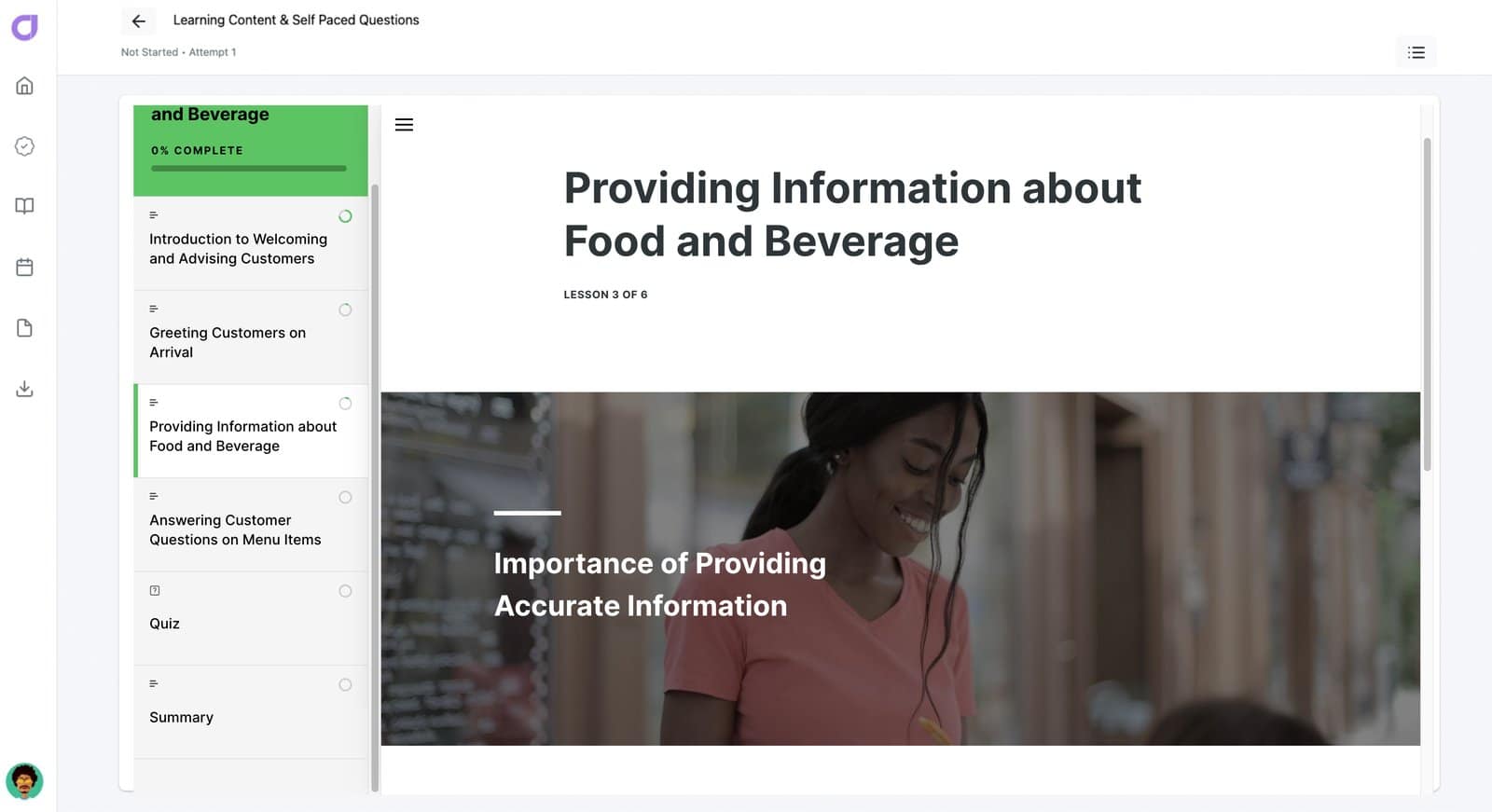
Welcome and Advise Customers for Food and Beverage 2 course screenshot

First impressions set the stage for every food experience. It’s important that customers feel welcome as soon as they arrive. This is why it’s essential for staff to greet customers confidently and help them feel comfortable.

This training course helps food professionals create welcoming environments and build trust. It covers communication techniques for detailing food and beverage offerings. These include how to explain details like ingredients and allergens. Participants will engage in real-world scenarios. This will help them handle questions, communicate respectfully and foster loyalty. By the end of the course, they’ll be well-equipped to provide your customers with memorable experiences.

Scope:

  • Creating a welcoming atmosphere that makes a positive first impression
  • Providing accurate information about menu items, including ingredients and allergens
  • Recommending menu items tailored to customer preferences
  • Accommodating diverse customers and handling queries courteously and accurately
  • Enhancing overall customer experiences to encourage repeat visits and positive reviews
Best for: Hosts, Front-of-house hospitality staff, New hires in food service environments Cost: Free

2. Taking and Processing Orders in Food and Beverage Course

Course Provider: Cloud Assess
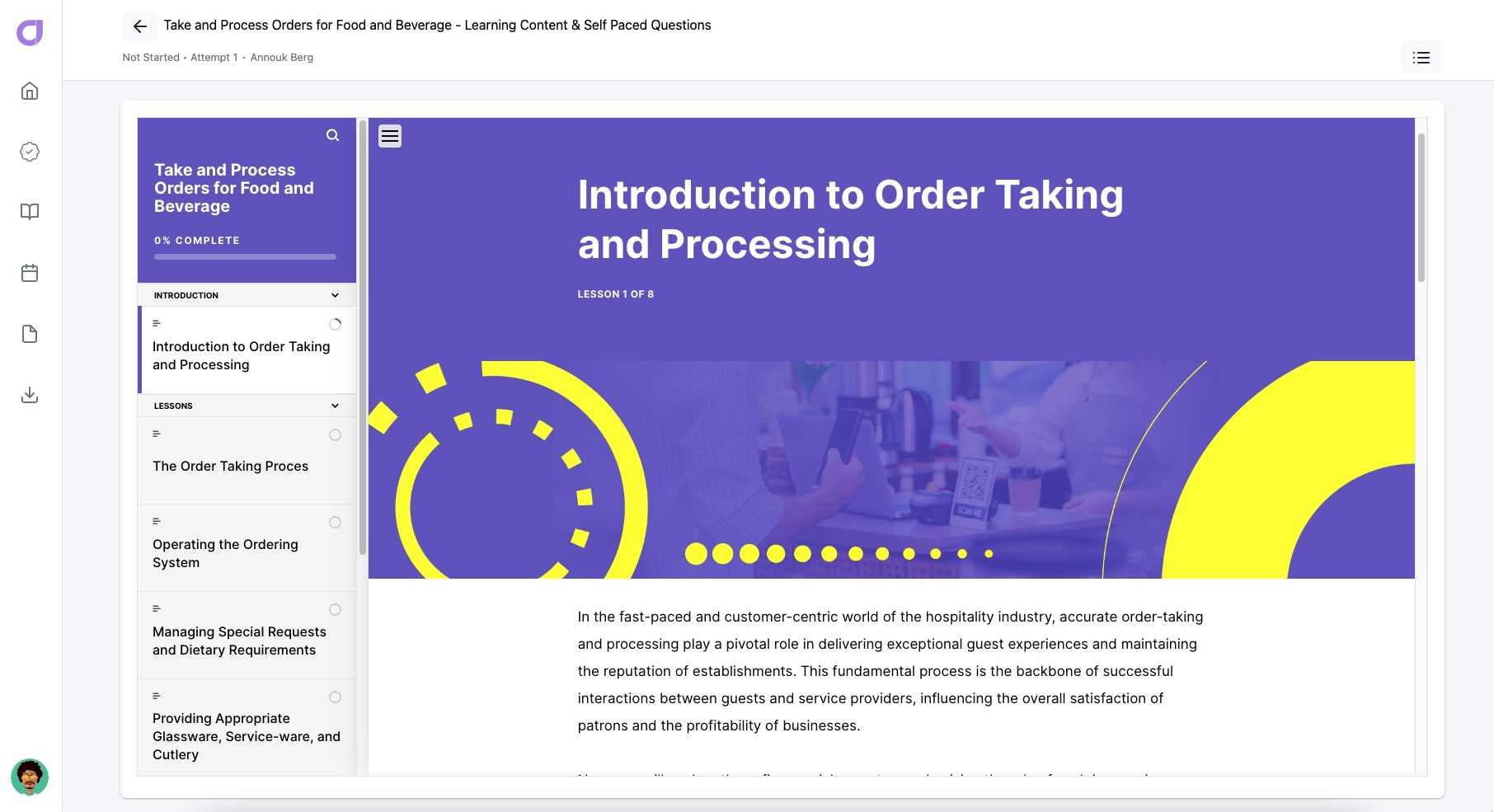
Take and Process Orders for Food and Beverage screenshot 1

Taking customer orders is about more than just writing down notes. Communication is key for helping customers understand which options may be best for their dietary needs. Communicating these to the kitchen, in turn, ensures that all steps are taken to turn a meal into a great experience.

In this food course, learners will develop essential skills for providing detail-oriented service. They’ll learn how to understand and communicate dietary restrictions to customers and kitchen staff. They’ll also learn techniques for prioritising food safety, and processing payments. Participants will engage in hands-on activities to improve their confidence. This will see staff delivering seamless, attentive service that meets high industry standards.

Scope:

  • Impact of order taking and processing on customer satisfaction and operational efficiency
  • Effective communication with customers and kitchen staff when taking and processing orders
  • Strategies for managing special requests and dietary requirements
  • Selecting appropriate glassware, serviceware and cutlery to enhance dining experiences
  • Processing payments precisely, accurately and transparently
Best for: Waitstaff, Restaurant management-in-training, Aspiring hospitality business owners Cost: Free

3. Provide Service to Customers Course

Course Provider: Cloud Assess
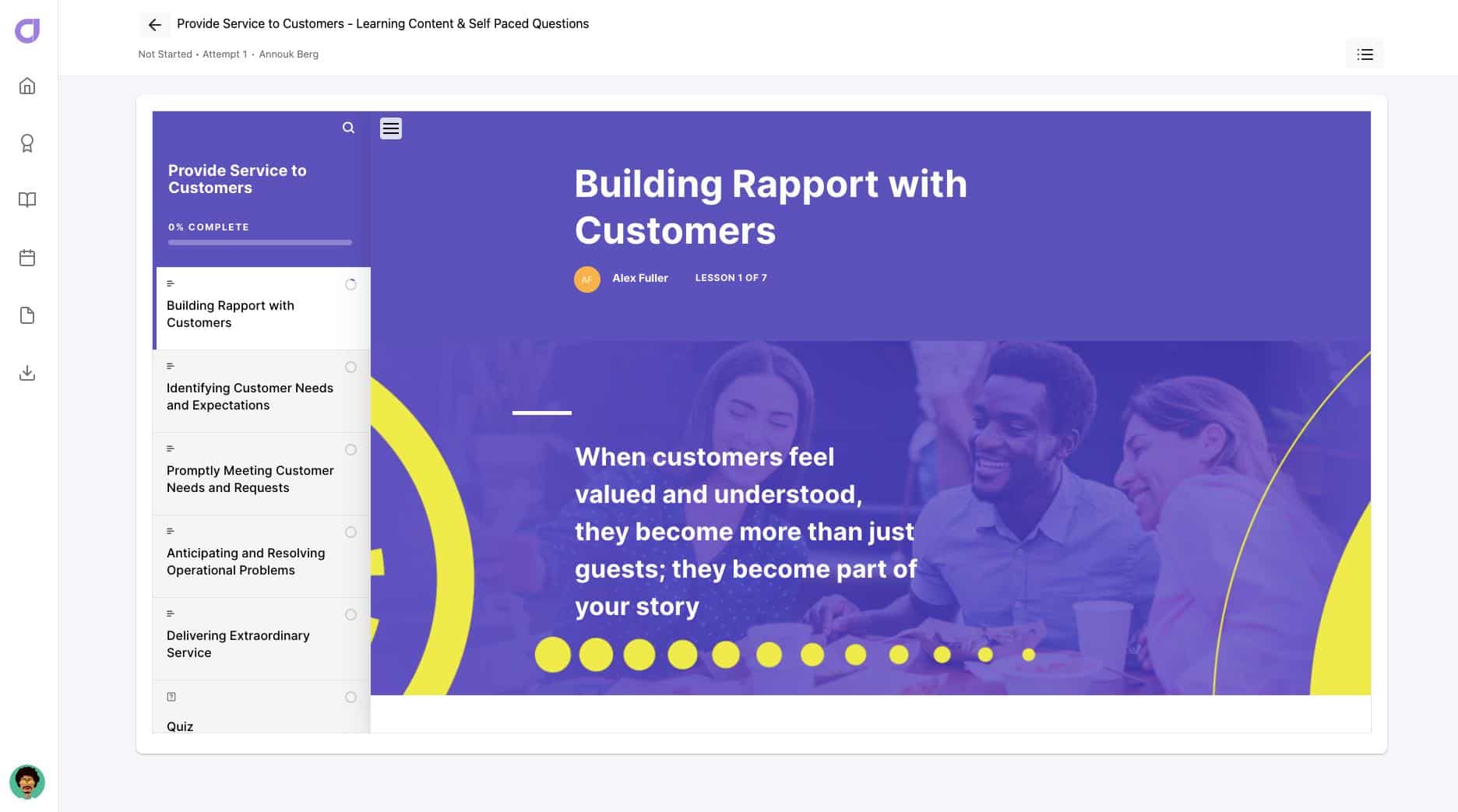
provide service to customers 1

Customer service is the foundation of every dining experience. Great customer service leads to happy, repeat customers. Poor customer service can lead to lost loyalty or even damage your reputation.

In this course, participants will learn the basics of customer service. They’ll learn communication strategies and techniques for building relationships and handling complaints. They’ll engage with practical lessons and real-world scenarios. This will help learners anticipate needs, prioritise requests, and remain professional, even in difficult situations.

Scope:

  • Establishing rapport to build strong customer relationships
  • Identifying customer needs and preferences
  • Enhancing satisfaction through active listening and prompt service
  • Anticipating and resolving operational problems to ensure smooth service delivery
  • Exceeding customer expectations
Best for: Waitstaff, Café front-of-house staff, Takeaway service workers Cost: Free

4. Respond to Customer Complaints Course

Course Provider: Cloud Assess
respond to customer complains 2

Dissatisfied and complaining customers are par for the course in every customer-service-centred industry. Knowing how to deal with them professionally can help companies avoid escalations. Instead, staff will improve customer loyalty and enhance the company’s reputation.

This course helps learners respond to customer complaints with empathy and professionalism. Participants will learn how to recognise dissatisfaction early and respond calmly. The course explores complaint patterns, empathy-driven communication, and complex issue resolution. This helps learners gain confidence and turn negative interactions into positive experiences.

Scope:

  • Understanding customer difficulties
  • Identifying dissatisfaction and handling complaints empathetically
  • Techniques for handling complex issues and escalations
  • Maintaining professionalism during interactions with unhappy customers
Best for: Café staff, Delivery workers, Counter service staff Cost: Free

Best Food Health and Safety Courses

5. Comply with Work and Personal Hygiene Standards Course

Course Provider: Cloud Assess
Comply with Work and Personal Hygiene Standards 0 course screenshot

Following good hygiene practices is essential in the food industry. Poor hygiene poses serious safety risks, from foodborne illness to regulatory violations. Your staff need to understand basic food hygiene protocols. This can protect them, other staff, your customers, and your reputation.

This health and safety training course focuses on essential personal hygiene practices. It covers essential aspects like handwashing, grooming and proper use of Personal Protective Equipment (PPE). It also covers the basics of workspace cleanliness. Learners are also trained on how to report health conditions and follow sanitation procedures. They’ll engage with practical examples that prepare them for contributing to a healthy work environment.

Scope:

  • The role of personal hygiene in preventing foodborne illnesses
  • Effective techniques for maintaining high food hygiene standards
  • Appropriate attire and the use of PPE
  • Procedures for reporting health conditions and illnesses to supervisors
  • Techniques for preventing cross-contamination of food items
  • Food hygiene compliance requirements
Best for: Kitchen hands, Food handlers, Café and restaurant staff, Hospitality students and trainees Cost: Free

6. Follow Hygiene Procedures and Identify Food Hazards Course

Course Provider: Cloud Assess
Follow Hygiene Procedures and Identify Food Hazards 0 course screenshot

Personal hygiene may be the first lesson in prioritising health and safety in food environments. But every establishment will have its own food hygiene protocols and procedures to follow as well. Without these, businesses risk failure to meet legal standards. More importantly, lapses in protocol can compromise the well-being of both customers and staff.

In this course, participants learn about key food hygiene procedures that go beyond personal practices. These include food handling and the safe use of uniforms and equipment. They’ll also learn how to identify and manage biological, chemical and physical hazards. This will help them avoid cross-contamination and implement effective cleaning and reporting protocols.

Scope:

  • Maintaining a clean and safe food preparation environment
  • Identifying, addressing and preventing biological, chemical and physical food hazards
  • Proper use of PPE
  • Strategies for preventing cross-contamination in food handling
  • Cleaning and sanitation of work areas and equipment
  • Protocols for reporting food hygiene breaches and safety hazards
  • Proper storage, cooking and temperature control practices
Best for: Food handlers, Kitchen staff, Café and restaurant employees Cost: Free

7. Prevent Food Contamination Course

Course Provider: Cloud Assess
Prevent Food Contamination 0 course screenshot

Cross-contamination is one of the biggest food safety risks and can quickly lead to serious health violations. A fundamental understanding of the importance of maintaining clean food surfaces and the proper use of protective equipment goes a long way to maintaining kitchen safety.

This health and safety course expands on the earlier personal hygiene and food hazards courses. It focuses on proper cleaning and sanitising routines. Participants will learn how to use food-grade sanitiser, handle utensils, and dispose of waste responsibly. By the end of the course, they’ll gain practical techniques for creating safe, compliant food environments.

Scope:

  • Essential techniques for avoiding the transfer of harmful bacteria between different types of food
  • Importance of maintaining personal hygiene
  • The difference between clearing and sanitising, and how to do both effectively
  • Safe food handling practices
  • How to safely dispose of food waste and recyclable items
  • Food safety legislation and best practices
Best for: Food preparation workers, Kitchen hands, Fast-food team members Cost: Free

8. Safe Food Handling and Storage Course

Course Provider: Cloud Assess
store and handle food safely free training course screenshot 4

When it comes to food handling and storage, there are often many points of contact within a business. Items need to be transported, prepared, displayed and disposed of. And often, different staff members are responsible for each step.

This food course helps participants understand different roles and responsibilities in handling and storage. It covers temperature control, hazard identification and hygiene protocols for displaying food items. By the end of the course, they’ll have built the skills they need to manage food in retail and service environments.

Scope:

  • Procedures and guidelines for receiving, transporting and storing food to ensure freshness
  • Preventing cross-contamination during food handling
  • How prompt food disposal maintains cleanliness and hygiene
  • Techniques for inspecting food items upon receipt and documenting any discrepancies
  • Techniques for storing food items including temperature maintenance, labelling and separating raw and cooked food items
Best for: Supermarket deli staff, Grocery staff, Food service assistants, Retail food handlers, Catering workers, Food logistics workers Cost: Free

9. Following a Food Safety Program Course

Course Provider: Cloud Assess
follow food safety program free training course screenshot 6

Food safety programs are designed to produce high-quality food. They provide quality assurance across the production process by prioritising food safety. This is fundamental for businesses to build and maintain strong reputations.

This in-depth training course helps with the effective development, navigation and use of food safety programs. It’s designed to help food businesses meet Food Standards Agency requirements. Participants will learn how to monitor and document safe food practices. They’ll also cover techniques for identifying and addressing food hazards. By the end of the course, learners will be able to confidently manage safety programs. This will help them promote a workplace culture that prioritises food hygiene.

Scope:

  • Understanding the components of a food safety program
  • Taking corrective actions for non-compliance and hazards
  • Monitoring food safety and recording food safety information
  • Implementing effective control measures for food safety hazards
Best for: Food technology specialists, Food science specialists, Quality assurance personnel, Catering workers, Supervisors in food service Cost: Free

Best Courses in Food Preparation

10. Basic Kitchen Operations Course

Course Provider: Cloud Assess
basic kitchen operations free training course screenshot 9

New kitchen staff need practical skills to work safely and efficiently. Without the right training, food prep can be slow, messy or unsafe.

This food course teaches the basics of prep and kitchen safety. Learners will practise using knives, cooking common ingredients and keeping workstations clean. They’ll also learn how to organise tools and food before cooking, and how to plate dishes properly. These skills help build strong habits from day one.

Scope:

  • Holding and gripping kitchen knives in a safe manner
  • Properly maintaining and sharpening kitchen knives
  • Presenting and plating food in a visually appealing way
  • Troubleshooting and solving problems in the kitchen
Best for: Apprentice chefs, Kitchen hands, Culinary students and trainees Cost: Free

11. Portion and Prepare Ingredients Course

Course Provider: Cloud Assess
Portion and Prepare Ingredients 0 course screenshot

Good portioning improves consistency, saves money and keeps customers happy. Poor preparation can slow down service and lead to waste.

This course covers the key steps in food prep. It includes food sequencing, accurate measuring, and how to prepare ingredients like salads. Participants will also learn ways to reduce food waste by using leftovers safely. These skills support faster, cleaner and more cost-effective kitchens.

Scope:

  • Role of portioning and preparation in optimising operational efficiency
  • How food production sequencing ensures smooth workflows
  • Weighing and measuring techniques for maintaining consistency and preventing wastage
  • Cutting and cleaning skills to enhance food hygiene and optimise presentation
  • Strategies for minimising waste and maximising profitability
  • Methods for creatively repurposing scraps to reduce waste and add value to dishes
Best for: Line cooks, Food prep assistants, Culinary students Cost: Free

12. Prepare Appetisers and Salads Course

Course Provider: Cloud Assess
Prepare Appetisers and Salads 0 course screenshot

Appetisers and salads are often the first things served to guests. If they’re made poorly, it can affect the rest of the meal.

This training course teaches how to prepare and present appetisers and salads. It covers classic recipes, dressings, and food handling methods like poaching and grilling. Participants will also explore how to balance flavour and improve visual presentation. These skills help staff deliver high-quality dishes with confidence.

Scope:

  • Understanding the impact that appetisers and salads have on overall dining experiences
  • Explore appetiser types and their roles in a meal
  • Explore and experiment with different salad varieties
  • The impact of proper preparation
  • Techniques used in the preparation of appetisers and salads
  • Preparation of sauces and dressings
  • Following recipes to ensure consistency, quality control and manage costs
  • Identifying and addressing food quality issues to ensure high standards
Best for: Apprentice chefs, Line cooks, Culinary students Cost: Free

Best Food Management Courses

13. Complete Work Process Course

Course Provider: Cloud Assess
complete work process free training course screenshot 3

In food environments, clean and organised workspaces are essential. Managers are responsible for making sure staff follow procedures that keep the kitchen safe and ready for service. Overlooking these processes can lead to contamination, safety risks, or service delays.

This course helps leaders oversee end-of-shift routines and workplace standards. It covers how to restore prep and service areas, check equipment safety, and manage surplus food or waste. Participants will also learn how to delegate responsibilities and set clear expectations. By the end of the course, they’ll be leading by example in maintaining a safe and professional food workspace.

Scope:

  • The negative impact clutter can have on service delivery and restaurant reputation
  • Role of cleanliness in managing safety hazards and enhancing guest impressions
  • Organisational procedures for work area cleanup
  • Role of collaboration in ensuring a consistently safe work environment
  • Significance of proper food storage techniques
  • First-In, First-Out technique for minimising waste and ensuring freshness
  • Techniques for monitoring storage areas to prioritise food hygiene
Best for: Kitchen management, Hospitality management, Food and beverage staff, Kitchen assistants, Hospitality team members Cost: Free

14. Complete Operational Tasks Course

Course Provider: Cloud Assess
complete operational tasks free training course screenshot 6

Food businesses rely on consistent daily operations. Managers are responsible for making sure nothing is missed. Gaps in task planning or oversight can affect hygiene, safety and service quality.

This training course helps leaders coordinate essential day-to-day activities. It covers task scheduling and communication strategies. Participants will also learn how to support staff with process checklists and SOPs. They’ll also cover techniques for identifying risks early and taking corrective action. These skills help managers lead smooth, efficient shifts and keep teams accountable.

Scope:

  • Streamlining organisational processes to boost efficiency and productivity
  • Role of work schedules in enhancing guest satisfaction
  • Food hygiene and safety best practices for ensuring the well-being of guests and staff
  • Techniques for maintaining tidiness and cleanliness
  • Strategies and technologies for optimising food and beverage operations
  • Techniques for anticipating and resolving operational challenges
Best for: Hospitality supervisors, Operations staff, Entry-level management Cost: Free

15. Communicate With Internal And External Customers Course

Course Provider: Cloud Assess
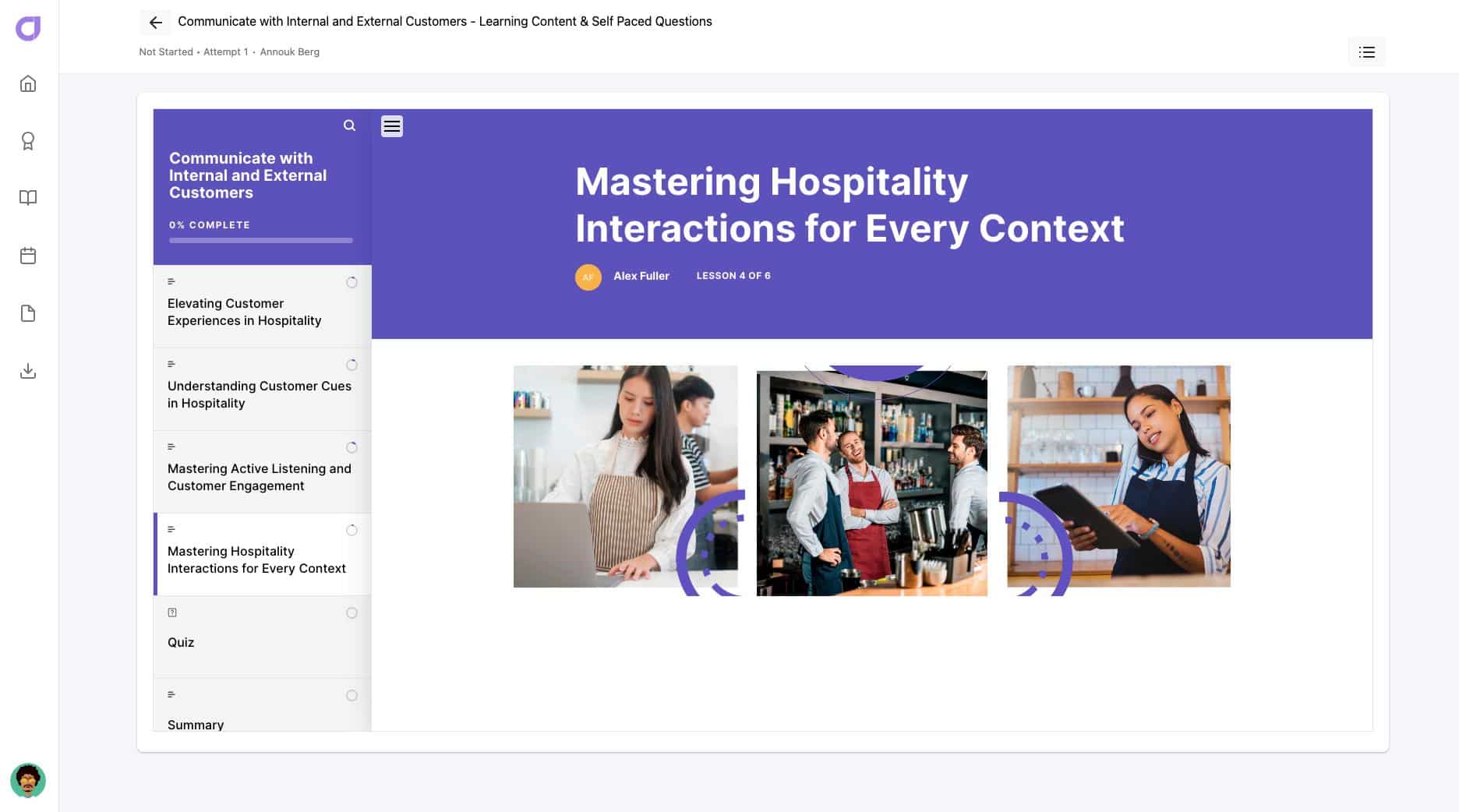
communicate with internal and external customers 4

In the food industry, communication affects every part of the operation—from customer service to kitchen flow. Managers play a key role in setting expectations and keeping communication clear between the front and back of house.

This course explores effective communication techniques that managers can use across their teams. This will help them communicate with both customers and colleagues. It covers how to give clear instructions and manage service issues. Managers will also learn how to support staff during high-pressure periods. It covers how to handle guest concerns professionally and reduce delays from miscommunication.

Scope:

  • How to boost guest satisfaction through professional, courteous and empathetic communication
  • The role of active listening in resolving conflicts, enhancing dining experiences, and increasing revenue
  • Identifying and interpreting non-verbal cues to tailor service delivery
  • Select appropriate communication methods for various contexts
  • Significance of timely responses in preventing issue escalation
Best for: Hospitality team leaders, Front-of-house staff, Guest services professionals Cost: Free

16. Inventory Management Course

Course Provider: Cloud Assess
inventory management free training course screenshot 4

Managing stock in food service is about more than just numbers. Poor inventory practices can lead to spoiled stock, menu shortages and unhappy customers. Managers must balance food safety, waste prevention and service consistency.

This training course helps food managers track, store and control inventory effectively. It covers stock rotation and temperature-sensitive storage. Participants will also learn how to forecast demand in kitchens or retail settings. By the end of the course, they’ll understand how to minimise food waste, manage supplier orders, and train staff in daily stock routines. These skills support both compliance and cost control in fast-paced food environments.

Scope:

  • Role of inventory management in reducing costs and improving customer satisfaction
  • Key inventory management concepts
  • Techniques like Just-in-Time and ABC analysis for inventory management
  • Best practices for forecasting demand to prevent stockouts or excess inventory
  • Appropriate reorder points based on lead times and demand variability
  • Use of food systems and technology in tracking and managing inventory effectively
  • Importance of collaboration with suppliers
Best for: Hospitality management, Kitchen management, Food retail management, Warehouse Clerks, Inventory controllers, Supply chain coordinators Cost: Free

Best Courses for Food Retail Environments

17. Maintain Equipment and Work Area in Food Retail Course

Course Provider: Cloud Assess
maintain equipment and work area free training course screenshot 5

Clean and well-maintained work areas are essential in food retail. Dirty surfaces or faulty equipment can lead to contamination or delays during busy periods. Staff need to know how to keep retail areas safe, tidy and ready for service.

This training course teaches how to clean benches, tools and machines used in food retail. It covers how to identify damage, report faults and follow workplace hygiene standards. By the end, participants will know how to keep workspaces safe, clean and ready for customers.

Scope:

  • Developing a schedule for cleaning and sanitising
  • Implementing measures to prevent infestations
  • Understanding the types of contaminants in food retail
  • Identifying and disposing of damaged equipment
Best for: Food retail assistants, Kitchen stewards,Kitchen management, Restaurant administrators, Hygiene team members Cost: Free

18. Maintain Stock Handling and Storage Areas Course

Course Provider: Cloud Assess
maintain stock handling and storage areas free training course screenshot 5

In food retail, poor storage can cause food to spoil or lead to safety issues. Staff must know how to handle food stock correctly, store it at the right temperature, and rotate items using FIFO.

This course teaches safe food stock practices in a retail setting. It covers temperature control, stock rotation, waste disposal and hazard reporting. Participants will also practise keeping stock areas clean and organised to support food safety and efficiency.

Scope:

  • Preventing spoilage and expiration through rotation
  • Implementing environmental control measures
  • Minimising health and safety risks in waste handling
  • Creating spill response plans and other emergency procedures
Best for: Stockroom attendants, Pantry supervisors, Food retail workers, Inventory clerks Cost: Free

19. Cash Handling and Register Operation Course

Course Provider: Cloud Assess

Cash handling is a key part of working in food retail. Mistakes at the register can lead to lost income or upset customers. It’s important that staff are confident in managing money, especially during busy periods.

This course teaches how to operate a register, give correct change and process different types of payments. It also covers how to spot fake notes, record transactions and follow store policies. By the end, staff will be able to handle cash quickly and accurately in a food retail setting.

Scope:

  • Importance of proper cash handling in ensuring accurate records, preventing errors and building trust with customers
  • Basic components of a cash register and their functions
  • Techniques for accurate counting and securing of cash
  • Recognising and avoiding common mistakes and risks
  • Importance of balancing cash registers to detect fraudulent activity, prevent shortages and overages, and ensure accurate financial reports
Best for: Cashiers, Retail team members, Front-of-house hospitality staff Cost: Free

20. Merchandise Food Products Course

Course Provider: Cloud Assess
merchandise food products course 1

In food retail, how products look on the shelf matters. Well-presented displays can attract more customers and increase sales. Poor displays can lead to wasted stock and reduced customer interest.

This training course teaches the basics of food merchandising. It covers food labelling, pricing, product rotation and safe display practices. Learners will also gain an in-depth understanding of how to follow hygiene rules while arranging food on shelves or in fridges. These skills help make food retail displays both safe and appealing.

Scope:

  • Understanding colour, lighting, and layout principles
  • Maintaining the safety and quality of food displays
  • Using demand forecasting and restocking strategies
  • Implementing proper storage and rotation techniques
Best for: Food merchandisers, Deli workers, Grocery team members, Food retail supervisors, Food Sales Promoters, Food product design specialists Cost: Free

Other Workplace Skills Courses

If you’re looking for more courses related to workplace skills, check out more of our curated lists:

You can also browse our complete Course Library to find many more free training and assessment opportunities.
Employee Training
The complete LMS and assessment platform for organisations who need training that works in the field, not just the classroom

You might also like