Training can be expensive, and many companies underestimate the financial commitment involved, especially with traditional methods. Costs quickly add up when factoring in training spaces, expert facilitators, and printed materials. And that’s without considering the time spent creating content or the potential productivity impact of pulling employees away from their roles.
This is why a well-thought-out learning and development (L&D) budget is critical. It helps businesses predict workplace training expenses, allocate resources strategically, and measure their return on investment.
In this blog, we’ll discuss:
- What an L&D budget is and why it matters
- The benefits of budgeting for training
- A free template for planning next year’s budget
- What to factor in when planning
- Eight steps for building an effective budget
- Common challenges organisations face along the way
- Practical ways to get more from L&D spend
What is a Learning and Development Budget?
A learning and development budget is a strategic tool for reliably predicting training expenses and guiding employee development planning. It provides a detailed spending outline, ensuring resources are allocated to initiatives that align with business goals and enhance learning outcomes.
What are the Benefits of an L&D Budget?
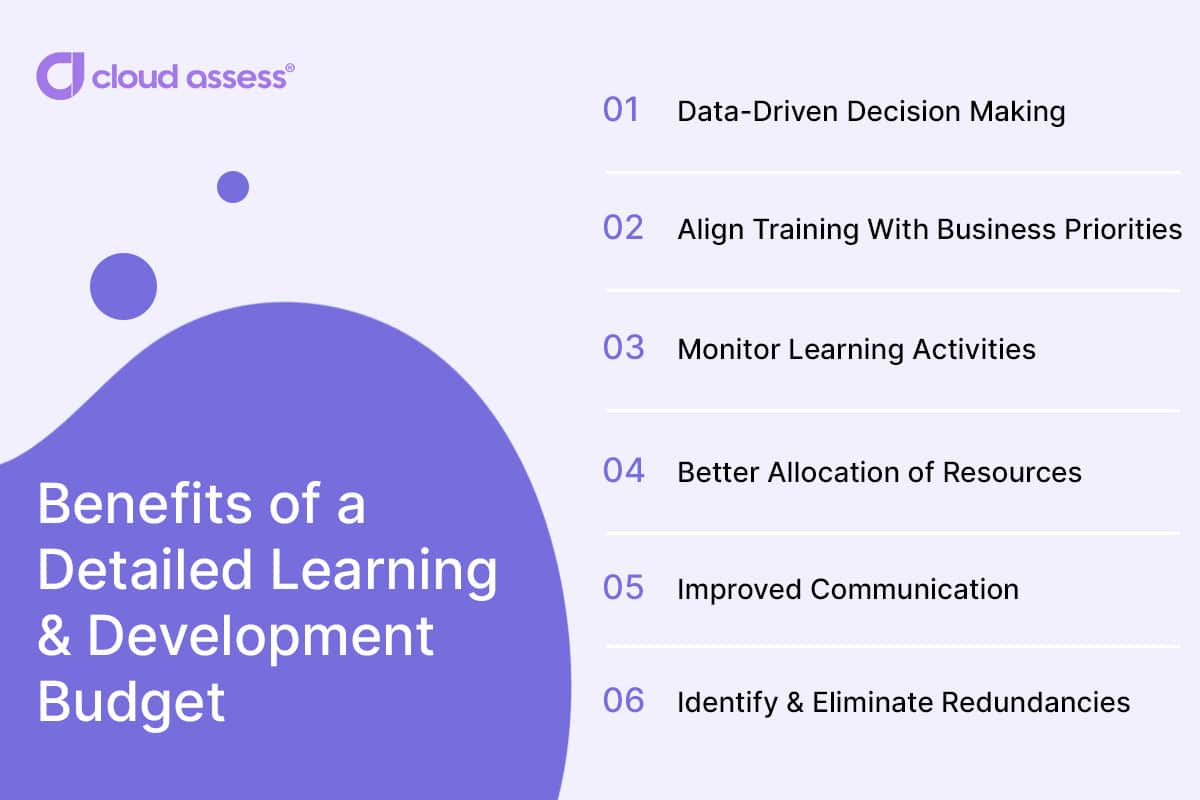
Data-Driven Decision Making
Regular budgeting enables companies to analyse past training results and allocate resources where they will have the greatest impact. This approach ensures that decisions are based on objective data rather than subjective opinions or persuasive arguments from different departments.
Align Training with Business Priorities
An L&D budget directs training spend towards strategic business goals. For example, organisations may invest in developing future-ready skills or reskill employees to address critical gaps within teams.
Monitor Learning Activities
A budget lets companies monitor the process and results of each learning activity. This makes it easier to measure effectiveness and adjust training as necessary while identifying areas where additional support or resources may be needed.
Better Resource Allocation

A detailed strategy for planned and continuous learning helps companies allocate funds to the most impactful initiatives while managing time and effort effectively. This ensures better alignment across the board and efficient allocation of resources.
Improved Communication
An L&D budget improves communication across the organisation. Putting together a development budget requires input from multiple departments. This collaboration builds transparency and accountability, with benefits that extend beyond training.
Identify and Eliminate Training Redundancies
Budget planning helps companies uncover overlapping or redundant employee training initiatives. Streamlining these efforts reduces expenses and ensures focus on the most impactful programs.
L&D Budget Free Template

Planning your L&D budget can take significant time and effort, but there are tools that can streamline the process. We’ve put together an L&D budget template that covers critical budgeting areas and considerations and can be adjusted to meet your unique business requirements.
Start planning next year’s learning and development today.
Which L&D Budgeting Method Should You Use?
Choosing the right training expense plan method is essential to aligning training investments with business objectives and achieving meaningful outcomes.
- Per employee. This budget allocation method assigns a set amount per employee, ensuring equal access to resources across your workforce. While it offers flexibility, it may result in inefficiencies, as employees often have differing training needs.
- Per department. Budgets are distributed to departments based on size, goals, or specific requirements. This approach promotes flexibility, with departments themselves deciding how resources are allocated. However, it can lead to inefficiencies if departments overestimate their needs or don’t align their training goals with organisational priorities.
- Needs-based. Companies perform a skills audit to evaluate existing abilities and identify critical skill gaps, allocating funds to address these areas. This reduces reliance on external hiring while aligning training initiatives with business priorities. However, the process can be time-consuming and resource-intensive.
- Performance-based. This budget allocation method assigns funds to training initiatives tied to specific projects, addressing immediate skill requirements. While it ensures relevance, it may overlook broader skill development or long-term organisational goals.
- Project-based. Businesses budget for developing skills required in a specific project. These ensure that planned projects always have the necessary workplace skills, but can neglect the need for broader skill development or long-term initiatives.
- Based on industry standards. This involves companies looking at industry or market trends to determine specific areas for development. While this approach ensures competitiveness, it can result in generic strategies that don’t leverage a company’s unique selling points.
- Based on ROI forecast. Budgets are allocated based on training initiatives with the highest ROI in previous years. While this ensures cost-effectiveness, it may deprioritise important initiatives with harder-to-measure or long-term outcomes.
What Costs Should You Include in an L&D Budget?
Various costs are associated with training that need to be factored into learning and development budgets. These include:
- Assessment costs. There are costs for assessing the impact of training. They may include hiring external assessors, printing costs for tests and materials, and transport fees for off-site assessments.
- Development costs. The time, effort and expenses involved in developing training materials. This may include research efforts, purchasing research papers or materials, specialised software or platforms, and the time spent integrating these resources into cohesive programs.
- Delivery & facility costs. These expenses cover how and where training is conducted. In-person sessions may include facilitator fees, the cost of employee time off, renting training spaces, and necessary transport. For online courses, software subscriptions based on per-student or per-course rates are common. A blended learning approach may incur both types of expenses.
- Administrative costs. Enrolments, manual data entry, reporting and analysis take significant time that needs to be budgeted for. Administrative software might also be required.
- L&D staffing costs. Many businesses have dedicated learning and development staff that need to be factored into their budgeting. This may include full- or part-time salaries and benefits.
- Overheads. There are various miscellaneous costs involved in training employees. Factors like internet access, utility usage and other fees that don’t fall easily into other categories should be accounted for here.
What Compliance Training Should Your L&D Budget Cover?
Many industries have strict training requirements that must be adhered to. These need to be followed to avoid costly penalties and reputation loss. For example, certain industries may require verifications of competency or workplace health and safety courses.
Who Should Be Involved in Planning an L&D Budget?
It’s important to consider input from various stakeholders when developing a budget strategy. These may include:
- Investors. Their input ensures the budget supports overall business objectives and delivers measurable returns.
- Business leaders. Provide valuable insights into strategic priorities for their specific teams, and ensure training fills critical skill gaps within their department.
- HR teams. Their focus is on talent acquisition and employee retention strategies, making their input in training crucial for developing strong talent pipelines.
- Finance department. Ensures the budget is realistic, sustainable, and aligned with larger organisational financial planning. This helps to prevent overspending and ensures efficient resource allocation.
- Employees. Their feedback can help you tailor training programs to meet individual needs that impact performance and employee engagement. Training feedback can also improve the adoption of training programs across your organisation.
8 Steps For Creating an Effective L&D Budget
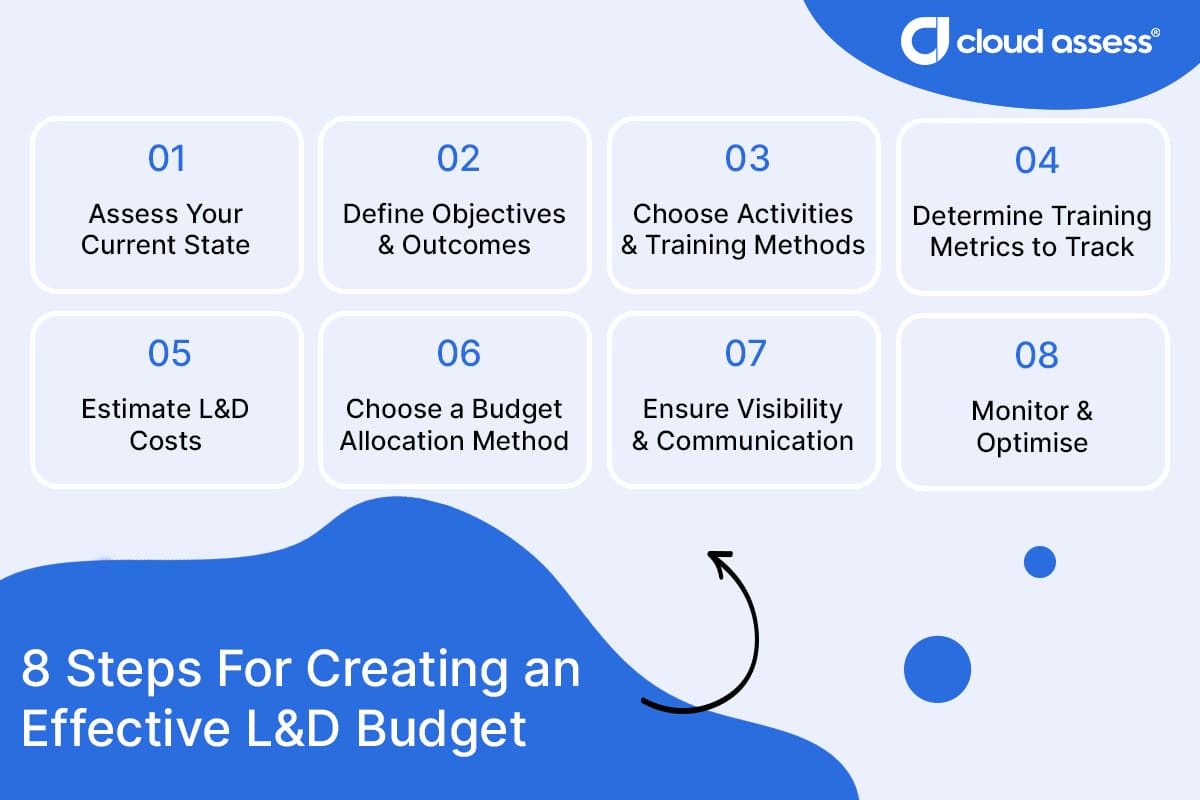
1. Assess Your Current State
Begin by evaluating your company’s current training efforts. These may include:
- Continuous training initiatives
- Existing skills, capabilities and competencies
- Pre-training assessment results
This will help you identify critical areas to prioritise within your learning and development budget. It can also highlight previous initiatives and employee training methods that delivered meaningful results.
2. Define Learning Objectives & Desired Outcomes
Focus on what you want your training to achieve in the year ahead. Some training initiatives are best suited for technical skill development, while others may focus on improving compliance or enhancing power skills like communication and collaboration.
A clear outline of your desired outcomes can help allocate budget for specific projects or training programs. It can also help you ensure maximum return on investment while supporting long-term business strategies.
3. Choose L&D Activities and Training Methods
Match each training method to the business goal it supports best. For example, on-the-job training is a practical approach that specifically develops role-related skills. Role-playing techniques, on the other hand, are effective for developing emotional intelligence and soft skills like communication.
4. Determine Training Metrics to Track
Choose metrics that track training success against your learning objectives. For example, performance improvements and higher review scores are great signs of skill development. Meanwhile, increased retention and promotion rates indicate career growth and improved employee engagement. Other training metrics to consider include:
- ROI of training programs
- Post-training assessment scores
- Training completion rates
- Cost per learner
- Spend vs revenue
5. Estimate L&D Costs
Calculate the full cost of each training program you plan to run. Be sure to include factors like developing courses and materials and delivering training alongside technology and administrative expenses. You want to ensure that all bases are covered, as unexpected costs can quickly derail even the most detailed L&D budget.
Consider getting input from your finance department to ensure that the budget is realistic and sustainable.
6. Allocate Your Budget According to Your Chosen Method
Choose a budgeting method that aligns with your organisational goals. This will help you allocate resources fairly, objectively and strategically to maximise the impact of training. However, do factor flexibility into the equation. This will help you adapt your budget as needed to changing circumstances.
7. Ensure Visibility and Communication
Share your employee development plan with investors and business leaders. Present it in simple, relatable terms and consider using visual aids like dashboards and reports to back up the data.
Encourage feedback as it opens up an opportunity for last-minute adjustments or reallocations before the budget is implemented. Transparency will foster better collaboration and ensure all departments are aware and accountable for executing training strategies within their teams.
Once all leaders agree with the budget, share it with your employees as well. Explain the reasoning behind the strategy and the benefits they’ll gain through training. This will improve adoption and engagement, and foster continuous learning.
8. Monitor Budget and Optimise For Results

Track expenses throughout the year and compare them against expected learning outcomes. This will help you identify areas for improvement and adjust your budget accordingly. It will also help you keep your budget flexible, addressing new needs as they emerge and ensuring consistent alignment with business goals.