

Vocational Education and Training (VET) is key to developing skilled and adaptable workforces. Registered Training Organisations (RTOs) are the driving force behind this development. They ensure learners gain skills and competencies needed to succeed in Australian industries.
However, the highest quality of education doesn’t happen by accident. It takes planning, alignment with real needs, and continuous improvement. This is where RTO compliance comes in. It’s the framework that keeps everything on track. This ensures RTOs maintain a reputation of offering high-quality education that supports Australian industries and the wider economy.
Who Sets and Monitors RTO Compliance Requirements?
Policy Makers
Before an RTO can be measured, the rules must be written. Policy makers design legislative frameworks and educational standards. They define what quality looks like in Australian VET.
Department of Employment and Workplace Relations
The Department of Employment and Workplace Relations (DEWR) guides the policies that RTOs need to follow. They’re a government department that focuses on developing strong workforces and fair working conditions.
DEWR writes the actual legislation, including the 2025 Standards for RTOs. They define the Outcome Standards that determine what high-quality training looks lile. This sets the benchmark that RTO services are measured against.
Jobs and Skills Councils
Jobs and Skills Councils (JSCs) are industry-led organisations. They connect the VET sector with the Australian workforce. They identify specific skills gaps and ensure nationally recognised training reflects industry needs.
JSCs develop and maintain the training packages that RTOs deliver. They set the units of competency and assessment requirements that providers must meet to remain compliant. This ensures graduates develop the specific skills required by employers across Australia.
National Centre for Vocational Education Research
The National Centre for Vocational Education Research (NCVER) collects and manages VET statistics. Governments and industries use this data to inform national policy decisions.
Part of NCVER’s data collection includes mandatory AVETMISS reporting for all training activity. Registered training organisations must submit the data yearly to ensure records and transcripts stay up to date.
Regulators
Once compliance requirements are established, they must be enforced. Regulators conduct regular RTO audits and ongoing assessments. This ensures regulations are followed, and training is conducted at a consistently high standard.
Australian Skills Quality Authority
The Australian Skills Quality Authority (ASQA) regulates most registered training organisations. This includes providers offering training to overseas learners or conducting training across territories.
ASQA manages RTO registration and renewal. They use a risk-based approach to conduct audits against regulations like the RTO Standards. They focus on annual risk priorities, covering areas like academic integrity and learner support. They also issue penalties for non-compliance, which can include fines or deregistration.
What Are ASQA’s Current Risk Priorities?
We break them down along with tips for ensuring continued compliance year-on-year.
Victorian Registration and Qualifications Authority
The Victorian Registration and Qualifications Authority (VRQA) is a state-based regulator. They ensure training providers in Victoria operate within the state’s specific regulatory framework.
These state-specific guidelines often align with national requirements like the 2025 RTO Standards. However, VRQA-registered providers must follow Victorian legislation until they transition to national standards. RTOs operating across multiple states or enrolling international learners remain regulated by ASQA.
Training Accreditation Council
The Training Accreditation Council (TAC) is the regulator for RTOs in Western Australia.
They register, audit, and monitor RTOs to ensure quality training outcomes. This oversight ensures that Western Australian qualifications meet national compliance requirements. It also supports the specific needs of local industry.
Department of Home Affairs
The Department of Home Affairs is not a training regulator in the traditional sense. However, they regulate the entry and stay of overseas learners. This is vital for providers listed on the Commonwealth Register of Institutions and Courses for Overseas Students (CRICOS).
The department monitors compliance with student visa conditions and the Education Services for Overseas Students (ESOS) framework. They ensure visa applicants are genuine learners. They also ensure organisations meet their reporting obligations for international enrolments.
Compliance Regulations & Legislation
National Vocational Education and Training Regulator Act
The National Vocational Education and Training Regulator (NVR) Act is the legal basis for Australian VET. It grants ASQA the power to register providers, conduct audits, and enforce standards. This clear legal structure is the foundation of the VET Quality Framework, which ensures the national training system remains consistent and transparent. This helps to safeguard the industry’s reputation and protect all learners.
The Act sets out the specific obligations that an RTO must meet to achieve and maintain registration. These include requirements for financial viability, data provision, and protecting learner records. It also mandates that provider registration automatically lapses if they don’t deliver training for 12 consecutive months. This ensures that only active, committed organisations can deliver training and assessment services.
Australian Qualifications Framework
The Australian Qualifications Framework (AQF) regulates qualifications across all education sectors. It connects schools, vocational training, and higher education into one single, comprehensive system. This ensures national consistency and recognition for qualification titles and levels country-wide.
The framework is divided into ten levels, ranging from Certificate I to a Doctoral Degree. Each level defines the specific depth and complexity of skills a graduate must demonstrate. For RTOs, this provides a benchmark for training that meets national competency expectations.
Adhering to the AQF allows for smooth transitions between different levels of study and various providers. It ensures that a qualification issued in one state is valued equally by employers and educators nationwide. This consistency maintains the international reputation and integrity of the Australian education system.
Standards for RTOs 2025
The Standards for RTOs 2025 are the main regulatory requirements that training providers in Australia need to follow. They ensure consistency and quality across the Australian VET sector. These Standards came into full effect on 1 July 2025 and are designed offer providers flexibility. This allows organisations to focus on educational outcomes rather than just administrative paperwork.
This framework is structured into three distinct elements. Together, they define how an RTO must operate, support its learners, and manage its professional workforce.
- Outcome Standards. Focus on the impact of training rather than just the processes used to deliver it. They explain specific quality outcomes for providers, learners and Australian industries.
- Compliance Requirements. Cover mandatory administrative rules in essential operational areas. These include marketing, the correct use of national logos, and fit and proper person requirements.
- Credential Policy. Specifies the qualifications that trainers and assessors must hold to deliver training. It also details circumstances where those working towards qualification may practice under supervision.
Learn More About The Latest Standards And Their Impact For RTOs.
Watch our free webinar today!Education Services for Overseas Students Act
The ESOS Act is the legal framework that protects international learners studying in Australia on student visas. It ensures high-quality education and financially protects their tuition fees. This maintains Australia’s reputation as a safe and reliable destination for vocational training.
For RTOs, the Act mandates that providers list their institutions and their courses on CRICOS. Registered training organisations must also follow strict rules for learner welfare, attendance monitoring, and academic progress. This is essential for maintaining the integrity of student visa programs and ensuring continued registration.
National Code
The National Code sets out the specific standards RTOs must meet when training international learners. While the ESOS Act provides the legal framework, the Code is a practical rule book for daily operations.
The Code is divided into 11 standards that cover the entire learner journey, from recruitment to completion. Following them is mandatory for protecting CRICOS registration and maintaining sector integrity. Recent updates have also strengthened the rules around education agents. This helps to prevent unethical recruitment practices.
Key Areas For Compliance
Training Delivery
Training and assessment must be delivered in a way that meets the specific needs of each learner group. RTOs must develop a comprehensive training and assessment strategy (TAS) for every product on their scope. This acts as the master plan that ensures training is consistent, industry-relevant, and of a high standard.
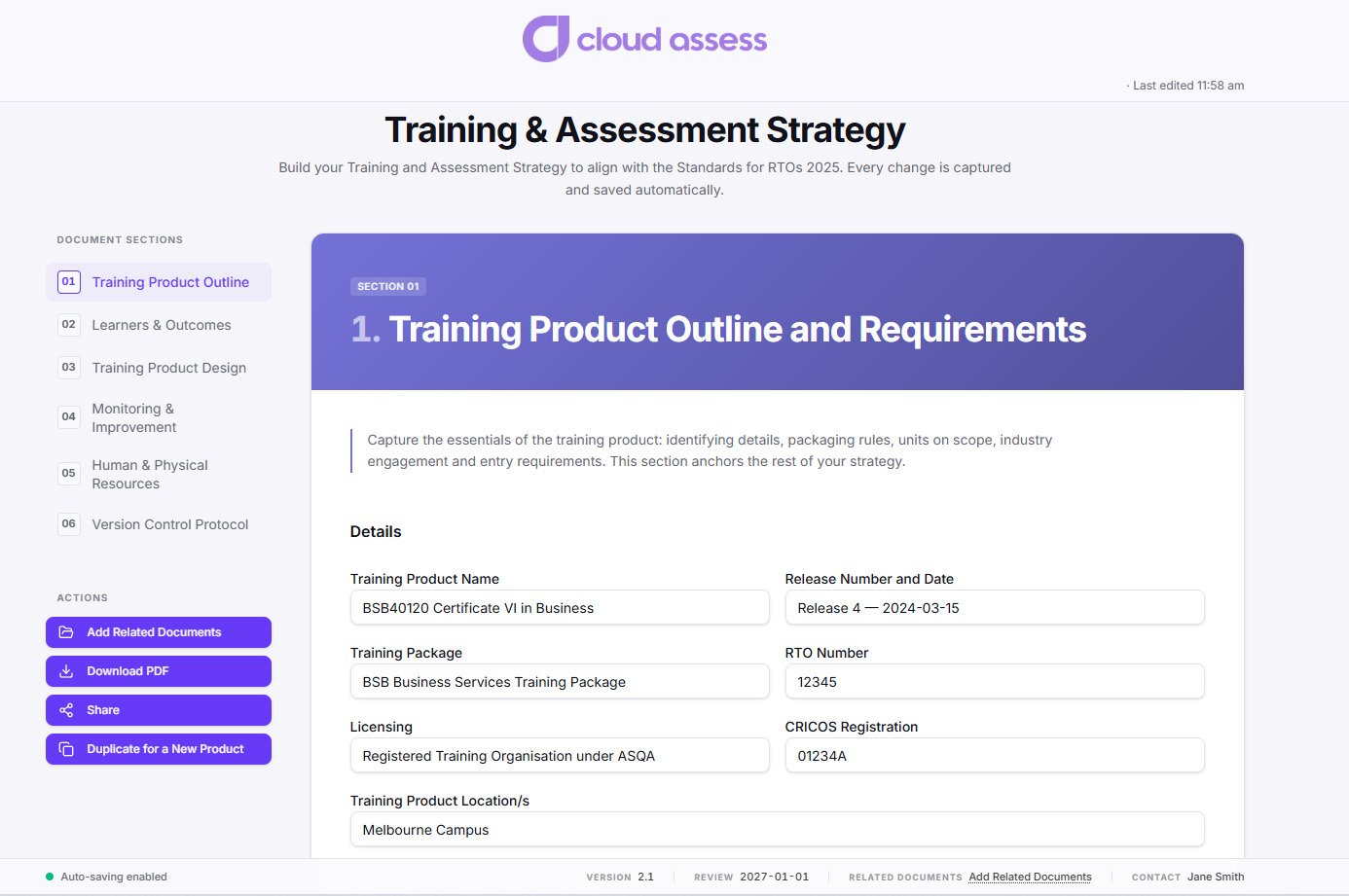
Developing Training and Assessment Strategies Doesn’t Have To Be A Mission!
We’ve designed a free tool to streamline the process.
Registered training organisations must also ensure that the volume of learning matches AQF requirements. This includes integrating foundation skills training into the program to support learners with literacy, numeracy, and digital needs. It’s important to document any adjustments to strategies or learning volumes and inform ASQA about them during audits. This reduces discrepancies during audits, while also helping RTOs stay on top of reporting compliance requirements.
Assessment Services
Providers need to conduct effective assessments that accurately measure learner competency against national standards. That way, providers can guarantee that learners graduate with genuine skills required by Australian industries.
This process requires assessors to apply the Principles of Assessment, ensuring that all tasks are fair, flexible, valid, and reliable. This can be achieved by maintaining a high standard of design and using versatile assessment methods. The evidence collected during these assessments must also be valid, sufficient, authentic, and current. These four requirements are known as the Rules of Evidence.
Providers also need to conduct regular assessment validation. This involves reviewing assessment tools and assessor judgements. These systematic reviews help to identify any inconsistencies. This type of RTO self-assessment also assists providers in maintaining consistent processes and audit-readiness. When it comes time for ASQA reviews, they’ll have documents and records that reflect their commitment to improvement and high-quality assessment.
Not Sure Where To Start With Self-Assessment?
We’ve got just the tool you need.Trainer and Assessor Credentials
The quality of an RTO’s training depends heavily on the people delivering it. Trainers and assessors must hold the right qualifications and have current, relevant industry experience. Specifics around qualifications that allow trainers and assessors to deliver and measure learning are included in the Credential Policy.
However, a provider’s role doesn’t end with hiring skilled and qualified professionals. RTOs must support their workforce in pursuing continuous professional development (CPD). This helps to keep skills up to date. It includes staying current with changes in training and assessment practices, as well as developments within their specific industry area.
RTOs should have clear processes in place to ensure their workforce meets these broad competency requirements. Keeping thorough records of qualifications, industry experience, and a CPD log of relevant activities is essential.
Track Continuous Professional Development Across Your Workforce!
We’ve designed a log that’s quick and easy to update.Learner Support
Supporting learners from enrolment to completion is a key compliance requirement. The process, however, starts long before enrolment. RTOs must provide prospective clients with accurate information about courses, fees, and support services. This includes making reasonable adjustments to ensure students with disabilities have equal access to learning opportunities.
Providers must also conduct pre-training assessments to determine learners’ suitability for specific training products. These assessments measure areas like language, literacy, and numeracy (LLN) capabilities alongside digital literacy. This is also an opportunity for Recognition of Prior Learning (RPL), which can impact the amount of training a learner needs to become certified.
What About Credit Transfers?
Discover the difference between recognising prior learning and transferring credits from another training provider.Learner support continues well afterenrolment. Providers must track progress and maintain high levels of learner engagement. This data helps RTOs identify where targeted guidance or interventions may be needed to help a learner reach their goals.
Marketing and Recruitment
Marketing is a common area of non-compliance for RTOs. Misleading claims, whether intentional or not, can damage learner trust and attract regulatory scrutiny. RTOs must ensure that all marketing materials, including those produced by third-party brokers or recruitment agents, accurately represent their services.
This is particularly important when it comes to AQF-accredited qualifications. Learners need to know exactly what they’re signing up for. Providers must clearly distinguish between training that leads to a formal qualification or statement of attainment and any non-accredited training they offer. Blurring this line can mislead prospective learners and trigger compliance breaches.
Providers should conduct regular audits to ensure they’re maintaining compliant RTO marketing and recruitment materials. This includes reviewing their website, social media, and any content distributed through third parties. Keeping records of these reviews is also good practice. It demonstrates a proactive approach to compliance and helps providers stay prepared for ASQA audits.
Make Sure You’re RTO Marketing Materials Are On Point!
We’ve created a checklist to make sure you’re covering all your bases.International Education Services
ASQA has identified the marketing and recruitment of international learners as a critical risk priority for 2026. This focus targets unethical practices that can undermine the integrity of the Australian VET sector. The regulator is particularly concerned with providers enrolling non-genuine students, often through the use of unregulated education agents.
To remain compliant, RTOs must ensure all marketing is transparent and avoids misleading claims about migration outcomes or training quality. Providers are also responsible for the conduct of their third-party agents and must monitor these relationships closely. Maintaining high standards in these areas protects the provider’s reputation and supports the long-term sustainability of international education.
Continuous Improvement
Continuous improvement is not just a best practice. Training providers must have systematic processes in place to regularly monitor and evaluate their services. This means actively gathering insights from a range of sources, including assessment validation outcomes, industry consultation, learner feedback, and audit results. These should be used to drive meaningful improvements across the organisation.
RTOs should maintain clear records of their improvement activities, documenting what was reviewed and identified, and what actions were taken. This demonstrates to ASQA that the provider is genuinely committed to raising the quality of its training and assessment services, rather than simply meeting the minimum standard. A strong culture of continuous improvement also helps providers stay ahead of compliance issues before they escalate.
Reporting Processes
The Compliance Standards make it clear that providers must submit an annual declaration of compliance. However, this is hardly where reporting obligations end. RTOs must meet a range of reporting requirements across multiple bodies, including ASQA and NCVER. This includes submitting accurate AVETMISS learner data and reporting feedback from ASQA’s quality indicator questionnaires. It also means ensuring all submissions are made on time and in the correct format.
Accurate data collection is the foundation of good reporting. Providers should ensure they are using an AVETMISS-compliant student management system to record and manage learner information throughout the training cycle. Keeping data accurate and up to date throughout the year makes reporting far more manageable and significantly reduces the risk of errors that could attract regulatory attention.
Looking For AVETMISS-Compliant Software?
Selecting the right platforms is an important decision. We’ve created a register to help providers identify a solution that suits their needs.Audit Preparation
RTO audits can feel daunting, but it helps to understand what ASQA is actually looking for. Their focus is not on catching providers out. It’s on ensuring that learners receive quality training that prepares them for real employment. Providers who are genuinely committed to delivering high-quality services have little to fear.
The best way to reduce audit stress is through consistent, ongoing documentation. Providers that treat internal quality assurance as a regular habit, rather than a last-minute scramble, are better prepared. This significantly reduces the pressure of external quality assurance reviews. Keep records of training delivery, assessment validation, trainer credentials, improvement activities, and reporting submissions throughout the year. This means that when regulators do come knocking, the evidence is already there.
Make Sure Your Internal Reviews Are Covering All Your Bases.
Download our free checklist today.Who is Responsible for Compliance Management in RTOs?
- RTO Owners set the strategic direction and are responsible for ensuring that the organisation operates within the boundaries of the Standards. Decisions made at an ownership level have a direct impact on compliance culture.
- RTO Managers oversee the day-to-day operations that maintain compliance. From managing staff to ensuring policies are followed, the scope of their responsibilities is broad. It’s no surprise that common problems RTO managers face often centre around balancing operational demands with compliance requirements.
- Compliance Managers are responsible for monitoring and maintaining the organisation’s compliance framework. This includes preparing for audits, tracking regulatory changes, and ensuring that policies and procedures remain current and accurate.
- Administrators manage documentation, maintain accurate records, and ensure that data is captured and reported correctly. Accurate admin support is essential for audit-readiness.
- Trainers and Assessors are responsible for delivering training and conducting assessments in line with the Standards. Their day-to-day practice, from assessment design to record keeping, directly affects an RTO’s compliance outcomes.
- Video
Audit-Ready Starts With Less Admin Burden
Watch this webinar to see how Cloud Assess automates the repetitive tasks that keep your documentation on track.
- Third Parties can introduce compliance risk if not properly managed. RTOs remain responsible for the conduct of any third party acting on their behalf, making oversight of these relationships essential.
Why is Compliance Important?
Complying with RTO requirements is fundamental to the integrity and effectiveness of VET in Australia. It ensures that the training delivered by RTOs meets the high standards set by the Australian Skills Quality Authority (ASQA) and other regulatory bodies. This adherence to quality standards ensures that learners receive education and training that not only equips them with the necessary skills and competencies for their chosen careers but also meets the current and future needs of industry and the wider economy.
Common Compliance Concerns for Registered Training Organisations
Understanding common RTO compliance concerns helps training providers take a proactive approach to addressing them within their own organisations. This is the first step towards building a more resilient and audit-ready organisation.
- Adopting New Standards. VET regulations don’t stand still. They’re constantly evolving, and providers need to adapt quickly or risk falling behind. For example, while the latest Standards for RTOs haven’t yet impacted providers in Victoria, the VRQA is helping RTOs transition to the new legislation by January 2027.
- Maintaining Academic Integrity in the Age of AI. Providers need to build AI literacy for trainers to help them identify AI-generated submissions. They must also have robust procedures in place for detecting AI-generated responses and plagiarism in assessments.
- Fostering Industry Relationships. Meaningful industry engagement is essential for keeping training relevant and ensuring it reflects current workplace expectations. Without it, providers risk delivering qualifications that don’t meet the needs of employers or learners.
- Supporting Work-Based Learning Opportunities. Apprenticeships and traineeships require careful coordination between providers, employers, and learners. Maintaining accurate and up-to-date RTO training plans is essential for keeping these arrangements compliant and on track.
Developing A Training Plan Doesn’t Always Have To Mean Starting From Scratch.
We’ve got the template you need to streamline the process.Tips For Staying Compliant
- Conduct Regular Staff Reviews. Regular reviews ensure trainers and assessors maintain their skills through continuous professional development. This process also confirms that all staff continue to meet mandatory fit and proper person requirements for their specific roles.
- Stay Up To Date With the Latest VET Trends. Keeping an eye on industry shifts is one of the best ways to pick up new best practices. It can help you navigate modern training methods and find techniques that actually work for your learners. It can also help you uncover new ways to cut down on RTO administrative burden.
- Find the Right Software. Look for tools that let you lean on AI and automation to do the heavy lifting. For example, the right LMS makes it much easier to deliver compliant training without it having to stay top-of-mind. Finding consolidated solutions like Cloud Assess can also help you reduce tech sprawl by combining LMS features, student management features, and workplace training features in a single platform.
Looking For More Compliance Tips?
We’ve got just the blog you need.Consequences of Non-Compliance
Fines and Penalties
RTOs that fail to meet compliance obligations can face significant financial penalties. These fines are imposed by regulators like ASQA, and vary based on the severity and nature of the breach. Repeated or serious violations may trigger escalating penalties that place real strain on an organisation’s finances. Staying compliant is always far less costly than facing enforcement action
Deregistration
In serious cases, regulators may cancel an RTO’s registration entirely. Deregistration means the organisation can no longer legally deliver recognised training or issue qualifications. This is one of the most severe outcomes an RTO can face, and it can be very difficult to recover from.
Unskilled Graduates Entering the Workforce
When providers fail to deliver training to the required standard, the real-world impact falls on learners and employers. Graduates may enter the workforce without the skills their qualification is supposed to represent. This creates risks for industries that rely on competent, work-ready candidates. It also undermines the integrity of the broader vocational education sector.
Reputational Damage
Non-compliance can cause lasting harm to a provider’s reputation. This can make it difficult to attract new learners, maintain employer partnerships, or build community trust. Negative audit outcomes and enforcement actions are often made publicly available by ASQA. Once trust is lost, it can take considerable time and effort to rebuild. A strong compliance record, on the other hand, is a genuine competitive advantage.
How Can Cloud Assess Help?
Cloud Assess’ training and assessment platform is designed with Australian training providers in mind. They combine learning management, student management, and workforce management into a single solution. This helps RTOs:
- Create Interactive Courses. Design self-paced online courses, or deliver instructor-led training through webinars. Social learning features also help learners share their experiences.
- Measure Skills and Competency. Skill- and competency-based assessments help providers gain a better understanding of where learners are thriving. Continuous and formative assessments can also help trainers understand where further support may be needed.
- Train Internal Teams. It’s not only VET students that can be trained through Cloud Assess. Providers can develop internal courses that support continuous professional development as well.
- Identify and Address Skill Gaps. Training and skills matrices help you track development across your cohorts and workforce. They make it easy to visualise gaps and address them through targeted training initiatives.
- Track Training Progress. Track learner progress as they complete modules within training courses. Cloud Assess also offers a wide range of training metrics to help RTOs measure the success of training programs.
- Manage Compliance and Reporting. Alerts and notifications remind your administrative teams of upcoming deadlines. Centralised documentation, training certificates, and AVETMISS reports also ensure you’re always audit-ready.


