Skills Audit vs Skills Mapping
A skills audit is the overall process of assessing your organisation’s current abilities. Skills mapping is the specific method used during that audit to visually connect skills to certain job roles or business goals.
Skills Audit vs Skills Visibility
A skills audit is a point-in-time event used to find gaps. Skills visibility is the state or outcome achieved after the audit is finished. It refers to having clear, real-time data on exactly what your people can do.
Skills Audit Quiz
Key Components of a Skills Audit

Skills Inventory
A skills inventory is a centralised list of the relevant skills, qualifications, and expertise available within your organisation. In larger companies, HR typically maintains this database. In smaller teams, unit managers often take responsibility for keeping this data current.
Competency Frameworks
Competency frameworks define the specific skills, knowledge, and behaviours required for success in a specific role. They standardise competency requirements across the organisation. This ensures consistent results for external and internal recruitment and employee assessments.
Organisational Goals
Your business objectives provide the criteria for the audit. These goals dictate which skills are currently a priority and which will be needed in the future. Keeping these goals top-of-mind ensures that your skill development supports the long-term success of the company. The audit identifies whether your current talent can actually deliver on these objectives.
Skills Gap Analysis
A skills gap analysis is the calculated result of your audit. It is the data created by comparing your skills inventory against your competency framework. While the audit is the overall project, the gap analysis is the final report. This highlights the exact shortfall between your current talent and your business needs.
Download a Free Skills Audit Template
A successful skills audit requires a structured way to collect and organise data. To help you get started, you can download our free Skills Audit Template. Using a pre-built structure saves time. It also ensures you don’t miss the critical components of a professional assessment.
This tool helps you list and categorise current employee skills. It also identifies the gaps between your team’s capabilities and business goals. By using this framework, you can easily prioritise your training needs. You can also make better recruitment decisions based on objective findings.
Why is a Skills Audit Important?
A skills audit is more than a discovery tool. It is a catalyst for organisational change. Most plans focus on two main goals: upskilling and reskilling.
- Informed Recruitment: A skills audit allows you to make data-based hiring decisions. By identifying missing technical or soft skills first, you avoid “panic hiring.” This ensures every new hire fills a specific gap in your team.
- Resource Allocation: A skills audit shows exactly where talent is best used. This ensures your most skilled employees are assigned to the highest-impact projects. It also prevents wasting expertise on low-priority tasks.
- Succession Planning: A skills audit allows you to identify future leaders early by measuring current competency against senior roles. This data-driven approach ensures your organisation is prepared for future departures.
- ROI on Training: A skills audit eliminates “blanket training” by directing your L&D budget only toward specific gaps. This ensures that every training dollar improves a necessary skill. It maximises your return on investment while saving time for your staff.
When to Perform a Skills Audit

You should conduct a skills audit regularly to maintain an up-to-date overview of your organisation. Most businesses perform these audits annually or biannually to stay ahead of core skill shortages. However, certain events require an immediate assessment.
Organisational Restructuring
A skills audit is a prerequisite for mergers, departmental shifts, or redundancies. Performing an audit before moving staff ensures your decisions are based on data. It helps you identify if you have too many people with the same skills in one area, allowing you to redeploy talent where it is needed most.
New Projects or Initiatives
An audit validates that your team has the skills to tackle new projects. It identifies if your team needs to learn new skills before the work begins. This prevents expensive, rushed hiring later in the project. It ensures your training and development budget is spent on the right expertise.
Annual Cycles and Performance Reviews
Many organisations choose to align their audits with their regular performance reviews. This allows managers to have data-driven conversations with employees about their career paths. It turns the audit into a routine part of your business cycle rather than a one-off project.
Addressing Underperformance
When a department misses its targets, an audit identifies the root cause. It determines if the issue is a lack of skill or a process failure. This allows you to apply the correct remedy, such as targeted training.
Types of Skills Audit
How to Conduct a Skills Audit

1. Define Your Objectives
Before you start with an employee skills audit, identify what you want to achieve. Are you preparing for a new project or a major restructuring? Clear objectives ensure the audit remains focused on your most important business goals.
2. Create a Competency Framework
List the key skills, knowledge, and behaviours required for the roles you are auditing. This framework acts as your measurement standard. It defines exactly what “competence” looks like for every position.
3. Choose an Assessment Method
Decide how you will collect your data. Common methods include employee self-assessments, manager reviews, or practical tests. Using a mix of these methods often provides the most accurate view of your team’s abilities.
4. Build Your Skills Inventory
Collect your data and record the current skills of every employee. This creates a master list of your team’s capabilities. You can use a spreadsheet, a skills matrix, or dedicated software to store this information. This record must be easy to update as your staff gain new experience.
5. Perform the Skills Gap Analysis
Compare your skills inventory against your competency framework. This step identifies the shortfall between your current talent and your requirements. By matching these data sets, you create a list of missing skills. You should then prioritise these gaps based on which ones pose the highest risk to your business goals.
6. Create an Action Plan
Turn your findings into a strategy for growth. Your plan should include specific remedies to close the identified gaps. These might include:
- External Training: Enrolling staff in paid or free professional courses.
- In-house Learning: Setting up mentoring or internal workshops.
- Recruitment: Hiring new talent to fill gaps that cannot be closed through training.
- Redeployment: Moving existing staff into roles that better fit their skills.
7. Monitor and Repeat
A skills audit is not a one-time event. Regularly review your progress and update your data. This ensures your workforce remains aligned with your goals as the industry evolves.
Tools and Technology to Simplify Your Skills Audit

Skills Matrix
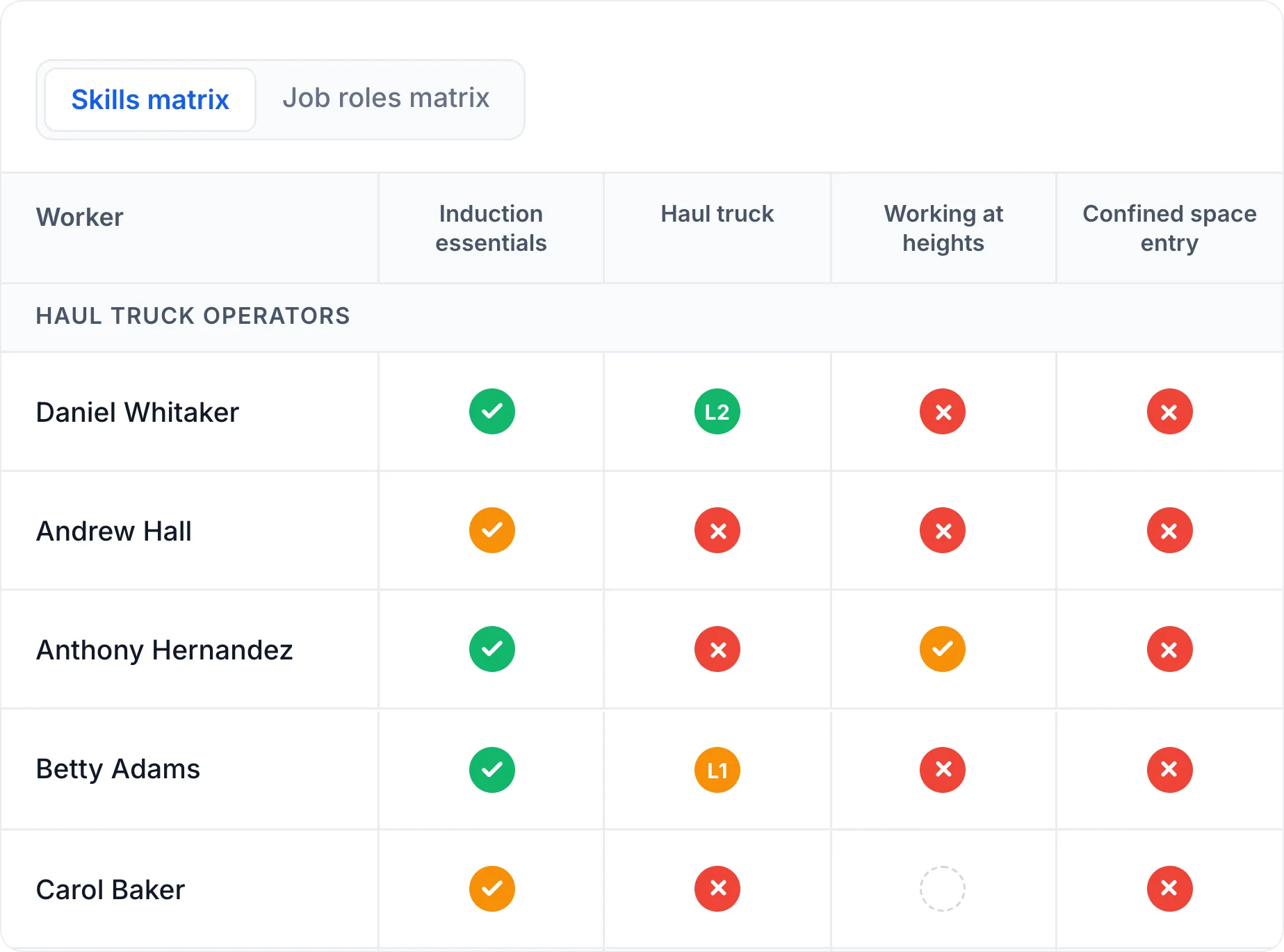
A skills matrix is a mapping tool used to track the proficiency levels of individual employees. It places staff names on one axis and specific skills on the other. This format allows you to identify exactly who can perform a task and who requires further training. It is the most effective way to turn a raw skills inventory into a clear picture of your team’s capacity.
Competency Matrix
A competency matrix serves as a benchmarking tool. It maps specific job roles against the required expertise levels defined in your competency framework. This tool allows managers to compare an employee’s current performance against the objective standard for their role. It is essential for ensuring that every department meets its operational requirements.
Skills Audit Software
For larger organisations, manual documents can become difficult to maintain. Most companies choose between two digital options to automate the process:
- HRIS (Human Resources Information Systems): These are general-purpose platforms that hold basic employee data, such as payroll and contact information. While they often include skills fields, they may lack the depth needed for a detailed audit.
- Dedicated Skills Management Systems: This is dedicated skills audit software built specifically to map, track, and develop workforce skills. Unlike a general HRIS, these tools often use AI to suggest skills and track the expiry of technical certifications over time. They also provide deep analytics on future talent needs.
Maximise the Impact and Outcome of Your Next Skills Audit
A skills audit is a strategic tool that aligns your people with your business goals. Identifying your shortfalls allows you to plan for internal growth. It helps ensure your workforce is ready for future challenges.
A skills management system like Cloud Assess allows you to automate the entire audit process. Cloud Assess is a specialist in training and assessment. It provides the tracking, reporting, and automation tools needed to simplify your data collection. This technology helps you turn raw data into a clear plan for workforce development. Book a demo today to start your journey toward a more resilient organisation.