Managing team performance is one of the most important parts of building a successful team. It helps employees grow, helps teams meet their goals, and keeps businesses competitive. To do this well, organisations need a strong performance management system. It guides work, tracks progress, and drives improvement. Without it, teams lose focus, miss feedback opportunities, and do not reach their full potential.
In this blog, we’ll explore:
- What performance management is
- How it compares to performance appraisals
- Why it’s important for business success
- The stages of the performance management cycle
- Methods and tools used in performance management
- How to build a strategy that works
- Common challenges and how to overcome them
- Best practices for continuous improvement
What is Performance Management?
Performance management is a strategic process that organisations use to plan, monitor, and improve employee output. It aligns individual efforts with business goals. It also maximises employee value by helping people contribute effectively to the organisation.
The performance management process includes regular check-ins, coaching, skills development, and formal reviews. When done well, it builds a culture of continuous improvement. It also supports growth, and drives long-term business success.
Performance Management vs. Performance Appraisal
Performance management is a wider process that shows how an employee is doing over time. It focuses on ongoing growth, setting goals, and giving regular feedback. It also helps spot performance problems early and identify steps to fix them as they come up.
Performance appraisal is one part of performance management. It is a review that looks at how an employee has performed over a set period. It helps business leaders make decisions such as pay rises, promotions, or performance ratings.
Performance Management vs Performance Reviews
A performance review is a regular check-in. It looks at recent progress, gives feedback, and helps set goals for the next period. It happens between a manager and an employee, or, in 360-degree reviews, between the employee and other team members. Reviews can happen monthly, quarterly, or as part of a performance appraisal.
Performance management includes these reviews, but it covers more. It links short-term progress to long-term goals. It tracks employee development, and supports steady improvement. It also brings together employees, managers, and HR to guide performance across the year.
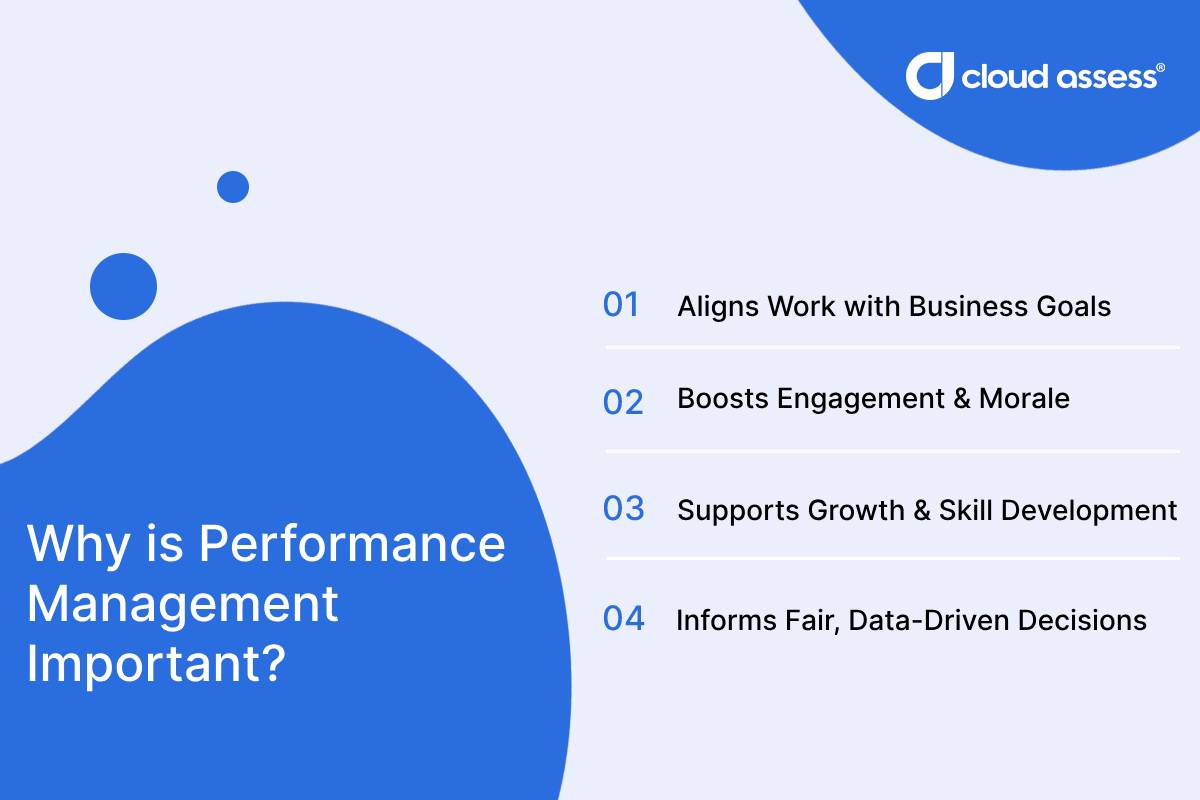
Why is Performance Management Important?
Drives Business Alignment and Accountability
Performance management connects day-to-day work with broader business goals. It helps employees understand how their role contributes to organisational success. When people see how their work supports the bigger picture, they’re more likely to take ownership of their outcomes.
It also gives leaders better visibility. With regular performance conversations, leaders can guide priorities, and adjust goals. They can stay in tune with what their teams need to succeed. This creates a more focused and accountable workplace for everyone.
Improves Employee Engagement and Morale
When employees don’t know where they stand or what’s expected, they can feel stuck or overlooked. This often leads to disengagement and lower morale. Performance management addresses this by providing regular feedback and support.
Setting clear goals helps employees feel more connected to their work. Keeping conversations open also supports this connection. Providing direction strengthens it further. This builds morale and strengthens engagement.
Enables Skill Development and Career Growth
Regular performance conversations help managers identify skill gaps early. This happens before those gaps turn into bigger problems. These discussions make it easier to set clear skills development goals and give employees the support they need to grow.
They also help reveal strengths that aren’t always visible on a CV or in an interview, whether during an internal or external hiring process. PwC Australia released a Workforce Hopes & Fears Survey in 2024. This report revealed that 45% of workers say they have skills that are not reflected in their qualifications. These skills also do not appear in their job titles. An effective performance management system creates space to recognise this hidden talent. It also helps to develop it.
Provides Data for Better Decision-Making
Performance management gives teams clear data on how people are doing and where they need support. When tracked over time, this information helps managers make better choices. It informs decisions about training. It also supports better choices around team goals and planning.
It also makes decisions fairer. Clear records of performance reduce guesswork and help leaders act on facts, not assumptions. When used well, performance data gives managers more confidence. It also helps employees understand how their work shapes future opportunities.
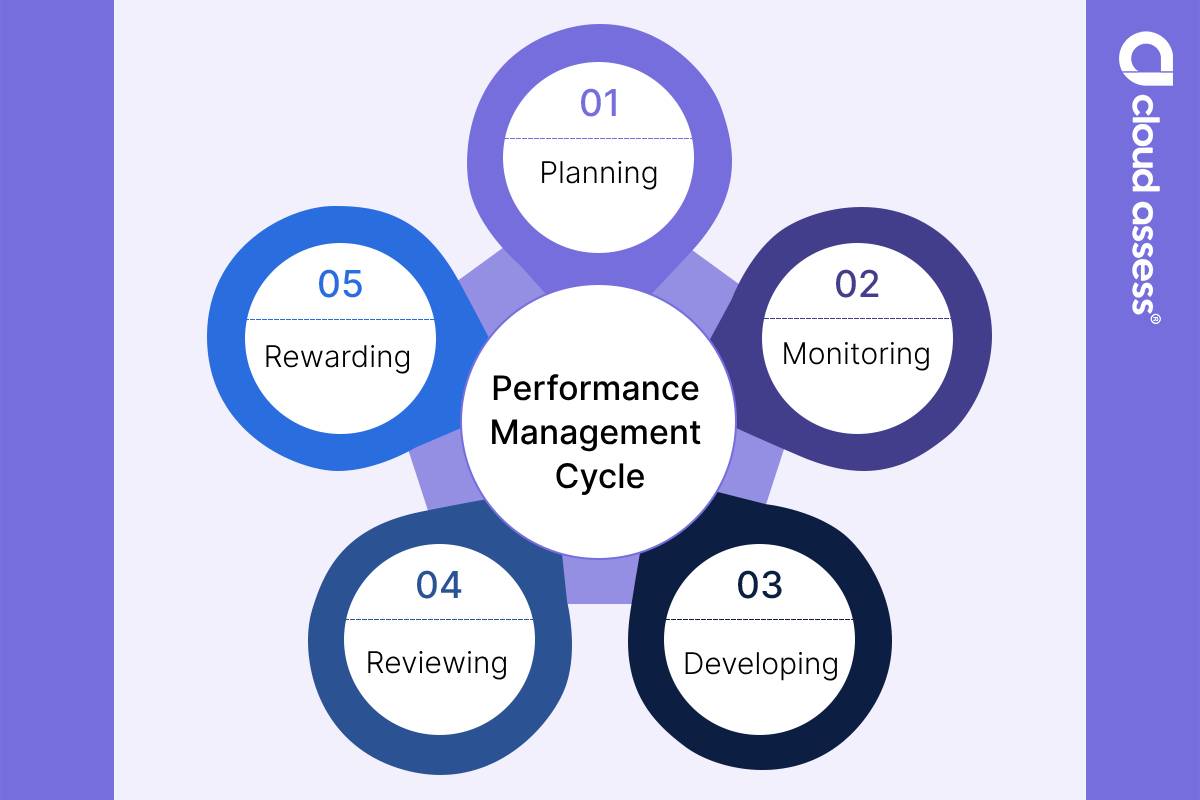
Performance Management Cycle
Planning
Planning sets the stage for performance. In this step, managers and employees work together to agree on what success looks like. They set goals related to daily tasks, project work, and skills development.
These goals should match business needs. They also need to include focus areas and performance metrics that clearly define how to measure progress. Both the manager and the employee should leave the conversation with the same understanding.
Monitoring
Monitoring keeps performance on track. In this step, managers and employees check in weekly, fortnightly, or monthly to review progress, spot any issues, and make changes if needed. These conversations help keep goals visible and work aligned with expectations.
Check-ins don’t need to be long or formal. A quick catch-up can be enough to raise challenges, share feedback, or adjust priorities. When employees know they’ll have a chance to talk about their work, they’re more likely to speak up early and act on feedback straight away.
Developing
Developing focuses on growth. In this step, managers and employees work together. They build the skills and knowledge needed to reach goals and improve performance. This can include upskilling, coaching, mentoring, and on-the-job training. It can also include any other training method that fits the employee’s needs.
It is essential that development ties back to the goals set earlier in the cycle. This keeps learning focused. It makes learning relevant to the role. It also prepares employees for skill mobility or future opportunities.
Reviewing
Reviewing focuses on evaluating progress over a set period. In this step, managers and employees reflect on what went well. They also evaluate what needs improvement, and how actual performance compares to the goals set earlier in the cycle. This stage may involve self-assessments, manager feedback, and sometimes input from peers.
Reviewing is a chance to look back, share feedback, and build a shared understanding of results. A good review process focuses on facts, not opinions. It creates space for open conversations and helps both sides agree on next steps. Whether that means setting new goals, offering more support, or planning future development.
Rewarding
Rewarding recognises the effort and results employees have delivered. In this step, managers provide feedback, celebrate progress, and offer rewards that match the level of performance. This can include public recognition, bonuses, promotions, or other forms of appreciation.
Recognition doesn’t always have to be formal or tied to pay. A simple thank-you or shout-out in a team meeting can go a long way in making people feel valued. The key is to match the recognition to the effort and make it timely.
Performance Management Methods
How you manage performance depends on how your teams work, how often goals shift, and what outcomes you want to improve. Different methods help structure the process. You can use them when setting long-term goals. You can also use them to track daily metrics or collect feedback from multiple sources.
For example:
- Use Objectives and Key Results (OKRs). This will help fast-moving teams stay focused on high-impact goals with measurable outcomes.
- Track progress with Key Performance Indicators (KPIs). Particularly, when you want to measure specific results. Things like revenue, delivery timelines, or customer satisfaction.
- Run 360-Degree Reviews to gather feedback from peers, managers, and direct reports for a fuller view of performance.
- Apply Management by Objectives (MBO). This is important in structured environments where performance links to clear, time-bound goals.
Each method supports a different part of the performance cycle. Choose the one that fits your team, and use it consistently. For a deeper breakdown of each, explore our guide to performance management techniques.
How to Develop a Performance Management Strategy
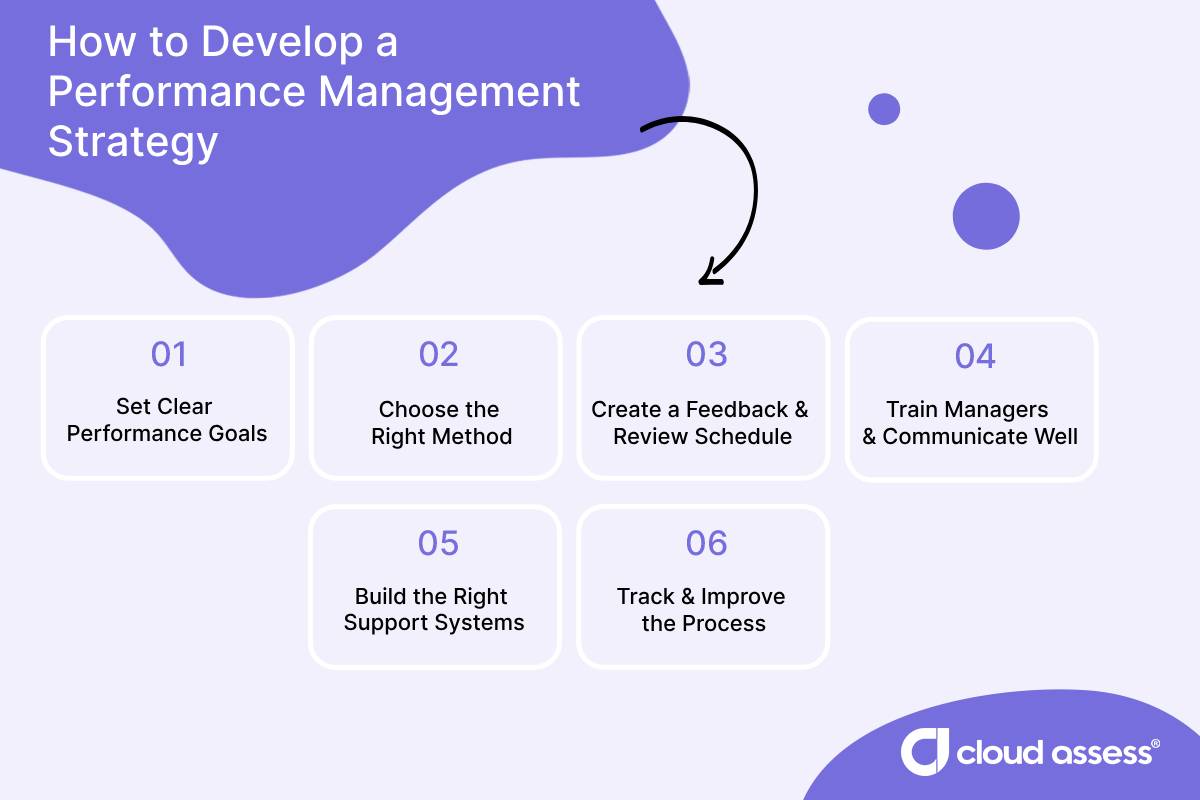
1. Define Clear Performance Objectives
Start by setting clear goals that show what success looks like for individuals, teams, and the business. These goals help people focus on the right work and stay aligned with wider business priorities.
Good performance goals are specific, easy to understand, and tied to real outcomes. For example:
- An individual goal might be: “Respond to all customer support emails within 24 hours.”
- A team goal could be: “Launch the new feature by the end of the quarter.”
- A business-level goal might be: “Increase customer retention by 10% this year.”
2. Choose a Framework or Method
Once you’ve set clear goals, choose a framework to help track and manage progress. Methods like OKRs, KPIs, or MBO give teams a way to organise goals, monitor results, and stay on track. Choose the one that fits how your team works. For example, some teams prefer to measure specific targets. Others need flexible, short-term goals that shift with priorities. The right technique should match the pace, structure, and needs of the team.
You don’t need to stick to one method. Some teams combine frameworks to suit different roles or levels. The key is to keep it simple, consistent, and easy to review.
3. Establish a Feedback and Review Schedule
Decide how often your team will give and receive feedback, and set a clear schedule that everyone can follow. Many teams hold weekly or fortnightly check-ins to stay aligned and run more structured reviews every quarter or twice a year.
Keep the schedule simple and realistic. Make sure feedback conversations happen often enough to support progress, but not so often that they become a burden. Document the plan so managers and employees know what to expect.
4. Train Managers and Communicate Clearly
Managers have a big part to play in making a performance management program work effectively. They lead check-ins, give feedback, and support employee growth. However, not all managers have the skills, experience, or confidence to do it well. Train managers to set goals, have performance conversations, and give feedback that helps people grow.
Make sure both managers and employees understand why the process matters, not just how it works. Everyone should know what’s expected and where to get help.
5. Build Operational Support Around the Strategy
A strong performance management strategy only works if teams can use it. That means building the right operational support into how people work every day. Without structure and support, even the best plans will fall flat.
Start by setting up shared resources like goal-setting templates, check-in guides, and review forms. Make sure your processes are documented and easy to follow. Choose tools that help managers and employees stay on top of updates, track progress, and give feedback without friction. These systems should work together, not sit in separate silos.
Think beyond HR. Your process should be usable by team leads, department heads, and employees across roles. The more accessible and integrated the system is, the more consistently people will use it.
6. Monitor and Improve the Process
Performance management isn’t a set-and-forget system. Once your strategy is live, you need to monitor how it’s working and where it needs adjustment. Track usage across teams: Are check-ins happening regularly? Are goals being updated? Do employees feel like feedback is fair and helpful? Use engagement data, feedback surveys, and manager input to see what’s landing and what needs refining.
Build in moments to reflect. Review the system quarterly or after each review cycle. Make small, targeted improvements rather than overhauling the whole process. Keep asking what’s useful, what’s unclear, and what’s missing. A strong strategy grows with the people using it.
Tools and Technology That Support Performance Management
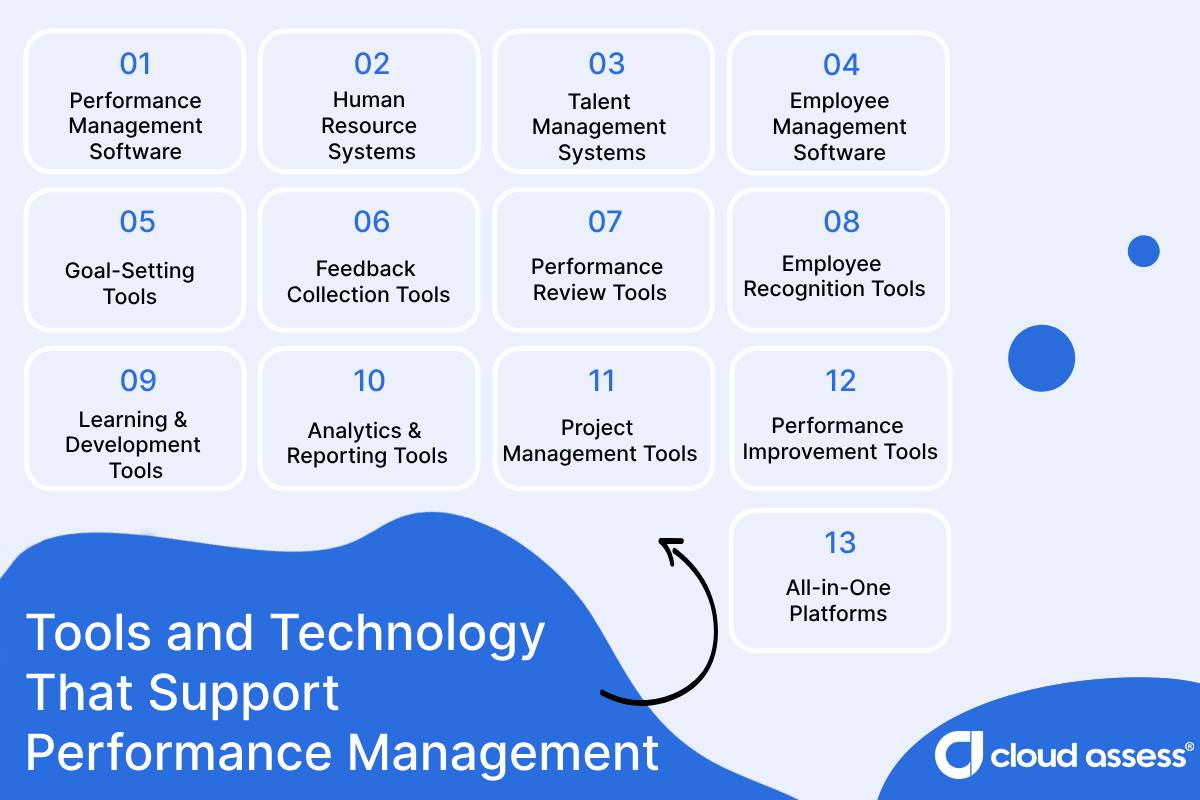
- Performance management software (PMS): Provides an integrated platform. This enables easy management of the entire performance lifecycle. The right performance management systems centralise functions such as goal setting, tracking, performance reviews, and reporting. To ensure consistency, improve visibility for managers. Make sure to also align individual performance with broader business objectives.
- Human resource systems: Store employee records, role history, and salary data. Many systems include modules or integrations for performance management tasks. Activities such as review scheduling, goal tracking, and feedback logging.
- Talent management systems: Manage the full employee journey from hiring to promotion. These platforms often include features for goal setting, and succession planning. They also allow tracking of development activities, and identifying top performers.
- Employee management software: Handle time tracking, shift scheduling, leave, and other operational needs. Some include performance-related functions. From basic review forms, to attendance alerts, and workflow triggers for feedback.
- Goal-setting tools: Allow employees and managers to create, update, and align goals. They often include goal libraries, alignment views, progress dashboards, reminders, and deadline tracking.
- Feedback collection tools: Support continuous input between employees, peers, and managers. Features often include feedback templates, comment threads, and anonymous options. And, scheduled feedback requests, and links to goals or competencies.
- Performance review tools: Guide formal review processes. These performance evaluation tools typically include templates for self-assessments and manager reviews. They also include peer input, rating scales, and built-in summaries. These summaries help track progress over time.
- Employee recognition tools: Let users give public or private praise. They can do this through badges, shout-outs, or written messages. Some systems include point-based rewards. They may also integrate with chat platforms and offer visibility across teams or departments.
- Learning and development tools: Offer course libraries, certification paths, and personalised learning plans. These tools also track course completion. They track skill development. They can also connect learning activities with employee performance goals.
- Analytics and reporting tools: Aggregate data from reviews, goals, and feedback. They offer dashboards and trend visualisations. They also provide filterable reports and comparison tools. These features help managers and HR track performance over time.
- Project management tools: It’s not a performance management tool. But it gives helpful context during reviews and check-ins. These tools show who’s working on what, how tasks move forward, and whether teams meet deadlines. They help managers understand contributions and track delivery without guessing.
- Performance improvement tools: Support formal and informal plans to help employees improve. These tools include editable templates for performance improvement plans. They also include templates for coaching plans and meeting logs. They also offer features for tracking milestones, documenting feedback, and scheduling follow-ups. They’re often used when employees need extra support to meet expectations or build specific skills.
- All-in-one platforms: Combine HR, learning, compliance, and performance functions in a single system. These tools often cover goal setting, feedback, reviews, skills tracking, learning, and reporting. This helps organisations streamline their tech stack. One good example is Cloud Assess. It isn’t a performance management tool. But it gives helpful visibility into employee skills, training progress, and compliance. It shows what employees are learning, which competencies they have achieved, and where there are gaps. This helps managers track capability and readiness alongside other HR tools.
Challenges in Implementing a Performance Management System
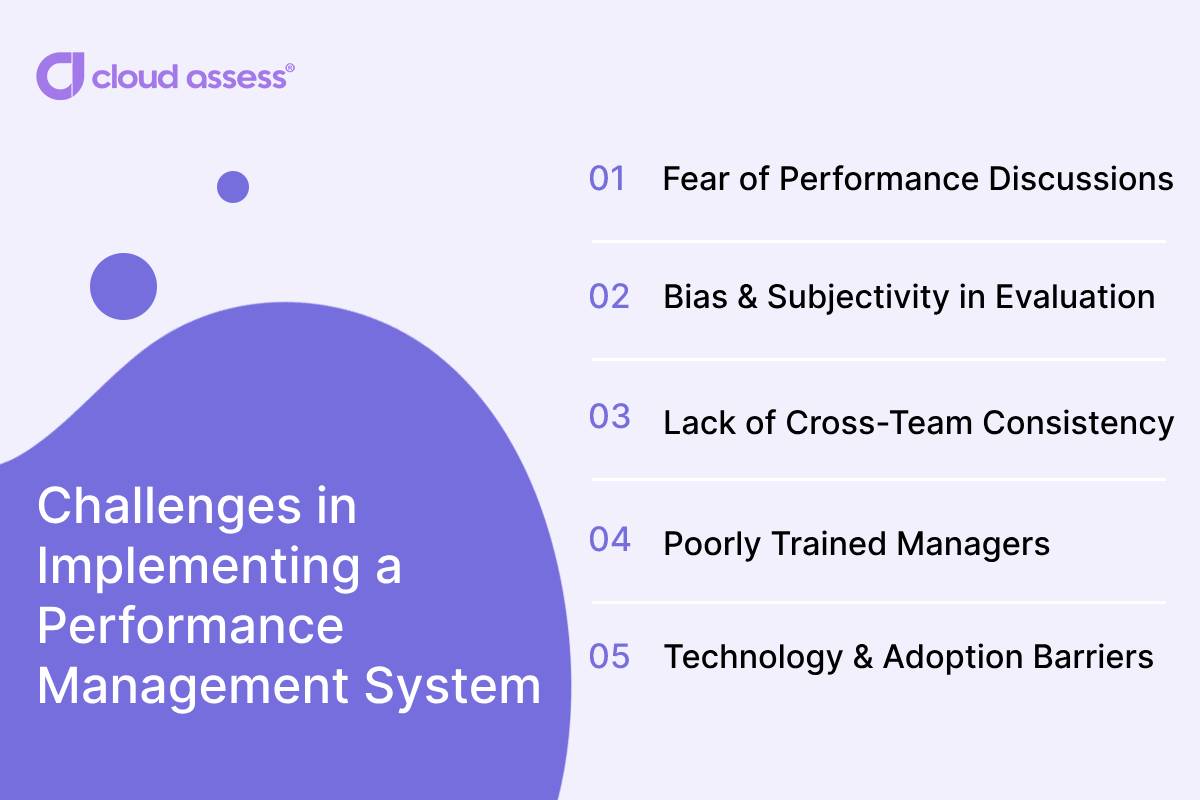
Resistance to Performance Conversations
Some employees and managers resist performance management because it feels uncomfortable. For some, it brings up fear of criticism or judgement. Others may not see the value in regular feedback, especially if past experiences with reviews have been negative or unclear.
Solution: Focus on shifting the mindset, not just introducing new tools. Reframe performance management as a way to support growth and build clarity. Start with simple check-ins, use feedback to highlight strengths as well as areas to improve. You should also share real examples where the process led to recognition or progress. Build trust before enforcing structure.
Bias and Subjectivity in Evaluation
Without clear criteria, performance reviews can feel subjective. They may reflect personal opinions rather than actual results. Bias can show up in many ways. It may appear through favouritism or unclear expectations. It can also appear when reviews are based on personality rather than performance.
Solution: Use structured review templates. Make sure they have consistent criteria linked to goals, role expectations, or company values. Encourage managers to base feedback on observed behaviour and documented outcomes. Where possible, include peer feedback or self-assessments to balance perspectives.
Lack of Consistency Across Teams
When some teams use performance management actively and others don’t, the process starts to feel optional or unfair. Employees may compare experiences across departments and question the value of the system.
Solution: Set clear expectations for how often managers should hold check-ins and update goals. Use shared templates, tools, or progress dashboards to keep teams aligned. Check engagement data or participation rates to spot where consistency might be slipping and follow up with support.
Poorly Trained Managers
Many managers lead performance conversations without the right training. As a result, they may avoid feedback, keep conversations surface-level, or focus only on what’s easy to measure.
Solution: Give managers simple, practical training that builds their confidence. Focus on real scenarios, like how to give constructive feedback, handle pushback, or set meaningful goals. Provide tools they can use, such as check-in guides, feedback templates, and question prompts.
Technology and Adoption Barriers
When performance tools don’t fit how teams work, adoption drops. For example, if check-ins live in one platform, goals in another, and feedback in a third, the process becomes fragmented and hard to follow.
Solution: Choose tools that align with your team’s workflow. Look for platforms that integrate goal tracking, feedback, and reviews in one place. Or platforms that connect easily with the systems you already use. Involve managers and employees in the selection process to make sure the tool is practical, not just feature-rich.
Transform Your Team with Smarter Performance Management
Strong performance doesn’t happen by accident. It takes structure, clarity, and a system that supports both the business and the people in it. That system needs to be consistent enough to build trust, but flexible enough to adapt as goals shift.
Whether you’re leading a team or shaping a company-wide approach, how you manage performance has a lasting impact. It influences how people show up, how they grow, and how they see their future in the business. Build your process with intention, and use the right tools and technology to keep it consistent, clear, and easy to manage. When done well, performance management becomes a meaningful part of everyday work.