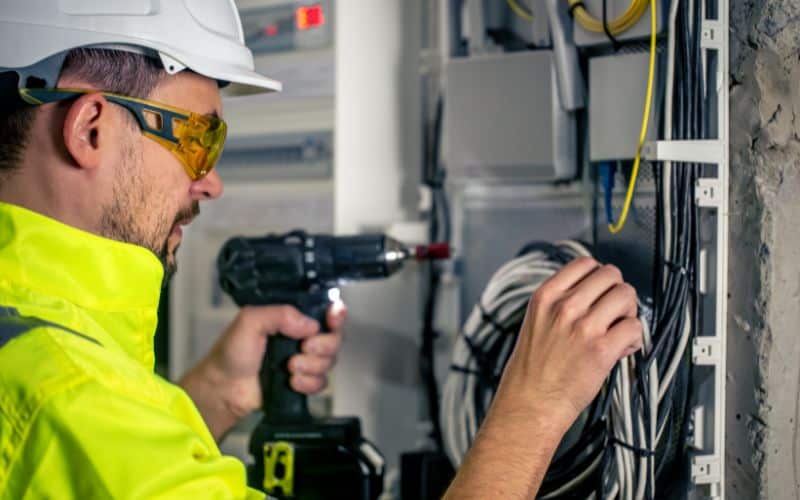
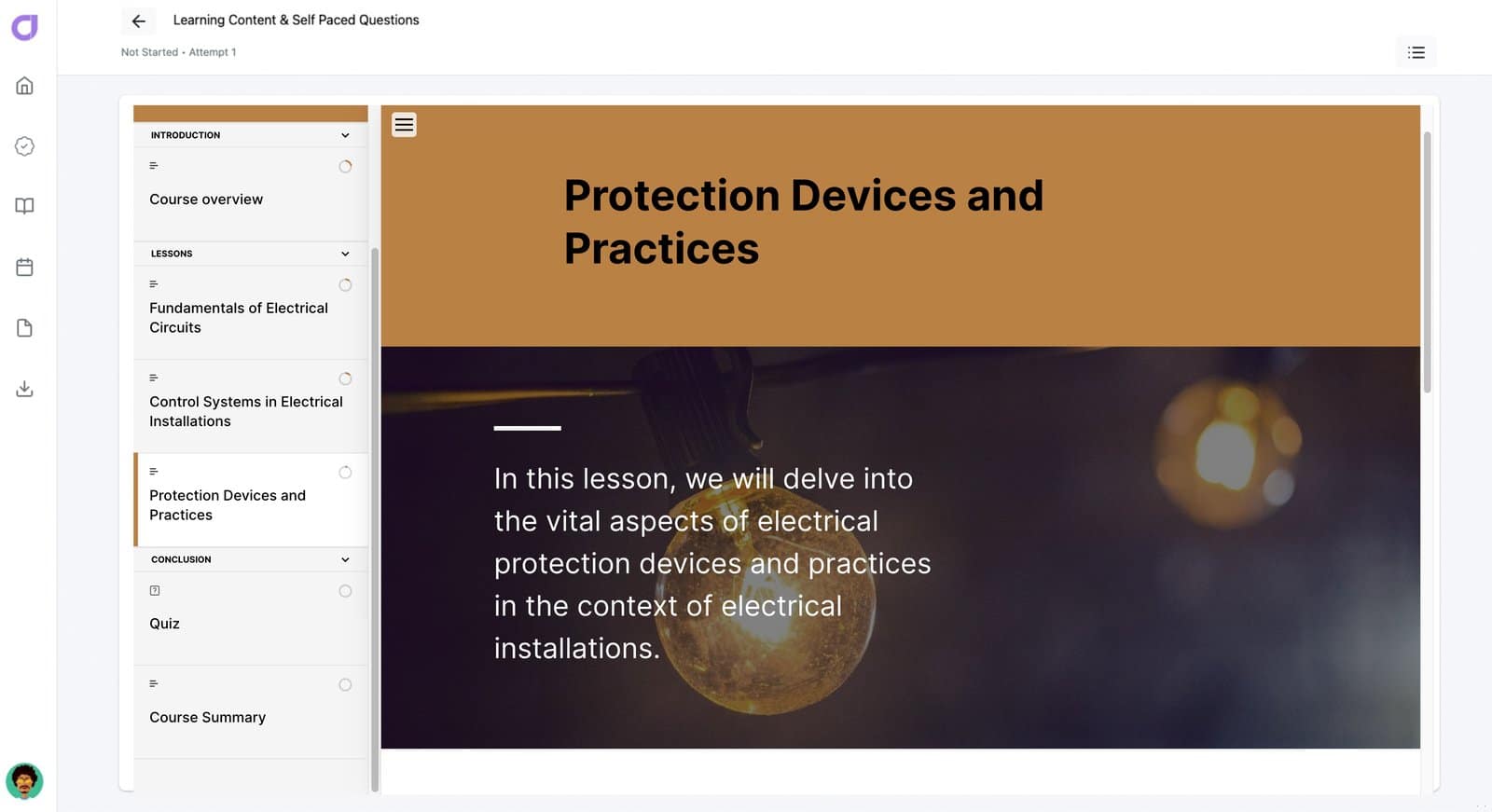
This course provides a comprehensive understanding of how to arrange, control, and protect electrical circuits in various installations. It begins with the basics of electrical circuits, covering essential components such as power sources, conductors, and loads, along with key terminologies like voltage, current, and resistance. You’ll learn to analyse circuits using fundamental principles like Kirchhoff’s Laws, and discover different types of circuits, including series and parallel configurations.
As you progress, the course delves into control systems, examining various control devices such as switches, relays, and contactors. You will also learn to create wiring diagrams and understand control logic, which are crucial for designing and troubleshooting electrical control systems. Safety measures in control systems, including isolation and emergency stops, are also covered to ensure the safe operation of electrical installations.
The final section focuses on protection devices and practices. You will explore the principles of electrical protection, learn about different protective devices like fuses, circuit breakers, and residual current devices, and understand their functions. The course also covers the correct installation and maintenance of these devices to ensure the safety and reliability of electrical systems.