Workplaces across Australia are changing, and so are the expectations placed on those who run them. Employees are experiencing longer hours, blurred boundaries, and mounting pressure. Strained team dynamics are adding to the load. But these are not just morale problems. Under Australian Work Health and Safety (WHS) law, they are a legal responsibility to manage.
Psychosocial hazards are explicitly regulated across Australian jurisdictions. Regulators are actively enforcing compliance and holding organisations accountable. Whether leading a small business or a large enterprise, the question is no longer if these hazards need to be addressed. It is whether enough is being done, right now.
In this blog, we’ll cover:
- What psychosocial hazards are and why they matter
- The most common examples found in Australian workplaces
- The impact they have on employees and organisations
- What Australian regulations require of employers
- How to identify, assess, and manage psychosocial risks
- How Cloud Assess supports psychosocial training
What Are Psychosocial Hazards in the Workplace?
Psychosocial hazards are aspects of work that have the potential to cause psychological or physical harm. The term combines two dimensions. The psychological dimension refers to how work affects a person’s mental health and emotional well-being. The social dimension refers to how work affects a person’s relationships, interactions, and sense of connection and belonging at work. They reflect the full spectrum of harm that poor work design and unhealthy workplace environments can cause.
Unlike manual handling hazards, psychosocial hazards are not always visible or easy to point to. They emerge from lived experience at work. Things like feeling constantly overwhelmed, having no say over how tasks are done, or working in a culture where bullying goes unchecked.
It is also worth noting that psychosocial hazards are not simply about individual stress responses. A worker experiencing burnout is not the hazard. The conditions that created that burnout are.
Examples of Most Common Psychosocial Hazards at Work

High Job Demands
High job demands occur when the volume, pace, or complexity of work consistently exceeds what a person can reasonably manage. This includes excessive workloads, tight deadlines, and the expectation to be constantly available. Over time, unmanaged job demands are a leading contributor to burnout and psychological injury.
Low Job Control
Low job control refers to having little say over how, when, or at what pace work is completed. This can include rigid procedures, micromanagement, and limited opportunity for input or decision-making. Workers with low control over their work tend to report higher levels of stress and disengagement.
Lack of Role Clarity
Role clarity refers to how well workers understand their responsibilities and expectations. It also speaks to how their work fits into the broader organisation. When this is absent, workers experience uncertainty and stress. It also increases the likelihood of conflict and error.
Poor Organisational Change Management
Poorly managed change creates uncertainty and erodes trust. Examples include restructures, redundancies, and system overhauls. When workers are not consulted or kept informed, anxiety and disengagement follow. Change is inevitable in most organisations. How it is managed is what determines the risk.
Trauma Exposure

Some roles require regular exposure to traumatic events, graphic content, or distressing situations. This includes emergency services, healthcare, social work, and customer-facing roles dealing with aggression. Repeated trauma exposure significantly increases the risk of post-traumatic stress and related conditions.
Remote and Isolated Work
Workers who are geographically isolated or working remotely face unique psychosocial risks. These include reduced access to support, limited social connection, and blurred boundaries between work and home life. Distance does not reduce an employer’s duty of care.
Bullying and Harassment
Workplace harassment and bullying is repeated, unreasonable behaviour directed at a worker or group of workers that creates a risk to health and safety. It can be overt, such as verbal abuse, or subtle, such as deliberate exclusion or undermining. Both forms cause serious psychological harm.
Discrimination and Harassment
This occurs when a worker is treated unfairly or subjected to offensive behaviour because of a protected attribute. This includes race, disability, sexual orientation, gender identity, religion, and age, among others. These behaviours cause serious psychological harm and expose organisations to significant legal liability.
Sexual Harassment and Gendered Violence
Sexual harassment involves unwelcome conduct of a sexual nature. This includes behaviour that makes a person feel offended, humiliated, or intimidated. It disproportionately affects women and is recognised as both a psychosocial hazard and a form of gendered violence. Employers have a positive duty to prevent it.
Poor Workplace Support
Poor workplace support refers to a lack of practical or emotional support from managers and colleagues. This can look like a manager who is unavailable or dismissive. It can also mean no clear process for raising concerns, or a team culture where asking for help is discouraged. Workers who feel unsupported are less equipped to handle pressure. They are more vulnerable to psychological harm.
What Impact Do Psychosocial Hazards Have on Employees and Organisations?
The Impact on Employees
Psychological Injury
Psychological injury is one of the most serious consequences of unmanaged psychosocial hazards. It includes conditions such as anxiety, depression, post-traumatic stress disorder, and burnout. These are not temporary stress responses. They are diagnosable conditions that can permanently alter a person’s ability to work and function.
Physical Health Consequences

The impact of psychosocial hazards is not limited to mental health issues. Chronic exposure to workplace stress is associated with cardiovascular disease, musculoskeletal disorders, immune suppression, and sleep disruption. The mind and body are not separate systems, and sustained psychological pressure takes a measurable physical toll.
The Compounding Effect of Multiple Hazards
Psychosocial hazards rarely occur in isolation. A worker experiencing high job demands may also have low control, poor support, and unclear role expectations. Each hazard compounds the others. The cumulative risk is significantly greater than any single hazard in isolation, and recovery becomes more complex the longer exposure continues.
Social and Relational Consequences
Psychosocial hazards do not only affect individuals in isolation. Hazards such as role conflict, poor management, and bullying erode trust between colleagues. This causes people to withdraw, become guarded, or fall into adversarial dynamics. The social fabric of a team deteriorates over time. Beyond the workplace, the effects carry over into personal life. Strained relationships, reduced confidence, and social withdrawal are common among those experiencing chronic occupational stress. A person’s sense of themselves as capable, connected, and valued can be significantly undermined, both professionally and personally.
The Impact on Organisations
WorkCover Claims and Legal Liability
Psychological injury claims are among the most expensive to resolve. The median compensation payout for a psychological injury claim is $67,400, compared to $16,300 for other serious injury types. Beyond direct claim costs, organisations face regulatory investigations and enforceable undertakings. They also face financial penalties where psychosocial risks have not been adequately managed.
Absenteeism and Turnover
Unmanaged psychosocial hazards drive sustained patterns of unplanned absence and staff attrition. Psychological conditions cost Australian workplaces approximately $17 billion annually, mostly through lost productivity. High turnover compounds this further. It adds recruitment, onboarding, and knowledge loss costs on top of an already strained workforce. Employee retention becomes increasingly difficult when the conditions driving people out remain unaddressed.
Lost Productivity and Engagement

The productivity impact extends beyond absence. Presenteeism is often harder to see and more expensive to absorb. This refers to workers who are physically present but operating well below capacity. Disengaged workers produce less and make more errors. They have a measurable effect on team performance and customer outcomes.
Reputational Damage
Organisations that mishandle psychosocial risks face consequences beyond the courtroom. Regulatory findings, WorkCover claims, and tribunal decisions are increasingly public. In a tight labour market, a reputation for poor psychological safety directly undermines an organisation’s ability to attract and retain skilled workers.
Psychosocial Hazard Regulations in Australia: How Each State and Territory Regulates
New South Wales
Psychosocial hazards in NSW are regulated by SafeWork NSW, under the:
- Work Health and Safety Act 2011 (NSW)
- Work Health and Safety Regulation 2025 (NSW)
The regulation explicitly requires employers to apply the hierarchy of controls to psychosocial risks, starting with higher-order controls such as work redesign before relying on training or counselling.
Queensland
Psychosocial hazards in Queensland are regulated by Workplace Health and Safety Queensland, under the:
- Work Health and Safety Act 2011 (Qld)
- Work Health and Safety Regulation 2011 (Qld), as amended in 2022
Queensland’s framework is among the most prescriptive in the country. The Code of Practice is enforceable. The psychosocial checks are integrated into routine inspection and audit processes.
Western Australia
Psychosocial hazards in WA are regulated by WorkSafe WA, under the:
- Work Health and Safety Act 2020 (WA)
- Work Health and Safety (General) Regulations 2022 (WA)
WA adopted harmonised WHS legislation in 2022. This makes psychosocial hazards an explicit part of its regulatory framework. The accompanying Code of Practice: Psychosocial Hazards in the Workplace provides sector-specific guidance.
South Australia
Psychosocial hazards in SA are regulated by SafeWork SA, under the:
- Work Health and Safety Act 2012 (SA)
- Work Health and Safety (Psychosocial Risks) Amendment Regulations 2023 (SA)
The regulations came into effect on 25 December 2023. SA applies the national model Code of Practice. Employers are expected to demonstrate an active risk management system, not just a policy on paper.
Tasmania
Psychosocial hazards in Tasmania are regulated by WorkSafe Tasmania, under the:
- Work Health and Safety Act 2012 (Tas)
- Work Health and Safety Regulations 2022 (Tas)
Tasmania follows the model WHS amendments closely and applies the national Code of Practice. WorkSafe Tasmania promotes practical checklists and self-assessment tools to support compliance.
Northern Territory
Psychosocial hazards in the NT are regulated by NT WorkSafe, under the:
- Work Health and Safety (National Uniform Legislation) Act 2011 (NT)
- Work Health and Safety (National Uniform Legislation) Regulations 2011 (NT), as amended in 2023
The NT explicitly defines both “psychosocial hazard” and “psychosocial risk” in its Regulations. Employers are expected to integrate psychosocial risk management into their broader WHS systems, not treat it as a separate HR function.
Australian Capital Territory
Psychosocial hazards in the ACT are regulated by WorkSafe ACT, under the:
- Work Health and Safety Act 2011 (ACT)
- Work Health and Safety Regulation 2011 (ACT)
The ACT approved its own Code of Practice in 2023. WorkSafe ACT has embedded psychosocial hazard checks into routine WHS inspections, looking beyond policy documents to evidence of implementation.
Victoria
Psychosocial hazards in Victoria are regulated by WorkSafe Victoria, under the:
- Occupational Health and Safety Act 2004 (Vic)
- Occupational Health and Safety (Psychological Health) Regulations 2025 (Vic)
The regulations came into force on 1 December 2025. Victoria is the only jurisdiction that has not adopted the model WHS framework. But its obligations are substantively equivalent. Training and information cannot be the primary control measure unless no other controls are reasonably practicable.
How to Identify and Manage Psychosocial Hazards in the Workplace

1. Establish Clear Policies on Psychosocial Hazards
Start by putting the right foundations in place. This means documented policies that clearly state the organisation’s commitment to psychosocial safety. Define what constitutes unacceptable behaviour. Outline reporting processes.
2. Identify Your Psychosocial Hazards
Identification should be systematic, not reactive. Use a combination of methods. These could include worker surveys, 360 performance reviews, one-on-one conversations, and focus groups. Analyse incident reports, grievance records, absenteeism data, and exit interview findings. Consult directly with workers and health and safety representatives. Workers closest to the work are often best placed to identify where the risks are. Document what you find.
3. Assess the Risks
Assess the risk each one poses. Consider how frequently workers are exposed, for how long, and how severe the potential harm could be. Also consider whether multiple hazards are present simultaneously. Document and review risk assessments regularly, instead of treating them as once-off exercises.
4. Prioritise Which Risks to Address First
Not all risks can be addressed at once. Prioritise based on the severity of potential harm, frequency of exposure, and the number of workers affected. Risks involving violence, harassment, trauma exposure, or significant workload issues generally warrant immediate attention. Document your prioritisation rationale. Regulators across multiple jurisdictions expect evidence of a considered approach.
5. Provide Psychosocial Training
Training should be targeted and practical. Equip managers and supervisors to recognise early warning signs. Encourage them to have difficult conversations, and respond appropriately to disclosures. All employees should also receive training such as:
- Burnout training
- Bullying and harassment training
- Change management training
This will ensure understanding and accountability is not limited to those in leadership roles. It’s also important to provide workers with awareness of their rights and how to report concerns. Conduct refresher training regularly, don’t just deliver it once at induction and forget.
6. Implement Organisational-Level Controls

Apply the hierarchy of controls, starting with the most effective measures. This includes redesigning job roles to balance workload and introducing flexible work arrangements. It also involves clarifying role expectations, improving employee work rotas, establishing complaint escalation pathways, and ensuring adequate staffing levels. Training alone is not sufficient. Most jurisdictions require evidence of higher-order controls.
7. Implement Strong Change Management Practices
Organisational change is a significant psychosocial risk when managed poorly. Follow and implement change management best practices. This includes communicating the reasons for change clearly and honestly. Provide adequate notice, transition support, and channels for workers to raise concerns. Document the process.
8. Regularly Communicate With Workers
Consultation is a legal requirement across all Australian jurisdictions. Create regular, accessible channels for workers to raise psychosocial concerns. This includes anonymous options where appropriate. Share what has been identified, what actions are being taken, and what outcomes have been achieved. Closing the feedback loop builds trust and demonstrates genuine commitment.
9. Monitor and Review
Psychosocial risk management is an ongoing obligation. Set regular review cycles and use both quantitative and qualitative feedback from workers. Review your controls after any significant incident, organisational change, or worker complaint. Update your risk register accordingly. Regulators expect evidence of an active, living system, not a static document.
How Cloud Assess Supports Psychosocial Training
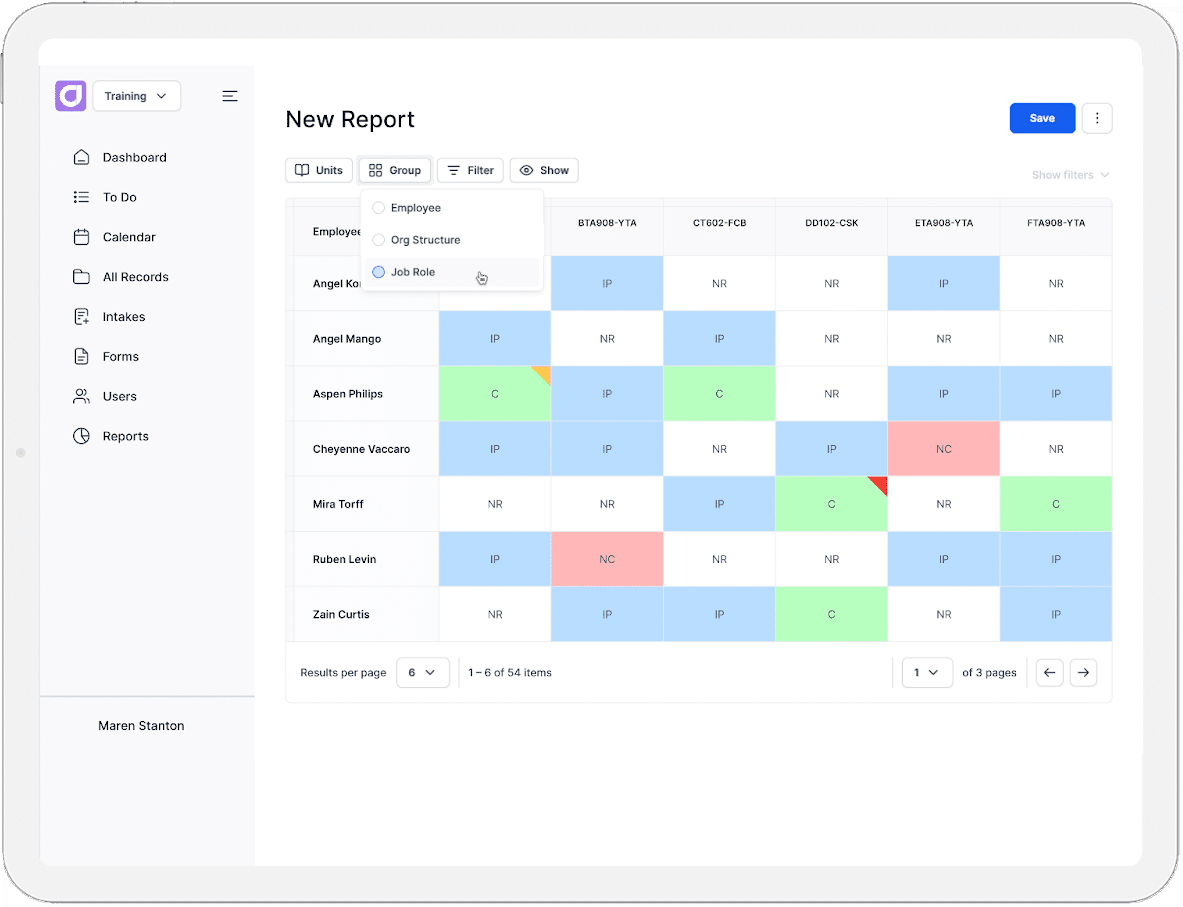
Delivering and tracking psychosocial training across a workforce is where many organisations struggle. Knowing what training is required, who has completed it, and when it needs to be renewed is an ongoing compliance obligation.
Cloud Assess is a training and assessment platform built for regulated industries and compliance-heavy environments. For organisations managing psychosocial training obligations, it supports:
- Building and delivering psychosocial training content tailored to your workforce
- Tracking completion, renewals, and expiries across teams and sites
- Assessing competency, not just course completion
- Maintaining audit-ready records to demonstrate compliance
- Automating enrolments, reminders, and reporting workflows
- Collecting feedback from employees at regular intervals
- Compiling feedback data into visual dashboards, making it easy to recognise gaps
For organisations that want to move quickly, Cloud Assess also provides a free course library with pre-built training content that teams can access straight away.
Training is one part of a broader psychosocial risk management system. Cloud Assess helps ensure that part is documented, consistent, and scalable.