As a business, planning for the future takes many different forms. You plan for the financial year ahead and put together 5-year plans for meeting your goals. However, one area that is often overlooked is succession planning.
There can be a variety of reasons for people leaving your business. Some are easier to predict. For example, you know in advance when employees are reaching retirement age. However, some circumstances cannot be foreseen. Employees may find other roles and leave with little warning, or need to take extended absences for parental or familial leave.
As a business, you need to have a plan to manage both predictable and unpredictable departures from your company. Succession planning is an essential part of the process.
What Is Succession Planning?
Succession planning is a talent management process that ensures leadership development in your existing workforce. It involves analysing skills within your business and identifying individuals with the potential to take over important roles. From there, the succession planning process sees you providing your teams with the training they need to develop the right skills.
Putting an effective succession planning strategy in place ensures that your business always has potential candidates to fill crucial positions. It also helps businesses transfer critical knowledge to the right people at the right time. This type of strategic workforce planning can see you managing, minimising and mitigating risk within your operations.

How Does Succession Planning Work?
What makes succession planning an effective strategy for businesses is the ability to plan ahead. While companies may not be able to predict every scenario where people leave their business, with the right tools at their disposal, they can ensure that high-performance individuals with great potential are ready to step into critical roles when the time comes.
There are two essential areas that make succession planning work effectively: recognising potential and training your teams.
One tool that can easily help businesses recognise the potential in their existing workforce is the 9-box talent grid. This is a matrix where employees are evaluated according to their performance and potential for advancement. Those who are identified as high performance and high potential are often referred to in the grid as ‘future leaders’ and are ideal candidates for succession.
The next step in the succession planning process is identifying skill gaps for relevant management or leadership roles, and ensuring that you develop those skills through training. This will ensure minimum downtime and maximum efficiency if these individuals need to take on the roles with short notice.
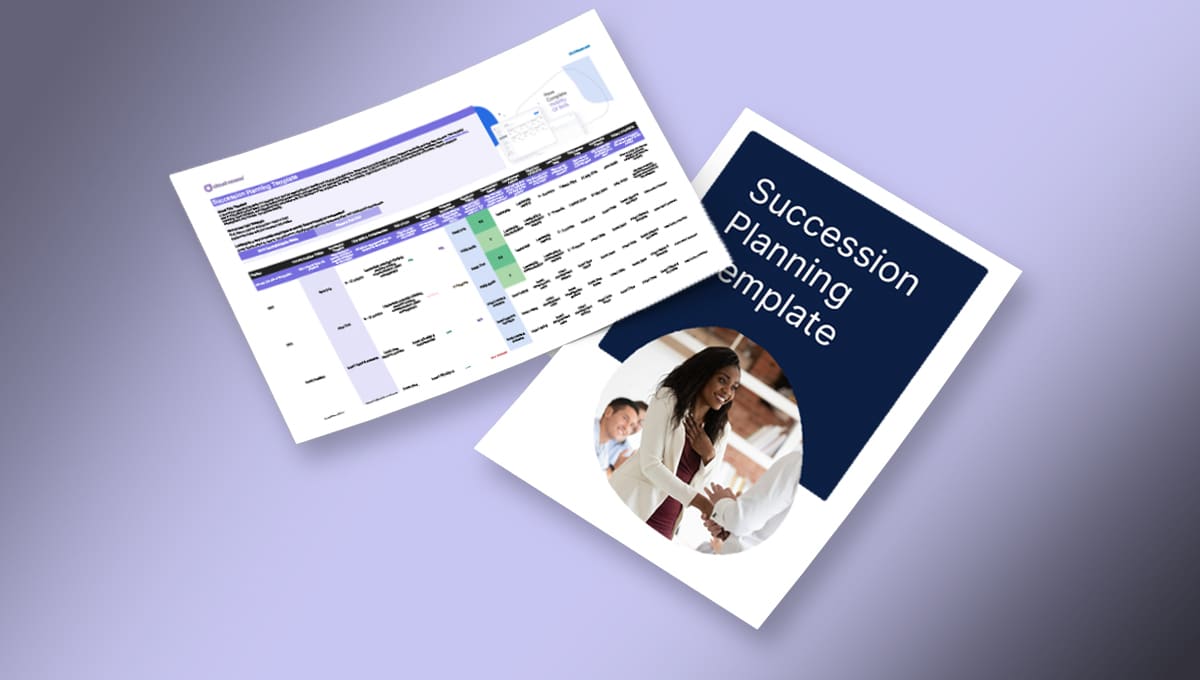
Downloadable Example Of A Succession Planning Template
The best approach to succession planning is a strategic one. And we’ve got just the tool to help you strategically plan succession throughout your business. Our downloadable template helps you track your succession planning alongside relevant training, ensuring that your teams are well-prepared to take on business-critical roles. This customisable template provides insight into existing positions, risk of loss, candidates for succession, and their readiness timeframe. All of this makes the template an invaluable tool in your succession planning process.
Download the free template today.
Employee Retention
Employees who feel that their efforts aren’t being recognised, or that there is no space to grow within a business, will look for other opportunities. No one wants to feel like they’re stagnating, or that they have reached the limit of their potential. With effective succession planning and communication, you can show that you recognise employees’ potential, and reduce the risk of future leaders leaving.
Risk Management
We’ve already looked at the risks involved in not implementing succession planning. By putting a strategy in place, you can significantly reduce, and even mitigate those risks.
- Invest in expertise through continuous assessment and training. This ensures structured and regular development, rather than urgently training an employee when a role needs to be filled.
- Improve transparency and visibility into existing processes and tools. This way you can ensure they’re incorporated into employee development plans.
- Train high performers early on to help existing leaders delegate responsibilities. This will reduce the risk of burnout and improve overall employee satisfaction. Existing leaders will experience less stress and team members will feel more valued and trusted.

8 Steps To An Effective Succession Plan
Every company will differ in their approach to succession planning. This will be dependent on your organisational structure, your company’s needs and goals, and multiple other factors. However, there are 8 steps that every business can take to create an effective succession plan.
1. Identifying Key Positions
The first step is recognising the key roles within your business. These will often be leadership positions. However, there may be other critical roles that would leave a significant gap in your operations if they were vacated. These may require specific skill sets or specialised knowledge or consist of roles that only one person within your business can fill.
For example, a receptionist may not be a leader or require specialist knowledge. However, they might be the only person in your business who understands how sign-ins for the property work and how to transfer calls between departments. If this were the case, your receptionist resigning would significantly strain your business until a replacement could be found and trained.
2. Recognise Needs And Threats
It’s important to recognise which of the roles you identified are at risk.
Gauging employee satisfaction will help you to identify employees who may be considering leaving your company. It’s also essential to factor in employees who may be approaching retirement and those who may need to take parental or familial leave in the near future. These are roles that will require succession planning most urgently.
In the case of parental or family leave, the roles may only need to be filled temporarily. However, you’ll want to ensure that team members are trained to take on some of the role’s responsibilities, rather than leaving them unaddressed.
3. Create Job Profiles
Job profiles should include listing necessary workplace skills, responsibilities, processes, tools and technologies that the role requires, and more. Putting together these profiles will prepare you for the next step in the succeeding planning process – assessing existing employees, recognising skill gaps, and identifying potential candidates for succession.
4. Assessing Potential Candidates
Different companies will have different methods for talent assessment and employee evaluation. Some businesses might use a 9-box grid template for talent management, while others might opt for regular one-on-ones and quarterly check-ins. You might even prefer to adopt a combination of methods. However your business goes about evaluating performance, it’s important to incorporate your findings into your succession planning to identify potential candidates for business critical roles.
5. Developing Talent
Once you’ve pinpointed who your high-potential employees are, you can identify any skill gaps that can be addressed. Compare existing competencies alongside your job profiles to find areas where training will be most effective.
A competency matrix template or an online skills matrix can be a great asset in quickly and easily identifying potential for skills development. You may even want to put together a training program up of self-paced and free leadership soft skills courses that your employees can enrol in. This will put career development in their own hands, helping you recognise team members who are able to take on leadership roles, and are willing to do so.
6. Creating A Succession Plan
You may think that this step is only necessary once a person in a critical role leaves your business. However, creating a succession plan for each of the essential roles that you identified should happen as early as possible.
There are many areas to consider when putting together a succession plan:
- How much time would you need to fill the role?
- Are there potential candidates you can start training?
- Would need to hire someone to take over the position?
- What would training for the role involve?
- Do you have documentation and tutorials to ensure a smooth transition?
7. Implementing The Plan
Once an important position does become available, it’s time to execute your strategy. This is where the efforts that you’ve put into succession planning thus far will pay off in dividends.
8. Document The Transition
Many companies consider implementation the final step of succession planning. However, succession planning isn’t a once-off process. It’s important to document the transition process and determining the effectiveness of your succession plans. By reviewing the process, getting feedback from all involved, and measuring the efficiency of the transition, you will be able to adjust your succession planning process and ensure that it is as effective as possible.
Best Practices For Measuring The Success Of Your Succession Plan
Regular Review and Updates
Succession planning is an ongoing challenge. As soon as one role has been filled, another could just as easily open up. Often the person filling a role will leave a gap within your business that also needs to be addressed. Regularly reviewing your succession strategy and aiming for continuous improvement ensures your business is ready for effective and efficient change management.
Involving Leadership And Stakeholders
Succession planning isn’t a one-man job. It should involve collaborative planning with all stakeholders involved in the process — from HR to owners, to team managers and the employees being primed to take over roles. Leadership buy-in will be especially important since leaders will be fundamental to the training process.
Look Beyond Existing Leaders
When considering succession planning for essential positions like a CEO, CFO or CIO, don’t only look at those already in leadership roles. This will substantially narrow your scope and could see you ignoring potential high-performing candidates who may not have managerial skills but would be well-suited to high-level positions.
Don’t Overlook Either Internal Or External Potential
Succession planning should involve looking both inside and outside of your business. Consider existing employees and areas where training could see them developing into key positions. However, it’s just as important to recognise when skill gaps within your business cannot be addressed through training alone, or when there isn’t enough time to train up a successor.
Focus On Key Metrics
Succession planning strategies are often data-driven. Here are a few key metrics to consider when putting a succession planning framework in place:
- Turnover and Retention Rate: Percentage of employees leaving your company, and percentage staying, within a specified period.
- Planned Positions Filled: Number of vacant positions that you need to fill.
- Roles Filled Internally: Number of job positions filled by promoting or transferring existing employees within the organisation.
- Cost per Hire: Total expenses incurred to hire a new employee.
- Time to Hire: Number of days from job posting to candidate acceptance.
- Cost of Training: Total expenses incurred in training existing employees.
- Effectiveness of Training: A rating of how well employees put learnings into practice.
- Engagement: Level of emotional commitment and involvement employees have towards their work and your company.
- Talent Pipeline: Ongoing pool of potential candidates for future roles.

What Common Mistakes Do Businesses Make When Succession Planning?
Starting Too Late
It often takes a key leader leaving a company for organisations to realise that they should be succession planning. However, by that point, it’s too late to put an effective plan in place. The earlier you start putting together your succession plans the better. This can see employees who hold key roles actively participating in training and succession management.
Underestimating How Much Time Training Takes
Training takes time. Skill development, even more so. It takes practice to ensure that skills are engrained into the way your employees work. This way you can ensure they’re not just rushing through training courses without absorbing information.
Even the succession planning process itself takes a significant amount of time. It’s not as simple as spending an afternoon filling in a succession planning template. It will require input from various stakeholders and a significant amount of back-and-forth. You’ll need to factor in regular employee evaluations and measure training and development progress.
There may be great tools available to make the process easier, however, effective planning always takes time. Far too many businesses underestimate the time commitment they need to make to both succession planning and training.
Not Having A Contingency Plan
It’s all well and good to choose one individual who is a great candidate for a particular role. However, what if that candidate leaves your business? What if they never wanted to be in senior management?
Effective succession plans will include multiple potential candidates who can be trained or hired into a single role. This will ensure that you have a contingency plan in place for the existing role that needs to be filled, and for the gap that will be left behind if you choose to fill the role internally.
Lack Of Communication And Transparency
Many businesses only make their succession plans accessible to senior managers, investors and business owners. They choose to keep the details of succession planning private rather than sharing them with team members. However, this strategy can easily backfire. If employees don’t realise they’re being considered for future leadership roles, they may feel that their talents and initiative are unappreciated or unrecognised. This often leads to high-potential employees leaving businesses without reaching their full potential.
Sticking To Succession Plans Too Rigidly
Succession plans are excellent talent management tools. However, they should act as guidelines, rather than a hard-and-fast set of rules that HR teams need to follow. Sticking to them too rigidly can result in missed opportunities, or see rising stars within your business being overlooked. Each employee within your business will also have their own way of working. Trying to force them to follow someone else’s procedures can see them failing before they can prove themselves.
How Does Succession Planning Relate To Learning And Development?
Succession planning and learning and development are intricately linked. Finding the right tools to both enhance leadership skills and track employee progress is critical to any succession planning initiative. If you’re looking for a learning management system that provides effective assessment, ensures compliance with industry regulations, and simplifies progress tracking, look no further than Cloud Assess.
With a free course library filled with leadership training materials, integrations with over 7000 technologies, and extensive features, Cloud Assess provides the tools you need to train your teams and help them grow both your business and their careers.
FAQs About Succession Planning
Who should lead succession planning?
Succession planning should ideally be led by senior leadership or a dedicated HR team with support from key stakeholders. This ensures alignment with overall business objectives and company values. Leaders and HR professionals collaborate to define critical roles, identify high-potential employees, and establish development pathways. In some cases, external consultants specialising in leadership development may also play a role in facilitating the process.
How often should succession planning take place?
Succession planning should be an ongoing process. It’s also important to regularly review and update your plan to reflect changes in business priorities, organisational structure, and workforce dynamics. This ensures that succession plans remain relevant, responsive to emerging talent trends, and adaptable to unexpected changes such as retirements, resignations, or business expansions.