An effective employee training plan is more than just a checklist of courses. It’s a strategic tool that drives business success. If you’re conducting in-house training to improve workplace skills, a well-crafted training plan keeps things on track. It sets clear participant expectations and holds employees and training providers accountable.
In this article, we explore:
- What an employee training and development plan is
- The difference between a training plan and developing a training program
- How to build a training plan that works for your business
- A template and an example of training plans for employees
- Benefits and challenges to bear in mind when you develop training plans

What is a Training Plan?
An employee training plan is a detailed outline of specific learning activities for each staff member. It details how they will acquire the skills and knowledge needed to perform their roles effectively. It’s like a roadmap for the training process. The plan lays out clear objectives, methods, timelines, and resources to help reach the desired outcomes.
Good employee training plans aren’t a one-size-fits-all checklist. They are tailored to fit each learner’s unique training needs, experiences, and goals. That’s why employees, learners, apprentices, or trainees need to be actively involved in creating their training plans. This collaboration ensures that a training program aligns immediate needs with long-term goals. It makes the process more meaningful and effective for everyone involved.

Employee Training Plan vs Employee Training Program
Many companies think of an employee or staff training plan and an employee training program as one and the same. But they serve different purposes in an organisation’s learning strategy. Both are essential components of broader training and development plans, but each focuses on a specific area.
A training plan outlines specific learning objectives. It may include skill gaps, timelines, and resources for individual development. This ensures that each team member receives targeted support aligned with their role and performance needs.
An employee training program is a strategy for training across teams, departments, or an entire organisation. Designing a training program for employees means detailing the structure, delivery methods, learning content, and evaluation process. Training programs often address company-wide goals like compliance, leadership development, or onboarding.

FREE Employee Training Plan Template
If your organisation wants to plan more structured employee training, our customisable template is a good place to start. This employee training plan template is a tool for managing the development of skills and competencies across your workforce. It supports continuous professional development. This plan will help you design customised training initiatives for your employees that meet their unique needs and goals.
What Should a Training Plan Include?
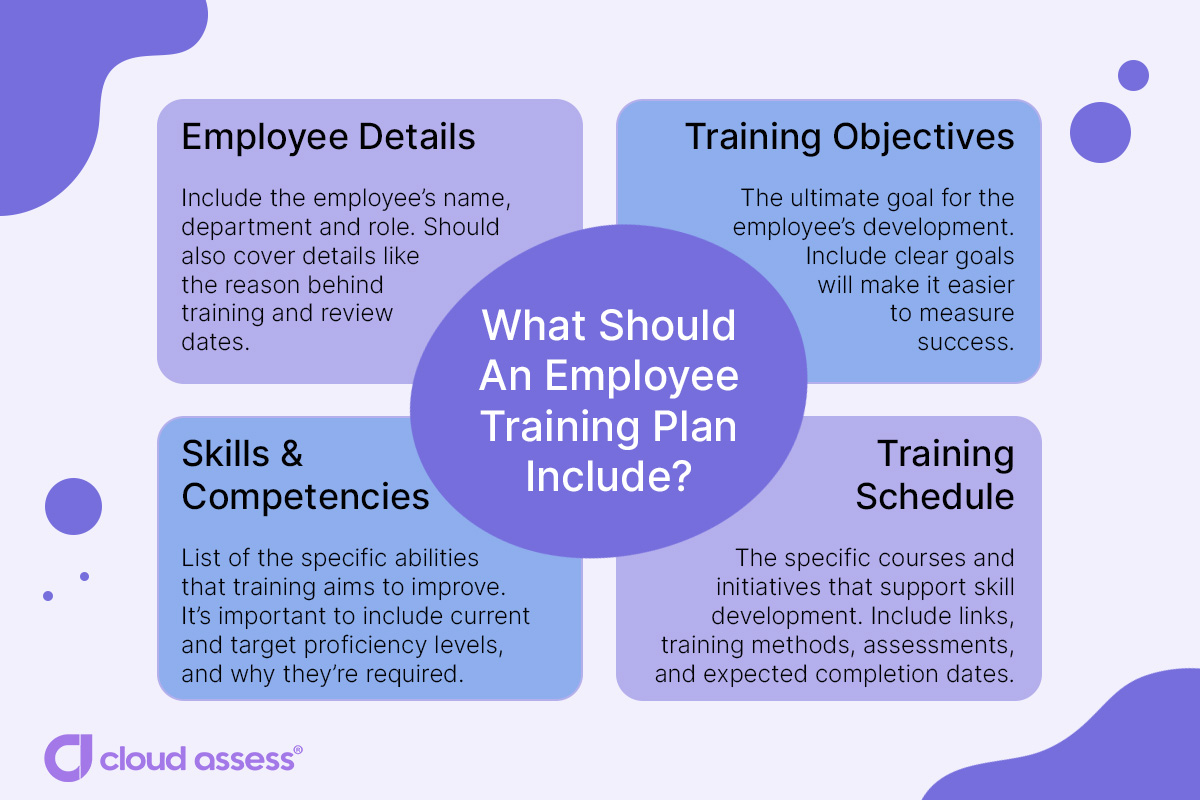
Unlike employee training programs, training plans need to be tailored to each individual’s needs. However, there are key areas that every employee development plan should include:
- Employee Details. These include the employee’s name, department and role. It also covers details like why they require specific training, and when their progress will be reviewed.
- Training Objectives. These are the ultimate goals for the employee’s development. Including clear objectives makes it easier for employees and managers to measure the success of training.
- Skills and Competencies. This is a list of the specific abilities that training aims to improve. It’s important to consider current proficiency levels as well as targeted improvements. There should also always be a reason for why this specific skill or competency is required.
- Training Schedule. These are the specific courses or training initiatives that support skill development. It should include links to the courses that an employee will enrol in, the training and assessment methods used, and dates for completion.

Employee Training Plan Example
Here’s a sample training plan that you can modify for your workplace.
- Employee Details. John Smith. Marketing Specialist. Requires training in social media
- Training Objectives. John to take over posting to Facebook, Twitter, LinkedIn and YouTube.
- Skills and Competencies. Post generation. Current skill level: Basic. Target skill level: Advanced. Social media reporting. Current skill level: Basic. Target skill level: Intermediate.
- Training Schedule. Social media workshop to be completed by 01 January. Facebook online course to be completed by 01 February. YouTube coaching to be completed by 01 March. Assessment of skills across platforms on 01 April. Assessment Method: Simulation.
How to Create a Training Plan for Effective Outcomes
This step-by-step guide ensures you plan training efforts that are well-structured. This supports consistency in achieving desired outcomes. Following these steps for how to make a training plan will streamline the process. It will also help you measure success and refine your future training strategies.
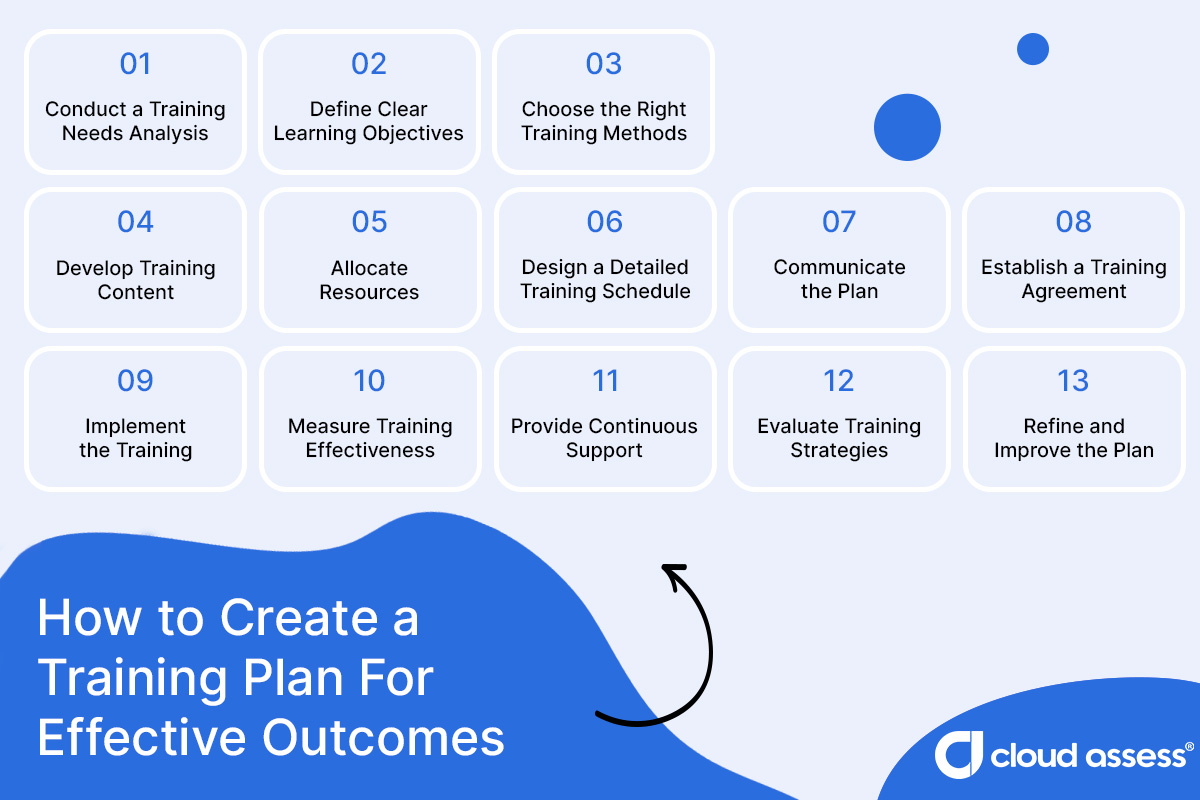
1. Conduct a Training Needs Analysis
Start by identifying the specific skills, knowledge, and competencies that need to be developed. Conducting a training needs analysis will help you gain insight into skills and competencies. From there, you can identify individual skill and knowledge gaps that need to be addressed.
This process is especially important when developing a new employee training plan, rather than adapting an older one. Look at where each employee is now and where you want them to be. This gap analysis will help you shape the training to focus on what matters most.
Also, make sure you know who you’re training. Understanding your audience helps you tailor employee development plans to individual training needs. It helps you choose the right methods and customise the content to their goals. Consider asking yourself, “How much do they already know?” This will help you decide whether to start with the basics or dive into more advanced material.
2. Define Clear Learning Objectives
Set clear, measurable learning objectives that tie into your company’s goals. These objectives should outline what the training aims to achieve and serve as a way to measure success.
Make sure the objectives are specific, realistic, and relevant to a workplace training context. Keep it simple by focusing on one or two goals per session to avoid overwhelming yourself or the trainees. It’s also important to consider which type of assessment will best showcase success.
Say, for example, the learning objective is developing communication skills. A quiz won’t be enough to measure skill development. In this case, a skill or competency-based assessment would be more appropriate.
3. Choose the Right Training Methods
Choose the employee training methods that best fit your plan for training. Keep you goals and audience in mind. You can choose on-the-job training, workshops, eLearning modules, or a mix of these approaches. Make sure your choices align with different types of learning styles and preferences. Consider the training type, content, and the unique needs of your learners. Then decide whether instructor-led training, online courses, webinars, or another method works best.
4. Develop Training Content
Create or curate relevant, engaging employee training content aligned with the learning objectives. This might include presentations, manuals, videos, quizzes, and hands-on activities. They can be stand-alone training materials, or full online courses and assessments. Ensure that the content is organised in a logical sequence and easy to understand.
5. Allocate Resources
Identify what you need to conduct a successful employee training session. This should include factors like learning materials and a conducive location. Create a checklist to organise these requirements effectively. Then, secure and allocate these resources. Find trainers, materials, equipment, and venues. Everything should be in place before training begins.
6. Design a Detailed Training Schedule for Employees
Plan the timing and duration of each employee training session. A detailed schedule ensures the training is delivered in manageable segments. Make sure it aligns with the employees’ work schedules. You may also want to adopt a microlearning approach. This breaks online training into bite-sized modules, rather than requiring a dedicated hour or two to complete. It makes courses more accessible and engaging. Be sure to include deadlines for completing various phases of the training.
7. Communicate the Plan
Communicate the training plan to all stakeholders, including participants, trainers, and management. Provide an overview of the objectives, schedule, and expectations. Effective communication ensures everyone is on the same page and prepared for the training.

8. Establish an Employee Training Agreement
Training agreements are an essential part of any training plan. They outline clear expectations, responsibilities, and conditions tied to the employee training program. It may include aspects like the commitment to complete the training and any associated costs. It should also cover the consequences of not fulfilling the training requirements. This agreement helps ensure that both parties are aligned and committed to the success of the training.
9. Implement the Training
Deliver training according to the plan you’ve developed. Ensure that the sessions are interactive and engaging. This will support training goals and make learning more memorable. This makes it more likely that employees will retain information and transfer learning into their roles. Make sure that participants have access to all training materials. They should be given opportunities to ask questions and practise new skills. Monitor the training’s progress to ensure it stays on track
10. Measure Training Effectiveness
With the specific training needs and learning outcomes in mind, it’s time to determine how successful your training efforts have been. Consider using various evaluation methods, including both formative and summative assessments. This will help you measure technical skill development alongside soft skills. Feedback forms and performance reviews are also invaluable resources. They’ll help you understand how engaged employees were with the process. This helps gauge how well the learning objectives were met and highlights areas for improvement.
11. Provide Continuous Support
Support doesn’t end when the training does. Offer ongoing tools like refresher courses and coaching. Provide unlimited access to online training resources and online courses. Continuous support helps reinforce learning and encourages employees to apply new skills.
12. Evaluate Training Strategies
Incorporate a thorough training evaluation process. This will help you understand the effectiveness of your training plan. Collect and analysing training feedback from participants to gauge the quality of training. This process isn’t only about reviewing results, though this can be an indication of an effective training program. Instead, it’s about the methods and techniques that were used, and where they can be refined. Training evaluation is crucial in understanding what works and needs adjustment. It helps you to refine your training strategy for smoother experiences and consistent outcomes.
13. Refine and Improve the Plan
Use the evaluation’s insights to refine and improve employee training plans. Adjust the content, methods, or schedule in existing training materials. This will enhance future employee training programs. A commitment to continuous improvement ensures that your training plan remains effective.
Benefits of Well-Structured Training Planning
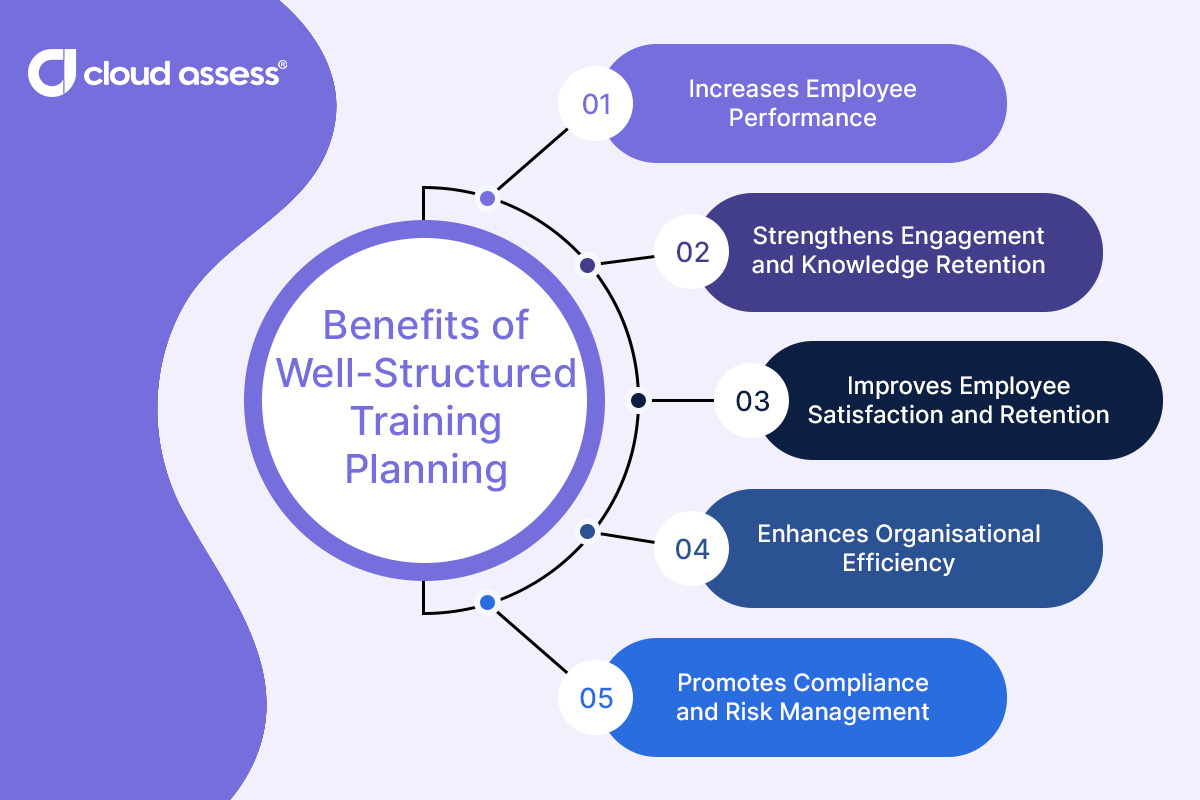
Increases Employee Performance
Well-thought-out training plans can make a big difference in employees’ performance. When training is targeted to address specific skill gaps, employees become more capable and confident in their roles. This helps boost their productivity and improves the quality of their work, making them more adaptable to new challenges.
Having training plans ensures that all training activities run smoothly. It sets clear expectations for everyone involved and holds participants and instructors accountable. With a solid structure in place, everyone can focus on what matters most. They’ll get the most out of each training session and align it with company goals.
Strengthens Employee Engagement and Knowledge Retention
A well-structured training is critical to boosting employee engagement. This, in turn, is essential for a motivated and productive workforce. Engaged employees are more likely to be proactive, innovative, and committed to the company’s success.
With a clear and organised training plan, employees understand the value of their learning journey. It keeps them motivated and invested in their work.
A structured plan also helps with knowledge retention. When training is delivered systematically, employees are more likely to remember and apply what they’ve learned. Follow-ups, assessments, and reinforcement support these efforts. This improves individual job performance and strengthens the company’s collective knowledge.
Improves Employee Satisfaction and Retention
A good training plan doesn’t just help employees do their jobs better; it also makes them feel valued and invested. When employees see that their growth is a priority, they’re more likely to stay engaged and loyal to the company. This commitment to their development creates a positive work environment. It reduces turnover and boosts overall job satisfaction. This makes it a practical and effective employee retention strategy.
Using a training plan also saves time because everyone knows what to expect and how things should go. This clarity makes the training more effective and helps create a workforce that feels supported and motivated.

Enhances Organisational Efficiency
Another significant advantage of a well-structured plan is that it boosts overall efficiency. With a training plan in place, companies can easily track how effective and successful employee training programs are. They can also ensure that training aligns with broader goals. This oversight allows for ongoing improvements in training delivery. It also leads to more efficient processes and better results.
A clear training plan also saves time by explaining how training should be conducted. When everyone knows what’s expected, there’s less confusion, and the entire process runs more smoothly.
Promotes Compliance and Risk Management
A well-designed training plan also supports compliance and risk management. It ensures employees are current on industry regulations, safety protocols, and ethical standards. This reduces legal and financial risks. Employees who understand and adhere to these guidelines help companies prevent costly mistakes. They also help organisations maintain a strong reputation.
Common Employee Training Plan Mistakes and How to Avoid Them
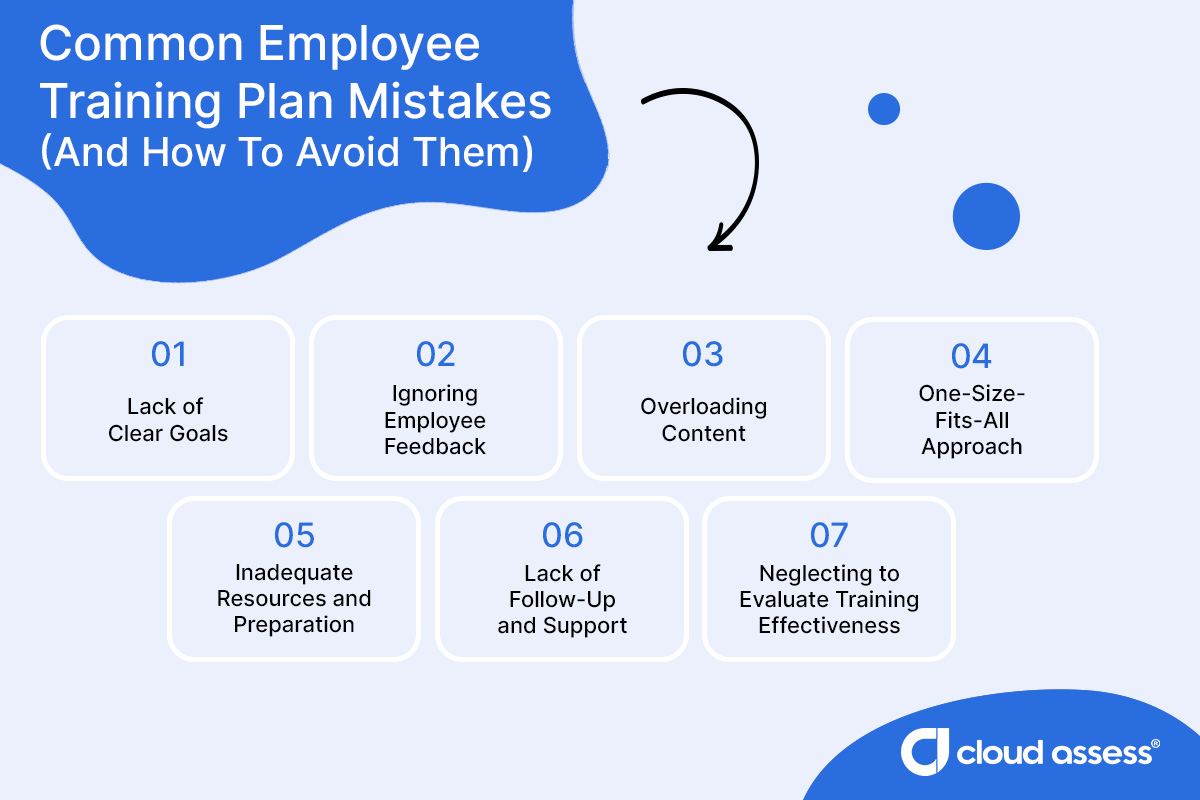
- Lack of Clear Goals. Without specific, measurable goals, training plans can become unfocused. This makes it less likely that they’ll deliver desired outcomes. Always define clear learning objectives that align with both employee and organisational goals.
- Ignoring Employee Feedback. Failing to consider participant feedback can lead to ineffective training sessions. They won’t meet your employees’ needs. Regularly ask for and incorporate feedback to ensure the training remains relevant and valuable.
- Overloading Content. Trying to cover too much information in a short time can overwhelm employees and reduce the effectiveness of the training. Break down content into manageable sections and focus on quality over quantity.
- One-Size-Fits-All Approach. Using a single training method for everyone can result in disengagement. This makes skill development less effective. Tailor your training methods to accommodate various learning preferences and levels of experience.
- Inadequate Resources and Preparation. Too little time, budget, or materials can severely impact the quality of the training. Ensure that everything needed for the training is well-prepared and available beforehand.
- Lack of Follow-Up and Support. Once the training is completed, employees may struggle to apply what they’ve learned without follow-up or ongoing support. Provide continuous learning opportunities and resources. This will reinforce the training and help employees implement new skills.
- Neglecting to Evaluate Training Effectiveness. Skipping the evaluation phase can prevent you from understanding training’s impact. It will also make it more difficult to identify areas for improvement. Continually assess the effectiveness of your training plan. It’s also important to use the insights gained to refine future training initiatives.
The Role of Technology in Employee Training Plans
Learning Management Systems (LMS)
Learning Management Systems (LMS) have become the backbone of modern training plans. They centralise all training resources and online courses. This makes organising, delivering, and tracking training efforts easy. They’ve essentially become an all-in-one training planner. With an LMS, like Cloud Assess, for example, you can:
- Monitor employee progress
- Assess performance through quizzes and assignments
- Generate reports to evaluate the effectiveness of the training
This centralisation streamlines the training process. It also provides valuable data that can be used to improve future training programs.
eLearning Platforms
Customised eLearning solutions allow employees to access learning materials anytime, anywhere. They offer unparalleled flexibility. Employees can engage with the content at their own convenience, whether it’s a self-paced course, a live webinar, or recorded sessions. This accessibility is particularly beneficial for remote and frontline workers. It ensures everyone can participate in training.
Gamification
Integrating gamification elements can transform traditional learning into engaging and interactive training experiences. Elements like points, digital badges, leaderboards, and challenges motivate employees. They boost participation and help staff actively engage with training. It also fosters a sense of competition and accomplishment. This can drive better material retention and encourage continuous learning.
Virtual Reality (VR) and Augmented Reality (AR)
VR and AR are cutting-edge technologies that offer immersive training experiences. They’re particularly valuable in fields requiring hands-on practice. VR can simulate real-world environments where employees can practise tasks in a safe and controlled setting. At the same time, AR can overlay digital information onto the physical world, improving on-the-job training. These technologies benefit training in complex, high-risk environments. These include healthcare, manufacturing, or technical fields, where practical experience is crucial.