Professional growth doesn’t end with a degree, certification, or on-the-field experience. It’s the start of a continuous journey toward excellence and innovation. Continuous professional development (CPD) is crucial for keeping teams relevant and achieving organisational goals.
For businesses, a structured approach to CPD turns everyday learning into a long-term investment. As employees build skills for changing roles, the organisation grows with them. The result is a workforce ready to meet new challenges as they arise.
In this blog, we’ll discuss:
- What CPD is and why it matters
- How CPD benefits both companies and employees
- The main types of learning that make up CPD
- How a CPD log differs from a CPD plan
- How to build a CPD plan step by step
- Common CPD challenges and how to overcome them
- The tools that support ongoing development
What is Continuous Professional Development (CPD)?
Continuous professional development is the ongoing process of planning, tracking, and documenting learning after an initial qualification to keep professionals’ skills aligned with industry standards.
Organisations use CPD records to show their workforce stays competent and compliant. Continuing professional development is another common name, and both terms share the CPD acronym.
CPD activities range from formal courses and qualifications to workshops, conferences, and eLearning. Informal learning, such as mentoring and peer discussions, also counts towards CPD.
Importance of Continuous Professional Development
CPD is essential for keeping a workforce competent as industry practices and regulations change. Continuous professional development ensures professionals remain competent and relevant by staying current with industry advancements. It enhances skills, expands knowledge, and fosters adaptability to new challenges. CPD is crucial for career advancement, showcasing a commitment to growth and increasing employability. It encourages innovation and creativity, leading to improved problem-solving and innovative solutions. Investing in CPD ensures long-term success and adaptability in an ever-changing work environment, providing professionals with security and confidence in their skills.
In many regulated professions, CPD is also a condition of registration. Professional bodies define the minimum hours practitioners must complete and record. The Nursing and Midwifery Board of Australia sets a 20-hour annual minimum for nurses. Engineers Australia asks Chartered engineers for 150 hours every three years. In the UK, the Nursing and Midwifery Council requires 35 hours every three years. For employers in these sectors, CPD tracking keeps staff registered and able to work.
Benefits of Continuous Professional Development

Benefits for Companies
Improved Job Performance
CPD equips employees with the latest knowledge and skills, which leads to better job performance, higher productivity, and improved quality of work. Mckinsey’s research has found that when leadership maps out talent development, employee engagement can increase by 50%, training costs down by 50%, and productivity increase by 40%.
Enhanced Career Prospects and Promotion Opportunities
Supporting CPD shows a company’s commitment to professional growth, which creates motivated employees with clear career advancement paths, reducing recruitment costs and boosting organisational stability. Employees who see a clear path forward are more likely to stay. Retaining those employees keeps valuable knowledge and experience inside the business.
Increased Earning Potential
Continuing professional development enables employees to take on more responsibilities and perform at higher levels, often increasing earning potential for both the employee and the organisation. Upskilled employees can take on more complex, higher-value work. Organisations gain that extra capability without needing to add headcount.
Succession Planning
Businesses that encourage continuous personal development also have an opportunity to identify individuals who would be well suited to future roles. Incorporating CPD into succession planning can ensure that companies have a talent pipeline without needing to hire externally. Targeted CPD then prepares those individuals before a role becomes vacant.
Benefits for Employees
Boosted Confidence And Self-Esteem
Employees who undertake CPD training boost their personal skills and knowledge, increasing their confidence and self-assurance. This can lead to better decision-making and willingness to tackle new challenges. Confident employees are also more likely to speak up about safety or quality issues.
Greater Job Satisfaction and Fulfilment
CPD increases job satisfaction by providing learning and growth opportunities, fostering a sense of purpose and belonging, and resulting in higher engagement and lower turnover rates. Employees who feel invested tend to bring more energy to their daily work. That engagement also strengthens team culture across the wider organisation.
Personal Growth and a Sense of Accomplishment

CPD encourages ongoing self-improvement, leading to a sense of accomplishment that benefits professional life and overall well-being. A completed course or new certification gives employees a clear milestone to celebrate. Each milestone builds momentum for the next stage of their development.
Key Components of Continuous Professional Development
1. Formal Education and Qualifications
Formal education and qualifications give professionals the core knowledge their role and industry require. Formal education and qualifications are foundational elements of CPD training. This includes earning degrees, diplomas, and certifications from accredited institutions. These structured programs provide in-depth knowledge and specialised skills that are crucial for professional competence. Formal qualification often sets the stage for advanced career opportunities and is essential for meeting industry standards and regulatory requirements.
2. Informal Learning and Networking
Informal learning and networking let professionals learn directly from their peers’ real-world experience. Informal learning and networking play a significant role in CPD training by offering opportunities for professionals to exchange ideas, share experiences, and learn from peers. This can occur through engaging a professional body, creating mentorship programs, attending industry events, or even having informal discussions with colleagues. Informal learning is often more flexible and tailored to individual needs, allowing professionals to gain practical insights and build valuable relationships.
3. Workshops, Seminars, and Conferences
Workshops, seminars, and conferences keep professionals up to date with the latest industry trends. Workshops, seminars, and conferences are vital continuing professional development activities that provide intensive learning experiences and exposure to the latest industry trends. These gatherings often include keynote speeches from industry leaders, panel discussions on emerging topics, and opportunities for one-on-one consultations with experts. Ultimately, they offer opportunities for hands-on training, expert presentations, and interactive sessions, which can help employees stay updated with current professional developments. This can help your employees improve their skills, and expand their professional network.
4. Self-Directed Learning and Online Courses

Self-directed learning and online courses put professionals in control of their own learning. Self-directed learning and online training courses empower professionals to take control of their CPD journey. This component includes eLearning platforms, webinars, podcasts, and reading professional literature. Online courses offer flexibility, allowing individuals to learn at their own pace and convenience. Own learning encourages autonomy and responsibility, enabling employees to tailor their professional development to their specific career goals and interests.
Continuous Professional Development Log
A Continuous Professional Development (CPD) log is a detailed record of the learning activities and experiences professionals engage in to enhance their skills and knowledge. This log serves as a personal account of continuing professional development, documenting each activity, the skills acquired, and the outcomes achieved. It is a crucial tool for professionals to track their progress and reflect on their learning journey, and it can be used as evidence of continuous learning in performance appraisals or when applying for new roles.
Maximise Your Team’s Development With Our CPD Log
Streamline tracking, goal-setting, and organisation with this essential tool for continuous learning. Whether your focus is improving skills, advancing career paths, or achieving business objectives, our CPD Log ensures clarity and accountability. Empower your workforce to stay competitive and motivated. Download the CPD Log Template today and guide your team towards sustained growth and success!
A CPD plan is a forward-looking document that outlines the goals, objectives, and planned activities for continuing professional development. It sets the direction and targets for future learning efforts.
A CPD log is a record-keeping tool that tracks the details of completed CPD activities, including dates, descriptions, and outcomes. It serves as evidence of the learning journey and achievements.
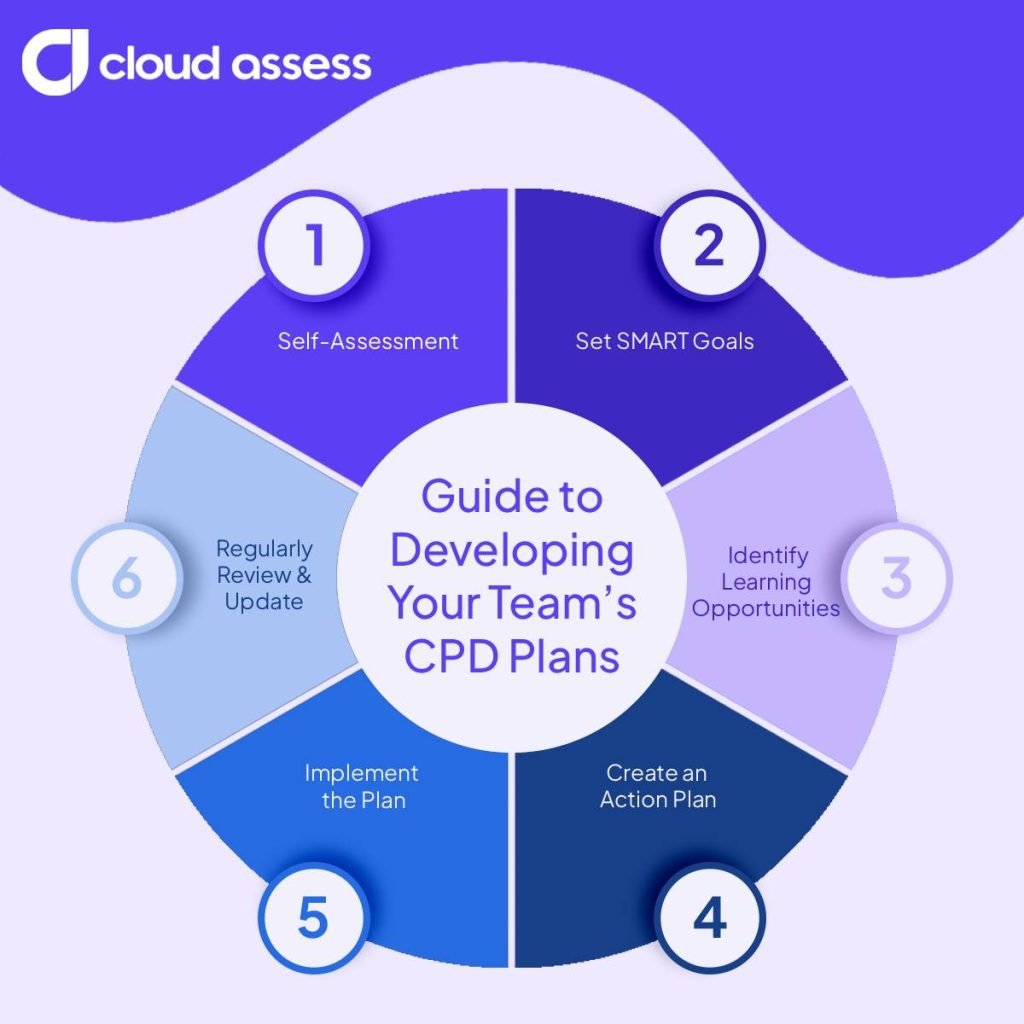
Step-by-Step Guide to Developing Your Team’s CPD Plans
1. Self-Assessment
Encourage employees to conduct a thorough self-assessment to identify their strengths, weaknesses, and areas for improvement. This can be done through self-reflection, feedback from peers and supervisors, and performance reviews.
Use a skills matrix or competency management software to visualise and assess current competencies.
2. Set SMART Goals
Based on their self-assessment, guide employees to set Specific, Measurable, Achievable, Relevant, and Time-bound (SMART) goals. These goals should align with both personal career aspirations and organisational objectives. For example, if an employee needs to improve their project management skills, a SMART goal could be: “Complete an advanced project management basic course within six months.”
3. Identify Learning Opportunities
Identify various continuing professional development (CPD) activities that can help employees achieve their goals. This may include formal education programs, online courses, workshops, conferences, eLearning software, and informal learning opportunities.
4. Create an Action Plan
Work with employees to create a comprehensive action plan that includes specific activities, timelines, and required resources. This plan should also outline any support needed from the organisation. This could include access to CPD training providers, funding for courses, or time off for attending training courses or workshops.
5. Implement the Plan
Encourage employees to start working on their CPD activities, providing necessary support and resources. Managers should monitor progress and offer guidance as needed. Ensuring employees have access to the essential tools and support for their career development throughout their CPD cycle.
6. Regularly Review and Update
Schedule regular check-ins to review employees’ progress against their continuing professional development goals. This can be done through quarterly reviews or bi-annual performance appraisals. Update the CPD plan based on these reviews, adjusting goals and activities as necessary to reflect changes in career aspirations or organisational priorities.
Use feedback from performance reviews and self-assessments to evaluate the effectiveness of the CPD activities and the overall plan. Adjust the strategy to ensure continuous improvement and relevance.
How to Overcome CPD Challenges
Time Constraints
Allocating time for employees to engage in CPD activities without disrupting productivity is often a huge challenge. To address this, create flexible CPD schedules and integrate learning into the workflow. Also, implement time management training to prioritise and schedule CPD activities. Use tools like calendars, to-do lists, and a time management matrix. Developing microlearning training courses that fit into employees’ daily routines can also be an effective technique.
Cost of CPD Activities
CPD training programs and activities are typically costly. However, employers can work with employees to explore external funding opportunities, such as grants and industry sponsorships. Using cost-effective resources, including free online training courses, webinars, and industry-sponsored training, can significantly reduce expenses. Organising group training sessions can also maximise value by training multiple employees simultaneously, which reduces per-person costs.
Finding Relevant Resources
Finding relevant, high-quality and structured CPD resources that align with business and employee needs can be challenging. Leaning on professional associations, industry networks, and trusted online learning platforms to access curated content can help resolve this challenge.
Another option is to create your own content with an LMS. Allow team members to work together and pool their knowledge and skills to develop courses on specific subject areas that they are familiar with. This fosters a sense of ownership and engagement among team members and ensures that the content is highly knowledgeable and relevant.
Maintaining Employee Motivation

It’s not easy to keep employees motivated to consistently undertake CPD. However, setting clear, achievable CPD goals, offering incentives for completion, and providing recognition and rewards for CPD achievements can help motivate employees to continuously participate in active learning. You can also encourage peer mentoring and collaboration.
Measuring CPD Impact
Measuring CPD activities’ impact on employee performance and business outcomes can be challenging. Strong evaluation methods, such as feedback surveys and performance metrics, are essential to effectively evaluating CPD outcomes. Data analytics can track progress and adjust CPD strategies as necessary. It is also important to review and update CPD plans regularly to ensure they are aligned with business objectives.
What Tools are Used for CPD Tracking?
Online Learning Platforms
Digital learning platforms offer a variety of courses and training programs accessible from anywhere, providing flexibility and a broad range of topics.
eLearning Software
All customised eLearning solutions help organisations create, deliver, and manage training and educational programs for employees or students. These solutions allow companies to use their own branding in courses to ensure a consistent and professional appearance that aligns with their corporate identity.
Skills Matrix Software
A skills matrix tool helps organisations assess and visualise the skills and competencies of their workforce, aiding in identifying skill gaps and planning training.