

Compliance is a complicated, multi-step process for Registered Training Organisations (RTOs). There are various regulations that need to be considered at every stage of their operations. Providers are encouraged to take a proactive approach. This is where annual compliance declaration forms come in. These online declarations confirm that they understand their obligations and meet them consistently.
In this article, we explore:
- What an annual declaration on compliance means
- Why the process is important
- Steps for proactively preparing your declaration
- How to submit your online declaration form
- Consequences of non-submission
- How Cloud Assess simplifies the process
What is the Annual Declaration of Compliance?
The Annual Declaration on Compliance is a survey submitted by providers to their regulator. It’s a form of self-assessment that:
- Confirms your RTO compliance
- States you’ve identified and corrected any issues that have come up
- Confirms you’re equipped to ensure compliance moving forward
The process is often referred to as the ASQA annual declaration on compliance, referencing the Australian Skills and Quality Authority. However, all RTOs need to submit a similar declaration, even if they’re not regulated by ASQA. This includes providers in Victoria and Western Australia. However, their processes for submissions may differ slightly.
Why is the Annual Declaration Important?

It’s a Regulatory Requirement
Putting together the declaration statement each year means RTOs are regularly reviewing their processes and looking for ways to do better. This touches every part of an RTO’s operations. It includes reviewing training and assessment strategies, third-party arrangements, industry partnerships, and more. Conducting regular internal audits, not just at declaration time but as an ongoing practice, supports consistently high-quality training services.
It Ensures Audit Readiness
Preparing for an audit is often a stressful process. But it doesn’t have to be. Proactive providers centralise documentation and prepare their statements well in advance. This reduces the stress associated with the declaration, while also streamlining audit processes. It becomes easier to find the records and reports that you need, reducing the last-minute rush when audits do occur.
Steps For Preparing Your Annual Declaration

1. Ensure Your Records with Regulators are Current
Regulators use these records to keep you updated with upcoming deadlines. ASQA and the Training Accreditation Council (TAC) in Western Australia also send an email link to the declaration survey. While the Victorian Registration and Qualifications Authority (VRQA) doesn’t follow the same process, they also require up-to-date contact information. Ensuring your information is current reduces the risk of notifications going undelivered.
2. Update Your Provider Information If Necessary
RTOs need to notify regulators about any material changes as a compliance obligation. This includes updates to ownership, staffing, or your scope of registration. It’s important to keep these records updated as changes happen. Discrepancies are harder to resolve during the declaration process, where time is limited, and errors can delay submission.
3. Make Compliance Part of Everyday Processes
Keep track of changes to your training services and internal processes as they occur. This makes the declaration process much more straightforward. It’s not just about noting what changed, but why. Say you’re adjusting your training and assessment strategy to accommodate students with disabilities. Documenting the reasoning behind that decision shows regulators you’re consistently improving your approach. It also gives you a clear audit trail and a useful benchmark for measuring progress over time.
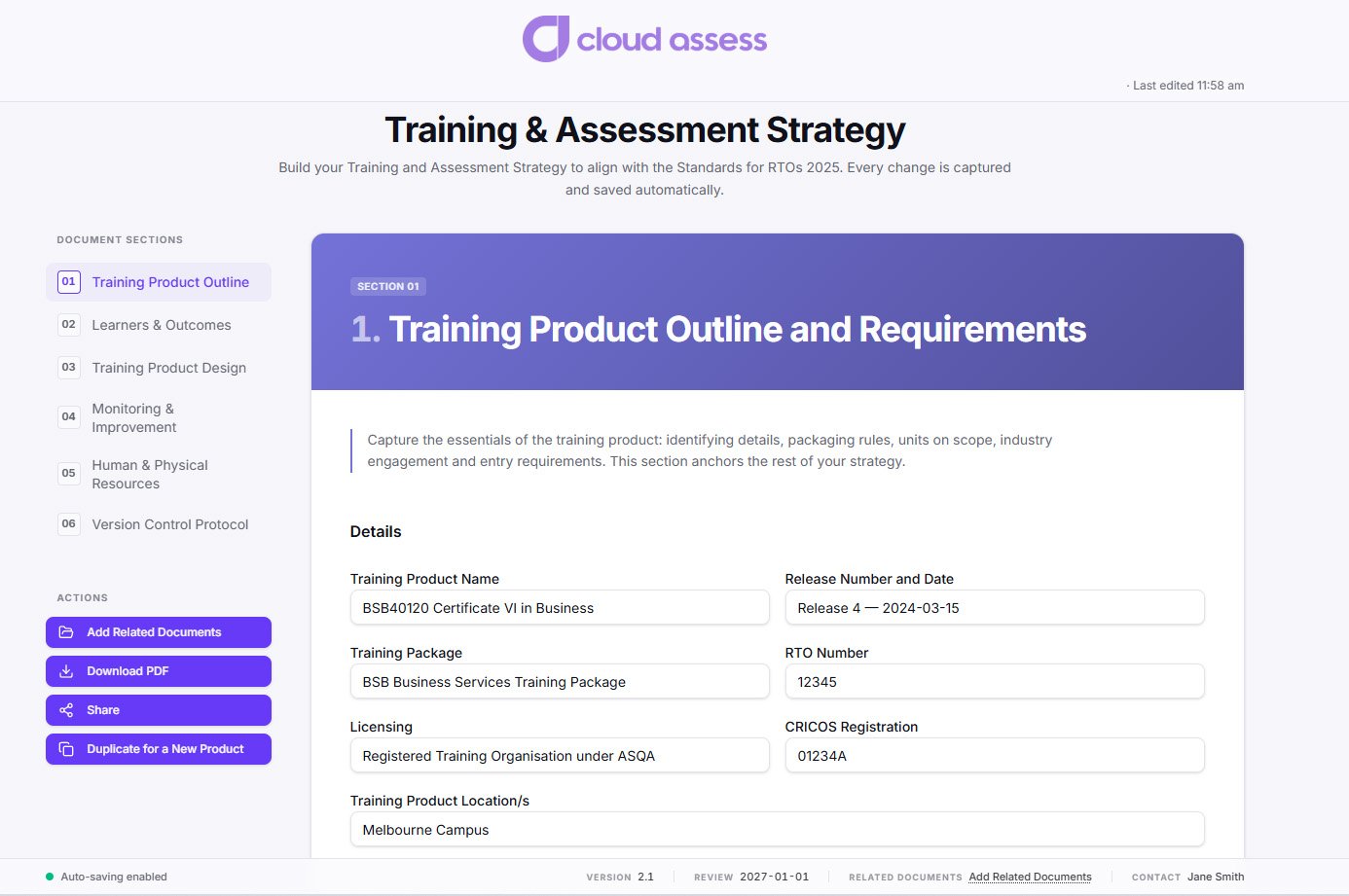
5. Ensure You Are Meeting All Regulatory Requirements
Once you’ve submitted your declaration, it can’t be changed or resubmitted. This makes it worth taking the time to do a final check across all your compliance obligations. Work through each regulatory requirement methodically. This includes your marketing and recruitment practices, student records, certification processes, and third-party arrangements. If anything isn’t quite right, this is your last opportunity to address it.
6. Submit Your Compliance Declaration Form On Time
Once everything is in order, submit your declaration before your regulator’s due date. Late submissions are not accepted, so it’s worth building this deadline into your compliance calendar well in advance.
How to Submit Your Annual Declaration on Compliance

Note: The following section details the steps for declarations to ASQA and TAC. These regulators follow the same process, though submission dates may differ. For VRQA, the form must be downloaded and emailed to [email protected] before 01 April.
1. Wait for an Email From Your Regulator
An email is sent to the Chief Executive Officer (CEO) of every RTO, as listed on training.gov.au, before the due date. This contains a unique web link to their online declaration survey. The survey takes between 15 and 30 minutes to submit in most cases.

2. Complete and Save Your Information Before The Due Date
Work through the survey carefully. Make sure your responses accurately reflect your organisation’s current compliance standing. Save your progress as you go where possible. Late submissions are not accepted, so it’s worth setting aside dedicated time to start the declaration process early.
3. Check All Details Before Submission
Your declaration can only be submitted once and cannot be changed after submission. This makes it essential to do one final check. If multiple people have contributed to the survey, make sure someone with an overview of the whole declaration does a final review.
4. Save a Copy of Your Answers
Once your answers have been submitted, you won’t be able to review them. Make sure you save a copy before you complete the process. You can do this by printing them, saving a PDF copy, or sending yourself an email with your responses. This may form part of your audit trail. It can also be a useful reference for future declarations.
5. Check That Your Declaration Has Been Submitted Correctly
As the final step in the process, double check that your declaration has gone through successfully. Return to the original email from your regulator and click on the link. It should bring up a message confirming that your declaration has been received. If not, contact your regulator directly.
Consequences of Not Submitting an Annual Declaration on Compliance

Failing to submit your annual declaration on time is treated as a compliance breach. Depending on the circumstances, your regulator can respond in various ways:
- Remediation. You may be asked to take corrective action. This means identifying what went wrong and showing that you’ve taken steps to fix it. This is the most likely response for RTOs that haven’t had compliance issues in the past.
- Financial Penalties. In cases where the issues are serious, or remediation hasn’t resolved the problem, an RTO may need to pay a fine. The size of the penalty will depend on the nature and extent of the breach.
- Deregistration. In the most serious cases, a regulator may cancel an RTO’s registration entirely. This is typically reserved for RTOs that have demonstrated a pattern of non-compliance.
- Impact on Your RTO’s Reputation. Regulatory action is a matter of public record. Compliance breaches can affect how students, employers, and industry partners view your organisation.
How Cloud Assess Can Help
Some of the biggest challenges in meeting annual declaration requirements include:
- Consolidating training data. Training data is often spread across multiple systems.This makes it difficult to get a clear picture when you need it most. Tools like Cloud Assess ensure information is shared seamlessly across your technologies, reducing effort and risk.
- Ensuring accurate student records. Incomplete or outdated records are a common compliance risk for RTOs. Manual data entry and storing various versions of the data make it worse. The right student management system can act as a single source of truth, with automations reducing the need for manual changes.
- Maintaining evidence of compliance efforts. Without a centralised system, maintaining a clear audit trail is time-consuming and admin-intensive. Look for solutions that help you manage and store documents, reports, and assessment evidence in a consolidated platform. This will help you find exactly what you need, when you ned it.
- Keeping track of deadlines. Without the correct processes in place, deadlines can pass by without administrators realising. Compliance management features can help you set up alerts and notifications to help you keep on top of deadlines, without them having to always be top of mind.
Ready to see the difference it can make for your RTO? Request a free demo today.



