The Standards for Registered Training Organisations are a critical element of Australia’s Vocational Education and Training (VET) sector. They set the framework to ensure that organisations provide high-quality training and assessment services that meet the needs of learners, employers, and industries across the country.
Over time, the standards evolve to address emerging challenges and changing sector needs, and the most recent revisions mark a significant update.
In this post, we will explore:
- Key components of the latest Standards for RTOs 2025
- How they differ from the Standards for Registered Training Organisations (RTOs) 2015
- What you need to do to ensure compliance.

Major Differences from the 2015 Standards
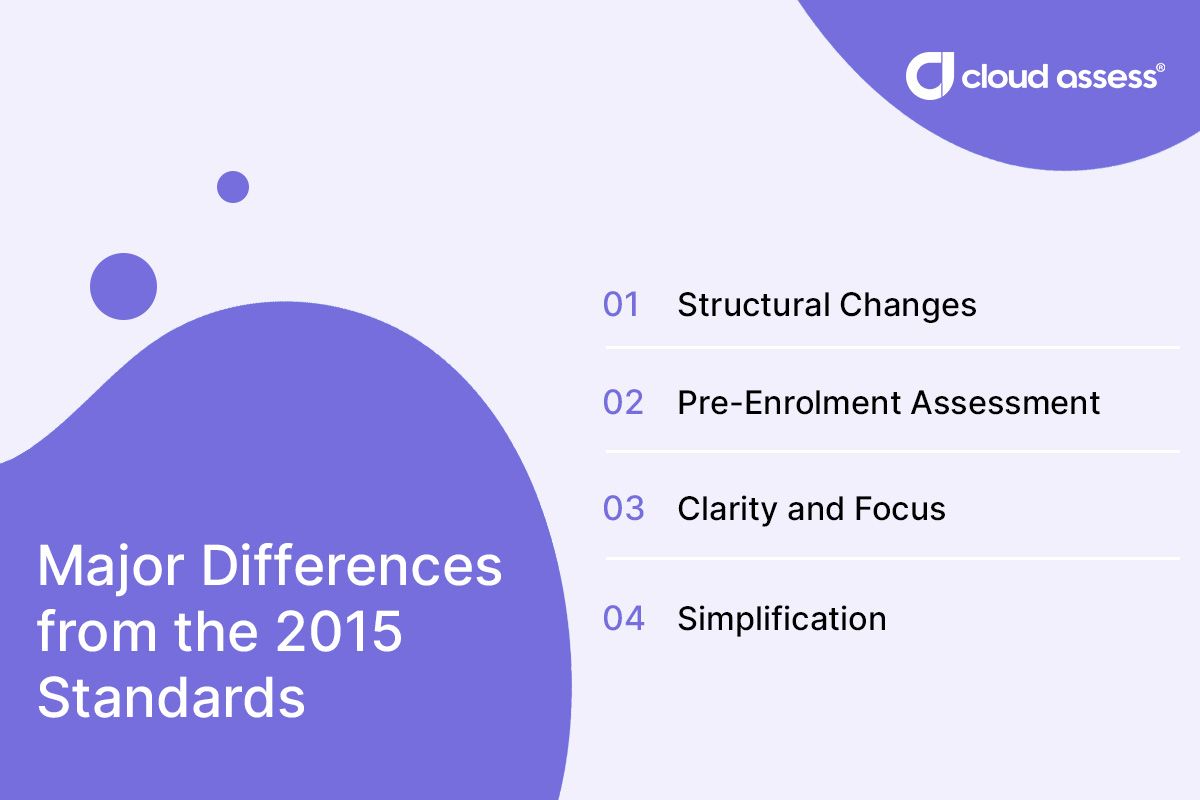
The revised Standards differ from the Standards for RTOs 2015 in several key ways:
1. Structural Changes
The 2015 Standards were consolidated, with various compliance and quality elements blended together. The RTO 2025 Standards are split into Outcome Standards, Compliance Requirements, and the Credential Policy, providing a more structured and accessible approach.
2. Pre-Enrolment Assessment Requirements
One of the key updates is that registered training organisations need to conduct pre-enrolment assessments. These assessments evaluate existing skills and competencies, including any credit transfers or recognition of prior learning. They also include digital literacy and Language, Literacy and Numeracy (LLN) proficiencies.
In the past, some of these assessments could be conducted after enrolment. Under the 2025 Standards, they must now be completed before enrolment. This ensures training organisations can advise students on the suitability of training products and identify any necessary support or adjustments. These requirements are part of broader student support obligations, designed to ensure that learners make informed decisions, are placed appropriately, and have a reasonable chance of success.
2. Clarity and Focus
The new Standards for RTOs provide a clearer link between compliance obligations and expected outcomes. For example, there is now a more distinct focus on credentialing requirements for trainers and assessors and a better articulation of governance and accountability expectations.
3. Simplification
While still comprehensive, the revised Standards are designed to be easier to navigate, with clearer guidance on areas like student support, workforce requirements, and assessment validation.
ASQA’s Role in the Transition
The Australian Skills Quality Authority (ASQA) played a critical role in supporting RTOs through this transition. They have developed guidance materials and regulatory guidelines to help RTOs understand and comply with the 2025 Standards. These materials have been released progressively since October 2024.
ASQA also provides self-assessment tools, workshops, and resources to ensure RTO compliance. Their website is regularly updated with guidance and best practices.
Key Components of the Revised Standards
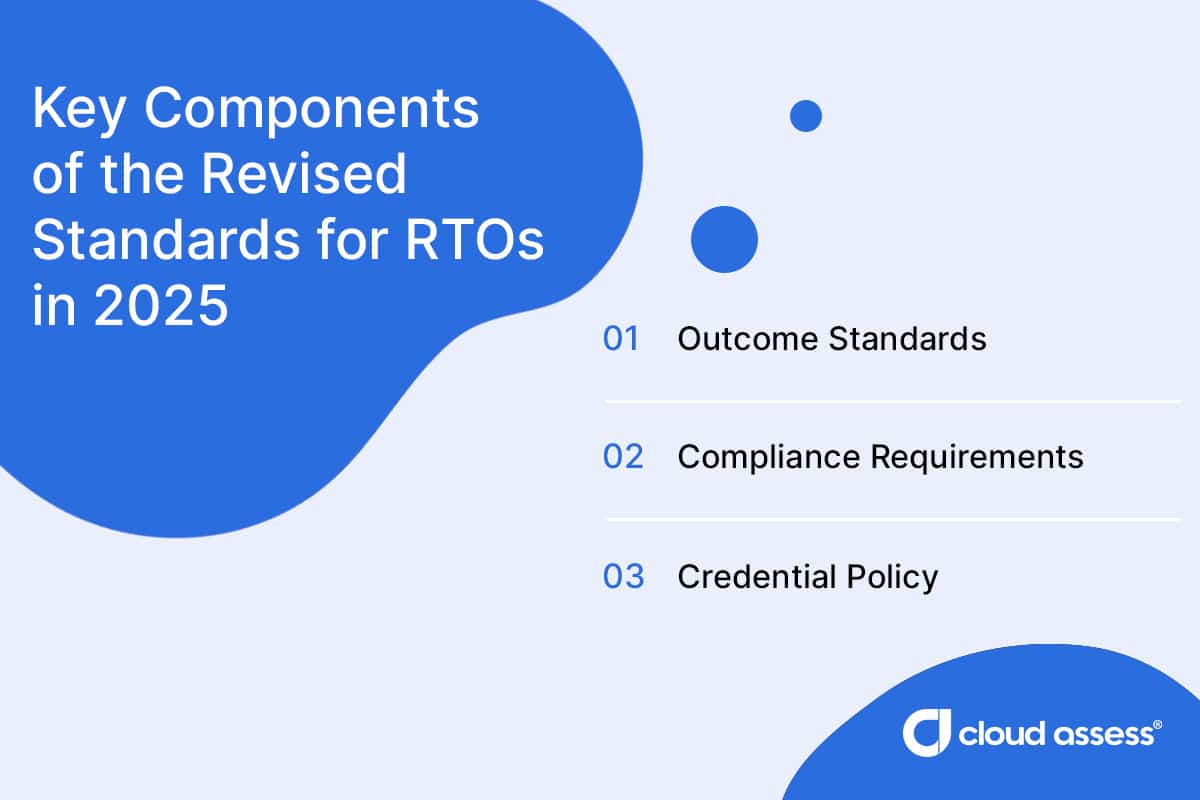
The Standards for RTOs 2025 are divided into three distinct parts, each with their own document. These three documents were designed to simplify compliance and make it easier for RTOs to focus on quality outcomes while adhering to regulatory requirements.
1. Outcome Standards: These standards define the quality expectations for training, assessment, governance, and student support within RTOs. They are focused on the outcomes that RTOs are expected to achieve, such as effective student engagement and robust assessment practices.
2. Compliance Requirements: This outlines the regulatory requirements RTOs must meet to remain compliant with the VET Quality Framework. It includes obligations such as information management, marketing, the issuance of AQF certification, and adhering to third-party arrangements. These are operational guidelines RTOs need to follow.
3. Credential Policy: This policy specifies the qualifications and credentials that trainers, assessors, and those involved in delivering and assessing VET products must hold. It connects to the Outcome Standards by outlining who is qualified to carry out different training activities, including those working under supervision.
Each document plays a distinct role:
- Outcome Standards focus on the goals and results of training.
- Compliance Requirements detail the operational steps RTOs must follow.
- Credential Policy outlines the qualifications needed for those delivering or assessing training.

Details on the Update to RTO Standards in 2025
The Standards for Registered Training Organisations 2025 have updated the way training is delivered and regulated. In this section, we’ll walk you through the key changes that have been implement across the three main areas.
While we cover the essentials to give you a solid understanding of requirements it is still recommended to review the official documentation.
1. Outcome Standards
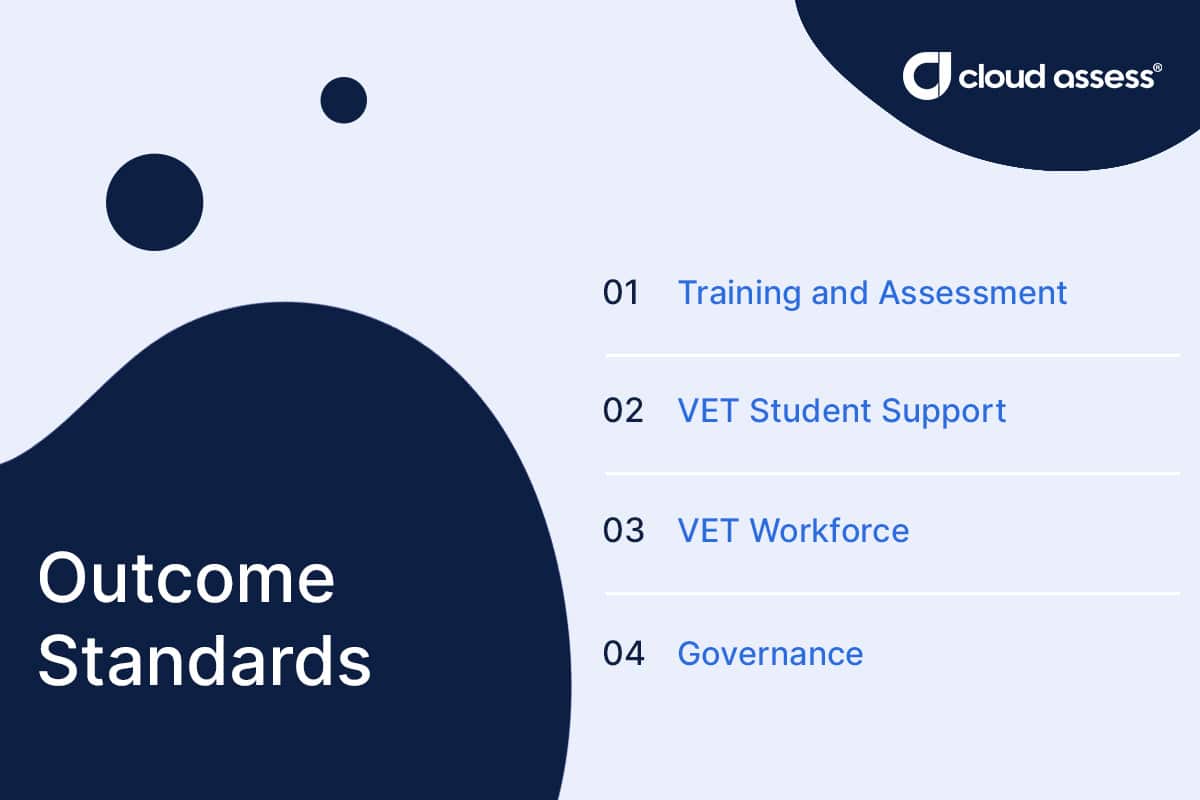
The Outcome Standards represent the core expectations around the quality of VET delivery. These standards emphasise engagement with learners, valid assessment practices, and strong governance within RTOs to ensure that students are trained to a nationally recognised standard.
1.1 Training and Assessment
The Training and Assessment section of the Outcome Standards covers all aspects related to delivering training that is consistent with the relevant training product and aligned with industry needs.
Training Requirements
RTOs must ensure that their training aligns with the competencies outlined in the training product, whether delivered in-person, online, or through blended methods.
- Training should be structured and paced to support student progress, and where necessary, incorporate work-integrated learning or placements.
- Industry engagement is crucial. RTOs must actively seek feedback from industry, employers, and community representatives to ensure that training is up to date with current industry practices.
Assessment Principles:
The assessment system must be designed to ensure that students are assessed fairly and accurately. RTOs must follow the principles of assessment (fairness, flexibility, validity, and reliability) and the rules of evidence (validity, sufficiency, authenticity, and currency).
- RTOs must review assessment tools before use and regularly validate assessment practices to ensure consistency and quality.
1.2 VET Student Support
The VET Student Support section ensures that students are informed, supported, and protected throughout their training journey.
- Information and Transparency: RTOs must provide clear, accurate, and current information to help students make informed decisions about the courses they enrol in. This includes information about course fees, training product requirements, and third-party arrangements.
- Pre-assessments. RTOs must evaluate students’ existing skills and competencies prior to their enrolment. This includes credit transfers, recognition of prior learning, digital literacy, and LLN proficiency assessments. Based on these evaluations, RTOs must advise students on suitable training products, support, and adjustments available to them.
- Training Support: Students should have access to the support they need, whether it’s academic, wellbeing, or other services. Reasonable adjustments must be made for students with disabilities, and RTOs should foster inclusive learning environments.
- Complaints and Appeals: RTOs must have processes in place for handling complaints and appeals fairly and transparently. Students should know how to access these services, and the feedback collected must be used for continuous improvement.
1.3 VET Workforce
A key part of ensuring quality training is having a qualified, skilled, and well-supported workforce.
- Trainer and Assessor Competencies: RTOs must ensure that trainers and assessors hold the relevant qualifications as specified by the Credential Policy. Trainers must also engage in continuous professional development to keep their skills up to date.
- Industry Expertise: Trainers must demonstrate current industry knowledge and competencies relevant to the courses they are delivering. In some cases, industry experts may be engaged to support trainers, but their involvement must be carefully managed to ensure the quality of training and assessment.
1.4 Governance
Effective governance is fundamental to RTO operations. The governance standards focus on accountability, leadership, and continuous improvement.
- Leadership and Accountability: Governing persons within the RTO must meet the Fit and Proper Person Requirements and ensure that the RTO operates with integrity.
- Risk Management: RTOs must identify and manage risks, particularly those related to student safety and financial viability. For RTOs working with students under 18, child safety and wellbeing principles are particularly important.
- Continuous Improvement: RTOs must systematically monitor their performance and make continuous improvements based on feedback from students, staff, and industry.
2. Compliance Requirements
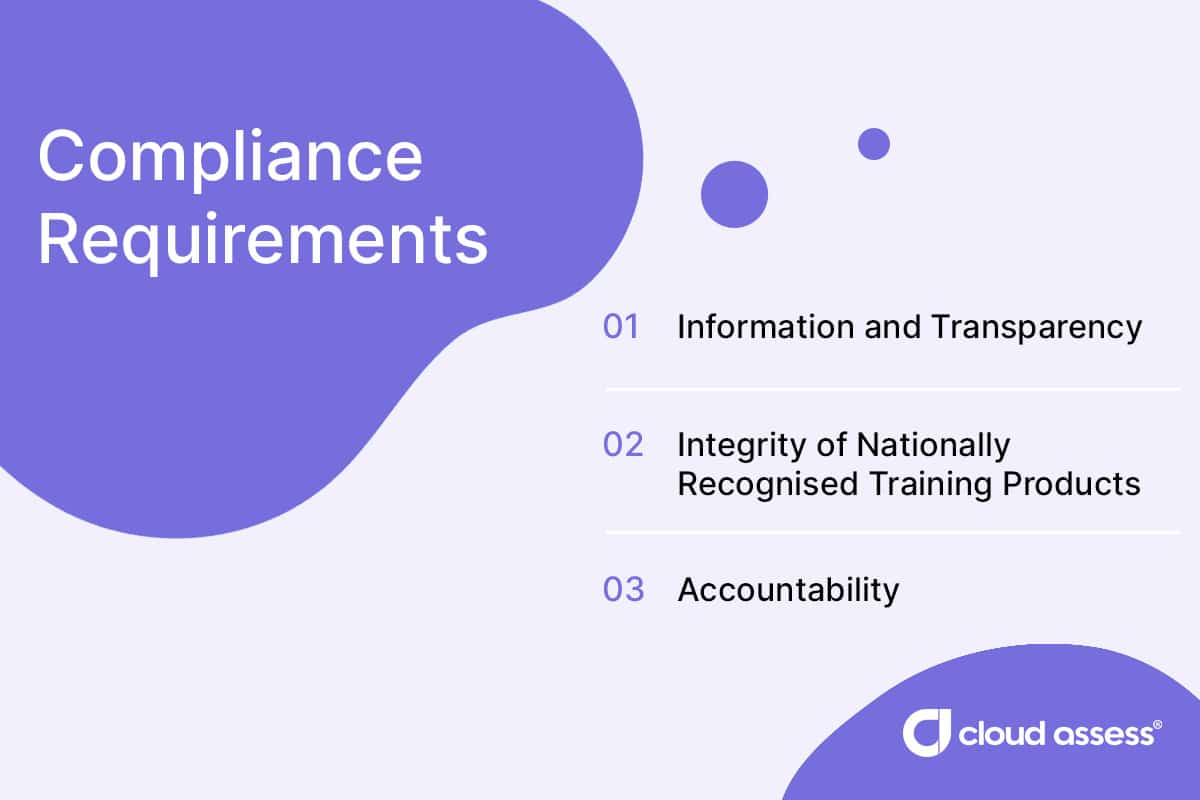
The Compliance Requirements outline the specific obligations that RTOs must meet to remain compliant with the revised Standards. These include rules around information management, advertising, third-party arrangements, and more.
2.1 Information and Transparency
Information Management
RTOs must ensure the secure handling of student information in compliance with privacy laws and maintain student assessment records for at least two years.
Marketing and Advertising
All marketing material must accurately represent the RTO’s services, include the RTO code, and distinguish between nationally recognised and other types of training. Misleading claims about student outcomes or employment prospects are strictly prohibited. Marketing is an important part of growing an RTO, so careful attention should be paid to ensure that your marketing is RTO compliant.
2.2 Integrity of Nationally Recognised Training Products
AQF Certification Documentation
RTOs are responsible for issuing AQF certification documentation only to students who meet the training product requirements. Certificates must be issued within 30 days after completion, provided all fees are paid.
Student Identifiers and NRT Logo
RTOs must comply with the Student Identifier Scheme and ensure correct use of the Nationally Recognised Training (NRT) Logo on AQF documentation.
Transition of Training Products
RTOs must manage the transition from superseded training products effectively, ensuring that students are not enrolled in expired or removed products.
2.3 Accountability
Annual Declaration of Compliance & Notification of Material Changes
RTOs are required to submit an Annual Declaration on Compliance and notify the VET Regulator of any material changes that might impact their ability to comply with the Standards.
Third-Party Arrangements
If an RTO engages a third party for the provision of services, a formal agreement must be in place, and the RTO must notify the regulator of such arrangements within 30 days.
Prepaid Fee Protection
To protect students, RTOs that collect prepaid fees exceeding $1,500 must implement fee protection measures, such as holding a financial guarantee or joining a Tuition Assurance Scheme.
Public Liability Insurance
RTOs must maintain public liability insurance throughout their registration period to cover their operational scope.
Compliance with other requirements
The RTO must comply with Commonwealth, State and Territory legislation and regulatory requirements relevant to its operations.
3. Credential Policy
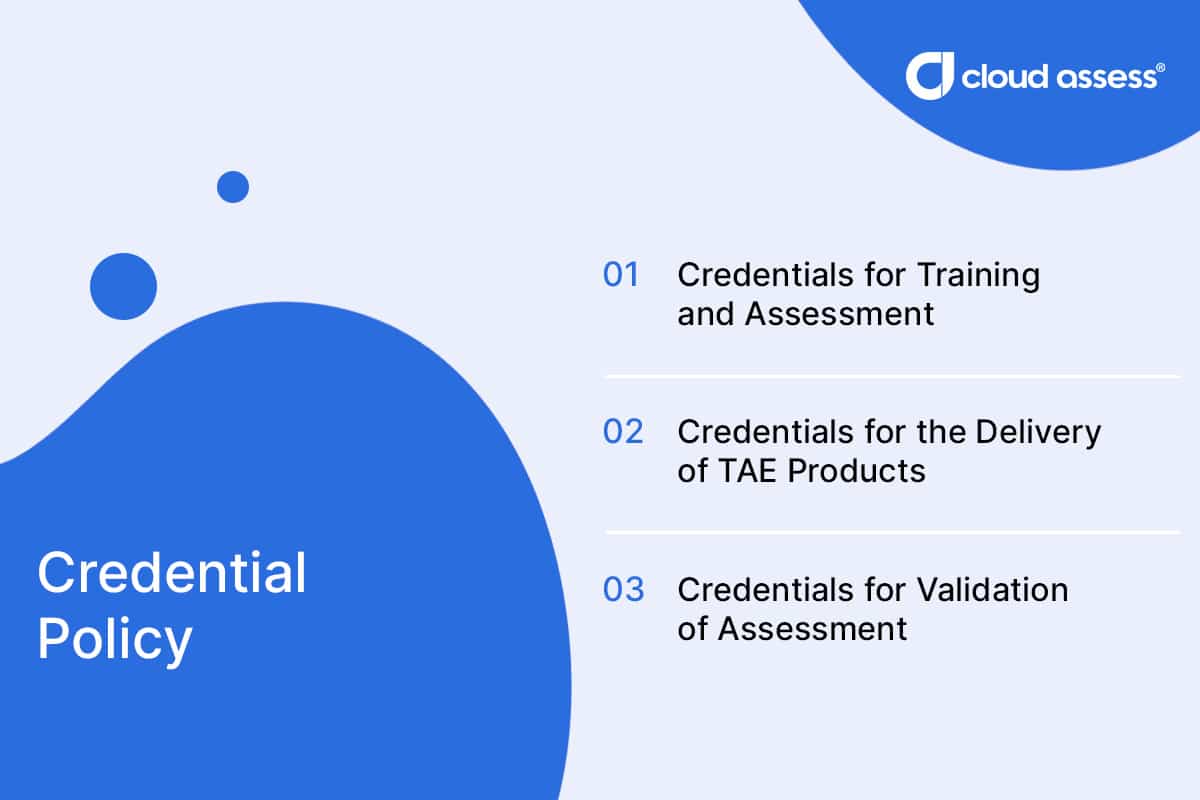
The Credential Policy specifies the qualifications trainers, assessors, and validators need to hold in order to deliver training and assessment. It is designed to ensure that RTO staff are properly credentialed to maintain the quality of VET delivery.
3.1 Credentials for Training and Assessment
All individuals delivering training and assessment must hold specific qualifications such as:
- Certificate IV in Training and Assessment (TAE40122 or its successors).
- Secondary teaching qualifications combined with relevant assessor skill sets.
3.2 Credentials for the Delivery of TAE Training Products
For trainers and assessors delivering qualifications from the TAE Training Package (e.g., the Certificate IV in Training and Assessment), higher-level credentials are required:
- Diploma of Vocational Education and Training or Diploma of Training Design and Development (or their successors).
3.3 Credentials for Validation of Assessment
Those conducting validation must meet specific credential requirements, particularly when validating qualifications from the TAE Training Package. Validators must collectively have industry expertise and knowledge relevant to the qualification being validated.
Frequently Asked Questions about the RTO Standards 2025
1. Why were the Standards for RTOs changed in 2025?
The Standards for RTOs 2025 aim to improve the quality, flexibility, and transparency of VET delivery. These changes to the 2015 Standards were driven by extensive consultation and are designed to address workforce challenges and modernise the sector.
2. How do the new RTO Standards 2025 affect my organisation’s current operations?
RTOs need to update policies, systems, and credential requirements in line with the 2025 Standards. Key areas like student support, governance, and assessment practices differ from previous compliance requirements.
3. What is the Credential Policy and why is it important?
The Credential Policy outlines the required qualifications for trainers, assessors, and validators. It ensures that those delivering and assessing VET training are properly credentialed, helping to maintain the quality and consistency of training outcomes.
4. How can RTOs ensure compliance with the 2025 Standards for RTOs?
RTOs should review the Compliance Requirements document carefully, ensure that trainers hold the necessary qualifications, and update their governance and risk management frameworks. Regular consultation with ASQA resources is key to remaining compliant.
6. Are the RTO Standards 2025 the same as ASQA Standards 2025?
The Standards for RTOs 2025 are often referred to as ASQA RTO Standards. This is because the Australian Skills Quality Authority is responsible for enforcing them. If you see the term ASQA new standards or ASQA Standards 2025, they all refer to the latest Standards for registered training organisations.
Simplify Compliance with the 2025 RTO Standards
The latest Standards for Registered Training Organisations have shifted how RTOs are regulated and how quality is assured within the VET sector. There is a heavier focus on outcome-driven standards, clear compliance requirements, and specific credentialing policies. This provides RTOs with a more structured framework to deliver high-quality training and assessment.
However, as we’ve seen with this update to the regulations, the standards that are required are constantly evolving. RTO must stay informed and leverage support from ASQA. This ensures they can continue to deliver industry-relevant, high-quality training that meets the needs of learners, employers, and the broader economy.