Compliance breaches can cost businesses more than just money. Trust can be damaged, operations stalled, and teams can be exposed to legal risk. Whether you’re managing teams, navigating industry audits, or scaling operations, staying compliant isn’t optional — it’s essential.
That’s where compliance management comes in. It helps organisations ensure the right policies, procedures, and measures are covered. This ensures they can stay aligned with internal standards and external regulations.
In this guide, we’ll explore:
- What is compliance management?
- The difference between compliance and ethics
- The relationships between compliance, governance, and risk management
- The different types of compliance
- The stakeholders responsible for compliance
- The importance of compliance management
- A guide on how to create a compliance program
- The role of compliance management tools
- Challenges in implementing an effective compliance program
What is Compliance Management?
Compliance management is a systematic process of ensuring organisations meet various standards. These include applicable laws, regulations, internal policies, and industry standards. The process involves establishing clear guidelines and documenting procedures. It also requires regularly monitoring adherence and promptly addressing issues of non-compliance.
Compliance vs Ethics

Compliance refers to following established rules, regulations, and organisational standards. It involves measurable and enforceable requirements that organisations must meet.
Ethics involves principles and values that guide individual behaviour and organisational decisions. Ethical standards may go beyond legal requirements. They focus on doing what is morally right, fair, or responsible, even without explicit rules.
Compliance and ethics often overlap. Compliance addresses mandatory obligations. And, ethics guides choices based on integrity and values.
Relationship Between Compliance, Governance, and Risk Management
Compliance, governance, and risk management create a stable and accountable organisation. Each has a distinct role:
- Governance sets direction and defines decision-making authority within the organisation.
- Risk Management identifies potential threats to operations, reputation, and legal standing.
- Compliance ensures the organisation follows applicable regulations and internal standards. It also requires adherence to laws set by regulatory authorities.
Types of Compliance
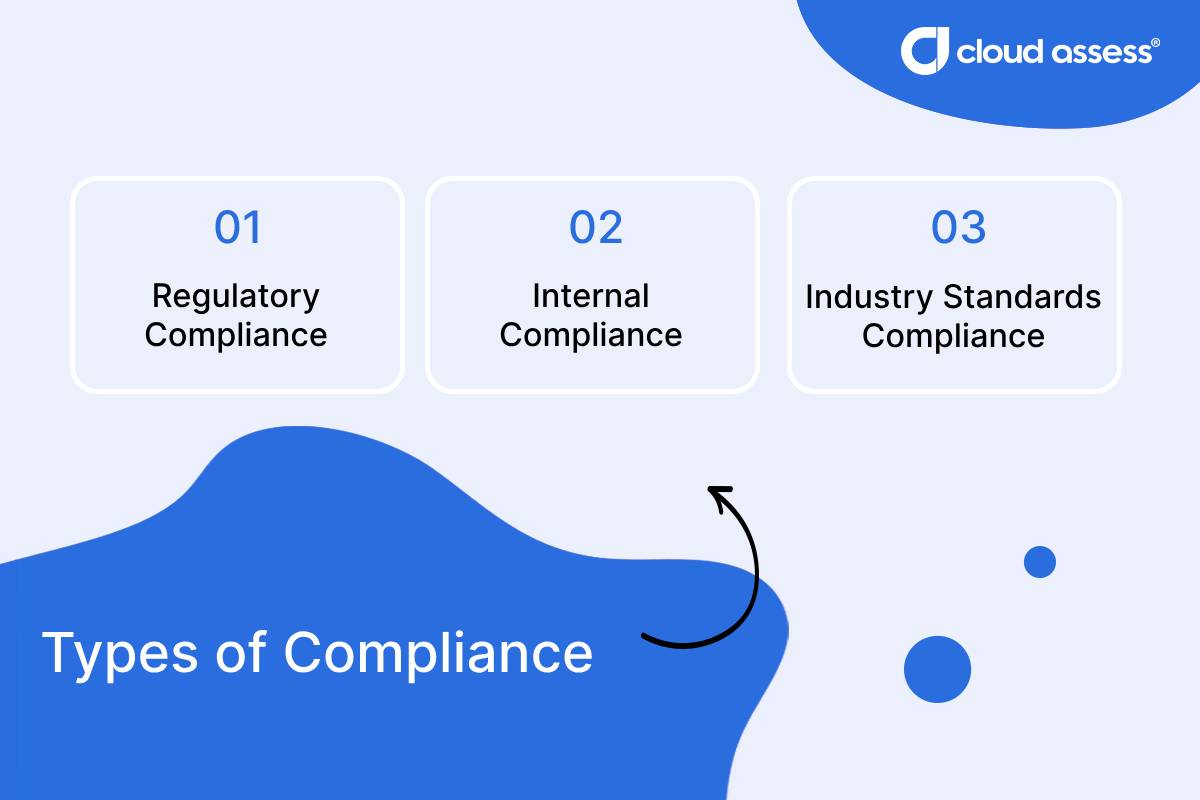
Regulatory Compliance
Workplaces follow laws and compliance regulations set by external authorities. These cover employment practices, workplace health and safety, data handling, and environmental operations.
Internal Compliance
Organisations develop their own policies and procedures to guide behaviour and daily operations. These rules shape how employees complete tasks, record decisions, and manage responsibilities. Internal compliance reflects the organisation’s structure, values, and expectations.
Industry Standards Compliance
Certain sectors adopt recognised standards from industry bodies or professional associations. These standards promote consistency, quality, and professionalism in the workplace.
Who is Responsible for Compliance?
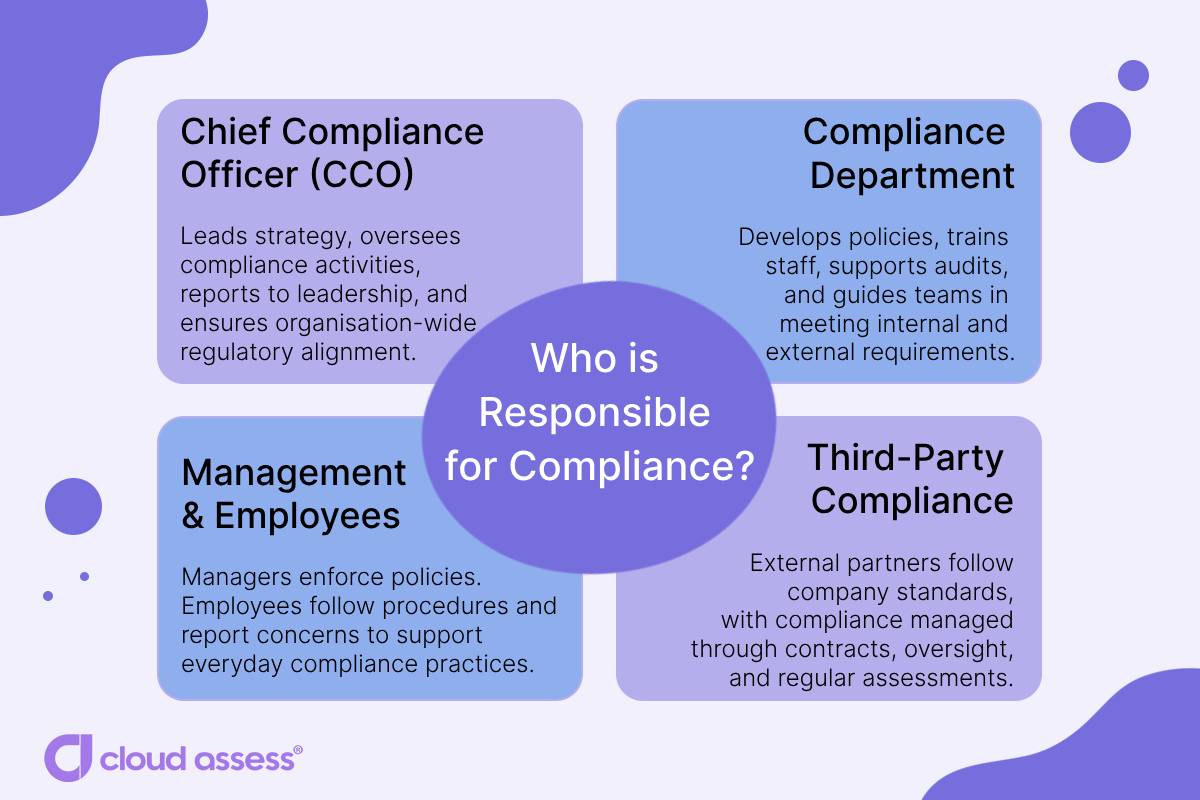
- Chief Compliance Officer (CCO). This is a senior executive responsible for leading the organisation’s compliance efforts. It is usually a dedicated role in larger or regulated businesses. Companies often appoint someone with a background in law, auditing, or corporate governance. The CCO typically reports to the CEO or board. They oversee the broader compliance strategy, direct internal reviews, and manage reporting structures. Smaller organisations may not appoint a formal CCO. Instead, they often assign these responsibilities to a leader in legal or operations.
- Compliance department. The compliance department works under the CCO or another senior leader. Its structure varies depending on the organisation’s size and industry. In larger companies, the department may include multiple specialists. These roles often focus on policy development and staff training. They also support internal monitoring and audit preparation. These activities help the organisation achieve compliance. In smaller workplaces, a single compliance officer may coordinate efforts across departments. The department provides support, guidance, and documentation management.
- Management and employees. Compliance is a shared responsibility across all levels of the organisation. Managers translate high-level policies into specific, practical actions. They oversee team conduct, deliver training, and reinforce expectations. Employees apply relevant procedures in their daily work and report any concerns.
- Third-party compliance. External providers often work under the organisation’s internal policies. They need to meet the same standards when delivering services or operating on-site. Companies manage these relationships through contract terms, oversight measures, and supplier assessments.
Importance of Compliance Management
Helps Avoid Legal Risks and Penalties
Effective compliance management keeps the organisation aligned with relevant laws and regulatory requirements. To achieve this, organisations must guide employees through the right procedures. These include handling sensitive data correctly and completing thorough risk assessments. Each department must apply these procedures consistently. This helps the organisation identify gaps early. With that visibility, teams can resolve issues early. This prevents them from growing into legal challenges or broader compliance management challenges.
Protects Organisational Reputation
A strong compliance management system reflects an organisation’s commitment to accountability. When employees follow consistent internal policies, the risk of data breaches or public missteps goes down. These routines help create a more stable and accountable environment. This consistent performance builds credibility and strengthens trust over time.
Enhances Operational Efficiency
Clear policies and procedures help employees understand what’s expected of them. When everyone follows the same compliance processes, teams work more efficiently. This reduces confusion and supports coordination across teams. It also speeds up routine tasks such as training, reporting, and record-keeping.
Builds Trust With Stakeholders
Organisations that enforce compliance effectively create transparency across operations. Clear internal controls build confidence during important interactions. This includes communication with clients, regulatory bodies, and senior management. Stakeholders are more likely to trust a business that demonstrates compliance and clear accountability. Structured compliance monitoring helps build trust over time.
Facilitates Ethical Organisational Culture
A strong compliance program supports ethical choices at every level. It gives employees a clear understanding of their compliance obligations and where to go when concerns arise. Over time, these standards shape a workplace culture built on integrity, not just rules.
How to Create a Compliance Program
1. Set Clear Objectives
Define what the program aims to achieve. Regulatory compliance goals may focus on meeting applicable laws and avoiding legal exposure. Internal compliance objectives often centre on improving consistency and accountability. For industry standards, the focus might be staying competitive or meeting client expectations.
2. Conduct a Compliance Risk Assessment
Identify where the organisation is most at risk and decide what controls to put in place. In regulatory compliance, this step often starts with mapping out the laws that apply. Once you identify these, you can assess how current operations align with legal requirements. Internal risk assessments focus on gaps in procedures or employee behaviour. For industry standards, the emphasis may be on efficiency risks or competitive gaps.
3. Standards Mapping and Alignment

If you’re creating an industry-standard-based program, identify the specific frameworks you intend to follow. This could include ISO certifications, sector-specific codes, or client-mandated requirements. Mapping current practices against these standards helps determine what to update or introduce.
4. Develop Compliance Policies and Procedures
Use the findings from your risk assessment and standards mapping to write clear, actionable policies. For regulatory compliance, policies often cover specific areas. These may include data handling, workplace safety, or financial reporting. In internal compliance, policies explain how teams operate. They guide how employees manage tasks, make decisions, and document their work. For industry standards, policies focus on consistency and performance. They help maintain quality and align internal processes with external expectations.
5. Establish Governance and Oversight
Assign roles and responsibilities for managing compliance. This includes naming compliance officers and defining reporting lines. It also involves setting clear expectations for senior management. Governance tends to be more formal in regulatory compliance, often requiring board-level reporting. Internal or industry programs may use simpler or more flexible ways to monitor compliance. For example, department managers may check that teams follow procedures. They might also ensure records are updated and training is completed on time.
6. Implement Compliance Training and Communication
Ensure employees understand their compliance responsibilities. Regulatory compliance may require training aligned with specific laws. These can include the General Data Protection Regulation (GDPR), the Foreign Corrupt Practices Act, or Australia’s Privacy Act 1988.
Internal compliance relies on clear training and consistent communication. Build training programs that show employees how to apply internal policies in their daily work. Use real workplace scenarios to make expectations tangible. Assign managers to reinforce key messages and model the right behaviours within their teams.
In industry compliance, training often focuses on recognised standards or procedures. It may involve preparing staff for audits or inspection processes. Training can also help them meet certification requirements. It can also help employees demonstrate verification of competency (VOC) for specific tasks or roles. In some industries, VOC is critical for proving that workers have the right skills and knowledge. This is necessary for technical tasks or safety-critical procedures. Meeting the required standard is a key part of compliance. This process helps ensure consistency, reduces risk, and supports regulatory compliance.
7. Set Up Monitoring and Reporting Systems

Track compliance activity using documentation, audits, and reporting tools. Regulatory programs often require detailed audit trails and formal reports to external authorities. Internal systems monitor whether teams follow policies correctly. In industry standards, monitoring might focus on maintaining consistent quality or process control.
8. Respond to Non-Compliance Effectively
Define how the organisation handles compliance failures. This includes investigating incidents, applying corrective actions, and updating policies when necessary. In regulatory settings, some responses may be mandatory or subject to reporting requirements. Internal and industry programs take a different approach. They tend to focus more on accountability, staff training, and ongoing process improvement.
9. Stay Ahead of Regulatory Change
Laws and regulations often evolve. Organisations focused on regulatory compliance management need a structured way to stay up to date. They must monitor legal changes, interpret their impact, and adjust policies as needed. This can include working with legal advisors to understand regulatory updates. It may also involve subscribing to compliance alerts or setting regular review dates for internal policies.
10. Regularly Review and Update the Program
Compliance is an ongoing process. Schedule periodic reviews of the compliance program. These help ensure it stays aligned with organisational goals and external requirements. Regulatory reviews focus on tracking legal updates. Internal reviews may reflect organisational restructuring or shifts in workflows. In industry compliance, updates often respond to changes in standards or competitive pressures.
The Role of Compliance Management Tools

- Policy Management Tools: Help create, update, and distribute internal policies. They ensure staff have access to the most current rules and procedures.
- Risk Assessment Tools: Identify and evaluate compliance risks across departments or processes. They support informed decision-making and proactive risk control.
- Audit Management Tools: Track, schedule, and document internal and external audits. These tools help maintain audit trails and demonstrate compliance.
- Incident and Case Management Systems: Log, investigate, and resolve compliance issues. They support fast responses and structured documentation for non-compliance events.
- Compliance Training Software: Delivers targeted compliance training courses, refresher training, and skill assessments. These tools help reinforce key standards and reduce training gaps.
- Learning Management Systems (LMS): Deliver, track, and update broader employee training. LMS platforms ensure that staff complete required learning and stay up to date on organisational policies.
- Regulatory Change Management Tools: Monitor legal changes and manage policy updates in response. They help organisations remain compliant with evolving laws.
- Compliance Monitoring and Reporting Dashboards: Provide real-time insights into compliance performance. Dashboards highlight trends, risks, and gaps for leadership teams.
- Document and Records Management Tools: Store and control access to compliance-related documents. These tools ensure files are accurate, secure, and easy to retrieve.
- Comprehensive Tools: Combine multiple functions to centralise and automate compliance processes. They help organisations manage compliance at scale.
Challenges in Implementing an Effective Compliance Program
Keeping Pace With Evolving Requirements
Compliance requirements don’t stay static. They can shift due to legal updates, internal reviews, or changes in industry standards. Organisations often struggle to keep policies and processes up to date across all areas.
Solution: Assign ownership for monitoring changes in each compliance area. Use change management tools to track external legal updates. Maintain a central register of internal policies. Include industry standards that apply to the organisation. Use it to track updates and monitor internal changes. Schedule regular reviews to track changes and update policies as needed.
Navigating International Compliance Complexities
Companies operating across regions must meet different legal and cultural requirements. This can lead to conflicting expectations or fragmented policies.
Solution: Map out the specific laws that apply in each region. Create a unified framework that allows for local variations where needed.
Resource Allocation and Budgetary Constraints
Compliance programs require time, staff, and funding. Smaller organisations may lack the capacity to manage ongoing compliance tasks.
Solution: Prioritise high-risk areas and use scalable compliance tools to automate routine tasks. Assign clear responsibilities to spread the workload efficiently.
Aligning Compliance Initiatives With Business Objectives
Many organisations treat compliance as an administrative or box-ticking exercise. Teams may treat it as a task to complete rather than part of how the business runs. This makes it harder to get buy-in or consistent support.
Solution: Involve department heads when planning compliance activities. Make sure compliance goals match how teams actually work. Show how good compliance can make things run more smoothly, reduce mistakes, and build trust with customers and partners.
How Cloud Assess Can Help
Cloud Assess helps workplaces take control of compliance. It provides clear, practical tools that support safe and consistent operations. Here’s how:
- Automates compliance training so teams complete the right learning at the right time.
- Verifies skills in real time with digital records, photos, and signatures.
- Tracks certifications and licenses to prevent expired or missing qualifications.
- Delivers mobile-first training so workers can learn and complete various types of assessments on-site. They can keep working even without internet access.
- Captures evidence with digital checklists to support audits and safety inspections.
- Reduces admin work by automating enrolments, notifications, and progress tracking.