Training providers play a critical role in helping people develop practical skills. This, in turn, helps learners access meaningful employment. However, supporting diverse learner cohorts in further education settings can be challenging.Providers must balance accessibility, compliance, assessment integrity, and individual learner needs.
Understanding disability, recognising barriers, and applying inclusive training and assessment strategies is essential. It helps Vocational Education and Training (VET) providers deliver high-quality training that supports fair and consistent outcomes.
In this article, we explore:
- Why supporting students with disabilities is important
- Types of disabilities, and how training can be adapted to support them
- What direct and indirect discrimination look like
- Regulations that support individuals with disabilities in vocational education
- Examples of vocational skills and types of training that build them
- Barriers that students with disabilities face in vocational education
- Principles for designing inclusive training experiences
- Reasonable adjustments that can be made to support students with disability
- Tips and best practices for supporting versatile learner cohorts

Why is it Important to Support Students with Disabilities in Vocational Education?
Supporting VET students with disabilities is about more than meeting legal obligations. Vocational education focuses on practical skills and real-world outcomes. This allows training to be adapted to different learning needs. At the same time, it maintains consistent competency standards.
Inclusive training environments help learners feel safe, respected, and confident in their abilities. This improves their motivation and supports their long-term success.
When Registered Training Organisations (RTOs) prioritise accessibility, they improve learner engagement. This leads to better knowledge retention and completion rates. Inclusive practices also strengthen training quality and academic integrity. This helps providers build a reputation for delivering strong outcomes for all students.
Types of Disabilities and How to Accommodate Them
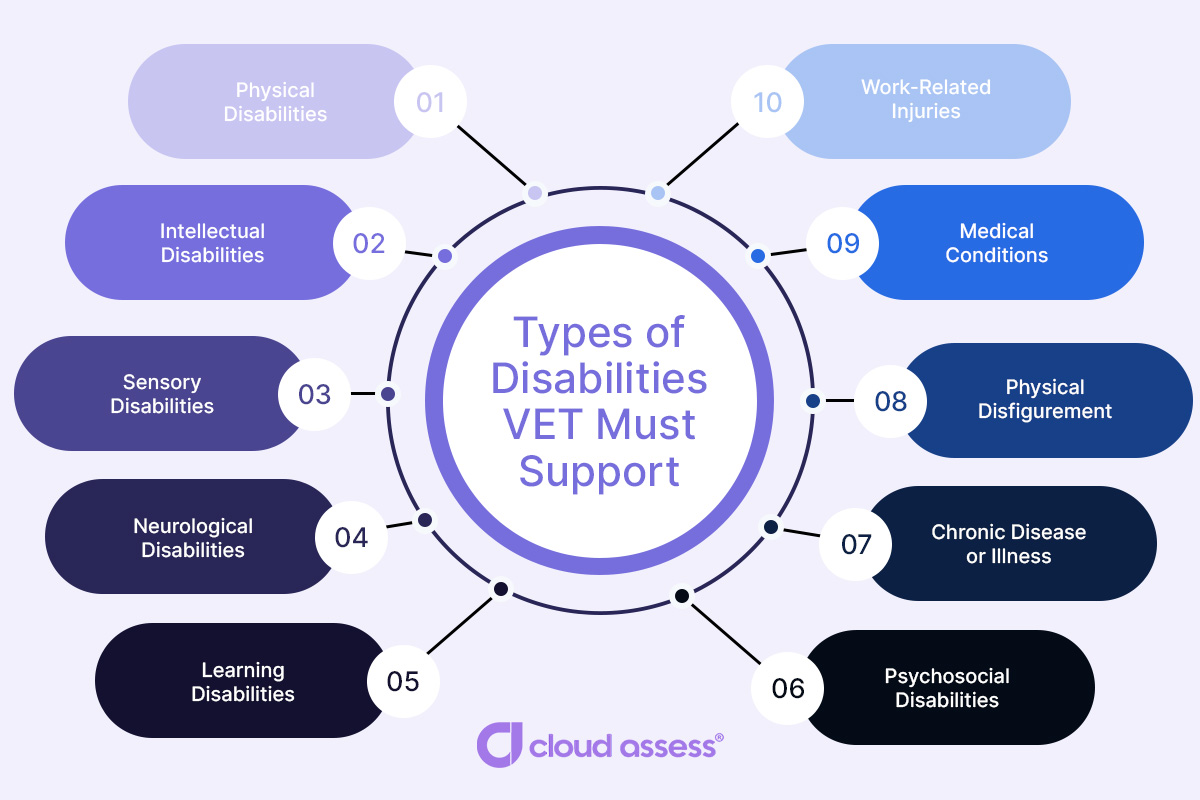
Physical Disabilities
Physical disabilities affect a person’s mobility, stamina, or physical functioning. These may limit movement, dexterity, or endurance. These learners may benefit from adjustments to the physical learning environment or training activities.
Intellectual Disabilities
Intellectual disabilities involve limitations in cognitive functioning, reasoning, problem-solving, and adaptive behaviour. Learners may need additional structure, simplified instructions, or scaffolded support.
Sensory Disabilities
Sensory disabilities impact hearing, vision, or both. Learners may require alternative learning formats, communication supports, or environmental adjustments. These will help them fully participate in training.
Neurological Disabilities
Neurological disabilities result from conditions that affect the nervous system. These include epilepsy, multiple sclerosis, or acquired brain injuries. This can influence coordination, concentration, memory, or fatigue levels. Trainers can help these students by adapting pacing and simplifying complex tasks.
Learning Disabilities
Learning disabilities affect the way individuals process, understand, or retain information. These students need flexible teaching strategies or additional time for tasks.
Psychosocial Disabilities
Psychosocial disabilities are associated with mental health conditions. These can affect a person’s social functioning, behaviour, or ability to manage stress. Learners may benefit from predictable routines and clear communication.
Chronic Disease or Illness
Illnesses like diabetes, cardiovascular disease, or chronic pain can affect stamina and concentration. This can lead to their participation being inconsistent. Flexibility in pacing and attendance can be beneficial for learners with this type of disease or illness.
Physical Disfigurement
Physical disfigurement refers to changes in appearance from burns, trauma, or medical conditions. They may not impact physical ability, but can affect confidence, communication, and participation. Students in this disability category need supportive and inclusive environments.
Medical Conditions
Medical conditions include ongoing health issues that may fluctuate or require regular treatment. These include asthma, autoimmune disorders, or cancer. Learners may need flexible scheduling and understanding of health-related absences.
Work-Related Injuries
Work-related injuries can temporarily or permanently affect movement, strength, or cognitive functioning. Training pathways may need to be adjusted to accommodate recovery, altered abilities, or retraining for new roles.
What Do Direct and Indirect Discrimination Look Like?

Discrimination can take many forms. It can be direct and intentional, indirect and inadvertent.
Direct discrimination could involve:
- Refusing to admit a learner based on their disability
- Refusing to make reasonable adjustments to classrooms or work environments
- Allowing a learner’s disability, rather than their competence, to influence assessment outcomes
Some examples of indirect discrimination include:
- Setting assessment tasks that require abilities unrelated to the competency
- Applying blanket policies that disadvantage certain disabilities
- Requiring attendance or participation in ways that are not accessible
- Using inflexible training or types of assessment
It’s also important to recognise that discriminatory behaviours don’t always come from negative intentions. Even well-meaning actions can prevent learners from full participation. These might include overprotective behaviour or unnecessary preferential treatment.
Regardless of intent, the impact on students with disabilities is often the same. They become excluded, frustrated, and disengaged from the learning process.
Vocational and Non-Vocational Barriers That Individuals With Disabilities Face
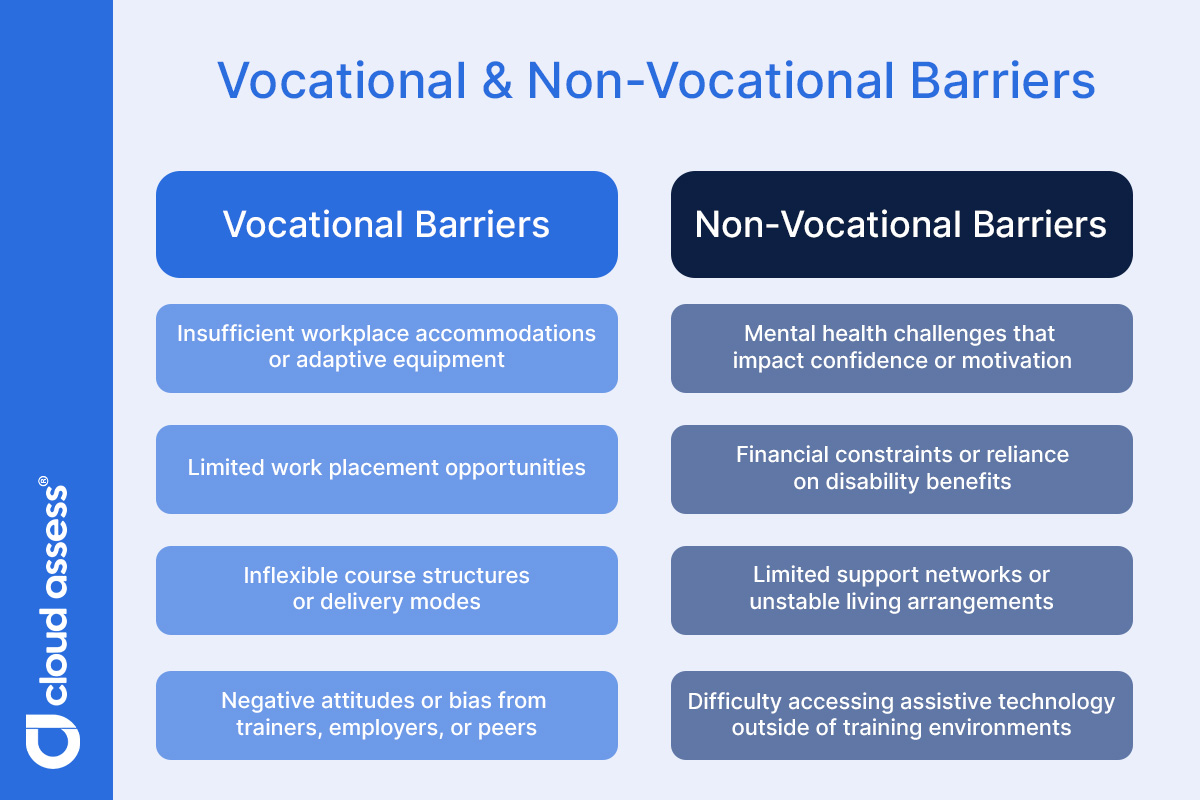
Learners with disabilities may encounter a range of barriers that affect their ability to participate fully in vocational training. Some barriers are directly related to training environments, while others stem from broader personal or social circumstances. Both can make it harder for learners to engage, progress, or transition into employment.
Vocational barriers could include:
- Insufficient workplace accommodations or adaptive equipment
- Limited work placement opportunities
- Inflexible course structures or delivery modes
- Negative attitudes or bias from trainers, employers, or peers
Examples of non-vocational barriers that can impact training include:
- Mental health challenges that impact confidence or motivation
- Financial constraints or reliance on disability benefits
- Limited support networks or unstable living arrangements
- Difficulty accessing assistive technology outside of training environments
Learners often face more than one barrier at a time, and even small obstacles can compound over time. Training providers who recognise these challenges are better positioned to respond early. This could involve removing unnecessary obstacles or connecting learners with appropriate supports.
Regulations That Guide Training and Assessment for Disabled Learners
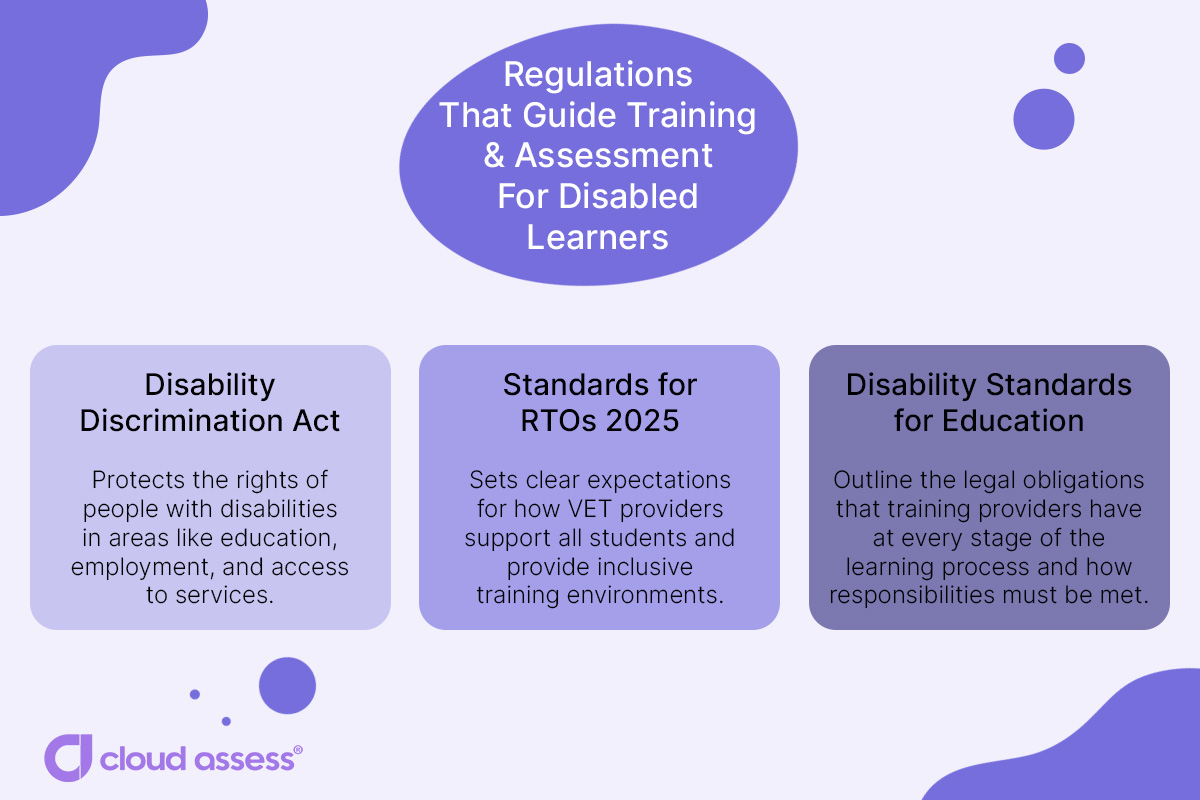
Disability Discrimination Act
The Disability Discrimination Act 1992 (DDA) is an Australian law that makes it unlawful to treat a person unfairly because of their disability. It covers areas that include education, employment, and access to services.
Section 22 refers specifically to education providers. Admission, enrolment, participation, assessment, and support cannot be discriminatory based on disability. Providers must also make reasonable adjustments to support inclusion. The only exception is where doing so would cause unjustifiable hardship.
The DDA aims to protect the rights of people with disabilities and promote full inclusion in community and working life. This includes all disability groups listed above, regardless of severity level. It also includes those who are born with disabilities and those who acquire them later in life. This protection also extends to those who have a personal connection with a person with a disability. This could include relatives, friends, carers, co-workers, and more.
The Australian Government is currently reviewing the DDA. It aims to strengthen the law and ensure it continues to reflect the experiences and needs of people with disabilities.
Standards for RTOs 2025

The Standards for RTOs 2025 set clear expectations for how vocational education and training providers support all students. This includes those with disabilities. For example, training providers must create inclusive and transparent environments. Learners should feel safe to disclose a disability without fear of discrimination. RTOs must also identify, apply, and communicate reasonable adjustments that can be made.
This shifts the focus from reactive compliance to proactive, learner-centred support throughout the training lifecycle. This focus is reiterated throughout the Standards. They place strong emphasis on overall training support and learner wellbeing. RTOs are expected to provide clear guidance, accessible environments, and appropriate support services. These boost learner engagement and help students progress through their training.
Disability Standards for Education
The Disability Standards for Education, also known as the Education Standards, were created by the Australian government under Section 31 of the DDA. They outline the legal obligations that education providers have. They also explain how these responsibilities must be met in educational settings.
Vocational education and training providers have obligations at every stage of the learning process. These apply across enrolment, participation, curriculum development, training delivery, assessment, and certification of VET qualifications. The Education Standards also require social support services and harassment and victimisation prevention. Examples of an RTO’s responsibilities include:
- Ensuring all students can enrol on the same basis
- Making units, learning materials, and assessments accessible for all students
- Adopting flexible delivery and activities to support equitable participation
- Ensuring all students who meet course requirements receive the same recognition
- Providing training and wellbeing support, and preventing harassment and victimisation
- Consulting with learners to identify reasonable adjustments that support their participation
Principles of Inclusive Vocational Training
- Universal Design for Learning (UDL). This focuses on designing accessible training materials from the start. It provides learners with various ways to engage with content, demonstrate learning, and stay motivated. This reduces the need for individual adjustments later.
- Individualised Training Pathways. Learners progress at different paces and have different support needs. This approach supports flexible delivery, tailored RTO training plans, and adjusted timelines. It also maintains consistent competency standards.
- Evidence-Based and Strength-Based Practice. This involves using proven training and assessment strategies and focusing on existing abilities. This helps educators provide effective support while building learner confidence. It leads to consistently positive vocational education outcomes.
Examples of Vocational Skills For Students With Disabilities
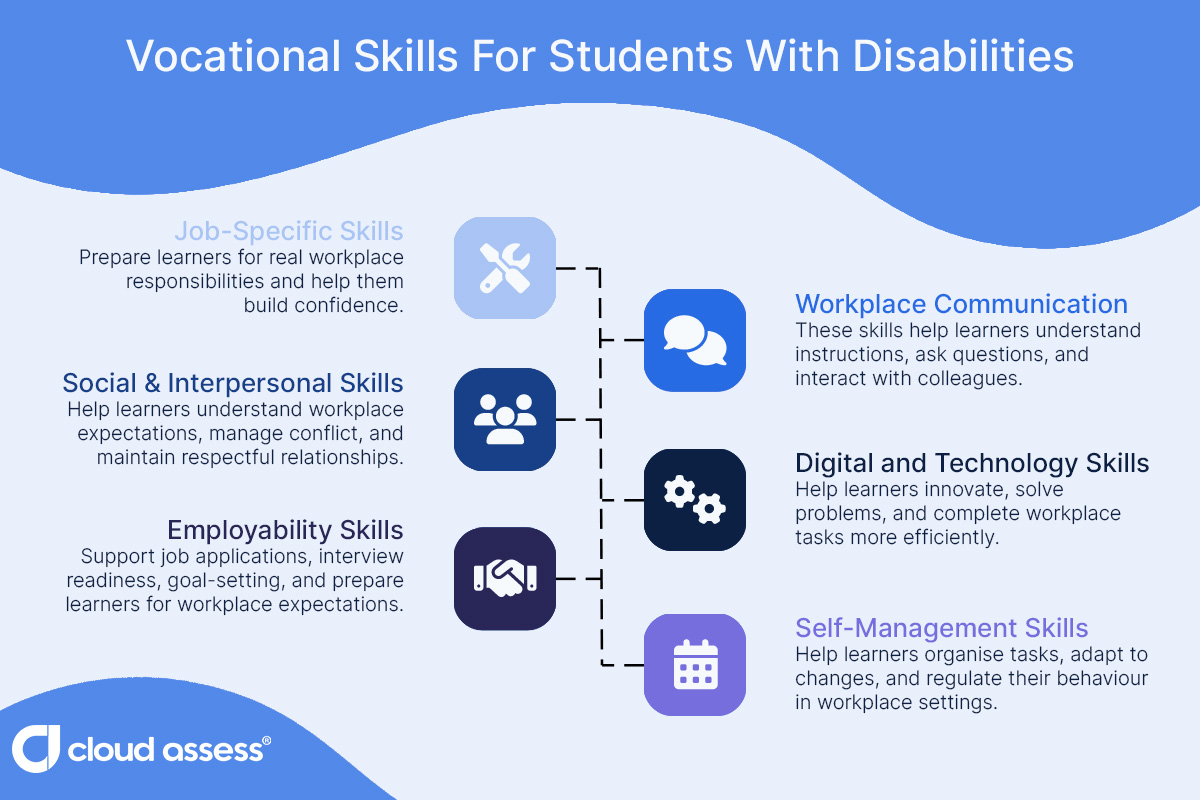
Job-Specific Skills
Practical, hands-on abilities required to perform tasks in particular industries or roles. These skills prepare learners for real workplace responsibilities and help them build confidence.
Workplace Communication Skills
Help learners understand instructions, ask questions, and interact with colleagues. These skills are essential for safe work practices and effective teamwork.
Social and Interpersonal Skills
Build positive workplace relationships and support effective collaboration. These skills help learners understand workplace expectations, manage conflict, and maintain respectful relationships.
Digital and Technology Skills
Span everything from basic device use to leveraging modern tools. This helps learners innovate, solve problems, and complete workplace tasks more efficiently.
Career Development and Employability Skills
Help learners prepare for entering the workforce. These skills support job applications, interview readiness, goal-setting, and understanding workplace expectations.
Self-Management Skills
Help learners organise tasks, adapt to changes, and regulate their behaviour in workplace settings. These skills are essential for independence and successful participation in vocational environments.
Types of Vocational Training for Disabled Persons
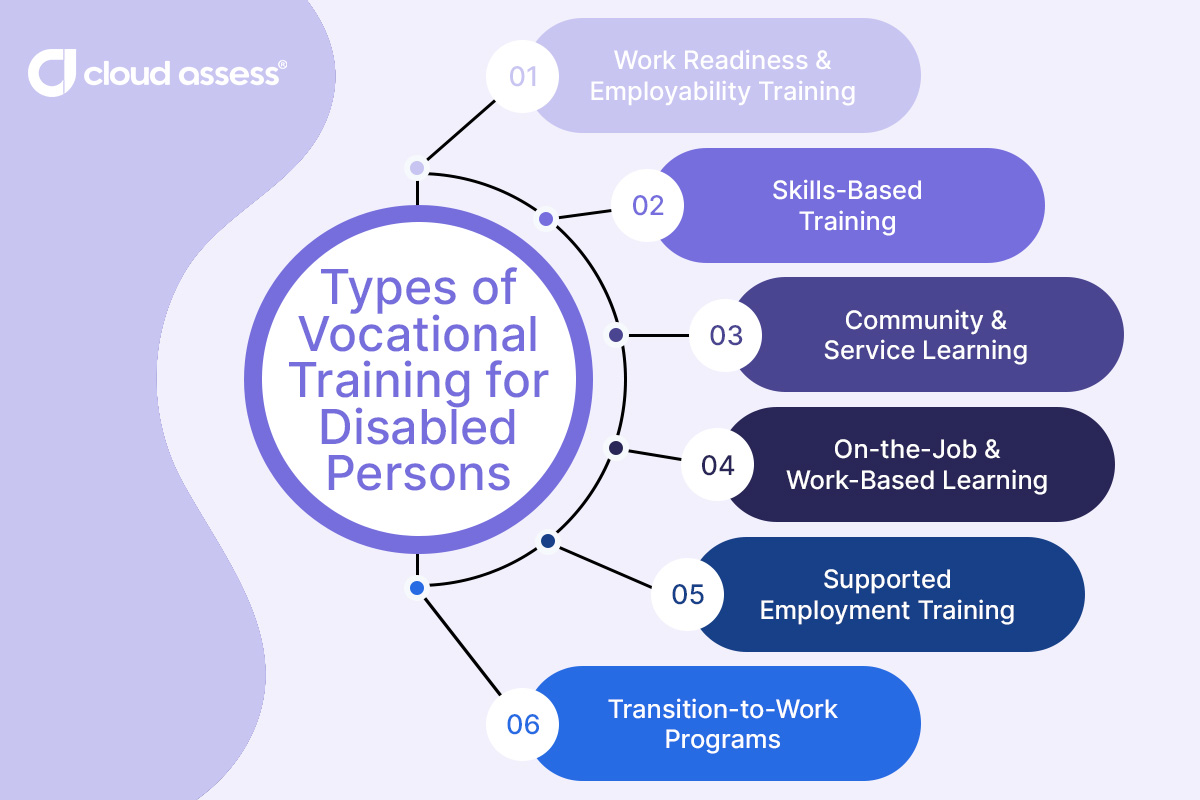
Work Readiness and Employability Training
Work readiness training develops foundation skills needed to enter or re-enter the workforce. It often covers areas like digital literacy, effective communication, and time management techniques.
Skills-Based Training
Skills and competency training focus on developing the hard and soft skills needed in specific roles or industries. These training programs often incorporate accessible tools or modified equipment to support participation. They can also be tailored to emphasise hands-on training, repetition, and real-world application.
Community and Service Learning
Service learning programs leverage skills and knowledge from training to benefit the community. This provides structured opportunities to practise skills without the pressures of competitive employment.
On-the-Job and Work-Based Learning
On-the-job training involves learning while engaging in job tasks, often as part of existing employment. Work-based learning, like apprenticeships and traineeships, combines structured study with supervised workplace training. Together, they help learners build confidence and apply their skills in real-world environments.
Supported Employment Training
Supported employment training provides learners with supervision and assistance while completing job tasks. It’s particularly effective for those who need ongoing guidance, job coaching, or modified tasks to succeed in the workplace.
Transition-to-Work Programs
Transition-to-work programs support people with disabilities as they move from education into employment. They often include career planning, work experience, and practical skill development. They also provide guidance on workplace expectations and available supports.
What Are Reasonable Adjustments in VET Systems and Higher Education?
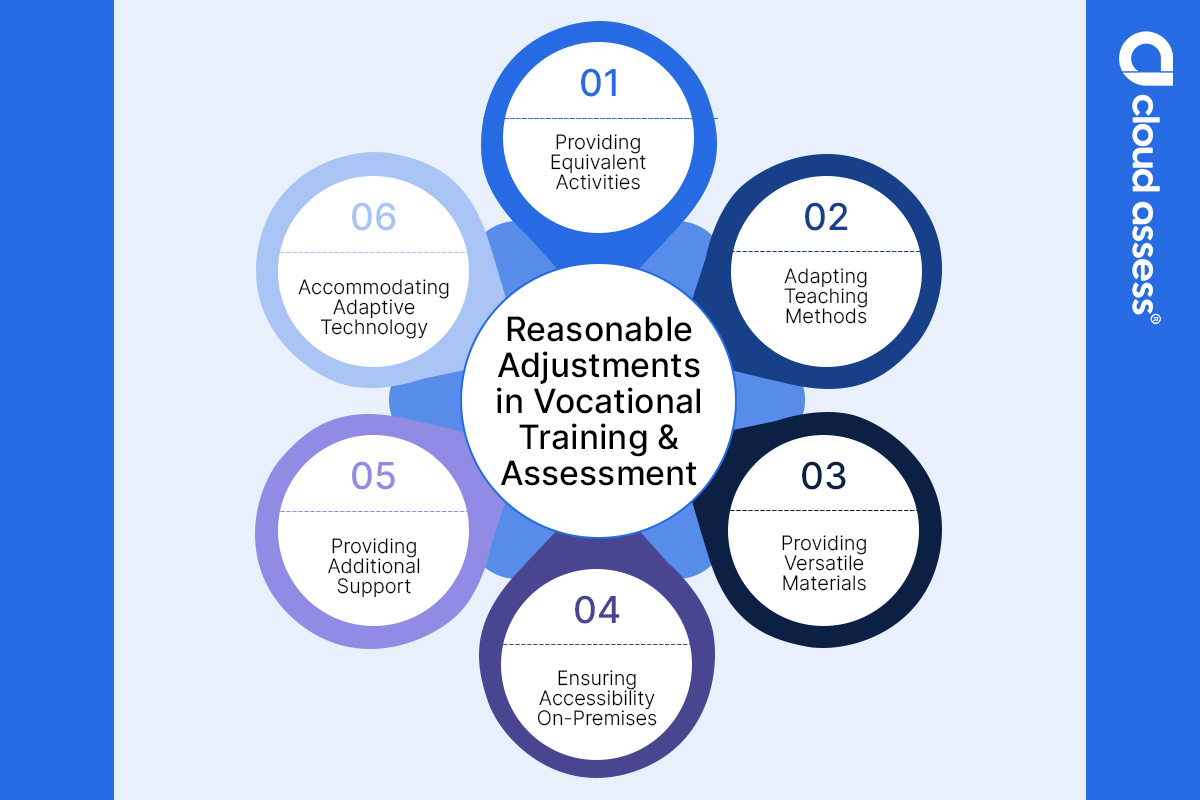
Providing Equivalent Activities
It’s not always possible to adapt an activity for every learner. In these cases, an alternative activity should offer an equivalent learning experience. It’s important that the task supports the same competency and learning outcomes as the original. It mustn’t lower the standard. This reasonable adjustment ensures learners are assessed on their ability, not their disability.
Example: A hands-on heavy machinery demonstration shows learners how production lines work. An equivalent simulation demonstrates the same principles without heavy lifting.
Adapting Teaching Methods
Adapting delivery methods helps remove barriers without changing what is being taught. It allows learners to engage with content in a way that works best for them. This reasonable adjustment supports learners who need more time to process information. It also makes training accessible for those who cannot attend sessions in real-time.
Example: Converting presentations into self-paced VET courses or recording in-person sessions for later review.
Providing Learning Materials in Various Formats
Providing adaptable training materials naturally supports individuals with disabilities. Offering content in text, audio, and visual formats allows learners to access information in the way that works best for them. This supports inclusivity and versatile learning styles without changing learning outcomes.
Example: When creating a training video, provide an audio-only version and a text-based alternative. The text version could be available in large print, braille, or as a digital file using accessible fonts, colours, and layouts.
Ensuring Accessibility On-Premises
Training facilities must allow learners to move safely and independently where possible. Physical accessibility is a fundamental need for participation in face-to-face training. Without it, learners may be excluded before training even begins.
Example: Arranging classrooms to allow space for wheelchairs and mobility aids.
Providing Additional Support

Additional support removes barriers, allowing all learners to participate on the same basis. Support is tailored to individual needs. It’s also often provided alongside other reasonable adjustments.
Example: Providing scribes, note-taking, or one-on-one support during a vocational assessment.
Accommodating Adaptive Technology
Adaptive technology enables students with disabilities to complete tasks independently. These tools provide learners access to training and assessment materials without barriers. The technologies promote autonomy and equitable participation.
Example: Providing screen readers or using voice-to-text technology during assessments
Best Practices for Supporting Students With Disabilities in Vocational Education
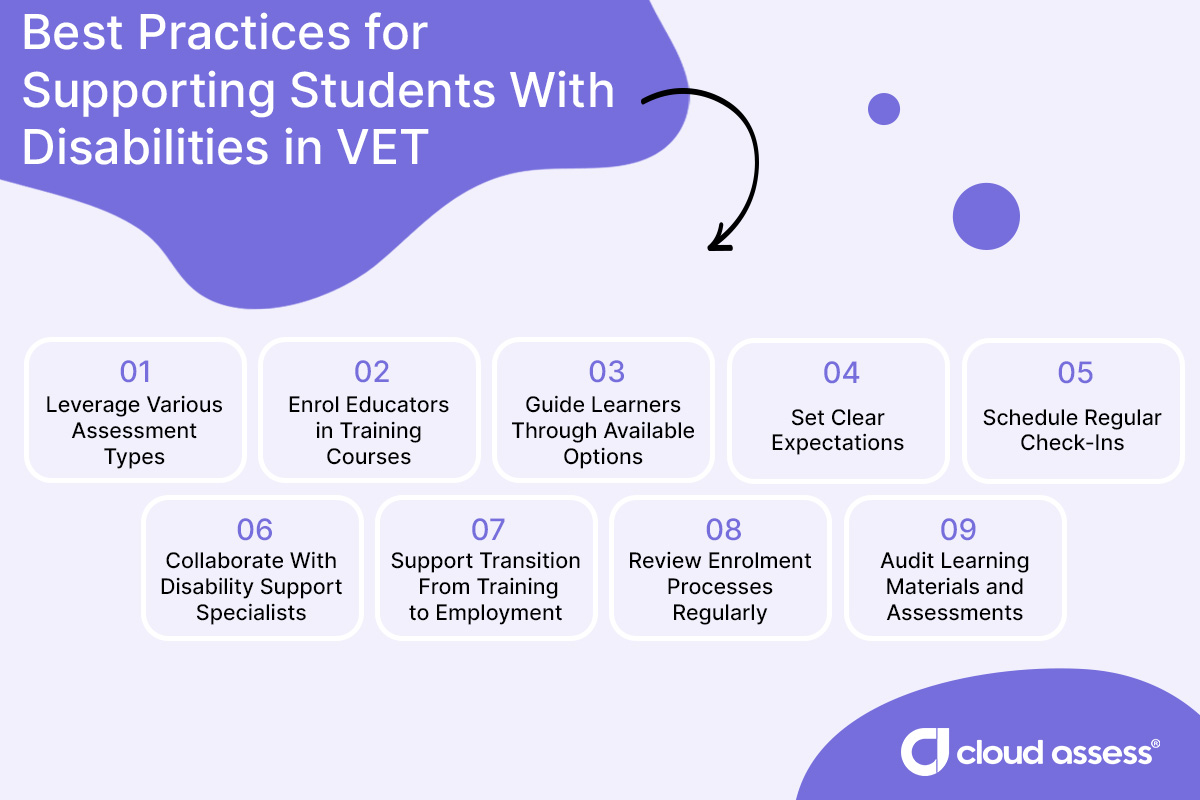
Leverage Various Assessment Types
Use a mix of assessment methods to capture competency in different ways. These could include practical demonstrations, projects, observations, and verbal explanations. This ensures vocational assessments for individuals with disabilities aren’t restrictive. They measure relevant skills and knowledge, not the ability to complete an assessment.
Enrol Educators in Disability Accessibility Training Courses
Provide trainers and assessors with regular disability accessibility and inclusion training. This helps staff understand their obligations and recognise barriers early. It prepares them to confidently support learners with diverse needs.
Guide Learners Through Available Options
Clearly explain available support, adjustments, and learning pathways throughout the training experience. It’s also important to include information about learner rights and consent. Make sure they know how to access complaints or feedback pathways if issues arise. Providing this information supports informed decision-making and helps students advocate for their needs.
Set Clear Expectations
Provide clear instructions, timelines, and assessment requirements from the outset. Structured information reduces uncertainty. It also supports learners who require predictable routines and explicit guidance.
Schedule Regular Check-Ins

Build regular check-ins into training schedules to discuss progress, challenges, and support needs. Early conversations help identify issues before they become barriers to participation or completion.
Collaborate With Disability Support Specialists
Work with disability support staff, job coaches, or external specialists. Collaboration ensures that supports are aligned with the learner’s needs. Long-term collaboration also means that supports can be adjusted to remain effective throughout training.
Help Learners Transition From Training to Employment
Help learners develop resumes, practise interviews, and meet workplace expectations. It’s also important to connect learners with work placements and disability-confident employers. This helps to ensure long-term employment outcomes.
Review Enrolment Processes Regularly
Assess enrolment forms, entry requirements, and communication processes often. This ensures they stay accessible and inclusive. Removing unnecessary barriers at enrolment helps learners start training on an equal footing.
Audit Learning Materials and Assessments
Regularly review training materials and assessments to identify accessibility issues or unnecessary complexity. Small changes, like clearer language or different formats, can make a big difference.
How Cloud Assess Can Help
Technology plays an essential role in supporting learners with disabilities. The right solutions enable flexible delivery and accessible assessments.
Platforms like Cloud Assess support RTOs and help them support learners with disability and other students equally. Features like an evidence portfolio help trainers prove competency in various ways. These include audio and video recordings, self-assessments, log books, and more. This supports learners with varying needs to prove their competency in ways that work for them.
The platform offers compliance management features. These help vocational education and training providers stay aligned with regulatory requirements. Providers can track and report on learning progress and assessment results across cohorts. They can also coordinate and report on reasonable adjustments they’ve made to accommodate disabled learners. This helps them track the impact of changes, and pinpoint areas for further improvement.
Centralising training, assessment, and support information also reduces administrative burden. Trainers and assessors can spend more time supporting learners, rather than managing paperwork. Cloud Assess’ integrations also help providers track adjustments across multiple systems.
Ready to see the difference that Cloud Assess can make for your RTO and your students? Talk to our Sales team today to request a free demo or quotation.