When it comes to training, success can take many forms. It can mean staying compliant with regulations while keeping learners motivated and confident in their abilities. It can also means equipping students and employees with the skills they need to make a real impact in local businesses and industries.
Engaged learners are central to that success. They don’t just complete courses. They build the confidence, competence, and drive to thrive in their careers. This is why organisations are always exploring how to increase learner engagement and drive success.
In this article, we explore:
- What learner engagement is
- Different types of engagement
- Techniques for measuring engagement levels
- Effective learner engagement strategies
- Signs of disengaged and engaged learners
- Why learning engagement is essential for RTOs
- Challenges that companies face
What is Learner Engagement?
Learner engagement is a measure of how involved, attentive, and interested learners are during training. Also referred to as student engagement, it’s about the level of attention, curiosity, and effort they bring to learning activities. Engagement is key to quality outcomes and ensures learners stay on track, complete their courses, and build real, job-ready skills.
Types of Learner Engagement
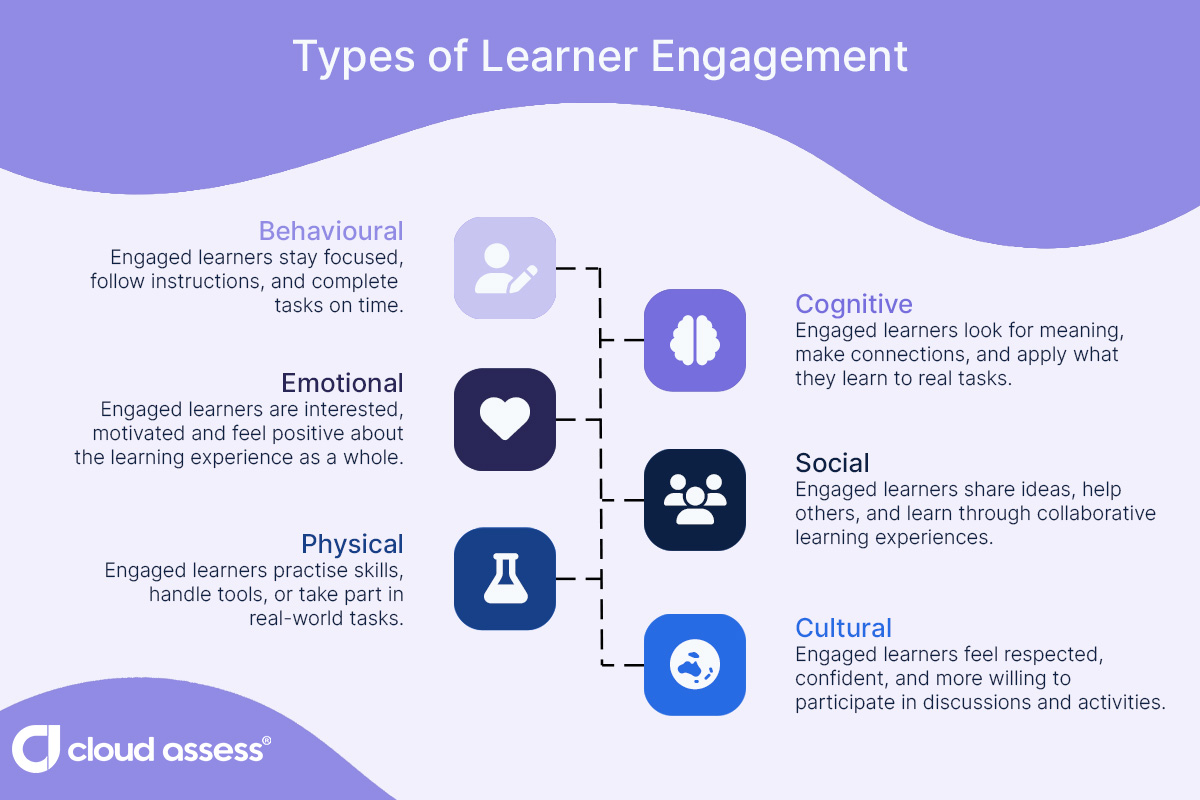
Behavioural Engagement
Behavioural engagement is about the actions that learners take during training. It includes participation, attendance, and the effort they put into their work. Learners who are behaviourally engaged stay focused, follow instructions, and complete tasks on time.
Cognitive Engagement
Cognitive engagement is about how much critical thinking and problem-solving learners do. It reflects their curiosity, reflection, and understanding. Learners who are cognitively engaged look for meaning and make connections. They also apply what they learn in real or simulated situations. This helps them transfer learning into their roles and careers.
Emotional Engagement
Emotional engagement is about how learners feel during training. It’s linked to interest, motivation, and enjoyment. Learners who are emotionally engaged care about the topic. They feel positive about their progress and the learning experience as a whole.
Social Engagement
Social engagement is about connecting with others during learning. It focuses on teamwork, discussion, and peer support. Learners who are socially engaged share ideas, help others, and learn through collaborative learning experiences.
Physical Engagement
Physical engagement is about being hands-on and actively involved during training. It involves taking part in activities, rather than just observing or reading about them. Learners who are physically and actively engaged practise skills, handle tools, or take part in real-world tasks.
Cultural Engagement
Cultural engagement is about how learners connect with content that reflects their values, identity, and experiences. It focuses on inclusion, belonging, and shared understanding. Learners who are culturally engaged feel respected, confident, and more willing to participate in discussions and activities.
6 Ways to Measure Learner Engagement
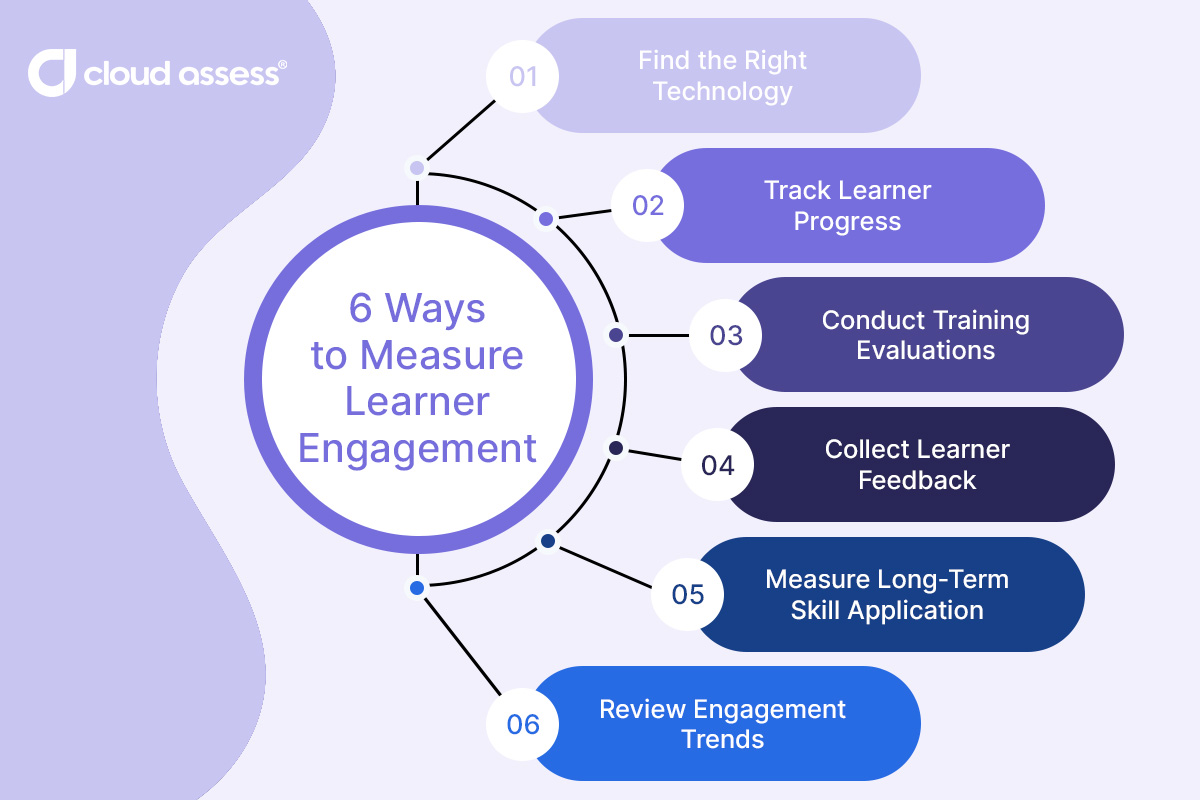
1. Find the Right Technology
The right tools make it easier to track and understand engagement. For example, a learning management system (LMS) helps you develop and deliver versatile training. The right LMS will also help you monitor participation, progress, and completion across online courses and in-person training.
For RTOs, the right student management system (SMS) is also key. It will help you track enrolments, attendance, and outcomes. These can highlight patterns and engagement trends over time.
Solutions that integrate both LMS features and SMS features give companies a complete view of learner engagement. They’re often flexible and customisable, helping you track the specific metrics that matter most to your organisation in a single platform.
2. Track Learner Progress
Tracking progress is about more than just attendance and completion rates. Focus on how learners move through the learning process and interact with different learning activities.
Progress data can show where learners are excelling and where they might need extra support. It also helps trainers adjust delivery methods to keep learning on track and engagement levels high.
3. Conduct Training Evaluations
Trainer reflections are just as important as learner data when measuring engagement. Training evaluations help Learning and Development (L&D) teams identify which activities work well and where they can improve. They provide insight into how effectively training supports engagement. Regular evaluations also encourage continuous learning improvement and ensure training stays relevant and impactful.
Top Tip: For Australian training organisations, this is more than just a suggestion. Continuous improvement is a compliance requirement! Learn about this and other RTO compliance concerns, and how you can get the feedback you need to ensure high-quality training.
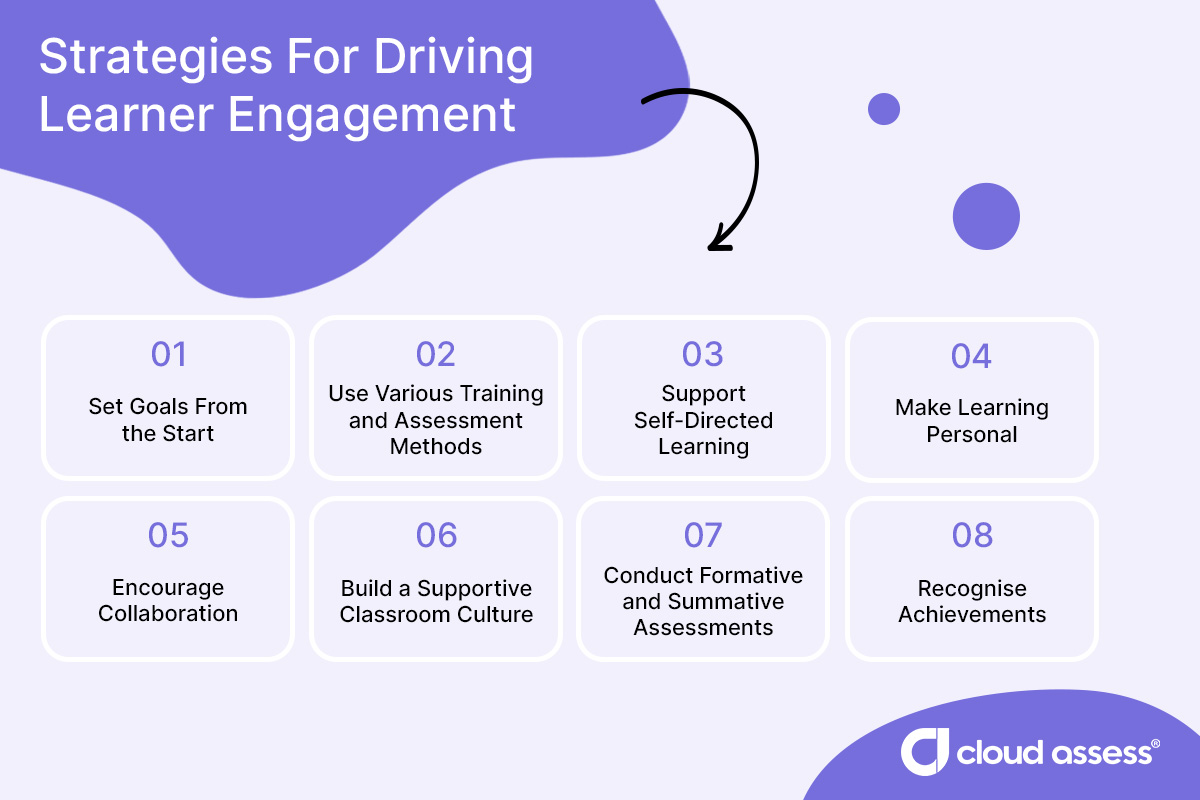
Set Goals From the Start
Encourage learners to set their own learning goals early in the course. Clear goals give direction and help learners understand what success looks like.
Make sure your organisation’s learning objectives are also clear from the beginning, so everyone knows what they’re working towards. When learners can see their progress, they’re more motivated to stay engaged.
Use Various Training and Assessment Methods
Different learners engage at different points in the learning process. Mixing training and various types of assessment supports participation, builds confidence, and helps learners apply their skills in diverse contexts.
- Interactive virtual learning environments help learners explore topics, share ideas, and collaborate through digital learning channels, webinars and video calls.
- Blended learning combines online and in-person delivery to make training flexible and accessible. For RTOs, online learner engagement is just as important as with instructor-led training. For companies, blended learning helps you balance on-the-job training, self-paced courses, and coaching efforts.
- Virtual reality and simulations offer realistic practice without real-world risks, helping learners gain confidence and practical understanding.
- Group projects encourage teamwork and communication while helping learners learn from each other. This is especially valuable in workplace training environments, where working on projects with other team members is part of daily responsibilities.
- Self-assessments build awareness and reflection, helping learners take ownership of their progress.
Support Self-Directed Learning
Self-directed learning helps students feel ownership over their progress. Give them space to explore topics, set learning objectives, and choose how they learn. This builds confidence and accountability, and naturally increases learner engagement and motivation.
Make Learning Personal
Not every learner connects with content in the same way. Use personalised learning paths and course curation solutions to tailor training to individual needs and goals. It’s also important to adapt training for different learning styles and accessibility requirements. This ensures everyone can participate fully, boosting engagement.
Encourage Collaboration

Collaborative learning helps learners connect, share ideas, and learn from each other. Group discussions, peer reviews, and teamwork build social engagement and communication skills. When learners collaborate, they stay active in the process and build stronger understanding together.
Build a Supportive Culture
A positive learning environment helps learners feel safe to ask questions and make mistakes. Encourage respect, inclusivity, and open communication. When learners feel supported, they’re more confident to participate and take risks in their learning. This can also contribute towards larger classroom and company cultures.
Conduct Formative and Summative Assessments
Continuous assessment helps to track progress and keep learners involved in their development. Formative assessments guide learning along the way, while summative assessments measure outcomes at the end. Together, they show how learners are growing and help trainers refine their approach.
Recognise Achievements
Acknowledging success keeps learners and employees motivated and proud of their progress. Recognition can be as simple as positive feedback, certificates, or small rewards. When people feel their effort is noticed, they stay engaged and eager to continue learning.
Challenges in Learner Engagement
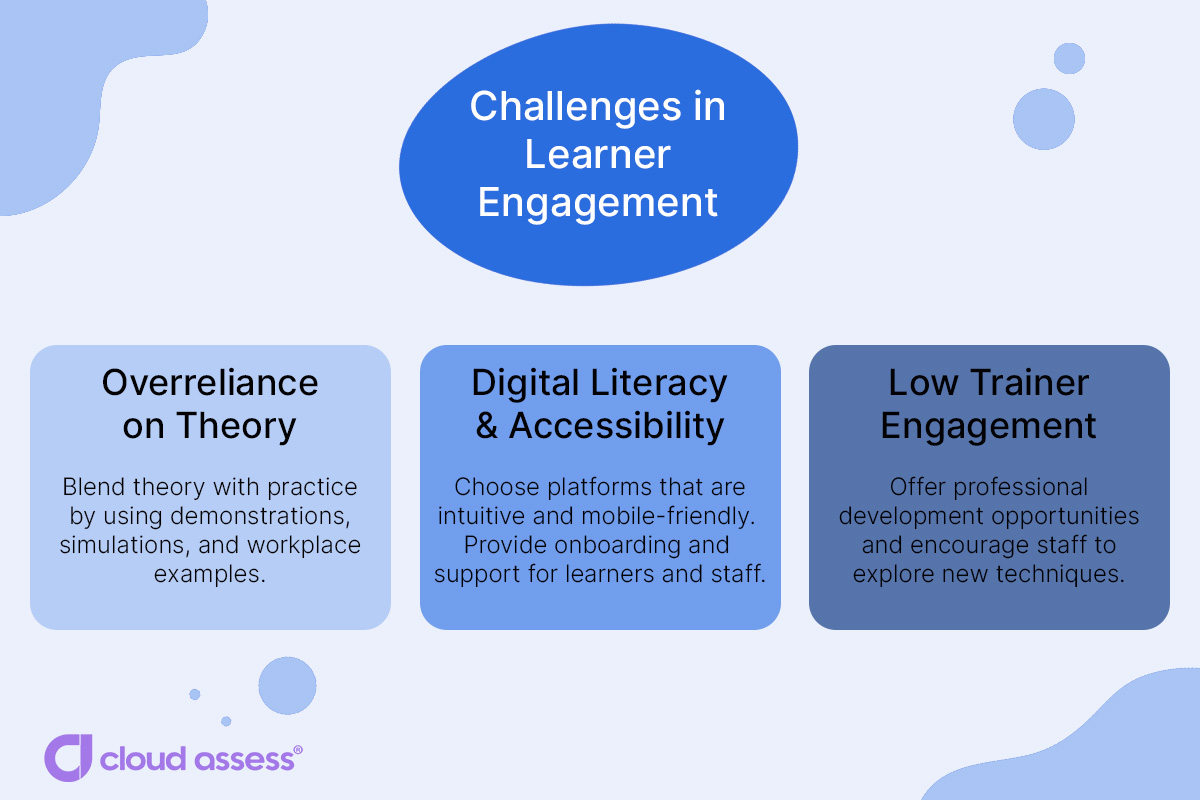
Overreliance on Theory
Too much theory can make learning feel distant and hard to apply. When learners can’t see how content connects to real-world situations, their motivation drops.
Solution: Blend theory with practice wherever possible. Use demonstrations, simulations, and workplace examples to make learning meaningful. Encourage trainers to show how theoretical knowledge translates into real skills, job tasks, and outcomes.
Digital Literacy and Accessibility
Some learners struggle with digital tools or online learning management systems. If platforms are confusing or inaccessible, it can quickly lead to frustration and disengagement.
Solution: Provide clear onboarding and tech support for all learners. Choose platforms that are easy to navigate and mobile-friendly. Make accessibility a priority by offering alternative formats, captions, or additional guidance when needed.
Low Trainer Engagement
Trainer enthusiasm has a direct impact on learners. If trainers, coaches, and mentors seem disinterested or rushed, learners are less likely to stay motivated. Over time, this can affect participation, satisfaction, and classroom engagement.
Solution: Support trainers by offering professional development opportunities. Encourage them to share ideas with peers, update their methods, and explore new ways to connect with learners.
Signs of Learner Engagement and Disengagement
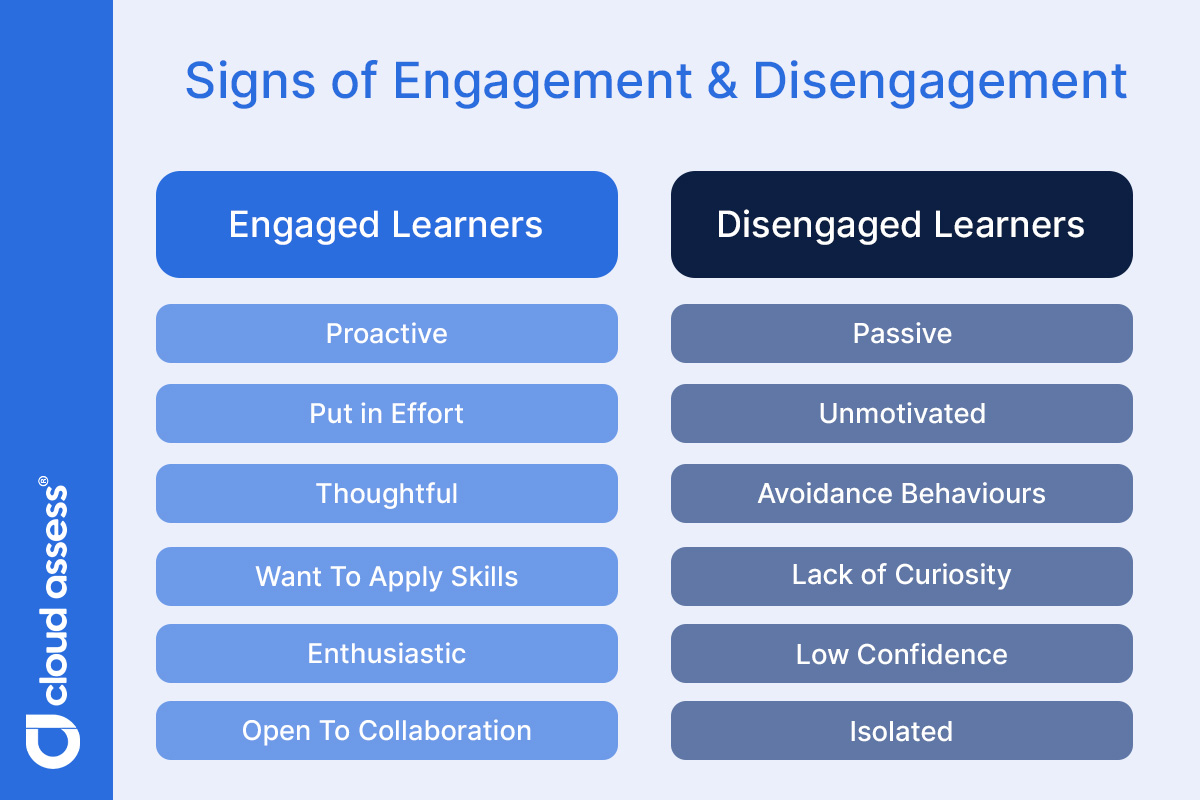
Signs of Engaged Learners
- Proactive. Engaged learners take initiative and get involved without being prompted. They participate in discussions, complete tasks early, and actively seek ways to improve.
- Put in Effort. They stay focused during sessions and give consistent effort, even when the work is challenging.
- Thoughtful. Engaged learners think critically about what they’re learning and ask meaningful questions. They connect new information to real-life situations or past experiences.
- Want to Apply Skills. They look for ways to use what they’ve learned outside the classroom or training setting.
- Enthusiastic. Engaged learners show excitement and energy during training. Their positive attitude encourages others and creates a motivating learning environment.
- Open to Collaboration. They work well with others and value different perspectives. These learners share ideas, give feedback, and help create an inclusive and supportive group dynamic.
Signs of Disengaged Learners
- Passive. Disengaged learners tend to sit back and observe rather than take part. They often wait for instructions and rarely ask questions or contribute to discussions.
- Unmotivated. They show little energy or interest during training sessions. Their body language and lack of movement suggest a disconnection from the learning process.
- Avoidance Behaviours. These learners often find excuses to skip tasks or delay participation.
- Lack of Curiosity. Disengaged learners focus on completing tasks with minimal thought or effort.
- Low Confidence. These learners may doubt their ability to succeed or hesitate to share their opinions.
- Isolated. Disengaged learners often work alone and avoid group interaction. They may feel disconnected or unrepresented in the learning environment.
Why Learning Engagement is Important for RTOs
Compliance with the Standards for RTOs 2025
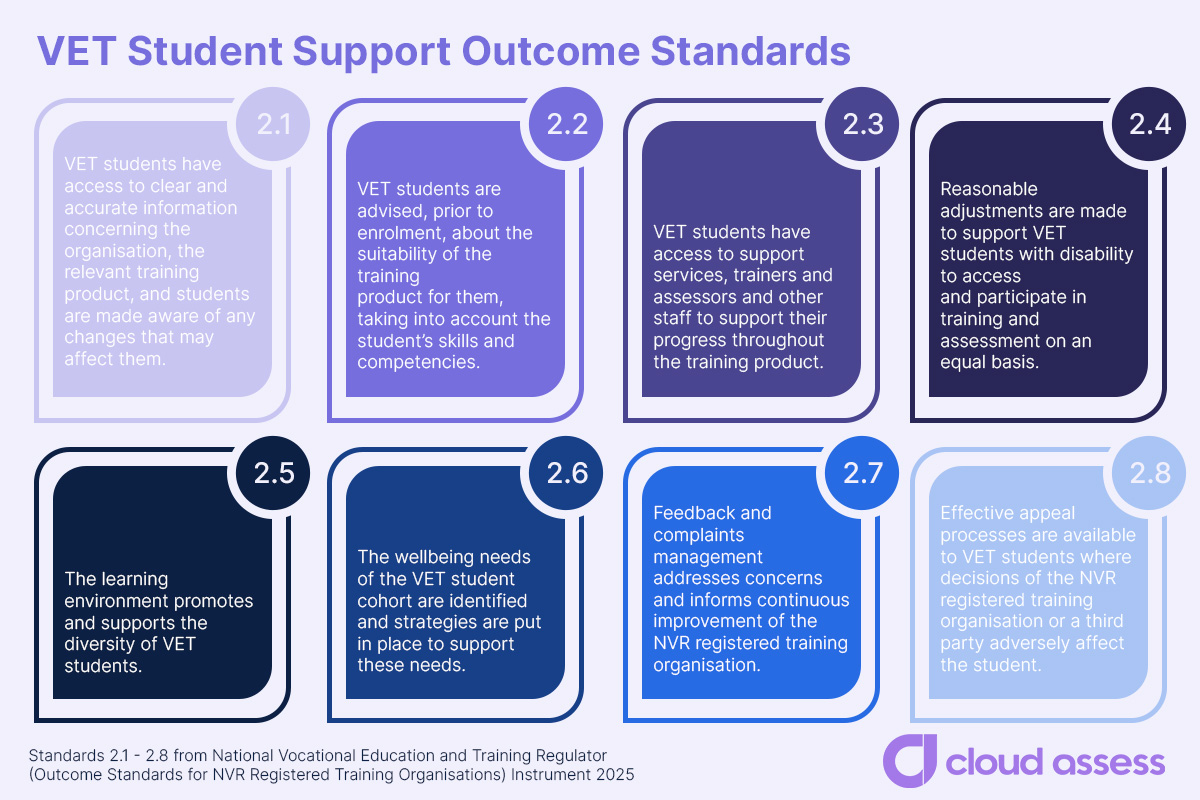
One of the main focuses of the Standards for RTOs 2025 is student support. The goal is to make sure every learner has the information, tools, and opportunities they need to succeed during training and in their future careers.
Part 2 of the Outcome Standards focuses specifically on VET student support. These Standards are designed to boost engagement and improve completion rates. RTOs are expected to conduct pre-training assessments. These ensure that students’ existing skills and knowledge match the courses they want to complete. They must also have systems for recognition of prior learning (RPL). They also need to support students from diverse backgrounds or with additional needs.
Maintaining Training Relevance
When content connects to real-world tasks and industry expectations, learners see value in what they’re doing. For RTOs, maintaining training relevance is about more than enhancing learner engagement and keeping them interested. It also supports employer confidence by ensuring that graduates are job-ready and equipped with practical, current skills.
Ensuring Long-Term Skill Development
By boosting learner engagement, RTOs develop enjoyment and excitement for growth and improvement. This helps students embrace the idea of continuous professional development. It encourages them to expand their skills to stay adaptable in changing industries. This focus on long-term professional development benefits both learners and employers. It keeps skills current and aligned with workforce needs.
Boosting Completion Rates

Improving engagement is one of the most effective ways to boost completion rates. When learners feel supported, challenged, and motivated, they are more likely to stay on track and finish their training.
Supporting Local Industries
Engaged learners gain more from their training. They graduate with practical, up-to-date skills. Industries can then benefit from a steady flow of capable workers. This connection between training and local employment strengthens community ties and promotes regional growth.
Building Brand Ambassadors
Engaged learners often become strong advocates for their RTO. Graduates who feel supported and inspired are more likely to return for further training. They’re also happier to share their success stories. This helps training organisations drive RTO marketing through learner satisfaction.
How Cloud Assess Can Help
Boosting learner engagement starts with having the right tools. Cloud Assess gives RTOs and companies everything they need to create flexible, interactive, and personalised training experiences. Its all-in-one design helps you save time, stay compliant, and ensure engaged learners stay motivated from enrolment to completion.
- Personalised Learner App. Engage students and employees with tailored content, progress tracking, and intuitive navigation.
- Mobile Learning Accessible. Learners can complete training anytime, anywhere, even offline. This is especially important for frontline workers and deskless teams.
- Pre-Built Course Library. Ready-to-use resources that make course creation faster and support self-directed learning efforts.
- Versatile and Interactive Assessments. Encourage active participation with a range of digital assessment options and formats.
- Customisable Reporting Dashboards. Give trainers and L&D teams clear insights into learner progress and engagement levels in real time.
- Automated Processes. Reduce administrative burden so trainers can focus more on supporting learners.
- Compliance Management Features. Meet regulatory requirements while maintaining learner focus and quality outcomes.
- Flexible, All-In-One Solution. Combine training, assessment, and reporting in one platform for a seamless learning journey.