What are Hard Skills?
Hard skills are abilities you can learn through school, training, or work. Also known as technical skills, these skills are usually needed for a specific job and aren’t something you’re born with. They require significant time, practice and on-the-job training or formal learning to master.

What are Soft Skills?
Soft skills are personal qualities that help you talk and work well with others. Also known as power skills or people skills, they help employees navigate challenges, adapt to change, and work well with others. Unlike hard skills, they are often more intuitive and difficult to quantify.
What is the Key Difference Between Hard Skills vs Soft Skills?

Hard and soft skills are both useful at work, but they are used in different ways.
- Measurement. Hard skills are easy to measure, with clear indicators of success. You can track employees’ proficiency in these skills through certifications. You can also use assessments and completed tasks. Soft skills are harder to measure and are usually judged by what others notice or say about you. This also makes it more challenging to compare one person’s soft skills to another’s.
- Application. Hard skills are used to perform specific tasks that align with defined roles or technical functions. For example, coding helps people build software, while graphic design helps them create visual content. A software engineer may not need graphic design skills, just as a designer may not require coding. Unlike hard skills, soft skills apply across many roles. They help employees work together, adapt, and communicate well, no matter their job title.
- Learning. Hard skills don’t come naturally, you have to learn them. You can develop hard skills through formal education. On-the-job training and self-directed learning also help, especially with specific tools and tasks. Soft skills are often linked to someone’s personality and life experience. While they may come more naturally to some, they can also be improved and refined through training, feedback, and practice.
Examples of Hard and Soft Skills
The easiest way to understand the difference between these two categories is to look at examples of specific abilities. You’ll also notice a third category—hybrid skills. These abilities could fall under both hard skills and soft skills, depending on how they are used and developed.
Hard Skill Examples

- Data analysis and visualisation is the ability to interpret and present data using tools and structured methods.
- Coding is the technical skill of writing precise instructions in different programming languages.
- Troubleshooting involves finding and fixing technical issues. Whether in person, over the phone, or through online channels.
- AI and machine learning involve understanding algorithms and developing or leveraging intelligent technologies.
- Public speaking is the skill of giving clear, engaging talks using your voice, gestures, and visuals.
- Graphic design may involve creativity, but it is also a technical skill. It involves the use of design principles and software to produce engaging visual content.
- Search engine optimisation is a technical skill. It uses proven techniques to boost the visibility and performance of content on Google, Bing, and other platforms.
- Risk assessment is the ability to analyse potential problems using set criteria and tools.
Soft Skill Examples
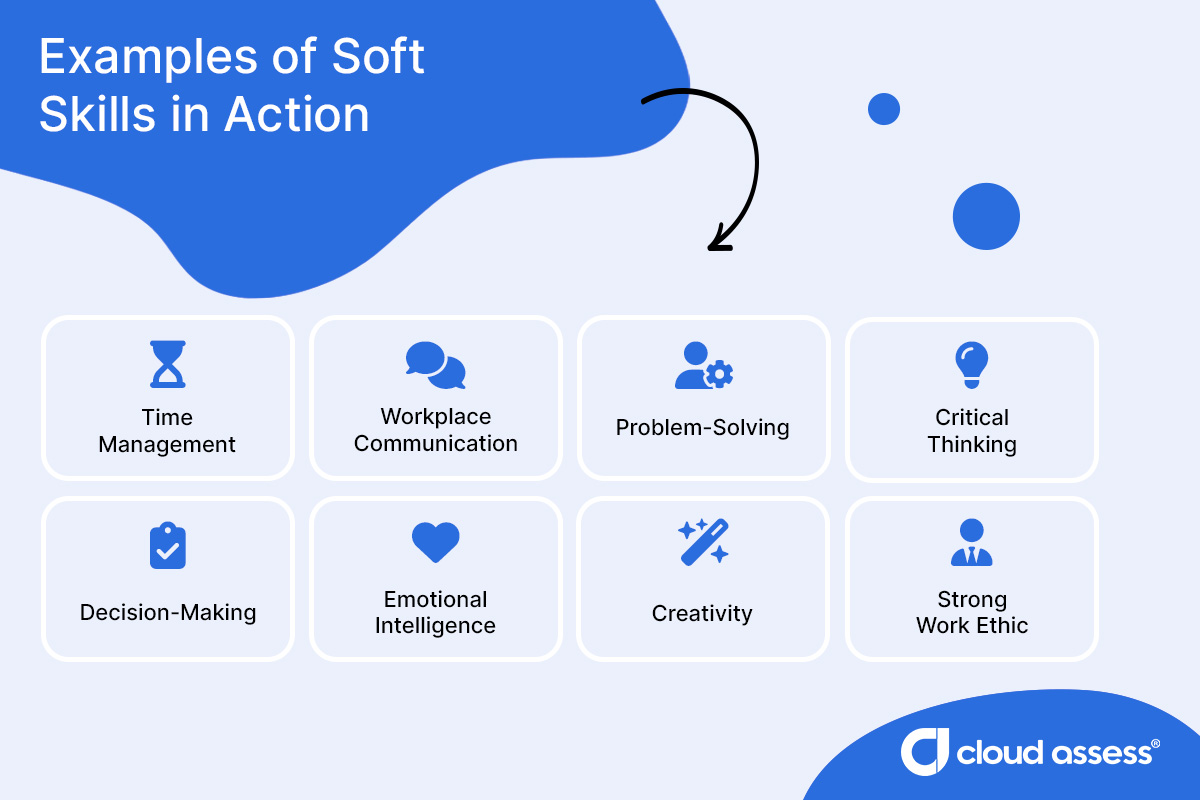
- Time management is the skill of planning your time and tasks to get more done.
- Workplace communication skills involve clearly and respectfully sharing and exchanging ideas.
- Problem-solving is the skill of identifying challenges and reaching impactful solutions.
- Critical thinking means using facts to make good decisions, even in tough situations.
- Decision-making is a behavioural skill. It involves using the available information and sound judgement to choose a responsible course of action from multiple options.
- Emotional intelligence means understanding your own feelings and those of others. It includes knowing how to respond well to others.
- Creativity is the ability to think in unique ways. It helps you come up with original ideas and find smart solutions to workplace problems.
- Strong work ethic means being reliable, honest, and taking responsibility for your actions.
Hybrid Skill Examples
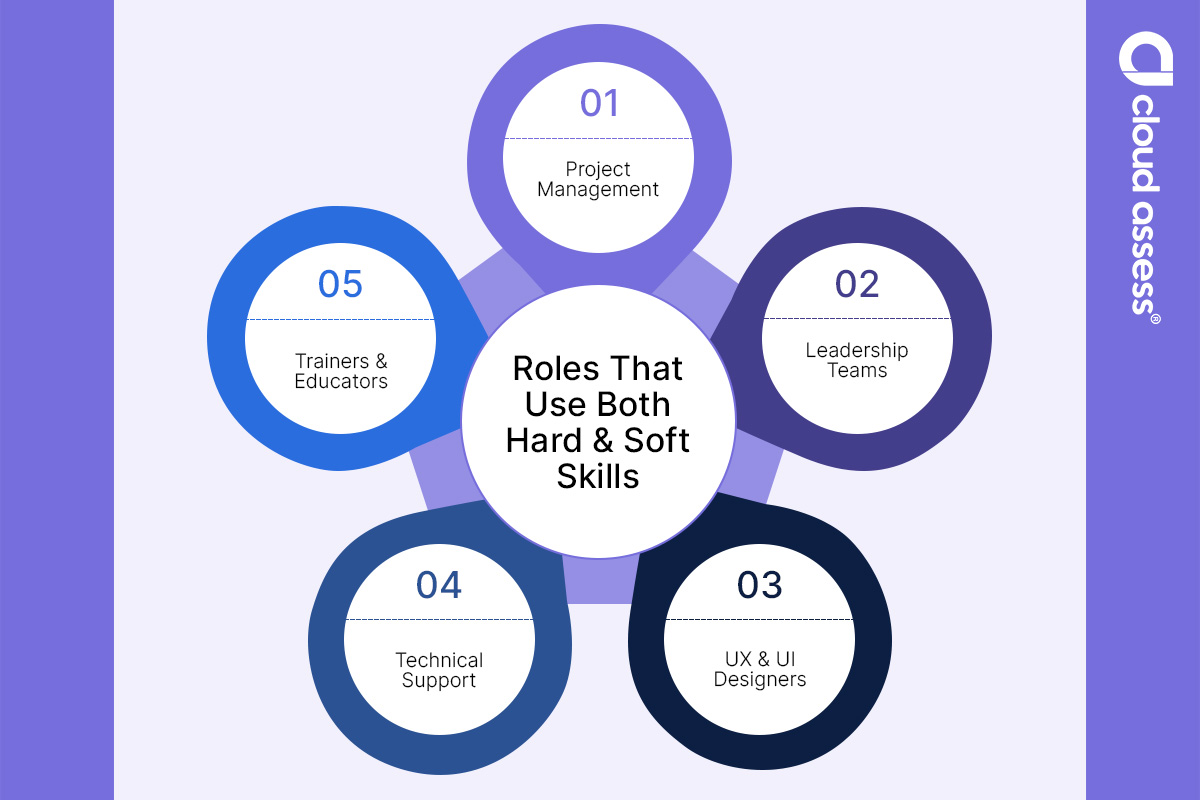
- Project management is the process of planning, executing and overseeing tasks to achieve specific goals within a set timeline and budget. As a hard skill, it involves the effective use of tools, project management software, and structured methodologies. As a soft skill, coordinating multiple people and priorities requires clear communication, smooth collaboration and strong time management.
- Leadership skills refer to the ability to guide, influence, and support individuals and teams toward shared goals. As a hard skill, leadership involves strategic planning, the use of performance management systems, and an understanding of formal leadership theories. It also draws heavily on soft skills like emotional intelligence, active listening, conflict management, and the ability to motivate and inspire others.
- UX and UI roles focus on designing digital products that are easy and enjoyable to use. These roles require hard skills like proficiency with design tools, wireframing, prototyping and user testing methods. They also rely on soft skills like empathy, creativity, cross-functional collaboration, and the ability to understand, implement and respond to user feedback.
- Technical support skills involve diagnosing and resolving hardware, software and system-related issues for colleagues and customers. They may require technical skills that include an in-depth knowledge of systems, effective troubleshooting, and the use of ticketing platforms. However, interpersonal skills are equally important for clear communication, maintaining patience, and staying calm under pressure.
- Trainer skills involve delivering knowledge and helping others build competencies through effective instruction. They include hard skills like lesson planning, understanding of learning theories, assessment design and the use of learning management systems. Trainers also rely on soft skills like adaptability, empathy, and the ability to engage and motivate diverse learners.
Use Cases for Soft and Hard Skills

Education
Hard skills and soft skills both play an important role in foundational learning and vocational education and training (VET). Hard skills like public speaking, research techniques, and digital literacy help students demonstrate knowledge, meet academic standards, and engage with course content effectively. When students also have soft skills like time management, they can work better in teams, stay organised, and take more control of their learning.
In the Workplace
Hard workplace skills enable employees to complete specific tasks, use essential tools and software, and meet performance expectations. However, it’s soft skills that shape a positive and productive work environment. They support effective communication, collaboration, and relationship-building, helping teams work cohesively. Soft skills also help with handling conflict and change, leading to happier and more engaged workers.
Career Advancement
Most people focus on hard skills when considering career opportunities, often viewing qualifications and technical expertise as the key to securing senior or specialised roles. But soft skills are also very important for growing your career. As employees move into leadership positions, they are often expected to manage teams, resolve conflicts, and contribute to strategic workforce planning, making skills like people management, critical thinking, and decision-making essential.
Personal Life
When it comes to their personal life, most people focus on how soft skills like empathy and communication can build and enhance relationships. However, it’s important not to underestimate the value of hard skills like budgeting and hands-on abilities such as home repairs, driving, or changing a car’s tyres in solving everyday problems. Both hard and soft skills directly impact quality of life, motivation, and a person’s ability to navigate challenges confidently and independently.
When are Hard vs Soft Skills More Valuable?
Both hard and soft skills are essential in the workplace, but their importance can shift depending on the role, industry, or situation. Understanding when each type of skill is most valuable in specific scenarios can help individuals prioritise their development and apply their strengths more effectively.

When are Hard Skills Most Important?
Hard skills are essential for performing technical tasks, meeting compliance standards, and working in roles that require specialised knowledge. Good communication helps, but not when you need to put out a fire or work on a detailed data report.
Hard skills are especially important in software development, data analysis, accounting, engineering, and clinical healthcare, where precise execution and measurable outcomes are critical to success.
When are Soft Skills Most Important?
Soft skills are vital for frontline workers and professionals in roles that involve close teamwork, leadership, or customer interaction. In these situations, technical knowledge is important, but knowing how to apply it through effective communication, empathy, and adaptability is even more valuable.
You might know how to fix a software issue in seconds. However, if you can’t explain the steps clearly and patiently, you’re likely to frustrate the person you’re trying to help.
How Employers Assess Hard Skills vs Soft Skills
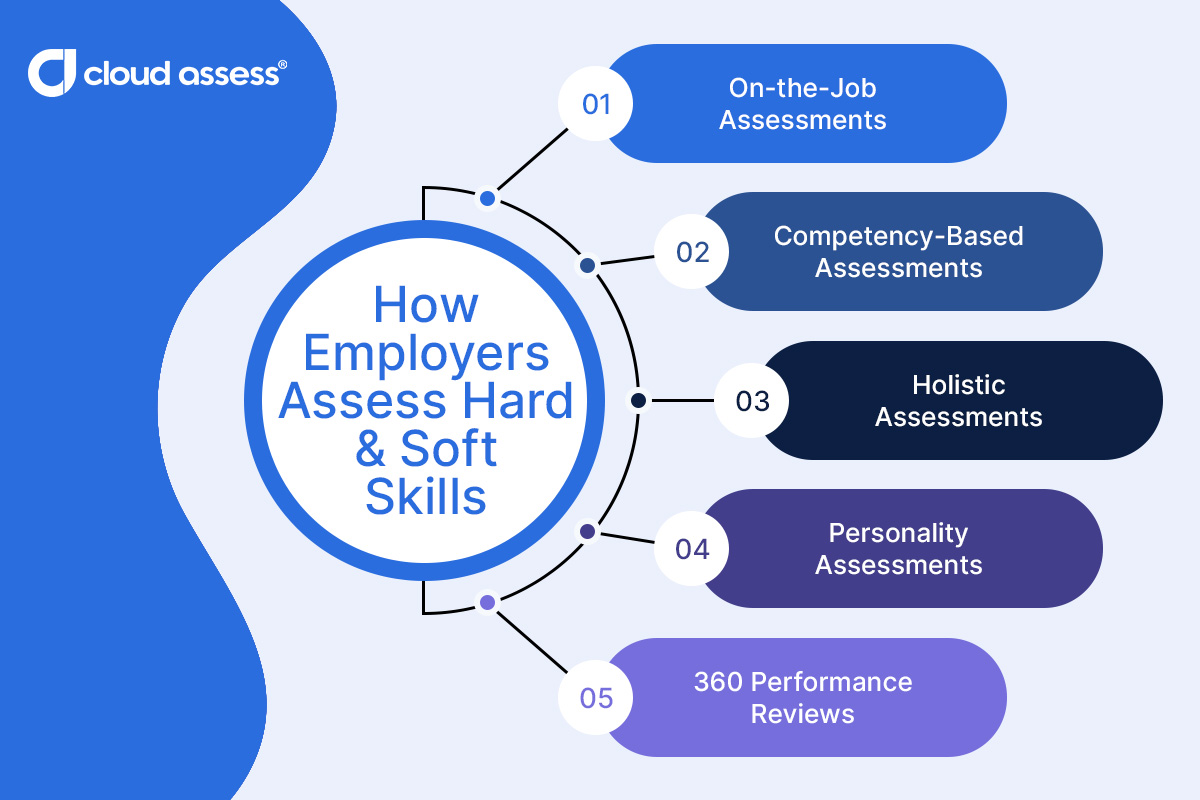
It’s harder to measure soft skills than hard skills, but it can be done.. By incorporating different types of assessment into your evaluation process, you can gain insight into both your team’s technical proficiencies and their interpersonal strengths. For example:
- On-the-job assessments are particularly effective for measuring technical abilities developed through hands-on experience in the workplace. These assessments involve observing employees as they complete real tasks, allowing managers to evaluate how well they apply hard skills in practice. They can also reveal soft skills like communication, time management, and adaptability, especially when tasks require teamwork or client interaction.
- Competency-based assessments evaluate how well employees apply knowledge and hard skills to meet specific job standards or role requirements. When delivered through simulations, role-playing, or workplace observations, they can also reveal important behavioural competencies like communication and problem-solving.
- Holistic assessment examples look at how a person performs across many tasks, not just one skill. This is an effective technique for measuring both hard and soft skills. It highlights how employees balance the technical aspects of their role with adaptability and interpersonal strengths in real-world scenarios.
- Personality assessments help companies better understand personal attributes, traits, preferences, and behavioural tendencies that influence how someone learns, works, and interacts with others. They also help find people who are ready to lead and work well with others.
- 360 Performance reviews focus on both soft and hard skills by gathering feedback from peers, managers, direct reports and clients. This gives a clear picture of a worker’s skills and what they can improve.
How to Showcase Hard and Soft Skills on Your Resume

Most curriculum vitae (CV) templates are geared towards highlighting hard skills. They don’t always give much space to elaborate on soft skills, but that doesn’t mean you should leave them out. You can list key soft skills (like leadership, adaptability, or communication) in a dedicated skills section, or weave them into your job descriptions.
Your cover letter and interview are great chances to show your skills with real examples. You can describe how you led a team through a period of change, or how you successfully navigated a challenging project .A well-written cover letter also shows your communication skills without saying it directly.
Tips for Developing Hard and Soft Skills
- Identify Areas for Improvement. Understanding your strengths and weaknesses is key to continuous growth. Recognising that there’s room for improvement isn’t a flaw. It’s an opportunity. Thinking about your strengths and doing regular self-checks can help you see which skills to work on.