Every day, strong communication drives results. It helps teams collaborate effectively, and accelerates decision-making. It also builds trust with colleagues and stakeholders. Whether on the shop floor, in a clinic, or presenting to a boardroom, confident, clear messaging makes a real difference.
Yet, despite its importance, communication is often overlooked as a workplace skill we can sharpen. The reality is that effective communication takes intention, practice, and self-awareness.
In this guide, we’ll share a list of communication courses that can help employees refine their messaging. They will help participants better engage an audience and confidently navigate workplace interactions.
Who Says Learning Has To Be Costly?
Access our comprehensive library of free courses todayBest Communication Courses
1. Effective Communications Course

This Effective Communications Course introduces learners to the essentials of clear, purposeful communication. It does this across verbal, non-verbal, written, visual, and listening modes. The course frames effective practice with the “five C’s of communication”: clear, concise, correct, complete, and compassionate. It also explains how clarity, correctness, and completeness build shared understanding. These qualities further support workplace outcomes.
By the end, participants will understand when and how to select appropriate communication channels. They will also be able to plan concise messages and use active listening to confirm comprehension. The course will help participants see how empathy and practical habits strengthen teamwork. Finally, they will learn to use empathy to reduce misunderstandings. This, in turn, will improve day-to-day collaboration in diverse roles.
Scope:
- Understand effective communication’s purpose, and organisational impact
- Differentiate verbal, non-verbal, written, visual, and listening modes
- Apply the five C’s for clear, concise, correct, complete, and compassionate messaging
- Select appropriate mediums by considering audience and message goals
- Use active listening to enhance understanding and rapport
- Recognise workplace benefits: teamwork, innovation, relationships, conflict resolution
Cost: Free
2. Interpersonal Skills Course
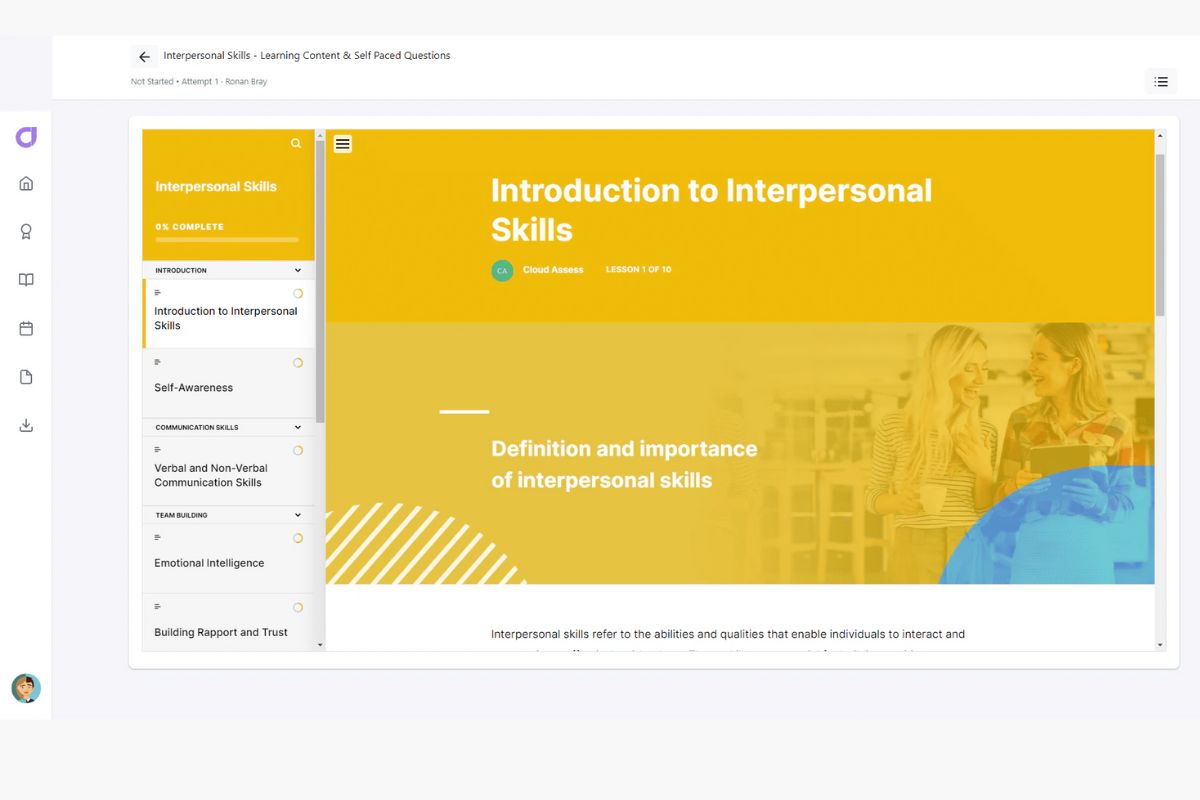
People build healthy working relationships on everyday behaviours that signal respect and empathy. These relationships also depend on clarity shared through effective communication. When equipped with the right tools, learners can build rapport. They also learn to exchange constructive feedback with care.
This course brings emotional intelligence and verbal and non-verbal techniques to achieve that. It also develops skills for constructive conflict management styles. Learners will explore scenarios that highlight small adjustments in tone and language. These shifts influence interpersonal dynamics such as trust, collaboration, and rapport. The course teaches learners how to navigate difficult conversations without escalation. Participants will also refine self-awareness and practise choosing responses thoughtfully under pressure. Ultimately, they will learn how to contribute to collaborative, psychologically safer teams.
Scope:
- Develop self-awareness to manage emotions and respond thoughtfully
- Use verbal and non-verbal communication to strengthen connections
- Apply emotional intelligence to understand, regulate, and express feelings
- Build rapport and trust for productive, respectful relationships
- Resolve conflicts constructively using negotiation and empathy techniques
- Practise skills via role-plays, simulations, and real scenarios
Cost: Free
3. Active Listening Course
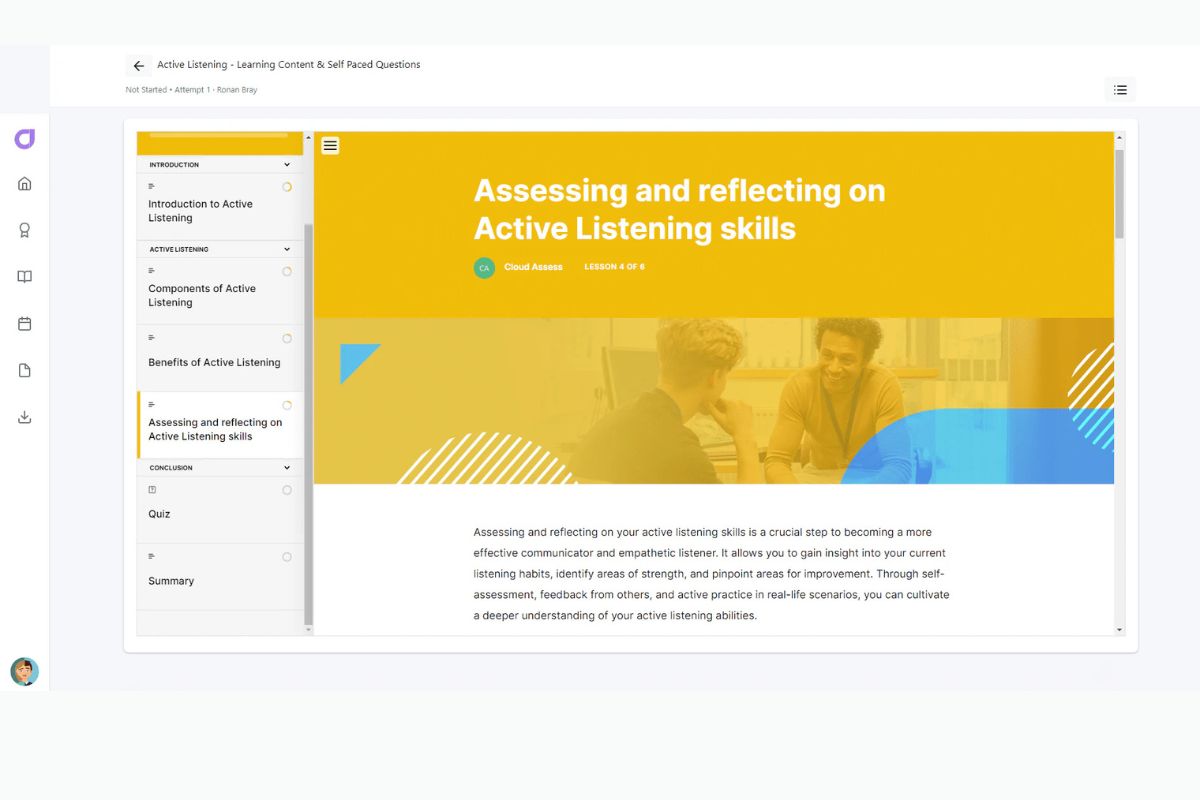
Many roles depend on accurately understanding what colleagues and customers intend. This course treats active listening as a deliberate practice that uses attention, posture, and eye contact. It also applies paraphrasing and clarifying questions to keep dialogue constructive. Learners will examine common blockers and adopt habits that sustain focus in conversations.
When applied in practice, these habits help participants ask better questions. They also help summarise agreements before closing and reduce avoidable errors. Confidence grows through short self-checks and reflection activities. This enables clearer rapport in meetings, one-to-ones, and service interactions.
Scope:
- Distinguish active listening from hearing; engage fully with speakers
- Demonstrate presence using eye contact and supportive nonverbal cues
- Ask clarifying questions and use affirmations to encourage dialogue
- Strengthen relationships, empathy, and problem-solving through attentive listening
- Self-assess listening habits, identify strengths and improvement areas
- Implement techniques and feedback for continuous listening improvement
Cost: Free
4. Communicate With the Retail Team Course

Retail moves quickly, so team messages must be clear, consistent and timely. This course links daily communication to store vision, sales targets and service standards. It teaches using briefing formats that support confident execution during changing trading conditions. Learners practise practical, customer-centred messaging across roles and shifts.
At the end, learners will be able to brief teams effectively and reinforce expected behaviours. Students will be able to coordinate handovers using simple checklists. Participants will also choose suitable channels for rapid updates. They will be able to encourage two-way feedback to surface issues early, and record incidents accurately for follow-up.
Scope:
- Align team roles with organisational vision and objectives
- Set clear work standards, behaviours, and communication expectations
- Share sales targets and goals to motivate and focus
- Adapt messaging to fast-paced, diverse retail environments effectively
- Build trust and encourage candid, two-way team feedback
- Use technology to deliver consistent, timely team communications
Cost: Free
5. Communicate With Internal And External Customers Cours e
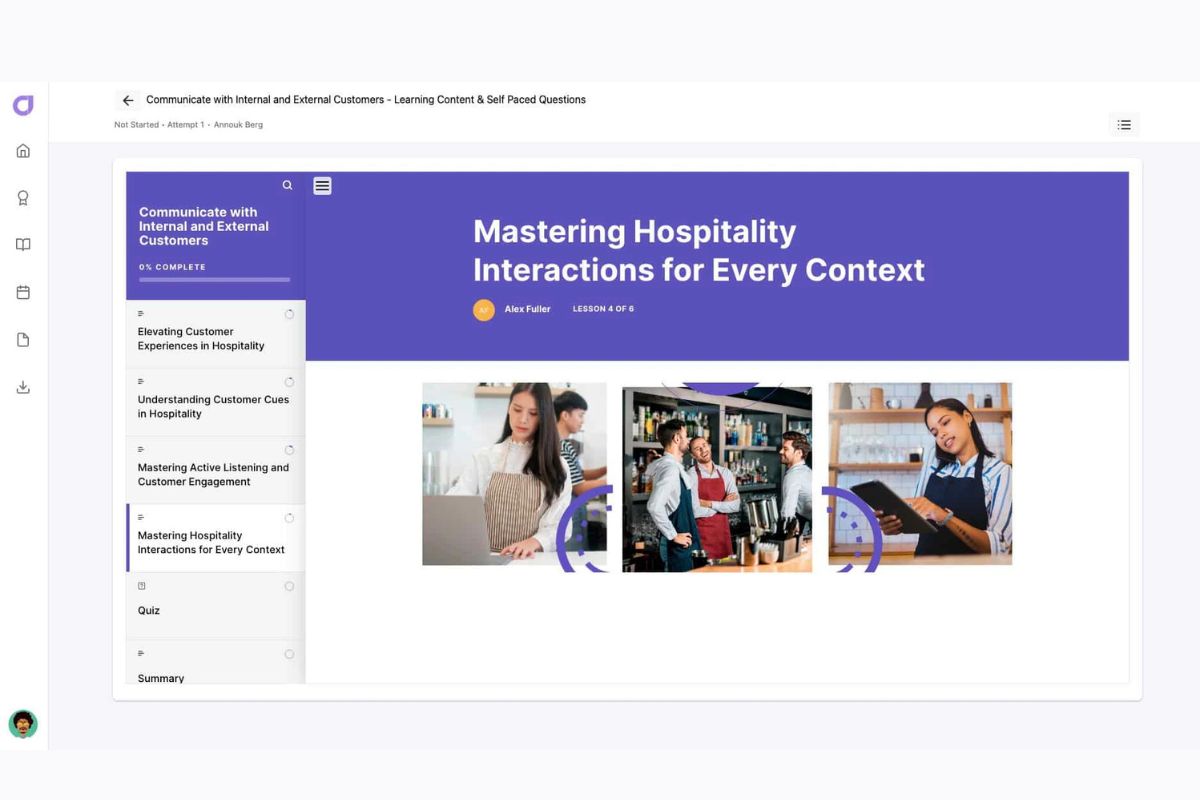
This course explores the essentials of communicating effectively with colleagues and external clients. Learners will examine how expectations differ between these groups. Participants will also learn why adapting style, tone, and language matters. The content highlights structured approaches to questioning, active listening, and clear information-sharing. These strategies help prevent misunderstandings and complaints.
Participants will practise strategies for managing expectations and handling customer concerns. They will also focus on maintaining professionalism in written and verbal communication. The course explores practical habits that build trust, and strengthen service quality. It provides practical tips that support smoother collaboration within and beyond the organisation.
Scope:
- Identify differences between internal and external customer needs
- Tailor tone and language for varied team and customer interactions
- Use structured communication to build trust and clarity
- Apply active listening to confirm customer understanding
- Manage expectations to reduce complaints and errors
- Strengthen professionalism in daily written and verbal exchanges
Cost: Free
6. Communicate the Risk Treatment Processes to Relevant Personnel Course
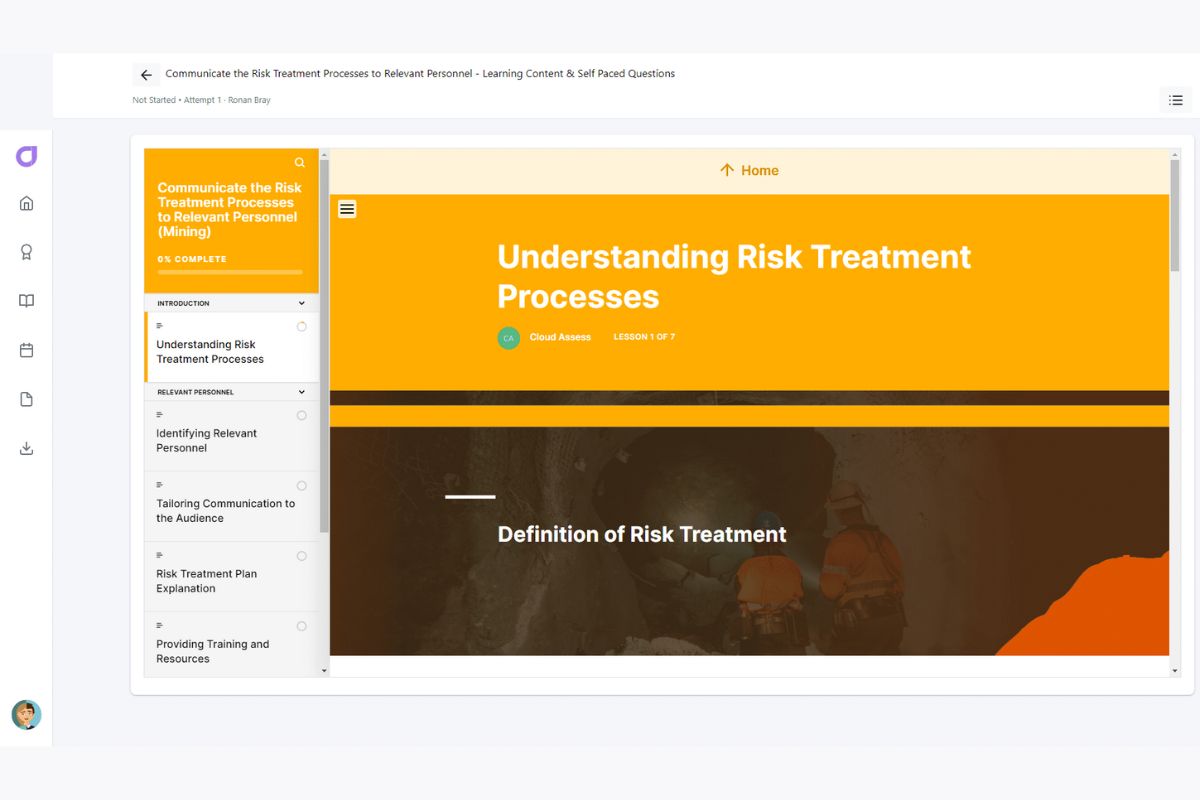
This course teaches participants how to communicate critical risk treatment procedures. It focuses particularly within mining and other high-risk industries. It explains the purpose of risk treatment. It also highlights the importance of clarity when addressing technical and non-technical personnel. Learners will see how communication highlights compliance with organisational and industry standards.
Participants will practise structuring updates and documenting outcomes. They will also learn to adapt messaging for varied stakeholders. Learners will develop the confidence to share accurate information, and reinforce safety protocols. They will build a culture of accountability that reduces risk and supports operational safety.
Scope:
- Explain the purpose of risk treatment in operations
- Communicate procedures clearly to relevant site personnel
- Adapt communication style for technical and non-technical audiences
- Ensure compliance with organisational and industry safety standards
- Document and share updates on treatment outcomes
- Support a culture of awareness and accountability
Cost: Free
7. Effective Communication & Interpersonal Skills at Work Course

Modern workplaces mix face-to-face moments with email, chat, and video. Style, tone, and platform choice directly affect speed, clarity, inclusivity, and record-keeping. A casual tone that works in a hallway can feel abrupt in email. Written chat strips away non-verbal cues, while video suits sensitive feedback but not quick updates. Email is searchable for approvals, and chat supports rapid coordination. This course helps learners recognise these trade-offs. It also helps them understand their preferred ways of communicating. They will learn to adjust to audience, risk, and urgency across typical office scenarios.
On completion, participants will be able to match message goals to the channel. They will set a respectful tone that encourages responses and structure asks, deadlines, and next steps clearly. They will also practise de-escalating difficult exchanges and closing feedback loops. Reflection cycles help them keep improving day to day.
Scope:
- Identify your personal communication style and adapt appropriately
- Choose platforms suited to message, audience, and context
- Apply communication style effectively within workplace scenarios and tasks
- Manage challenging conversations towards constructive, positive outcomes
- Reflect on goals, tone, and technique to improve
Cost: Free
8. Communication Essentials

This beginner-level fundamentals course is about doing everyday workplace communication well. Learners will practise writing plain-English emails and short reports. They will also practise planning meetings with clear agendas and minutes. They will learn how to shape slide decks that highlight key points. The Communication Essentials modules use simple templates and checklists so messages are easy to scan. It also makes sure learners can record decisions clearly and make next actions unambiguous. It’s practical, not theoretical, and assumes no prior training.
By the end, participants will be able to draft concise updates and summaries. They’ll understand how to run meetings that start and finish on time, and present with a logical flow and minimal jargon. They will learn how to adjust tone for different audiences, and apply quick editing passes for clarity. They will be able to use consistent formats that colleagues can follow.
Scope:
- Compose clear, concise emails, reports, and professional messages
- Plan and conduct effective meetings with confident facilitation
- Deliver persuasive presentations using structure, clarity, and presence
- Use non-verbal cues, tone, and active listening deliberately
- Practise assertiveness to build respectful, collaborative relationships at work
Cost: Free (optional paid certificate)
9. Improving Communication Skills

Effective communication blends trust, thoughtful questioning and deliberate medium choice. This communication skills training course introduces research-based strategies for influence, listening and cooperation. It also explores common pitfalls such as unclear messaging, mixed signals, and unproductive conflict. It includes case examples that connect ideas to everyday professional interactions.
After completing the course, participants will be able to design persuasive messages. They’ll also have a thorough understanding of appropriate communication channels. They will be able to use power skills such as cooperative problem-solving in negotiations and disagreements. With guided prompts, participants choose measurable goals. The course also includes short practice cycles to help learners develop behaviours that advance workplace goals.
Scope:
- Detect deception cues and respond with appropriate strategies
- Build trust through vulnerability, rapport, warmth, and interdependence
- Choose optimal communication medium across contexts and audiences
- Craft persuasive messages; ask thoughtful questions; listen actively
- Use negotiation, apologies, and cooperation versus competition wisely
- Set effective goals to enhance communication performance consistently
Cost: Free (optional paid certificate)
10. The Complete Communication Skills Master Class for Life
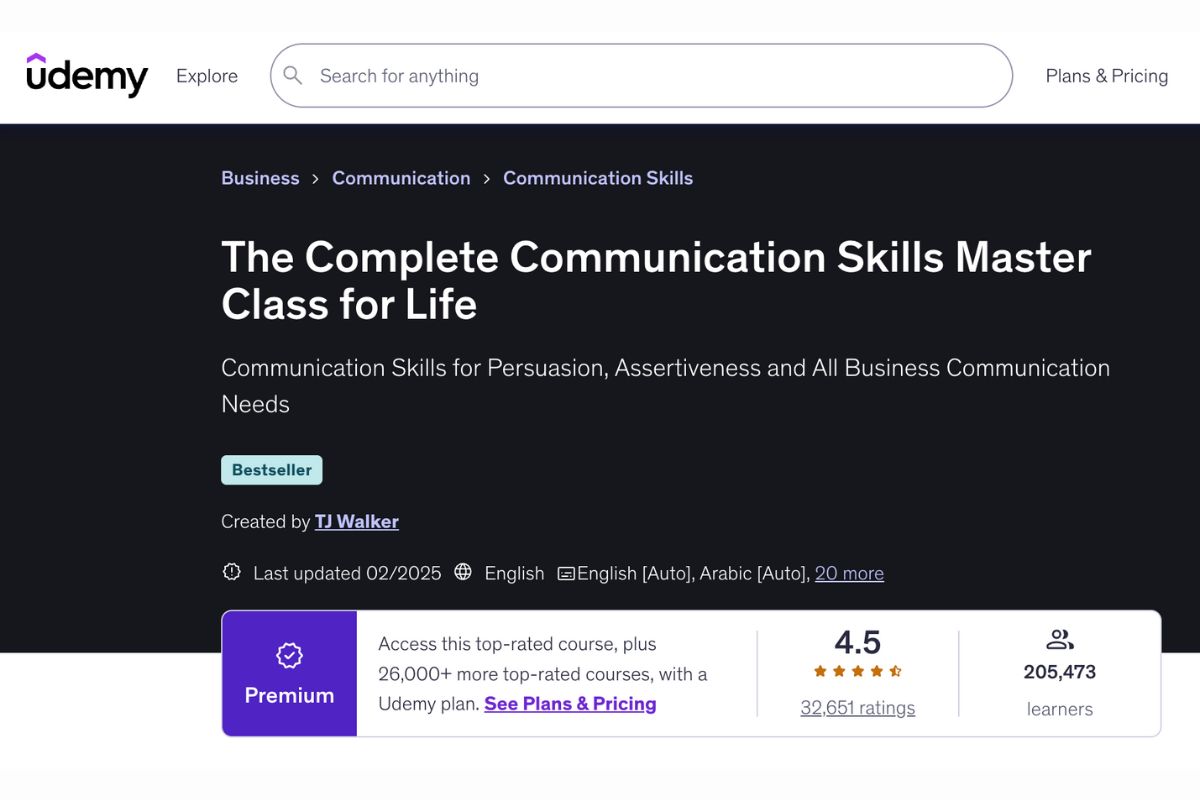
Some learners prefer one complete course that covers many communication scenarios. This course teaches practical public speaking and broader verbal communication skills. Participants learn to structure talks with clear openings and closings. They will learn to use voice, pace, and body language effectively, handle nerves, and speak confidently on camera. The course also teaches persuasive messaging for everyday conversations and interviews. It covers presentations and negotiations across personal and professional settings. Learners practise crafting short speeches and executive summaries. They rehearse with checklists, record and review practice videos, and manage live Q&A without losing composure.
Participants will also learn frameworks for storytelling and argument. They will learn techniques for responding to objections. They will also develop simple routines for steady improvement. These practices help ensure confidence and clarity in meetings and client pitches. They also carry over to community events and social interactions.
Scope:
- Communicate confidently in professional and personal situations worldwide
- Influence others ethically using persuasive communication techniques daily
- Master assertiveness for clearer, more respectful interactions everywhere
- Deliver memorable messages audiences understand and remember easily
- Practise on-camera speaking to build fluency and confidence
- Apply skills across interviews, negotiations, and presentations scenarios
Cost: $54.99 AUD
11. Business Communication

Professional impact depends on structure, brevity, audience awareness, and deliberate communication strategies. This course covers planning, drafting, and presenting messages that colleagues can absorb quickly. It teaches learners to factor in cultural context and use non-verbal communication signals effectively. The course also introduces leadership communication essentials. Participants will learn to frame purpose and tailor messages for stakeholders. They’ll also understand how to deliver concise briefings that inform decisions. The course offers practice opportunities in creating written materials and presentations that support clear, timely action.
In the end, participants will be able to craft logical messages and edit for clarity and precision. They’ll apply strategies that align content with organisational goals. The course also strengthens presentations with purposeful visuals and executive-style summaries. They will be able to communicate up, down, and across teams with confidence. They will also develop a consistent professional voice across emails, proposals, and updates.
Scope:
- Understand workplace culture’s impact on business communication effectiveness
- Build professional relationships using face-to-face and remote strategies
- Use language and non-verbal cues to convey shared meaning
- Create succinct messages tailored to diverse professional audiences
- Strengthen written, presentation, and interpersonal communication competencies
Cost: Free
12. Engaging in Communication with Line Management

Operational environments require concise updates, clear priorities, and timely escalation. This course focuses on establishing open channels with supervisors. It explores aligning messages to risks, timelines, and resources. It also covers documenting decisions to overcome communication barriers with management. Learners use structured approaches to reporting, issue-raising, and follow-up. These promote transparent decision-making.
The course supports day-to-day operations. Participants will learn how to shape succinct status reports and escalate concerns with relevant evidence. They’ll also close feedback loops and ensure effective tracking of actions. The result is stronger trust with line management. This reduced ambiguity during handovers. Finally, it’ll ensure teams stay aligned to objectives.
Scope:
- Establish open communication channels with line managers to collaborate
- Convey information clearly between teams and management stakeholders
- Address team issues with management using constructive approaches
- Implement feedback mechanisms that improve clarity and accountability
- Foster transparency, trust, and psychological safety across teams
- Apply conflict resolution techniques to maintain a harmonious environment
Cost: Free
Other Courses to Improve Communication
Want to explore more ways to apply strong communication in practice? These courses highlight communication skills examples that show how listening, speaking, and writing improve outcomes across different situations and channels:
For more free training opportunities, explore our wider course library to find options matched to your learning needs.