Employee development is one of those topics that almost every organisation agrees matters. It drives retention, builds capability, and prepares businesses for the challenges and demands ahead. And yet, it’s hard to get right. Between competing priorities, limited resources, and the pace of change most teams are operating at right now, development can slip down the list.
Before you can close gaps in your development strategy, you need to see them. This blog helps you do exactly that.
In this blog, we explore:
- Why employee development is a business-critical conversation right now
- 14 barriers stalling development across organisations
- How to start turning those barriers into progress
14 Common Barriers Blocking Employee Development
1. No Strategy Beyond HR
In many organisations, employee development lives almost entirely within the HR function. It gets planned by HR, delivered by HR, and measured by HR. Everyone else opts in when convenient. The problem with that model is that development becomes a support function rather than a business priority. It sits outside the day-to-day decisions that shape how teams are built, how work gets done, and where the organisation is heading.
According to McKinsey’s HR Monitor Report, employee development remains highly fragmented across organisations. Many are still segmenting it into silos rather than connecting performance management, learning, and talent development into one cohesive approach.
When development isn’t owned across the business, it doesn’t scale. It stays reactive, underfunded, and disconnected from strategy.
2. Budgets Are Treated as a Cost

When budgets tighten, learning and development (L&D) is often one of the first lines to get cut. It’s an easy thing to pause and a hard thing to reprioritise. Unlike headcount or infrastructure, the consequences of cutting it aren’t immediately felt.
That’s the core problem. Development spending gets evaluated as an expense rather than an investment. Without a clear line between learning activity and business outcomes, it’s hard to defend in a budget conversation.
The organisations that protect L&D budgets tend to be the ones that have already built that business case. They can point to retention rates, internal career mobility, and capability growth. Those that can’t make that connection are always vulnerable when finances come under pressure.
3. Development Isn’t Equally Accessible
Not everyone in an organisation gets the same access to development. Senior and office-based employees tend to have more opportunities. Frontline, shift-based, and part-time employees often work in conditions that make formal learning hard to access.
This isn’t always intentional. Development programs are frequently designed around a standard working pattern that doesn’t reflect how large portions of the workforce actually operate today. The result is a two-tier system where the people who arguably need the most support to grow are the least likely to receive it.
Equitable access to development isn’t just a fairness issue. It’s a capability and retention issue that affects the whole organisation.
4. AI Change Is Creating Paralysis, Not Urgency
Most organisations know AI is changing the skills their people need. Few have done anything meaningful about it yet.
The challenge is that the pace of change feels hard to plan around. By the time an AI upskilling or reskilling program is designed and rolled out, the landscape has shifted again. So rather than acting with urgency, many organisations stall. They wait for clarity that isn’t coming.
This results in widening AI skills gaps. Employees are left to figure out new tools on their own, with mixed success. And the organisations that do invest in building AI skills early pull further ahead.
Waiting for the right moment to act is itself a strategic decision. But when it comes to AI, it’s rarely a good one.
5. Informal Learning Is Filling the Gap Unevenly
When formal development isn’t available, people find their own way. They ask a colleague, watch a video, or figure it out through trial and error. Informal learning fills the gap.
The problem is that it fills it unevenly. Who you sit near, who you know, and how confident you are in seeking help all influence how much you actually learn. Some employees thrive in that environment. Others fall quietly behind.
Organisations that rely on informal learning as a default aren’t building capability intentionally. They’re leaving it to chance. And the gaps that result are often invisible until they become a real problem.
6. Senior Leaders Are Left to Figure It Out Alone
Senior leaders are often the least supported when it comes to skill development. There’s an assumption that by the time someone reaches a leadership role, they’ve already figured out how to grow. In practice, the opposite is often true.
The higher someone sits in an organisation, the fewer people they can turn to for honest feedback or guidance. Peer learning becomes harder. Formal learning programs rarely address the specific pressures of senior leadership. And the expectation to project confidence can make it difficult to admit where development is needed.
Leaving senior leaders without structured support doesn’t just limit their growth. It limits the growth of everyone they lead.
7. Managers Are Caught Between Delivery and Development
Most managers are promoted because they were good at their job. They don’t always have the management skills to develop others, and aren’t given the tools or time to become good at it.
The day-to-day pressure of hitting targets, managing workload, and keeping teams running leaves little room for meaningful development conversations. When something has to give, it’s rarely the output. It’s the one-to-ones, the coaching, and the career growth conversations.
The deeper problem is that most organisations don’t hold managers accountable for this. If a manager consistently delivers on targets but neglects the growth of their team, that’s rarely flagged. Development accountability simply isn’t built into how performance is measured or rewarded. Managers prioritise what they’re measured on. If team development isn’t on that list, it slips.
8. Leaders Aren’t Modelling Learning
When senior leaders talk about development but don’t visibly engage in it themselves, the message employees receive is clear. Learning is something you do lower down the organisation, not something leaders do.
Culture is shaped more by behaviour than by policy. If leaders aren’t sharing what they’re working on, acknowledging what they don’t know, or making time for their own development, it signals that learning isn’t really valued at the top.
Employees take their cues from the people above them. When leaders model curiosity and continuous learning, it gives everyone else permission to do the same. When they don’t, employees treat development as optional, too.
9. Compliance Training Is Crowding Out Practical Development

Compliance training is necessary. But in many organisations, it consumes time, budget, and attention that could also go toward practical development. When employees think of learning at work, they think of mandatory and statutory training modules. When L&D teams report on training activity, completion rates for compliance programs dominate the numbers. It creates an illusion of a robust learning culture without the substance of one.
Practical development is the kind of learning that builds real capability in someone’s role. It includes skills development training, coaching, mentoring, and career-focused learning. Both compliance and practical development have a place. But when one consistently crowds out the other, organisations end up ticking boxes rather than building people.
10. One-Size-Fits-All Training Misses the Mark
A program designed for everyone is rarely right for anyone. When development is built around the average employee, it fails to account for the different roles, experience levels, career stages, and learning needs that exist across a workforce.
A graduate joining their first role needs something different from a mid-level manager preparing for senior leadership. A frontline worker developing technical and digital skills needs something different from a head office team building strategic capability.
Generic training isn’t always without value. But when it’s the default rather than the exception, it wastes time, disengages learners, and produces limited results. Development works best when it’s relevant to the person receiving it.
11. There’s No Way to Measure Real Development Impact
Many organisations track training activity using the wrong training metrics. These include hours completed, modules finished, and courses attended. What they rarely track is whether any of it made a difference. Without meaningful measurement, it’s impossible to know which development initiatives are working, which aren’t, and where to invest next. It also makes it harder to build the business case for development spending when budget conversations come around.
Part of the problem is when organisations don’t align training with business goals from the outset. When learning activity isn’t connected to specific outcomes the business is trying to achieve, there’s no baseline to measure against. Impact looks at behaviour change, performance improvement, and capability growth over time. That’s the data that actually matters.
12. Delivery Formats Are Out of Date

Many organisations are still delivering development the same way they did a decade ago. Full-day workshops, slide-heavy presentations, and scheduled classroom sessions remain the default. This is despite the reality that the way people work has changed significantly.
Hybrid and remote teams, fragmented schedules, and shorter attention spans all call for more flexible formats. On-demand video, microlearning, digital modules, and peer learning cohorts give people more control over when and how they learn. Different employees also have different learning styles. Some retain information better through doing, others through discussion or self-paced reading. A single delivery format will rarely serve all of them well.
Format directly affects whether learning actually reaches people. The best development content will underdeliver if it’s packaged in a way that doesn’t fit how people work today.
13. Employees Wait for Development to Come to Them
Many employees adopt a passive approach to their own development. They wait to be enrolled in a program, nominated for training, or told what they should be learning next. When that direction doesn’t come, development simply doesn’t happen.
But the organisation shares that responsibility. Some claim that they offer dedicated time for learning without ever formalising it. There’s no structure, no clear expectation, and no leeway given for work and tasks that come up during those hours. Employees who do step away feel guilty or worry about how it looks. They also know that taking the time to learn means having to work extra time to ensure their tasks are covered. So they don’t step away.
Building a workforce that takes ownership of its own growth requires more than encouragement. It requires protected time, clear expectations, and direct managers who actively support employees in driving their own development forward.
14. Employees Don’t Feel Safe Admitting Gaps
Development starts with honesty about where someone needs to grow. But in many organisations, admitting a skills gap feels risky. Employees worry it will affect how they’re perceived, limit their opportunities, or flag them as underperforming.
That fear isn’t irrational. In cultures where vulnerability is seen as weakness, people learn quickly to hide what they don’t know rather than address it. Development conversations become performative. Employees talk about strengths and ambitions but avoid the gaps that actually need attention.
Psychological safety is the foundation of any meaningful development culture. Without it, even the best programs will only scratch the surface. People can’t grow from a starting point they’re not willing to acknowledge.
How Cloud Assess Can Help Your Organisation Turn Barriers Into Progress
Development breaks down when it’s disconnected, hard to access, difficult to measure, or not built into the way an organisation actually operates. Cloud Assess is built to address exactly that.
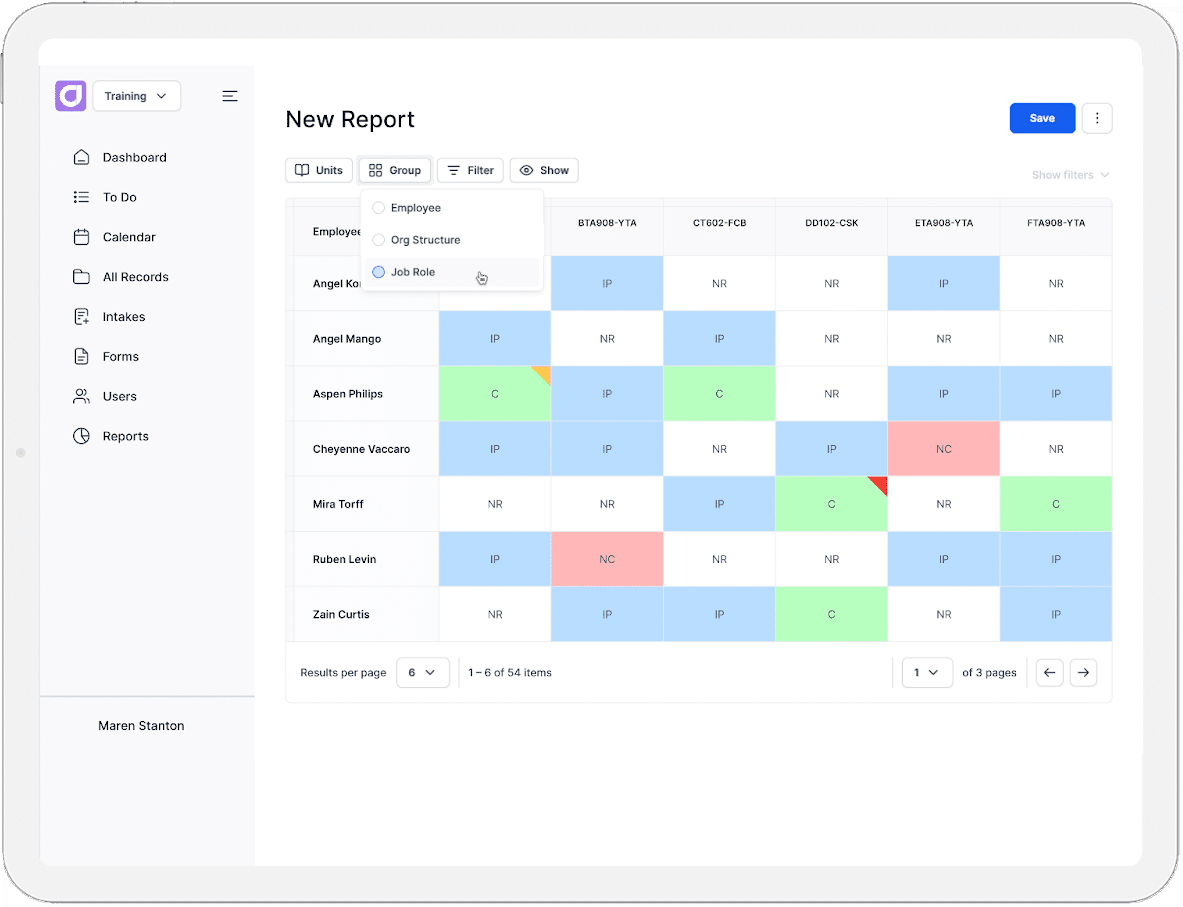
- Visibility across your workforce. Cloud Assess gives L&D and operations leaders a real-time view of skills, gaps, and training progress across their entire workforce. The Skills Matrix makes it easy to see where capability exists, where it doesn’t, and what needs to happen next. That visibility is the starting point for any development strategy worth building.
- Development that reaches everyone. Cloud Assess is purpose-built for teams that don’t sit at desks. Mobile-first delivery with full offline functionality means frontline, remote, and shift-based workers can access training on any device, anywhere.
- Less admin, more impact. Automated workflows, compliance tracking, and AI-powered tools handle the administrative heavy lifting. AI-generated assessments, automated expiry alerts, and real-time reporting mean your team spends less time managing training and more time improving it.
- Measurement that goes beyond completion. Cloud Assess tracks progress, performance, and competency over time. Rather than counting completions, organisations can build clearer career paths, and clearer picture of whether development is translating into real capability growth.
- Compliance and practical development in one place. Cloud Assess manages compliance training and practical development from a single platform. That means organisations don’t have to choose between staying compliant and building capability. Both happen in the same system, without one crowding out the other.
Ready to see how Cloud Assess can work for your organisation? Talk to our team!