Instructor-led training (ILT) remains a widely used and effective method for developing skills and knowledge across industries. It brings a human connection to learning, with trainers guiding individuals or groups through content in a structured, interactive setting.
In a world filled with digital options and on-demand learning, ILT stands out for its ability to adapt in real-time, support collaboration, and foster deeper understanding. Whether you’re planning a new training initiative or evaluating your current approach, understanding how ILT works, and how it compares to other methods is essential.
In this blog, we’ll cover:
- What instructor-led training is and how it works
- How ILT compares with other training methods
- The main types of ILT delivery
- Real-world examples of ILT sessions in action
- The benefits and challenges of using ILT
- A step-by-step look at how to deliver it effectively
What is Instructor-Led Training?
Instructor-led training (ILT) is a learning method where trainers deliver content in real time. It can be one-on-one or group-based, and take place in person or virtually. ILT often follows a structured format that allows learners to ask questions, receive feedback, and engage directly with the instructor. It’s commonly used in corporate training, educational institutions, and professional development programs.
Instructor-Led Training vs. Other Training Methods
ILT vs. On-the-Job Training
Instructor-led training provides structured learning in a dedicated physical or virtual learning environment to build foundational knowledge.
On-the-job training happens directly in the workplace, where employees learn by performing real-world tasks, usually with limited formal instruction and under the supervision of a peer or manager.
ILT vs. Hands-On Training
Instructor-led training is typically used to explain concepts, procedures, or frameworks before practical application.
Hands-on training focuses on active skill development through direct interaction with tools, equipment, or real-world scenarios, and is commonly used when practical experience is essential to mastering a task.
ILT vs. Coaching or Mentoring
Instructor-led training follows a structured curriculum delivered to groups or individuals by a trainer, often with predefined learning objectives and timeframes.
Coaching or mentoring is a personalised, ongoing process focused on individual development, where guidance is shaped by the learner’s specific goals, challenges, and career progression.
Types of Instructor-Led Training
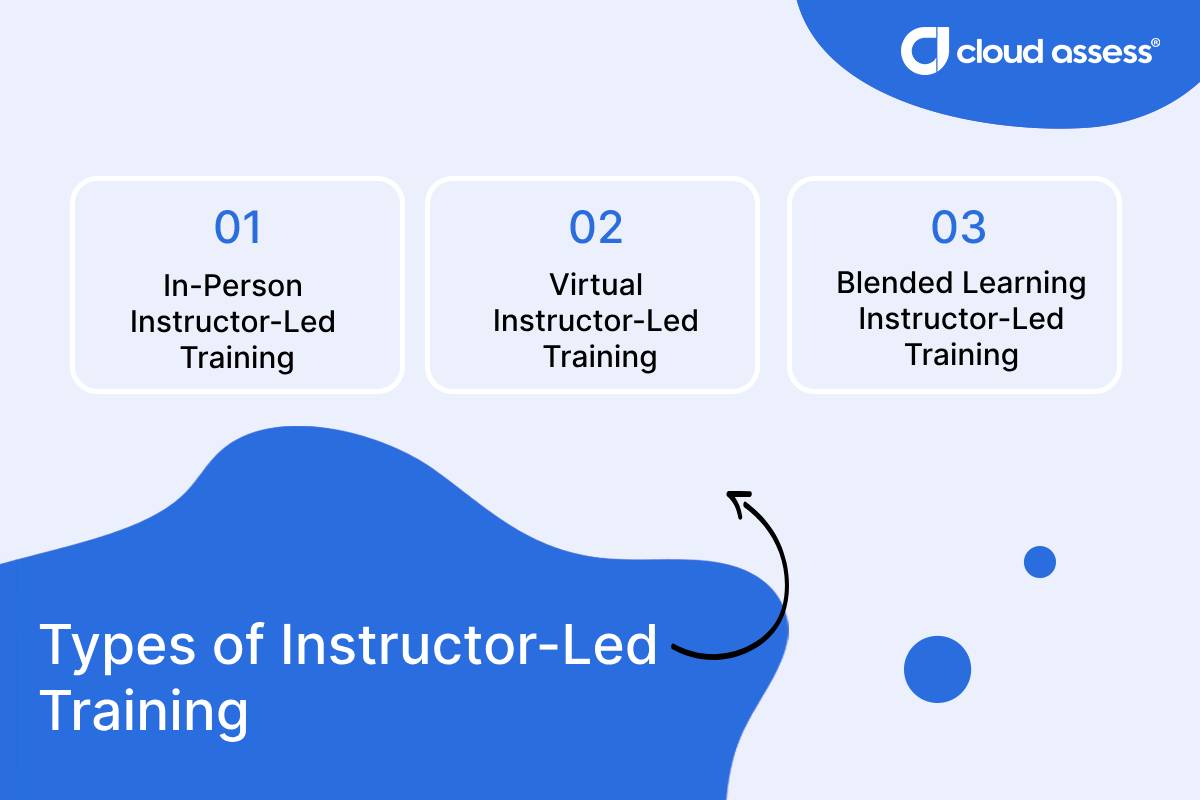
In-Person Instructor-Led Training
In-person trainer-led learning takes place when the instructor and learners are in the same physical setting. It allows for face-to-face interaction, hands-on demonstrations, and immediate feedback. This format is often used when physical presence enhances learning, such as in technical training, safety procedures, or workshops that require group collaboration.
Virtual Instructor-Led Training (VILT)
Virtual instructor-led training is delivered in real time using video conferencing tools, where the trainer and participants connect remotely. It replicates the structure and interactivity of in-person sessions, allowing for live discussions, presentations, and feedback. VILT is often supported by virtual learning environments or digital platforms that host course materials, but the core instruction happens through synchronous online sessions. This format is ideal for distributed teams or situations where in-person training is not feasible.
Blended Learning: Combining ILT with Digital Modules
Blended learning integrates instructor-led training, delivered either in person or online, with self-paced digital modules to create a more flexible and comprehensive learning experience. In this approach, learners may access online content before or after the instructor-led sessions. Pre-session materials can help build foundational knowledge, while post-session modules serve to reinforce learning and improve retention. This model allows learners to benefit from the structure and interaction of live instruction, alongside the convenience and autonomy of digital learning.
Examples of Instructor-Led Training

Corporate Onboarding Sessions: A financial services firm runs a week-long in-person employee onboarding program where trainers walk new hires through company policies, compliance standards, software systems, and workplace culture. The structured setting ensures consistency, while live Q&A lets new staff clarify expectations from day one.
Technical Software Training: A manufacturing company introducing new inventory software organises online training sessions where a trainer demonstrates workflows, answers questions, and guides employees through scenarios using shared screens. This format allows learners to follow along, ask for clarification, and practise tasks in real time, helping them grasp the software’s functions more quickly.
Compliance and Regulatory Education: A healthcare provider conducts annual compliance training sessions, delivered either in person or via live webinar, focusing on patient data protection. A trainer walks staff through policy updates, reviews case studies, and answers questions. This ensures staff understand their legal obligations and provides a record of attendance for regulatory audits.
Academic Classroom Instruction: A university lecturer leads weekly seminars on business ethics, presenting theory, encouraging discussion, and facilitating group work. The instructor can adapt explanations based on student feedback, ensuring deeper engagement and comprehension.
Benefits of Instructor-Led Training
Personalised and Adaptive Instruction
In smaller groups, instructors can tailor their delivery to meet the needs of individual learners or the group as a whole. If a concept is clearly understood, they can move ahead; if confusion arises, they can pause, reframe, or explore the topic in more depth. This adaptability ensures that learners engage with the content at an appropriate level, supporting deeper understanding and knowledge retention.
Real-Time Feedback and Learner Engagement
For smaller groups, instructor-led training courses also offer immediate feedback, allowing learners to clarify doubts as they arise. Trainers can assess comprehension on the spot, reinforce key messages, and keep learners actively involved. This back-and-forth interaction strengthens learner engagement and helps embed information more effectively.
Peer Interaction and Collaborative Learning

Instructor-led sessions create space for group learning through discussions, shared exercises, and team-based problem solving. Collaborative learning enables students to learn from subject matter experts and from the insights and experiences of their peers. This adds depth to understanding and supports social learning. These interactions also give trainees opportunities to practise new concepts in a supportive environment.
Accountability and Structured Scheduling
Live, scheduled sessions encourage commitment and consistency. Learners are more likely to stay on track when sessions are led by a trainer and structured around clear objectives. This regularity, combined with real-time interaction, supports better focus, participation, and ultimately, knowledge retention.
How to Deliver Instructor-Led Training
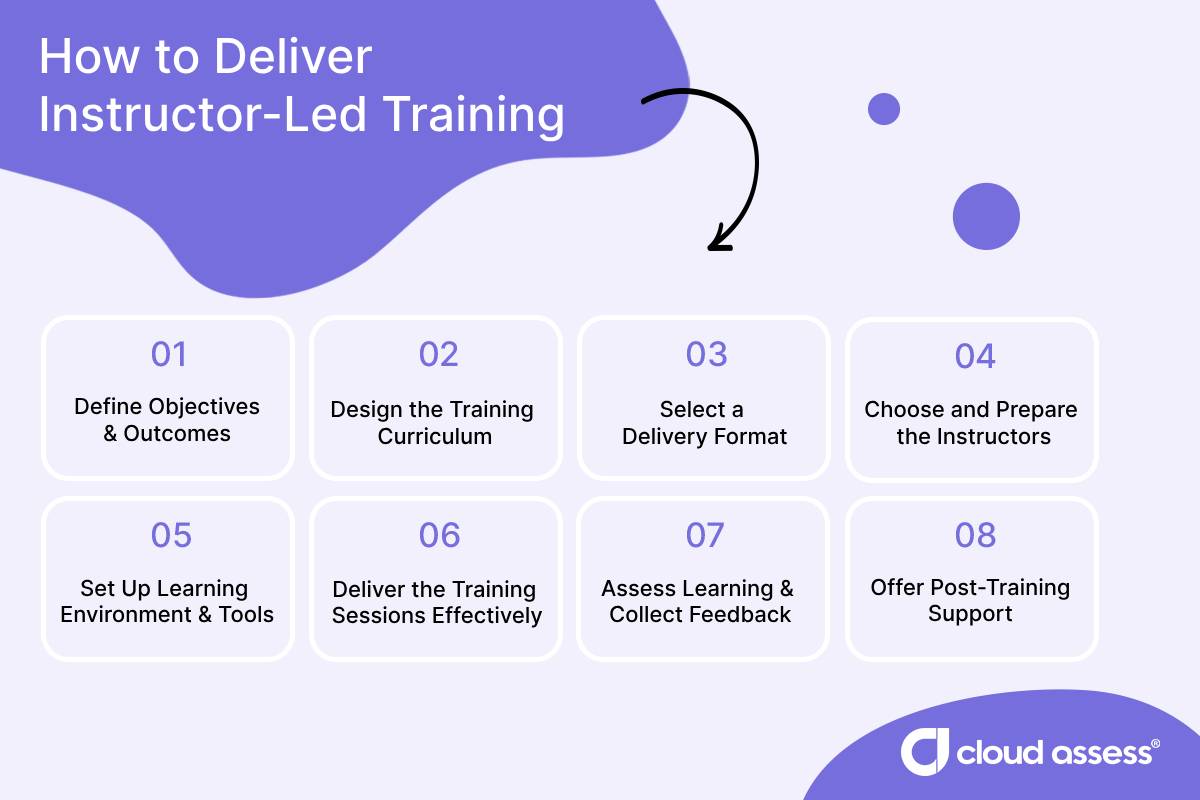
1. Define Learning Objectives and Outcomes
Clear objectives are the foundation of a successful ILT session. Identify what learners should be able to do by the end of the instructor-led course. These objectives help instructors shape their delivery, choose appropriate methods, and tailor their examples. For instance, instead of “teach project management,” an ILT-focused objective might be: “Enable participants to create a basic project timeline using Gantt charts, with real-time instructor guidance and feedback.”
2. Design the Training Curriculum
Once objectives are in place, organise the content into modules that support live instruction. The curriculum should be paced to allow time for explanation, interaction, and practice. ILT benefits from active learning elements, case discussions, group activities, and live demonstrations, so include these deliberately. Build in flexibility for instructors to pause and elaborate based on learner feedback.
3. Select the Appropriate Delivery Format
Determine whether the instructor-led sessions will be delivered in person, online, or as part of a blended approach. In-person ILT allows for hands-on demonstrations and real-time collaboration, while virtual ILT suits remote teams and reduces logistical challenges. Whichever format is chosen, it should allow instructors to engage learners actively and respond to questions in real time.
4. Choose and Prepare the Instructors
Instructor quality significantly impacts ILT effectiveness. Choose facilitators with both subject matter expertise and the ability to lead engaging sessions. Provide them with the curriculum, session plans, and information about the learner group in advance. For virtual ILT, ensure instructors are comfortable using video conferencing tools and virtual engagement techniques.
5. Set Up an Interactive Learning Environment
Whether physical or virtual, the environment should support the dynamics of instructor-led learning. In-person rooms should allow for visibility, movement, and group work. Online platforms must enable video, screen sharing, breakout rooms, and chat features to keep sessions interactive. Instructors should test tools beforehand and ensure learners can access materials and participate smoothly.
6. Deliver the Training Sessions Effectively
During the session, the instructor should manage time effectively, vary delivery methods, and facilitate meaningful discussion. ILT thrives on real-time interaction, so instructors should check for understanding, adapt based on learner cues, and create space for questions and exploration. Blending instruction with activities helps deepen learning and maintain energy.
7. Assess Learning and Collect Feedback
Use a variety of types of assessments, such as scenario-based tasks, group activities, live demonstrations, or quick quizzes to determine whether learners have met the objectives. As you deliver training, observe learner engagement and comprehension in real time. After the session, collect training feedback from participants and review your own performance. Reflect on how effectively you used the training materials, managed the session flow, and responded to learner needs. Continuous self-assessment and learner input will help you refine your approach and improve the impact of future instructor-led sessions, whether delivered in person or online.
8. Provide Post-Training Support and Reinforcement
Reinforcement is essential to sustaining the outcomes of any instructor-led training program. After the formal sessions conclude, continue supporting learners through job aids, session recordings, or digital follow-ups. Offer office hours or follow-up Q&A sessions to clarify lingering questions and help learners apply what they’ve learned in real-world contexts. This ongoing support strengthens the learning process, encourages knowledge retention, and ensures that training translates into practical performance.
Challenges of Instructor-Led Training
Cost and Logistics

ILT sessions often require significant investment in trainer time, travel, venues, printed materials, and scheduling coordination. This can make it difficult to scale or repeat frequently.
Solution: Leverage virtual instructor-led training where possible to reduce travel and facility costs. For in-person sessions, consolidate training into fewer, more impactful sessions and use blended learning to shift foundational content online, reducing time spent in live training.
Scalability and Consistency
Delivering consistent ILT across multiple locations or large groups can be challenging, especially when different instructors are involved.
Solution: Standardise the curriculum, slides, activities, and key talking points. Record model sessions or offer a train-the-trainer program to align delivery. Organisations can also work with experienced training providers to support consistency across teams, especially when scaling delivery to multiple locations or departments.
Instructor Dependency
Training quality can vary depending on the instructor’s experience, style, or subject knowledge. Learners may have different outcomes based on who delivers the session.
Solution: Invest in instructor training and provide clear facilitation guides to reduce variability. Pair newer trainers with experienced facilitators or co-host sessions to ensure content delivery stays on track. Collect regular feedback to monitor performance and address inconsistencies.
Learner Fatigue In Longer Sessions
Extended sessions can lead to information overload and reduced attention spans, especially in virtual settings where screen fatigue sets in faster.
Solution: Break long sessions into shorter modules with built-in breaks and interactive segments. Use a mix of teaching methods, discussion, breakout activities, and quizzes, to keep learners engaged. Include opportunities where trainees practise key concepts during the session to reinforce learning and maintain energy levels throughout.
Making the Most of Instructor-Led Training
Instructor-led training remains one of the most effective ways to build skills, support the transfer of learning, and engage students. When planned and delivered with purpose, it offers a level of interaction, adaptability, and structure that few other methods can match.
To get the most out of ILT, align your training with clear objectives, choose the right format for your audience, and ensure instructors are well-prepared to deliver both content and engagement. Supplement sessions with digital resources and follow-up support to extend learning beyond the classroom.
Whether in person, online, or blended, instructor-led training works best when it’s designed to inform and connect, making the learning experience relevant, collaborative, and impactful.