In today’s fast-evolving world, traditional education systems often fall short of addressing the practical skill demands of modern industries. While high schools and universities focus on theoretical knowledge, they rarely equip students with the hands-on expertise businesses need to thrive.
This gap has contributed to widespread skill shortages, leaving many organisations struggling to find qualified workers to drive growth and innovation.
Since the 1980s, New Zealand has tackled this issue head-on through Private Training Establishments (PTEs). These institutions specialise in vocational and skill-based education, delivering targeted training across a diverse range of sectors.
In this article, we explore key features of PTEs, the types of training they provide across different sectors, and benefits for students and businesses. We also look at how to register a PTE and the technologies that support them.

What is a Private Training Establishment?
A Private Training Establishment is a New Zealand institute that provides vocational education through specialised training and New Zealand Qualifications Authority (NZQA) accredited qualifications.
PTEs provide flexible learning opportunities, including evening, weekend and online classes that cater to students with different schedules. With smaller class sizes, they offer personalised support, ensuring learners receive the guidance needed to succeed in their education.
Focused on meeting modern workforce demands, PTEs often collaborate with local and international organisations to develop tailored courses that address specific skill, capability and competency requirements.
Difference Between PTEs and RTOs
While New Zealand’s Private Training Establishments and Australia’s Registered Training Organisations share similarities, there are some distinctions between the two that go beyond their geography.
- Target Audience: PTEs cater to both local and international students and organisations, whereas RTOs primarily meet the needs of Australian students and industries.
- Qualification Scope: PTEs offer NZQA-accredited courses aligned with New Zealand’s workforce demands and tailored to specialised fields like information technology, healthcare, hospitality and trades. RTOs offer a broader range of qualifications that include certificates, diplomas and advanced diplomas covering vocational, technical and community education sectors.
- Flexibility and Customisation: While PTE training programmes must follow NZQA standards for program approval and ongoing compliance, they are customisable to meet individual learner or employer needs. RTOs also offer customised courses but are often limited by the Australian Qualification Framework (AQF) and Standards for RTOs.
Key Features of PTEs in New Zealand
Developing Industry-Relevant Skills to Support Local and International Industries
Private Training Establishments equip students with practical, job-ready skills tailored to meet the demands of specific industries in New Zealand and abroad. They also often have close ties with local businesses, ensuring that training programmes align with their unique needs and expectations.
This addresses skill shortages by developing a job-ready workforce with relevant technical and soft skills to handle the requirements of specific roles.

Providing Personalised Learning
PTEs offer smaller class sizes and dedicated trainers. This allows learners to benefit from personalised support, making it easier to address their unique challenges. They also provide flexible learning options, including online training, night and weekend classes, and work-based learning programmes. These varied opportunities accommodate different learning styles and diverse needs, fostering both personal and professional development.
Offer Diverse and Compliant Qualifications
PTEs provide a wide range of qualifications, from certificates to diplomas, across industries like healthcare, information technology, hospitality, electrical engineering, logistics and trades. These qualifications are designed to cater to niche industries and specific career pathways.
Their courses also meet NZQA quality standards, providing students with credible and recognised qualifications.

What You Can Study at a PTE
Private Training Establishments offer courses across various sectors. This helps students develop the skills required in their particular fields, ensuring that their education supports professional growth and development. It also ensures training can be applied to local sectors and develops skills sought after in international industries.
Industries that PTEs cater to include:
- Healthcare and Aged Care: Training programmes in nursing, caregiving, and Allied Health services equip learners with essential skills to support patients and other medical professionals.
- Trades and Technical Professions: Courses in construction, plumbing, electrical work, and automotive services provide students with the technical expertise needed for hands-on roles in essential trade industries.
- Information Technology: Training in software development, cybersecurity, and IT support develops practical skills and ensures learners have up-to-date knowledge to meet evolving industry needs.
- Business and Management: Programmes in leadership, project management, and administration help students build critical skills for managing teams, driving organisational success, and navigating the complexities of modern environments.
- Agriculture and Horticulture: By emphasising innovation and environmental sustainability in farming practices, training in farming techniques, viticulture, and sustainable agriculture prepare learners for careers in agricultural sectors.
- Engineering and Manufacturing: Hands-on and project-based training in mechanical, civil, industrial and electrical engineering equips students with valuable technical and problem-solving skills required in these sectors.
Types of Study and Training Provided by PTEs
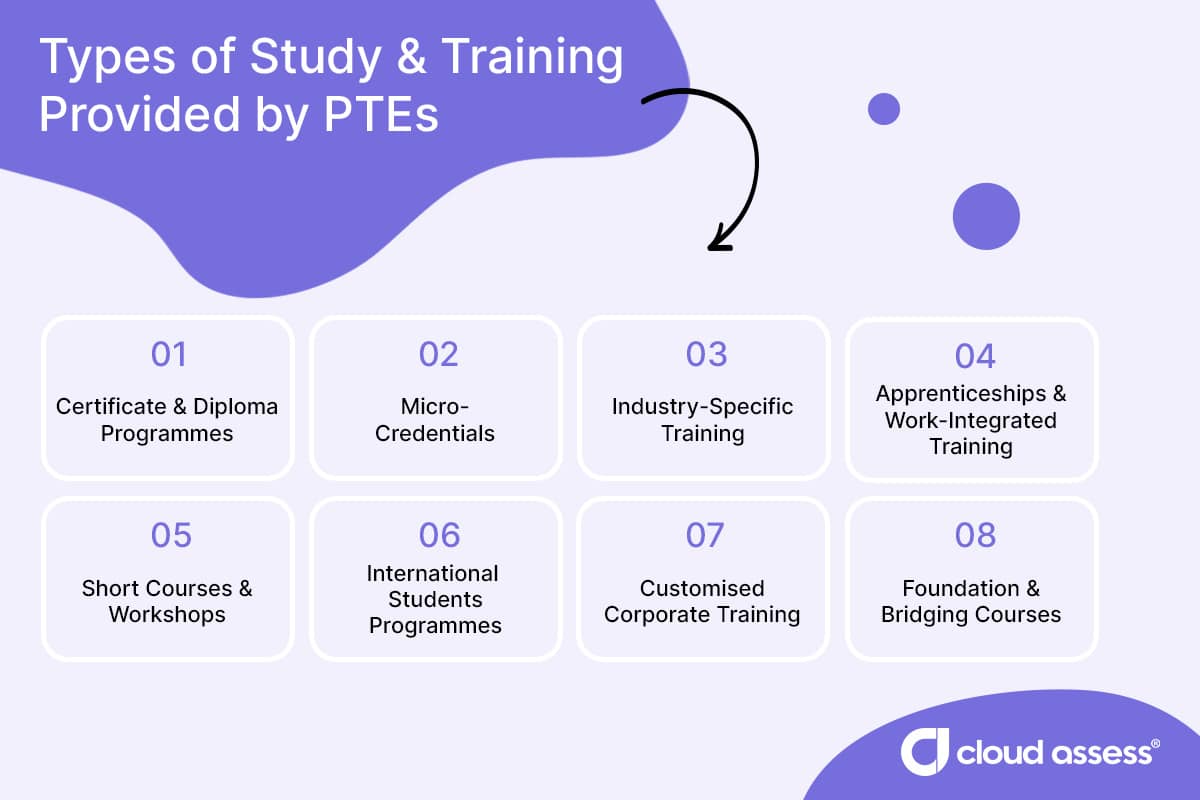
Private Training Establishments use various methods and diverse training options to help learners develop job-ready skills. They often take a blended learning approach, integrating practical, hands-on training with eLearning. This offers students flexibility and diversity, catering to many types of learning styles and preferences.
The types of study and training they provide include:
- Certificate and Diploma Programmes. Short to medium-length programs that provide students with industry-recognised qualifications.
- Micro-Credentials. Short, focused qualifications that certify specific skills or knowledge in a particular area, allowing learners to quickly upskill and meet industry demands.
- Industry-Specific Training. Tailored courses designed to meet the demands of specific sectors, focusing on practical, job-ready skill development.
- Apprenticeships and Work-Integrated Training. Structured programmes that combine theoretical learning and on-the-job training to provide students with workplace experience.
- Short Courses and Workshops. Targeted programmes aimed at upskilling or reskilling learners in a short timeframe.
- International Students Programmes. Courses that meet New Zealand Qualifications Authority standards and provide international students with pathways to employment or further study opportunities in New Zealand.
- Customised Corporate Training. Tailored training solutions developed in partnership with local businesses to address specific workforce skill requirements.
- Foundation and Bridging Courses. Programmes that prepare learners for higher education or specific career paths by building foundational skills.

Where Can You Enrol in a PTE Programme?
There are numerous Private Training Establishments based around New Zealand. While many of them offer in-person training, there are options for remote and international students as well. Finding the right PTE for your needs will depend on your location, the industry you want to work in, and the delivery method that you prefer.
Sites like Independent Tertiary Education New Zealand list various PTEs that you can study with, and allow you to filter the options based on location, subject area, delivery mode and NZQA category rating.
PTE Programme Requirements
Programme requirements vary depending on the level and type of qualification.
Foundational certificates at levels 1-3 often have no prerequisites, allowing students to enrol without prior training or specific subjects. However, advanced certificates, diplomas, and degrees at level 4 and above typically require prior knowledge, completed courses, or relevant experience.
Some PTE programs, such as trades, services, Gateway, and Secondary Tertiary Alignment Resource (STAR) initiatives, can be undertaken while students are still in high school, providing an early pathway into vocational education.
How to Register a PTE
There are a number of advantages to registering your New Zealand-based training organisation as a Private Training Establishment. You’ll be able to:
- Deliver NZQA-accredited qualifications
- Apply for government funding through the Tertiary Education Commission (TEC)
- Build credibility and trust among students and employers
The New Zealand Qualifications Authority (NZQA) governs the registration process under the Education and Training Act 2020 and the PTE Registration Rules 2022. This ensures PTEs meet high standards of quality education and accountability.
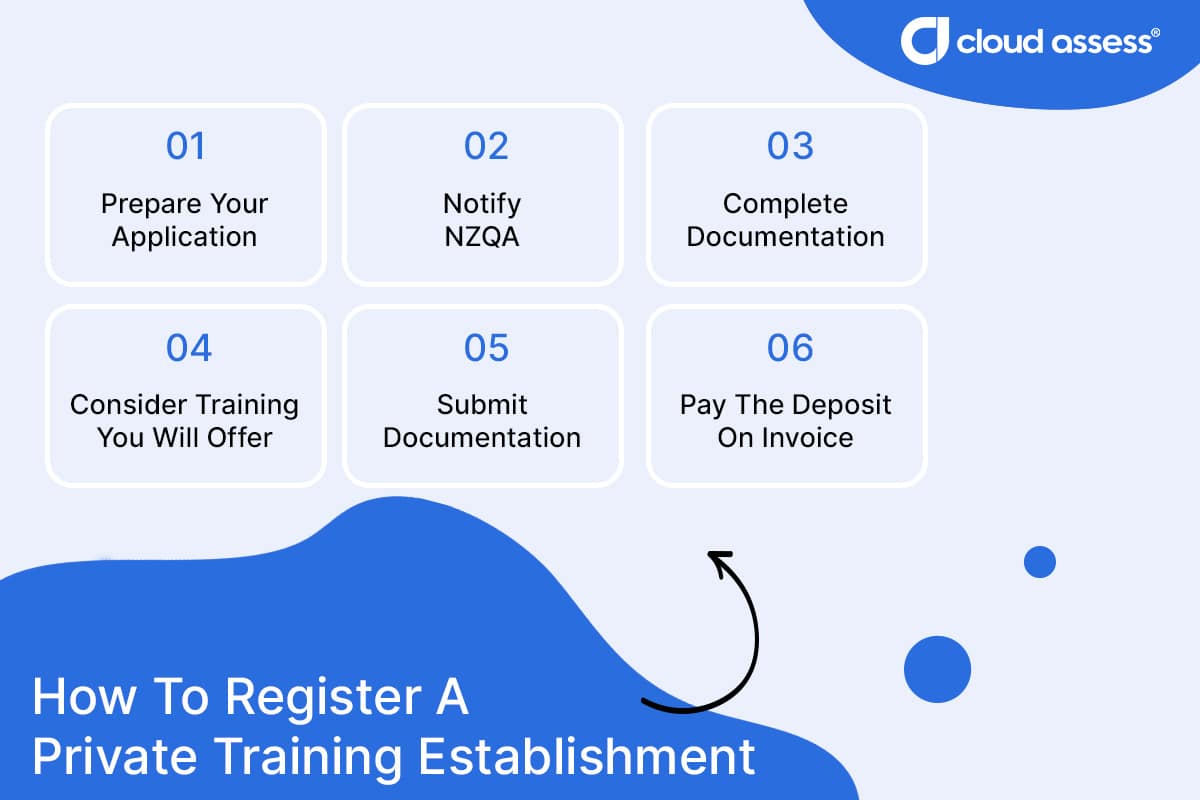
To register your training organisation, you will need to:
- Prepare Your Application by downloading the form from the NZQA website.
- Notify NZQA about your pending application via email.
- Complete Documentation. This should include a list of governing members who are ‘fit and proper persons’, and evidence of adequate staff, premises, equipment and financial management practices.
- Consider the list of programmes and micro-credentials you will offer. You will need to apply for these, and begin providing them, within the first year of registration.
- Submit Documentation including the completed form and supporting evidence to NZQA for evaluation.
- Pay the Deposit of $750 GST inclusive, which is required for application evaluation. You will receive an invoice for this.
Once your PTE is operational, NZQA will conduct a validation visit to ensure compliance. This includes monitoring operations, sampling student enrolment records, and checking quality management systems like moderation and student fee protection.
What Types of Education Software Do Private Training Establishments Need?
- Learning Management Systems (LMS) provide PTEs with a platform to deliver, manage and track online training programmes. The best LMS technology includes features for course creation, progress tracking, learner engagement, and workflow automation to streamline processes like enrolment and reporting.
- Student Management Systems (SMS) and Student Information Systems (SIS) help PTEs manage student enrolment, attendance tracking, compliant reporting, certifications, and academic records management.
- Virtual Learning Environments (VLEs) provide learners with access to digital resources, online classrooms, and interactive tools, helping PTEs develop a collaborative and flexible learning experience.
- Assessment Tools help PTEs accurately measure learner performance by creating, administering and evaluating various types of assessment including interactive quizzes, tests, assignments and projects.
- Skill Tracking Solutions, like an online skills matrix, help PTEs monitor learner skill development, identify gaps, and align training with workplace skill requirements.
- Reporting Tools support informed decision-making, ensure compliance, and encourage continuous improvement by generating insights into learner performance and programme effectiveness.
Benefits of PTEs for Students and Employers

For Students
- Tailored experiences that support diverse learner needs. Smaller class sizes, dedicated instructors and various study and training options help students get the support and customised training experience they need to excel.
- Opportunities to develop industry-specific skills. Practical, hands-on and job-focused training helps students develop the specific skills they’ll need in their chosen field. This prepares them for employment as soon as their studies are complete.
- Pathways to employment and career growth. PTE training often includes opportunities for internships or industry placements, creating direct connections to potential employers and future career opportunities.

For Employers
- Customised workforce training. Many PTEs collaborate with local and international businesses to design training programmes that address specific organisational needs and skill gaps.
- Opportunities for upskilling and reskilling. Enrolling existing employees in PTE courses can help employers ensure that staff remain up to date on the latest best practices and industry trends. This enhances workplace training initiatives and succession planning by encouraging the skill development needed to transition into new roles.
- Fostering collaboration. By partnering with PTEs, businesses can develop a consistently skilled talent pipeline aligned with industry needs and trends.
- Support for workforce diversity. PTEs cater to diverse learner demographics, enabling employers to build inclusive teams with varied skill sets and perspectives.