Employees are key to any organisation’s success. Ensuring they’re skilled, appropriately compensated and motivated to grow with your company is essential to maintaining job satisfaction and improving employee retention.
However, managing skill development, tracking benefits and payroll, and planning for future workforce needs can be complex and time-consuming. This is where HR systems come in. These platforms automate and centralise key HR processes, helping businesses manage everything from recruitment and performance tracking to payroll and compliance.
In this article, we explore:
- What HR systems are, and who uses them
- The types of HR systems available
- Key HR processes that digital systems streamline
- Benefits of implementing an HR system
- Challenges with HR systems and solutions to overcome them
- Tips for choosing the right HR solution for your business needs
What is an HR System?
An HR system is a digital tool for managing various human resources processes and HR functions. These systems handle tasks such as tracking employee absences and benefits, mapping skills and competencies, and developing succession plans to future-proof organisations.
Multiple teams and individuals across an organisation use HR systems for various department or role-based reasons:
- HR professionals use them to streamline recruitment, measure satisfaction and maintain accurate data records.
- Team managers rely on HR systems to monitor performance, manage leave requests and support team development.
- Finance teams use these platforms to process salaries, administer benefits and manage expenses.
- Learning and development (L&D) teams use HR systems to ensure training data is synchronised and can be accounted for in skill mapping and development.
- Business leaders leverage HR analytics to gain insights into employee performance and engagement. This can inform decision-making and help with strategic workforce planning.
- Employees access self-service HR portals to update personal records, submit leave requests, view payslips, and provide feedback to team managers and business leaders.
What are the Different Types of HR Systems?
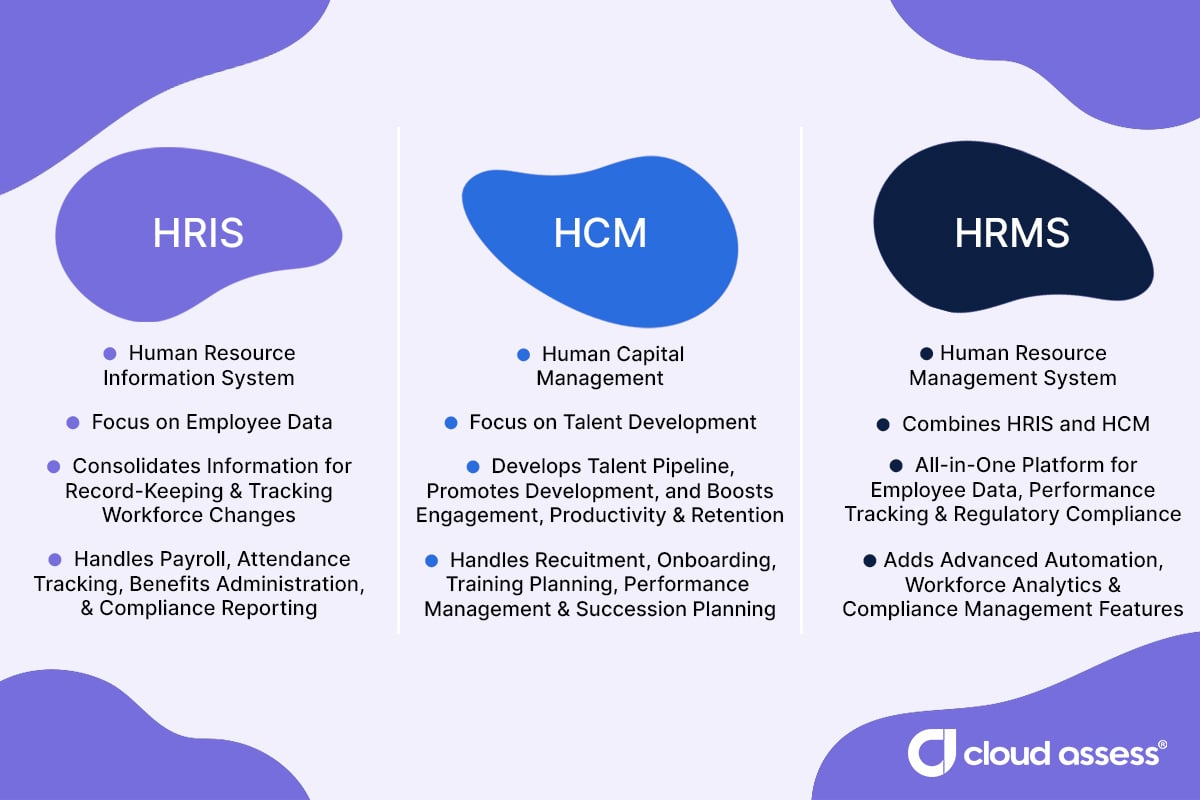
HR software comes in different forms, ranging from basic employee record-keeping tools to comprehensive workforce management platforms. While they share common functionalities, they differ in scope and complexity. Understanding their differences can help businesses choose the right solution for their workforce strategy.
Human Resource Information System
A human resource information system (HRIS) focuses on storing and managing employee data. It handles core HR functions like payroll, attendance tracking, benefits administration and compliance reporting. These HR systems are a good fit for companies that want to consolidate information for record-keeping, track workforce change, and ensure compliance with regulations.
Human Capital Management
A human capital management (HCM) solution focuses on talent acquisition, development and planning. They help HR professionals with processes like recruitment, onboarding, workplace training planning, performance management, and succession planning. This makes them valuable tools for companies looking to develop their talent pipeline, promote continuous professional development, and boost employee engagement, productivity and retention.
Human Resource Management Systems
A human resource management system (HRMS) is a comprehensive solution that combines HRIS and HCM capabilities while adding advanced automation, workforce analytics, and compliance management. These systems are best suited for large organisations that need an all-in-one platform for employee data, performance tracking, and regulatory compliance. However, HRMS solutions often come with a higher cost, making them less accessible for small and medium-sized enterprises.
What Processes Do HR Systems Handle?
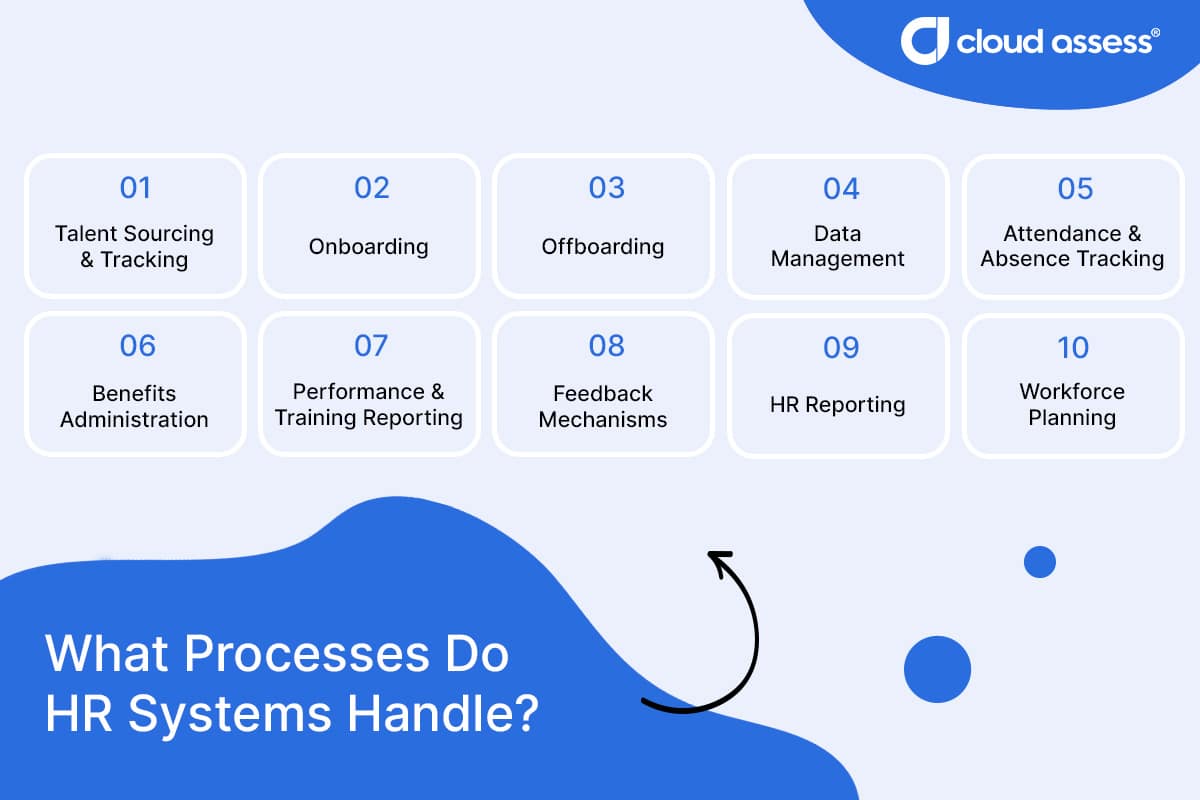
HR systems help businesses streamline key functions, improving workforce efficiency, data accuracy, and regulatory compliance. While specific features vary across solutions, common HR processes managed by these systems include:
- Talent sourcing and tracking. Typically found in HCM and HRMS tools, these features automate job postings, track candidate applications, and optimise recruitment pipelines for faster, more effective hiring.
- Onboarding. HRIS and HRMS platforms manage new hire documentation, compliance requirements, and induction training, ensuring a smooth transition for employees joining the company.
- Offboarding. HRIS and human resource management systems help organisations handle exit interviews, final payroll processing, compliance documentation, and knowledge transfer, ensuring seamless workforce transitions.
- Data management. HRIS systems centralise employee records, reducing manual data entry while keeping employee information secure, accessible, and up to date.
- Attendance and absence tracking. These information management features monitor employee work hours, overtime, shift schedules, and leave (paid and unpaid) to ensure accurate reporting and payroll calculations.
- Benefits administration. Typically included in HRIS platforms, these features help to track and manage benefits like health insurance, retirement plans and employee allowances.
- Performance and training reporting. Found in HCM solutions, these tools help companies manage role performance, goal-setting and employee development by identifying skill gaps and addressing them through targeted programs.
- Feedback mechanisms. HR systems facilitate continuous feedback through performance reviews, peer assessments, training evaluations, and employee engagement surveys, helping businesses strengthen their work culture.
Why Do Companies Need HR Systems?
Accessible Employee Data
HR systems centralise employee information, ensuring secure and efficient access to records for key HR functions. This simplifies processes like compliance audits and payroll management. Automated data management also minimises human error, enhances accuracy, and ensures businesses always have up-to-date employee records without relying on manual record-keeping.
Simplified Leave Management

The best HR systems provide self-service portals that simplify requesting, approving, tracking and reporting on leave. This saves time, effort, and paperwork while helping team and business leaders track patterns in absenteeism and forecast staffing needs. It can also help managers create effective employee work rotas that account for absence management.
Reducing Administrative Burden
Between self-service portals, streamlined workflows and automated reporting, HR management systems reduce the need for human interventions. Employees no longer need to handle HR processes like sending out payslips, filing leave requests and updating employee details across different systems. This saves significant time and effort, allowing HR professionals to focus on strategic initiatives that improve employee engagement.
Compliance Management
HR systems help businesses maintain compliance with labour laws and industry regulations by automating documentation management, certification tracking, and managing Standard Operating Procedures. These systems provide a clear audit trail for HR activities, making it easier to generate reports for compliance checks. Many HR platforms also send automated alerts for document renewals, training deadlines, and regulatory updates, helping organisations stay up-to-date and reduce the risk of non-compliance.
Employee Engagement

Boosting employee engagement is a strong employee retention strategy. A recent Workhuman survey found that 68% of workers would consider leaving a company because they feel undervalued and underappreciated.
HR systems help organisations improve company culture by offering tools for performance tracking, feedback collection, and career development planning. These tools allow team members to build strong connections to your company values while showing that you support professional development. This reduces the risk of career stagnation, encouraging employees to grow with your company.
Data-Driven Decision Making
HR systems provide real-time insights through analytics and reporting tools, helping businesses track workplace skills, performance metrics, and engagement levels. This data-driven approach enables HR and business leaders to make strategic workforce decisions that align with long-term business goals.
HR Software Challenges and Solutions
Disconnect Between HR and Training Initiatives
While many HR systems support the direction of and reporting on employee training programs, they don’t offer the functionality for delivering and tracking employee training. This disconnect can often lead to inefficiencies in tracking the implementation and results from training initiatives.
Solution: Ensure your HR systems integrate with a training and assessment tool like Cloud Assess for seamless data sharing.
Data Privacy and Security
Using digital and cloud-based tools always carries the risk of cybersecurity threats. HR systems are often used to store sensitive employee information that needs to be protected.
Solution: Choose an HR system with user-level permissions to ensure employees can access the information they need without compromising other data. It’s also important to analyse advanced security features before investing in an HR management system.
Compliance with Regulations
Compliance requirements frequently evolve, particularly in heavily regulated industries. Keeping HR processes aligned with changing labour laws, data protection policies, and industry standards can be challenging.
Solution: An adaptable human resource information system or HR management system can simplify compliance management by automating regulatory updates, documentation tracking, and reporting. Integrating these systems with a platform like Cloud Assess helps businesses manage compliance training records while ensuring employees understand their responsibilities in maintaining compliance.
Regular Updates and Upgrades Causing Disruptions

Modern HR systems often require regular updates to incorporate evolving capabilities and more advanced tools. While these upgrades can be beneficial, they may also cause disruptions, leading to process delays, system downtime, or additional training requirements for HR teams.
Solution: Choose an HR system with core features that align with your business goals to minimise dependency on frequent updates. Before implementing upgrades, assess their value versus the effort required for adoption, including potential downtime, employee training, and process adjustments.
How to Choose the Best HR System For Your Needs
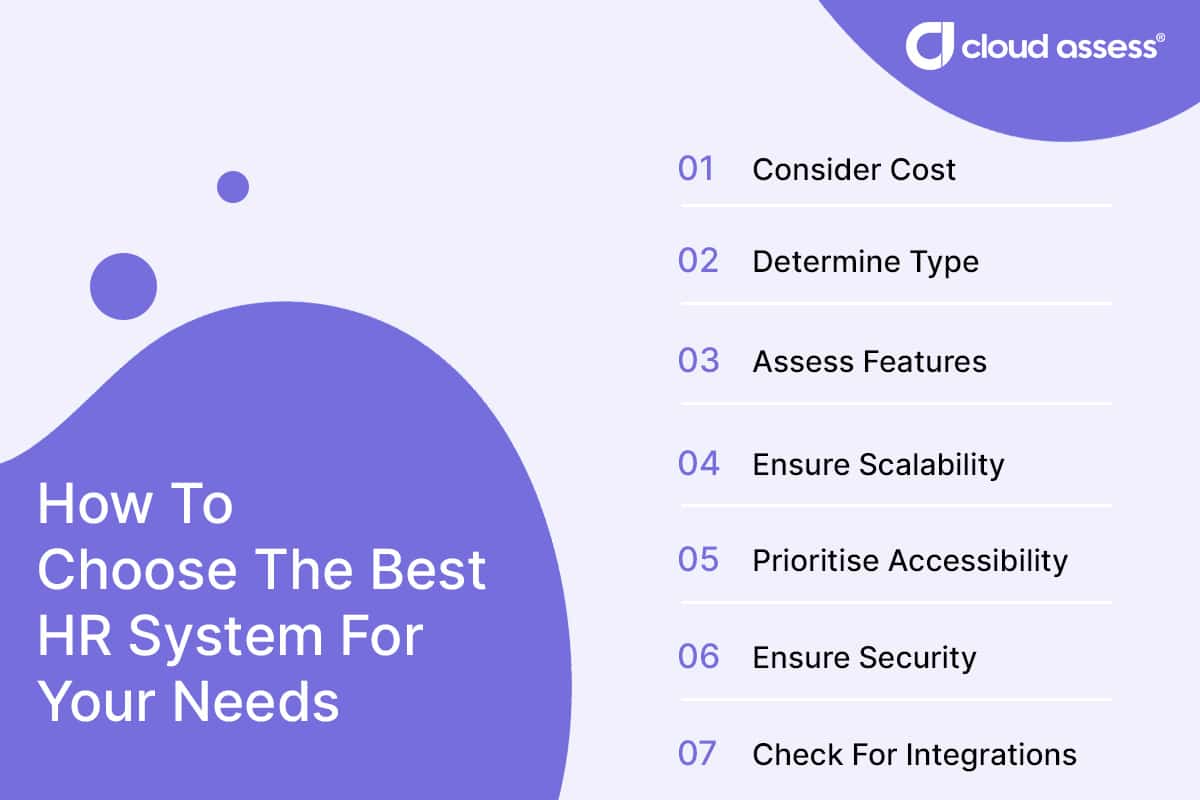
When looking to adopt a new HR system or employee management software solution, there are a few key factors to consider. These ensure the solution you choose will accommodate your HR needs, while also fitting into your larger tech stack.
- Consider Cost. Consider both upfront and ongoing HR system costs, including licensing, maintenance, and potential upgrade fees, to ensure the solution fits your budget.
- Determine Type. Determine whether an HRIS, HCM, or HRMS best suits your organisation’s needs based on the scope of HR functions you require.
- Assess Features. Look for essential capabilities like payroll, benefits administration, compliance tracking, and performance management, ensuring they align with your business goals.
- Ensure Scalability. Choose a system that can grow with your organisation, accommodating expanding workforce needs, new locations, and evolving HR processes.
- Prioritise Accessibility. Ensure the platform offers cloud-based access, mobile compatibility, and self-service portals for employees and HR teams.
- Ensure Security. Look for security features like data encryption, role-based access controls, and compliance with GDPR or other relevant data protection regulations to safeguard sensitive employee information.
- Check For Integrations. Check for compatibility with your learning management system, payroll software, automation tools, and other business systems to streamline operations and improve efficiency.
HR Systems & Cloud Assess: Integrated For Success
HR systems play a crucial role in streamlining workforce management, improving efficiency, and ensuring compliance. Integrating these solutions with a training and assessment platform like Cloud Assess allows you to seamlessly manage compliance training, upskill employees, and maintain accurate training records. This ensures your organisation remains compliant while fostering a culture of continuous learning and professional growth.