An engaged workforce is essential for business success. When employees feel motivated, committed, and connected to company goals, they bring their best to work. This helps drive consistent performance and strengthen teams.
But real employee engagement doesn’t happen on its own. It takes more than good intentions, requiring the right mindset, skills, knowledge, and support. That’s where employee engagement training comes in. It provides a structured approach that helps people grow while staying invested in their work, creating a stronger, more connected team in the process.
In this guide, we cover:
- What employee engagement training is
- Components of an effective program
- Benefits for both businesses and employees
- Real-world training examples
- How to design a tailored training approach
- Common challenges and how to overcome them
- How to measure long-term impact
What is Employee Engagement Training?
Employee engagement training is a structured program that helps employees and managers build motivation, connection, and alignment with organisational goals. It focuses on improving communication, recognition, and workplace relationships, and providing a sense of purpose.
Unlike traditional skills training, employee engagement training addresses the human and relational aspects of work that lead to sustained engagement. It helps improve employee engagement by creating stronger connections, deeper motivation, and a clearer sense of purpose.
Components of Effective Engagement Training
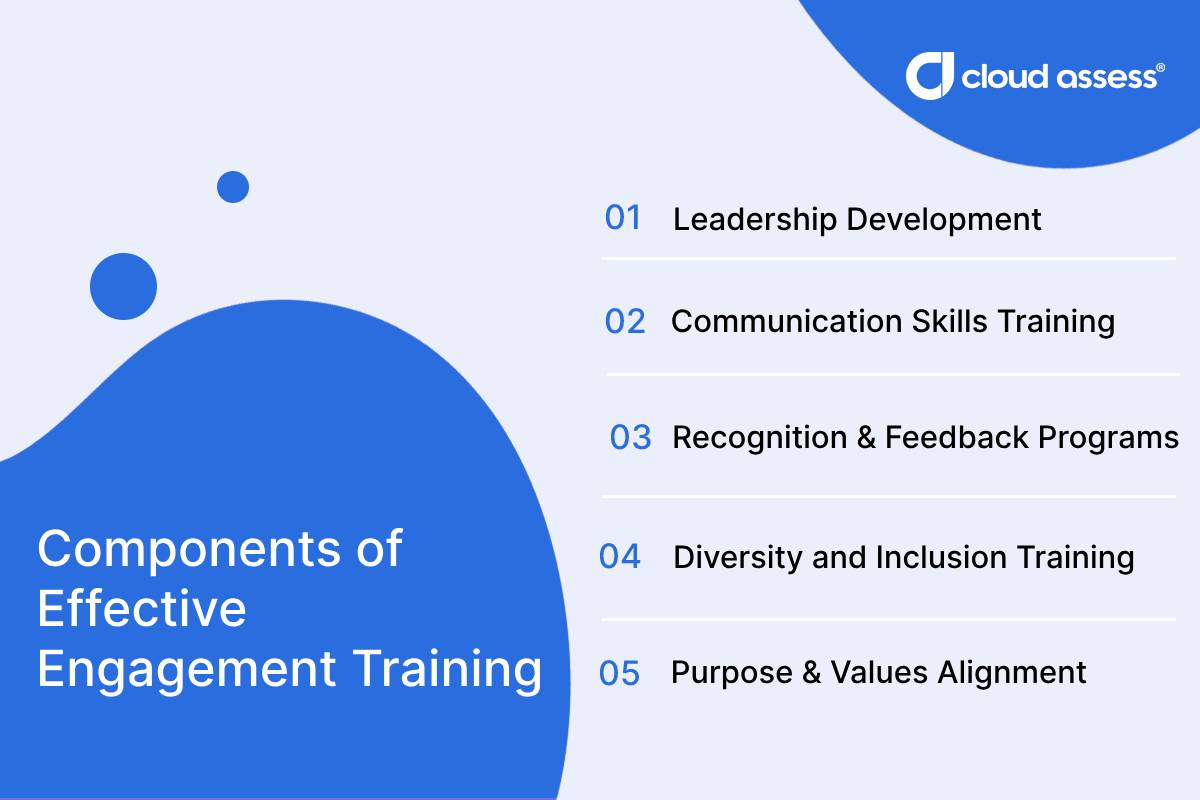
Leadership Development
Leadership training within an engagement program focuses on building managers’ capacity to lead with empathy, clarity, and purpose. It helps them understand their role in shaping daily employee experiences, from setting expectations to recognising effort. By equipping leaders to build trust and psychological safety, this training turns line managers into active drivers of engagement.
Communication Skills Training
The communication skills component strengthens the relational dynamics within teams. It trains employees and managers to communicate openly, resolve conflicts constructively, and collaborate across departments. When people can express ideas, concerns, and feedback without friction, engagement becomes more sustainable and resilient.
Recognition and Feedback Programs
Training in this area teaches the principles and practices of meaningful recognition. It helps managers and peers understand when and how to acknowledge contributions in ways that reinforce motivation and connection. Structured feedback systems, introduced through training, also ensure performance conversations are frequent, developmental, and aligned with team goals.
Diversity and Inclusion (D&I) Training
D&I modules in engagement training address how inclusion impacts individual engagement and team cohesion. They challenge assumptions, encourage inclusive practices, and equip employees with the workforce skills needed to recognise and value diverse perspectives. These modules also often address workplace harassment, helping teams identify, prevent, and respond to behaviours that undermine psychological safety. This creates a more equitable environment where people feel they belong, which is essential to maintaining consistent engagement across the organisation.
Purpose-Driven Work and Company Values
This training helps employees link their daily work to the organisation’s mission and long-term goals. It also shows leaders how to consistently reinforce company values through power skills such as decision-making, recognition, and communication. Connecting tasks to a larger purpose gives teams a clearer sense of meaning in their roles, keeping employees engaged over time.
Benefits of Employee Engagement Training
Benefits For Businesses
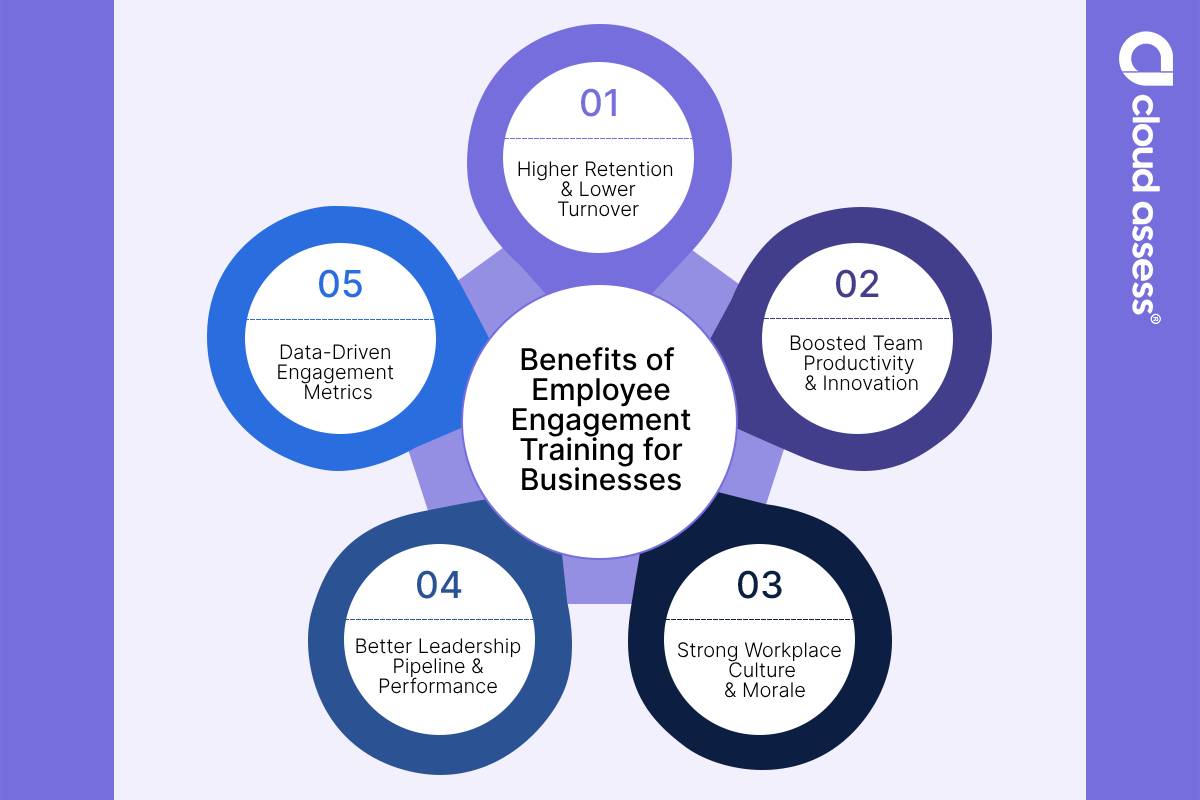
- Higher Retention and Lower Turnover: Training reinforces the factors that make employees want to stay with a company, such as strong leadership, recognition, clarity, and inclusion. When people feel supported and valued, they are more committed to organisational success, resulting in increased employee retention.
- Boosted Team Productivity and Innovation: Engaged employees communicate better, take more initiative, and collaborate more effectively. Engagement training fosters environments where ideas are shared openly and productivity is driven by shared purpose rather than pressure.
- Stronger Workplace Culture and Morale: Embedding engagement principles into training helps cultivate a more positive, inclusive culture. Reinforced values and expectations improve morale and strengthen workplace engagement.
- Better Leadership Pipeline and Manager Performance: Investing in leadership development as part of engagement training allows organisations to build a stronger internal pipeline of people-focused managers. This improves team performance and supports long-term succession planning, reducing dependence on external hires.
- Data-Driven Improvements in Engagement Metrics: Targeted employee engagement strategies are easy to measure. Organisations that track improvements in communication, recognition, and alignment can identify what works and refine their approach using real data.
Benefits For Employees
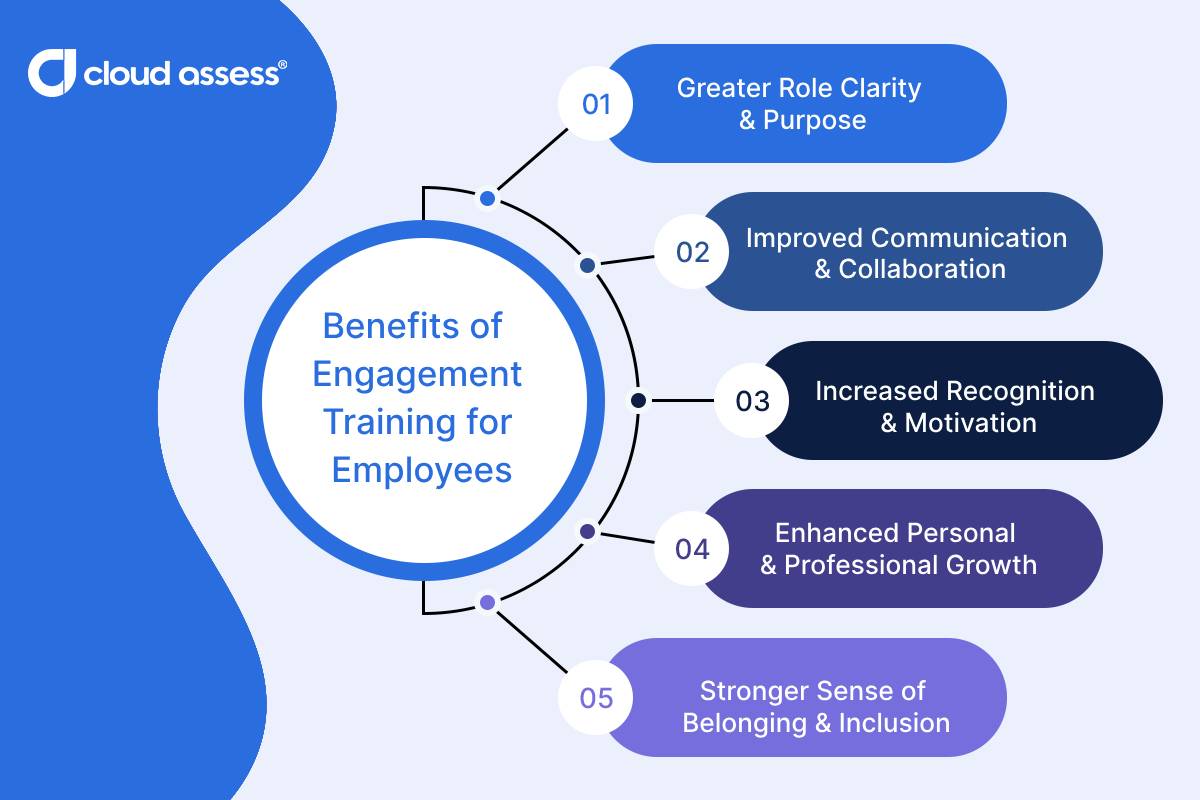
- Greater Role Clarity and Purpose: Training connects individual roles to broader goals and expectations. Engaged teams gain a clearer understanding of how their work contributes to the organisation, increasing focus and job satisfaction.
- Improved Communication and Collaboration: Engagement training equips teams to share ideas, resolve conflicts, and collaborate more effectively. This reduces friction and builds stronger working relationships.
- Increased Recognition and Motivation: When recognition becomes a consistent, trained behaviour, employees feel more appreciated and seen. This boosts motivation and strengthens their emotional connection to the team.
- Enhanced Personal and Professional Growth: The focus on feedback, leadership excellence, and communication supports individual development. Employees learn workplace skills that improve job performance and contribute to long-term career growth.
- Stronger Sense of Belonging and Inclusion: Training that integrates D&I principles helps create a workplace where employees feel respected and included. This increases emotional safety and encourages full participation across diverse teams.
Examples of Employee Engagement Training
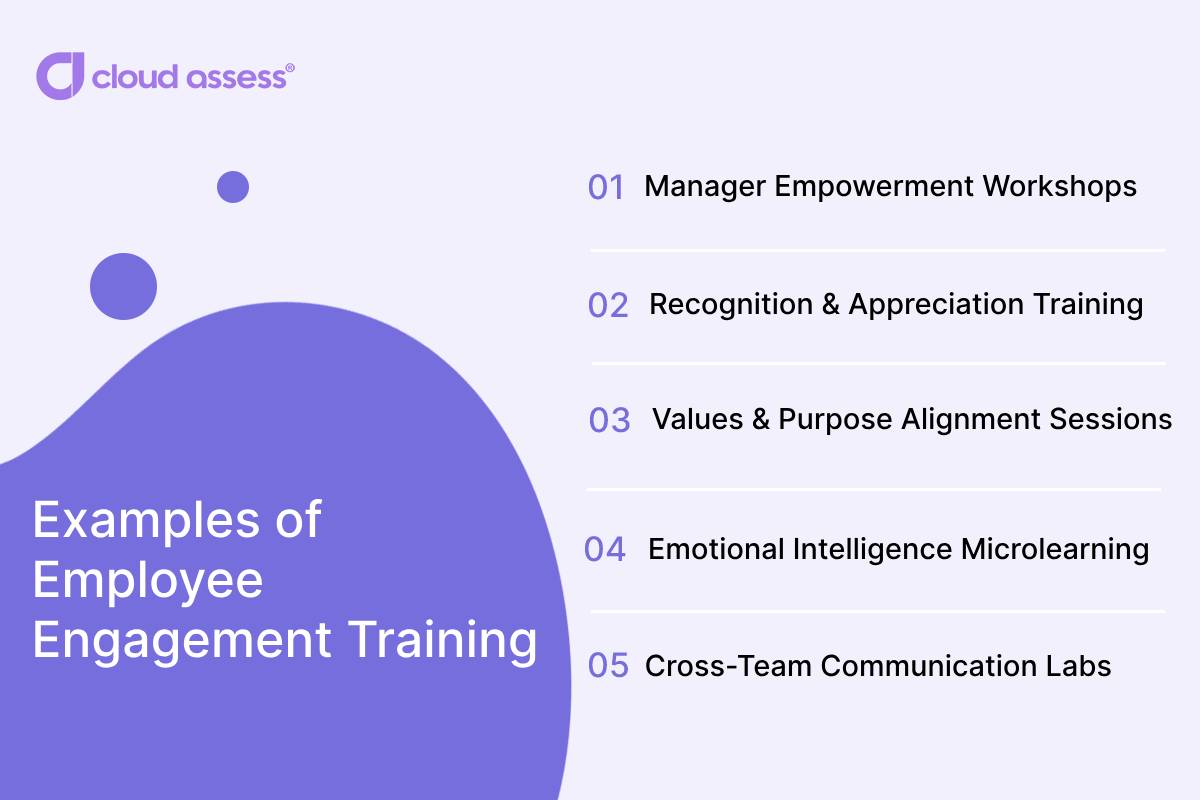
Manager Empowerment Workshops
Managers are central to day-to-day engagement, and these workshops train them to lead in ways that foster trust, accountability, and connection. The focus is on the real-world future of work skills, such as holding effective one-to-ones, navigating performance conversations, and recognising team wins. These directly impact how supported and motivated people feel, leading to highly engaged employees.
Recognition & Appreciation Training
This training is a powerful way to improve employee engagement as it shifts recognition from an occasional gesture to a core workplace behaviour. Employees and managers learn how to give appreciation that is specific, timely, and aligned with organisational values. When delivered well, recognition strengthens team relationships and reinforces a culture where contributions are consistently acknowledged.
Values & Purpose Alignment Sessions
These sessions guide teams in exploring company values, clarifying shared goals, and identifying how individual roles contribute to long-term impact. They help align employee motivation with organisational direction.
Emotional Intelligence (EQ) Microlearning
Emotional intelligence training delivered through microlearning modules helps target self-awareness, empathy, and interpersonal communication skills that are closely tied to sustained engagement. These short, focused lessons give employees and managers the tools to build better relationships, manage tension, and respond more constructively under pressure.
Cross-Team Communication Labs
Siloed communication can undermine engagement, especially in growing organisations. These labs provide hands-on practice in listening, feedback, and goal alignment across teams. They are designed to improve collaboration and create a more cohesive, connected working environment.
How to Design an Employee Engagement Training Program
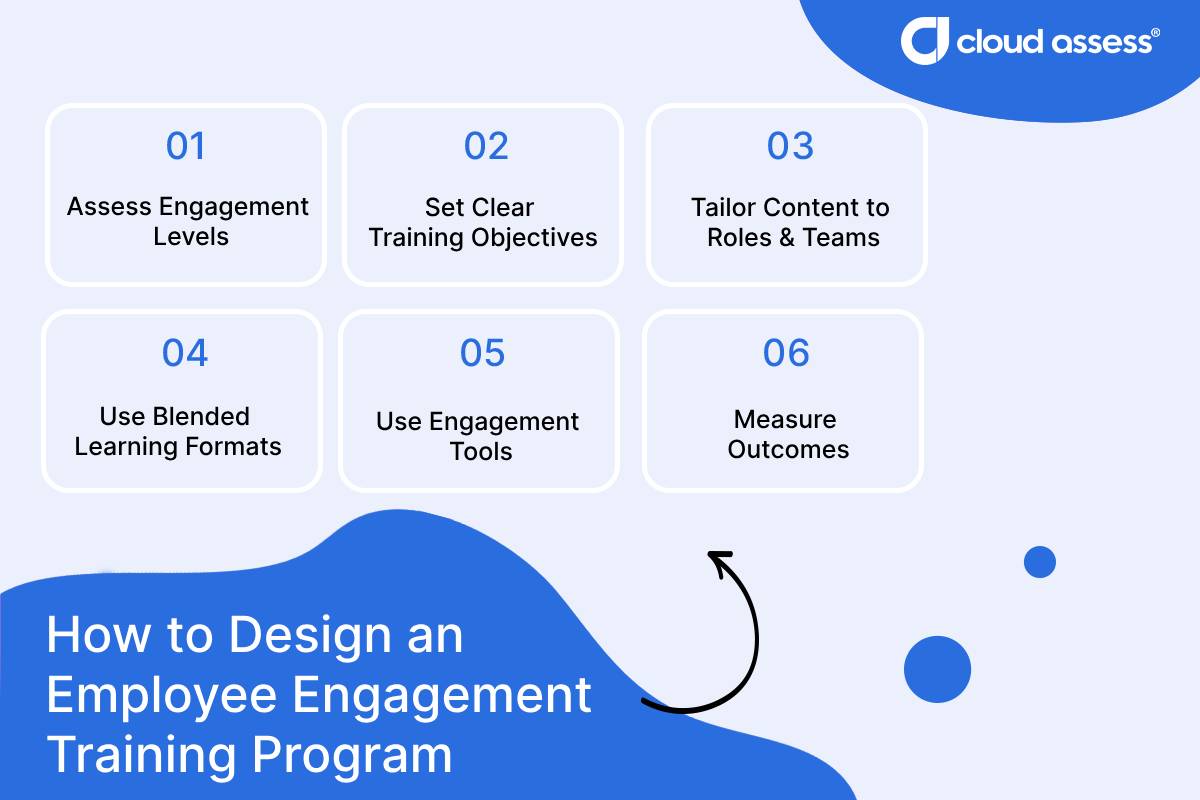
1. Assess Engagement Levels
Before designing any training, you need a clear picture of where engagement currently stands. A well-designed engagement survey helps identify what’s working, what’s missing, and where disengagement might be setting in. Focus on core engagement drivers like leadership trust, role clarity, recognition, and communication.
Use both quantitative data (e.g. engagement scores, eNPS, retention rates) and qualitative insights (e.g. focus groups, anonymous feedback, exit interviews). This dual approach reveals what is happening and why. This level of context is critical for designing an employee training program that addresses the right problems. For example, if survey results show low scores on “I feel recognised for my work,” your training plan should include a module on building peer-to-peer recognition habits.
Tip: Use a segmentation approach when reviewing results, compare scores by team, department, or tenure to spot hidden engagement gaps.
2. Set Clear Training Objectives
Engagement training should solve specific challenges. Clear objectives keep the program focused and measurable. These goals should align with business priorities and employee needs found in your assessment.
Translate high-level aims into concrete behavioural goals. So, instead of “increase employee engagement”, choose “improve manager feedback frequency” or “boost cross-team collaboration.” For example, a company struggling with siloed departments might set an objective to “improve collaboration across functions through structured communication labs.”
Tip: Share objectives with participants in advance because transparency improves buy-in and helps connect training to real workplace challenges.
3. Tailor Content to Roles and Teams
Engagement looks different across the organisation. A one-size-fits-all approach often misses the mark. Design content streams that reflect the daily realities and responsibilities of different groups like frontline workers, middle managers, senior leaders, and cross-functional teams.
Frontline workers may need support around recognition and communication. Managers typically benefit from coaching skills development, performance conversations, and emotional intelligence training. Senior business leaders may focus more on strategic alignment and driving culture through values. For example, a customer service team might receive conflict management training, while managers focus on coaching through burnout and high turnover periods.
Tip: Involve team leads or employee representatives in co-designing training content. These stakeholders will surface challenges and nuances that might otherwise be missed.
4. Use Blended Learning Formats

A blended learning approach that combines live workshops, digital modules, peer learning, and on-the-job activities supports learning that sticks. It also accommodates different types of learning styles and schedules, making the program more inclusive.
Start with a live or virtual kickoff session to build momentum, then follow up with a structured online employee engagement course that delivers self-paced digital modules and reinforces behaviours over time. Peer coaching groups, scenario-based roleplays, and microlearning nudges help reinforce behaviours over time. For example, a leadership module might start with a live coaching workshop, followed by weekly video micro-lessons on feedback, and peer-led reflection sessions.
Tip: Use learning milestones tied to real-world actions. For example, “Give one piece of strengths-based feedback this week” to reinforce engagement-building habits.
5. Integrate Engagement Tools into Training
Training is most effective when it’s embedded into daily work, not treated as an isolated event. This means using the same tools in training that employees will use on the job, such as feedback platforms, recognition systems, and collaboration tools, to help build lasting habits.
For self-paced learning components, learning experience platforms (LXPs) or learning management systems (LMSs) can host interactive content that supports online employee engagement at scale. These platforms allow learners to access microlearning modules, scenario-based exercises, and reflective prompts on their schedule, reinforcing behaviours introduced in live sessions.
For example, you can use your organisation’s LXP to create a learning track on recognition, combining short video lessons, practice prompts, and in-app shout-out tasks that tie back to the training themes.
Tip: Integrate these platforms into your communication rhythm by incorporating weekly Slack reminders to complete modules, keeping learning active without overwhelming learners.
6. Measure Outcomes
To sustain engagement, you need to show that the training is working. Set clear training metrics tied to behaviours and business impact, such as an increase in recognition activity, improvements in manager feedback scores, or reductions in turnover.
Use short pulse surveys post-training to capture early sentiment shifts, and compare baseline data with follow-up engagement scores. Qualitative feedback from managers and teams can also help you assess how training is influencing day-to-day interactions. For example, if one objective was to improve employee engagement in communication, track increases in 1:1 meeting frequency or self-reported improvements in team collaboration.
Tip: Report back to participants on progress because closing the loop builds trust and reinforces that engagement is an ongoing investment, not a one-time event.
Challenges of Implementing Employee Engagement Training
Lack of Leadership Buy-In

Engagement training loses momentum when senior leaders are not visibly involved. Without their backing, the engagement initiatives can appear optional or disconnected from real business goals.
Solution: Secure buy-in early by positioning engagement training as a leadership development tool, not just a culture initiative. Share engagement data to highlight business risks and opportunities, and involve leaders in setting objectives. Encourage them to attend sessions, open training events, or share personal experiences to show commitment and reinforce the importance of the program.
Low Participation Due to Lack of Role Relevance
Employees are less likely to engage with training if they do not see its relevance or struggle to apply it to their specific roles. When content feels generic, abstract, or disconnected from real responsibilities, participation drops, and learning fails to translate into behaviour.
Solution: Design training that speaks directly to real work contexts and challenges. Use role-relevant scenarios, invite input from team leads, and build flexible, time-sensitive formats that feel like a natural extension of the workday, not an added burden. Encourage early adopters to lead by example and build peer momentum.
Scaling Engagement Training Across Teams
As organisations grow, it becomes harder to ensure consistency, relevance, and impact across different roles, regions, or levels of digital maturity.
Solution: Use a modular training approach that combines core engagement principles with flexible delivery formats. Establish a standard framework but allow local teams to customise examples, case studies, and exercises. Lean on scalable digital learning platforms to ensure accessibility without sacrificing personal relevance.
Making Engagement Training Work
Employee engagement training plays a critical role in building a committed, high-performing, and more engaged workforce. It equips teams with the support they need to stay motivated, aligned, and connected to their work. When employee training is intentional, practical, and tailored to the needs of your people, it strengthens leadership, improves communication, and reinforces a culture where people want to do their best work.
Sustaining this impact requires the right tools. For self-paced learning that fits into busy schedules and diverse roles, Cloud Assess offers a flexible, purpose-built LMS. It allows you to deliver targeted microlearning, track engagement progress, and create seamless learning pathways that support your engagement strategies long-term.
Explore Cloud Assess’s free self-paced courses to see how flexible, targeted learning can support your engagement goals. Or, start a Explore Pricing and experience how the platform powers impactful, scalable training.