Workplaces are changing in how they operate, how teams are structured, and how work gets done. Teams are more distributed, roles are evolving faster, and organisations need training that keeps pace. Skills gaps are widening. Compliance requirements are increasing. Organisations need structured, scalable training that fits around real work.
Digital learning platforms make that possible. They centralise content, and automate administration. They also give L&D teams visibility into workforce capability. Employees can complete training on demand, and managers can track progress in real time. Organisations can maintain consistent standards across locations.
If you’re evaluating tools to strengthen your workplace training strategy, you’re in the right place. This guide explores some of the top digital learning platforms available today.
What is a Digital Learning Platform?
A digital learning platform is an online system that centralises the creation and delivery of learning content. It’s purpose-built to make education and training accessible from anywhere, at any time.
These platforms offer capabilities such as course authoring, learner progress tracking, and assessments. They also come with built-in reporting and analytics and often integrate with third-party tools. Many modern platforms also incorporate artificial intelligence in training to personalise the learning experience.
Digital Learning Platform TLDR Summary
Cloud Assess is built specifically for frontline and deskless environments, with offline mobile learning and on-the-job assessment tools that support real-world competency verification.
For organisations prioritising AI-powered skills mapping and workforce agility at enterprise scale, Absorb LMS, Cornerstone Galaxy, and Docebo offer sophisticated learning paths and analytics tied to business outcomes.
Schoox and TalentLMS suit mid-market teams needing AI course authoring alongside microlearning and compliance tools, while iSpring LMS and SkyPrep offer faster deployment for organisations with straightforward onboarding and compliance requirements.
Leapsome and Litmos serve workplace training teams that need learning connected to performance management or accessible off-the-shelf compliance content respectively.
Vocational and workplace training teams should prioritise platforms with strong blended learning support, offline access, and competency verification tools suited to operational environments.
Best Digital Learning Platforms
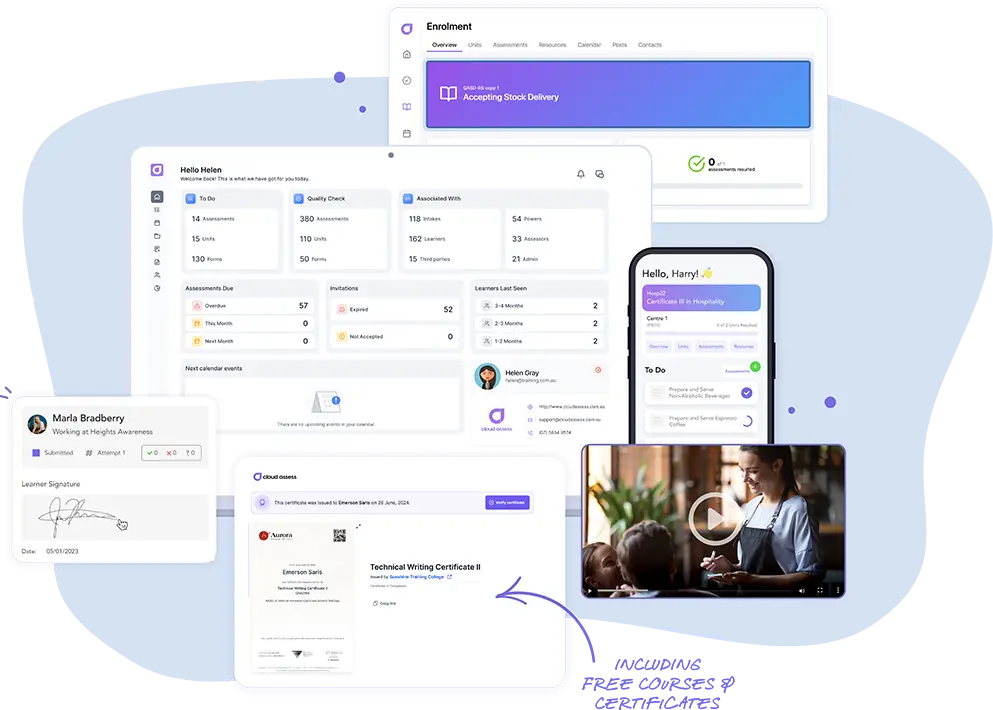
Cloud Assess is a cloud-based learning management system (LMS). It’s built for frontline and deskless environments where training happens on-site. Its mobile app supports online and offline learning. This allows employees to complete assessments and upload evidence even in low-connectivity locations. L&D teams can identify skills gaps and assign targeted pathways. They can also verify real-world performance through structured, on-the-job assessments.
The platform offers centralised dashboards that help trainers gain visibility into essential data. This includes tracking training certificate management, compliance status, and workforce capability across locations. This results in organisations maintaining audit-ready training records while keeping operational teams productive.
Key Features
- Course authoring
- On-the-job assessments
- Evidence portfolio tools
- Skills gap analysis
- Skills matrix
- Compliance tracking
- Blended learning support
- Offline learning
- Verification of competency
- Reporting and analytics
- Automated enrolments
- 5,000+ Third-party integrations
- Extensive course library
Pros
- Supports offline learning for frontline and deskless workers
- Enables real-world competency verification through on-the-job assessments
- Provides full workforce skill visibility across multiple locations
- Streamlines certification tracking and digital credentialing
Pricing
Cloud Assess offers an all-inclusive solution for employee training in high-risk, high-compliance industries. Every feature is included from day one, including mobile offline assessment, verification of competency, skills matrix and automated compliance tracking. There are no upgrade paths or feature gates. Visit our pricing page for an accurate quote.
Rating
4.7/5 (average rating from Capterra, G2, GetApp, Software Advice)
#2 iSpring LMS
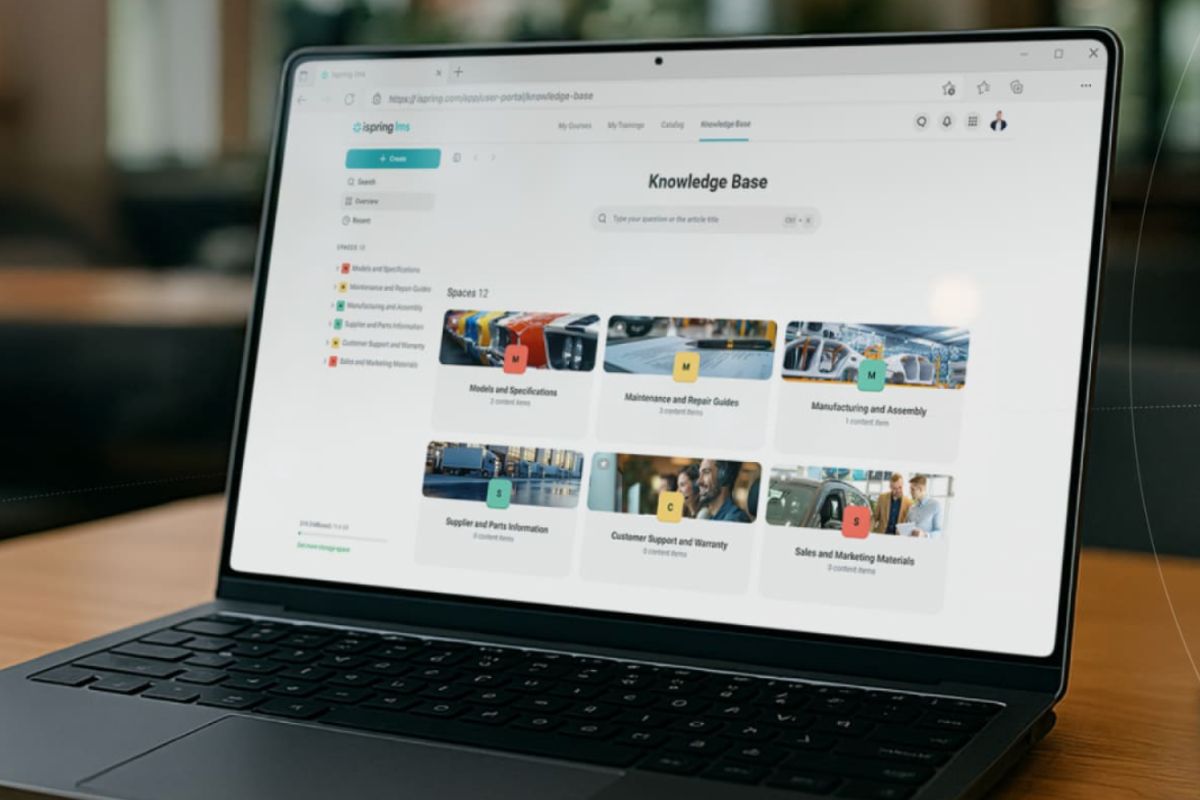
iSpring LMS is designed for organisations that need to get training online without a complex technical rollout. The online learning platform allows training teams to turn existing presentations into interactive, trackable courses. This enables trainers to distribute high-quality modules to their teams in a matter of hours. Its mobile app supports full offline access, ensuring staff in remote or low-connectivity areas never miss a lesson. The system focuses on ease of use, making it simple for managers to oversee basic onboarding and compliance.
However, some users find that the reporting and analytics features are quite basic. This can make it difficult for managers to extract deep insights or customise data filters. This is especially challenging when overseeing very large or complex teams.
Key Features
- AI course authoring
- PowerPoint course conversion
- Observation checklists
- Development plans
- On-the-job training tasks
- 360-degree feedback
- Compliance training
- Gamification
- Mobile learning app
- Reporting and analytics
- Automated enrolments
- REST API access
Pros
- Enables fast training deployment without a technical background
- Supports offline mobile learning for frontline workers
- Centralises all training records for easy compliance tracking and audit readiness
- Scales to meet the needs of both small and large organisations across industries
Cons
- Reporting options are difficult to customise
- Limited platform branding and customisation
- Unintuitive admin and learner navigation
Pricing
iSpring offers three LMS pricing points for its Business plan: $4.46 per user monthly for 300 users, $3.97 for 500 users, and $3.58 for 1000 users. Their Enterprise plan is customised based on unique business needs.
User Volume
Mid to large-sized organisations that need structured employee training without heavy administrative overhead.
Rating
4.6/5 (average rating from G2, Capterra, GetApp, Software Advice)
#3 SkyPrep
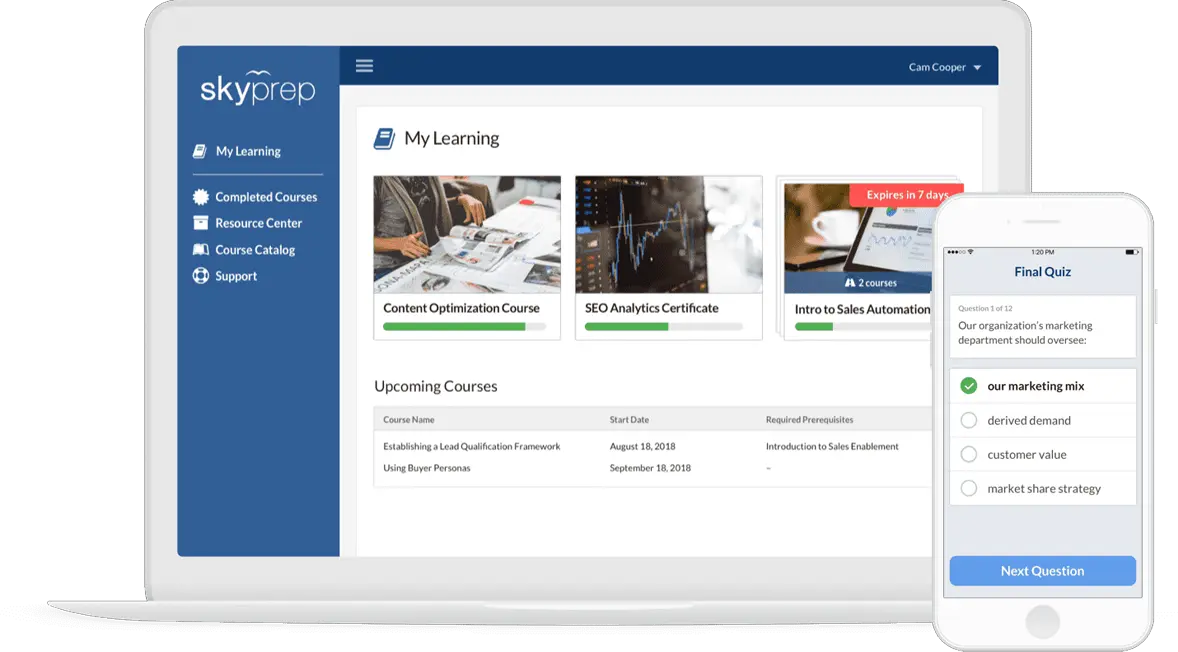
SkyPrep is an employee training software designed for corporate training teams. The platform allows organisations to create and deliver online courses, quizzes, and assessments at scale. Administrators can group learners to automate enrolments and training reminders. It provides reporting tools that help trainers track progress, certifications, and completion trends. The system also supports mobile access to ensure staff can engage with their training while on the go.
However, some users find that the backend interface feels cluttered and less intuitive than the learner portal. This can lead to extra manual work when trying to adjust reporting layouts or assign specific course credits.
Key Features
- Course authoring
- AI content translation
- Learning paths
- Instructor-led training
- Compliance tracking
- Automated enrolments
- Gamification
- Mobile learning
- Reporting and analytics
- Zapier integration
- Open API access
Pros
- Quick to implement with minimal technical setup required
- Intuitive learner portal that supports smooth adoption across teams
- Centralises all training materials for easy access and management
- Automated certification that helps streamline compliance record-keeping
Cons
- Backend interface that feels cluttered for administrators
- Reporting tools lack flexibility for detailed insights
- Only basic assessment and testing features
- Live virtual session functionality can be unreliable
Pricing
SkyPrep offers Lite and Premium pricing solutions. The exact pricing details for these are available upon request.
User Volume
Small to mid-sized businesses that need a straightforward platform for compliance management and employee training.
Rating
4.5/5 (average rating from G2, Capterra,GetApp, Software Advice)
#4 Absorb LMS

Absorb LMS is a flexible platform built to manage training across complex, multi-audience environments. Mid-sized to enterprise organisations use it to run employee onboarding and compliance training. The platform includes tools like Absorb Skills and Absorb Create. These help L&D teams build personalised upskilling paths and generate new course content quickly. It offers automated enrolments, reminders, and notifications. These features help reduce the administrative load on training teams.
However, some users find the interface feels less modern than newer platforms. This can affect the overall learner experience.
Key Features
- AI course authoring
- AI skills mapping
- Observation checklists
- Learning paths
- Instructor-led training
- Compliance training courses
- Social learning
- Gamification
- Mobile learning
- Reporting and analytics
- Automated enrolments
- Human Capital Management integrations
- REST API access
Pros
- AI-powered tools that help reduce the time and cost of building courses
- Automates routine admin tasks, freeing L&D teams to focus on training quality
- Personalised learning paths that help employees develop skills relevant to their role
- Robust reporting tools that allow organisations to align training with business goals
Cons
- Interface feels less modern than newer platforms
- Enrolment workflows that can feel complex for new administrators
- Limited branding and customisation options
- Basic native course authoring may be insufficient for advanced content needs
Pricing
AbsorbLMS’s price structure is tailored according to organisational needs. Absorb offers Pay-Per-User, Pay-Per-Active-User, and Perpetual License Fee pricing structures. The LMS even has an open-source option.
User Volume
Mid-sized to large companies that need to manage complex, multi-audience training programs at scale.
Rating
4.8/5 (average rating from G2, Capterra, GetApp, Software Advice)
#5 Leapsome
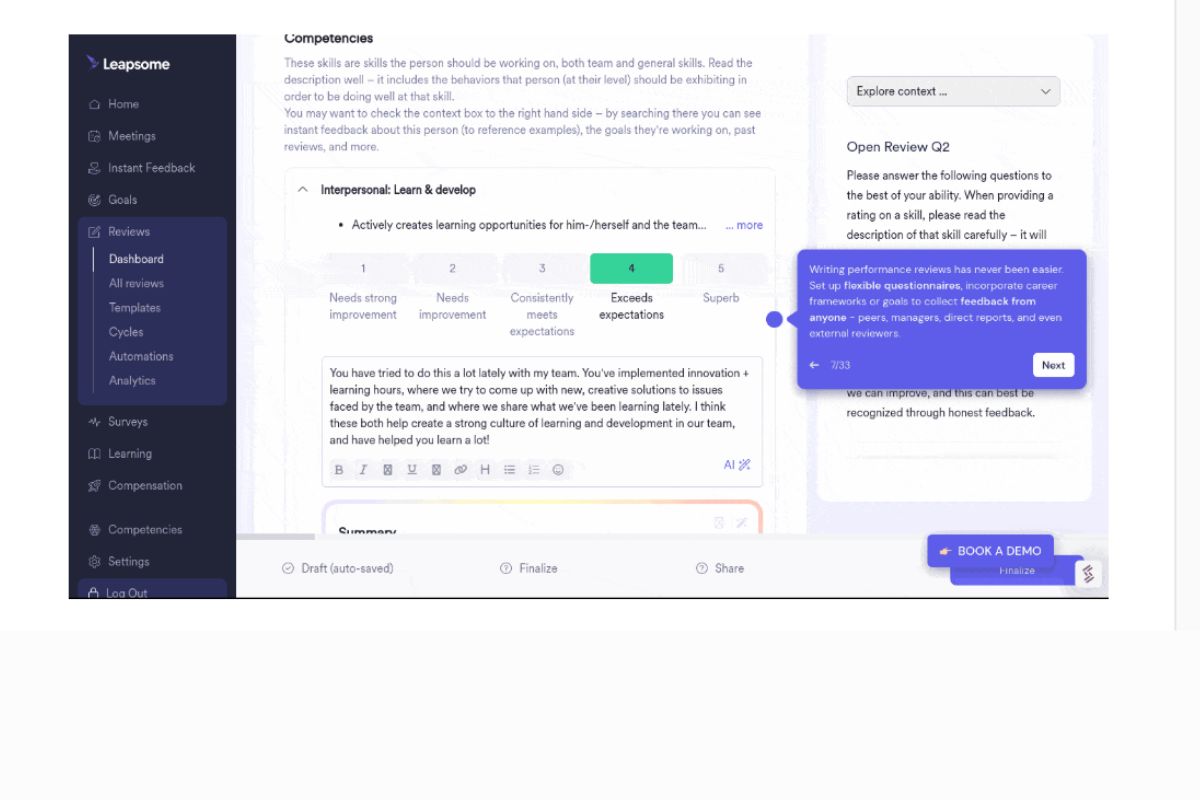
Leapsome is an AI-powered people enablement platform. It connects performance management, employee engagement, and learning in one system. Organisations use it to run structured review cycles, set learning goals, and track progress. They also use it to deliver training that is tied directly to performance data. Its learning module allows HR teams to build and assign personalised learning paths. These are automatically triggered based on role or employee onboarding stage. They can also trigger based on identified skill gaps from performance reviews.
However, learning is one module within a broader HR suite, and is most effective when combined with Leapsome’s other products. Organisations looking for a dedicated platform may find its training capabilities somewhat limited. Its features are often less comprehensive than those found in the standalone solutions on this list.
Key Features
- Personalised learning paths
- Course authoring tools
- Blended learning
- Knowledge assessments
- Curated content library
- Automated enrolments
- 360-degree performance reviews
- OKR goal tracking
- Employee engagement surveys
- AI review assistant
- Skills gap tracking
- Reporting and analytics
Free OKR Template to Set Clear, Measurable Goals
Looking for a simple way to define Objectives and Key Results? Download this ready-to-use OKR template to structure goals, track progress, and keep teams aligned.Pros
- Links learning directly to performance data and business goals
- 360-degree feedback tools that support a culture of continuous professional development
- AI-powered insights that help HR teams make more informed decisions
- Intuitive interface that supports fast adoption across teams
Cons
- Steep learning curve during initial setup and configuration
- Learning module less comprehensive than standalone platforms
- Limited customisation for automated notifications
- Too feature-heavy for smaller teams
Pricing
Leapsome’s pricing follows a modular pricing model, which enables businesses to customise plans based on their specific needs. Contact Leapsome directly for tailored pricing options.
User Volume
Mid-sized to enterprise organisations that want to connect employee learning directly to performance management and business goals.
Rating
4.6/5 (average rating from G2, Capterra, GetApp, Software Advice)
Looking For More Options?
We’ve compiled Leapsome alternatives for you to explore.#6 TalentLMS

TalentLMS is a cloud-based LMS used by organisations to deliver employee training at scale. Businesses use it to manage onboarding, compliance, and skills development across distributed teams. TalentLMS includes an AI-powered course builder that helps training teams create content quickly. Its AI Coach provides learners with real-time, personalised support throughout their training. The platform’s skills module helps organisations identify skill gaps. It also helps them build targeted upskilling paths for individual employees. The platform’s automated enrolments and gamification features also keep learners engaged.
However, some users find that the platform’s reporting tools lack the depth needed for complex training programs. This can make it harder to surface granular insights across large or fast-growing teams.
Key Features
- AI course builder
- AI learning coach
- Course auto-translation
- Skills gap analysis
- Learning paths
- Compliance training
- Gamification
- Mobile learning
- Reporting and analytics
- Automated enrolments
- REST API access
Pros
- Intuitive interface that supports fast adoption for both admins and learners
- AI-powered course builder that helps training teams easily create content
- Gamification tools that help keep learners motivated and on track
- Mobile learning app that supports offline access for remote and frontline employees
Cons
- Reporting tools that lack depth for complex training programs
- Course authoring may be too basic for advanced interactive design needs
- Limited advanced customisation options
- Mobile app does not support push notifications
Pricing
TalentLMS offers four pricing tiers: Core, Grow, Pro, and Enterprise. Plans start at $89 for smaller tiers, with custom pricing available for the larger tiers. The cost varies based on the number of users required.
User Volume
Small to mid-sized businesses that need a straightforward platform for employee onboarding, compliance, and skills development.
Rating
4.7/5 (average rating from G2, Capterra, GetApp, Software Advice)
#7 Schoox

Schoox is built for frontline and distributed teams across various industries. Organisations use it to manage onboarding, compliance, and skills development at scale. The platform’s Learning Impact Suite uses AI to map business goals to role-based skills. It then auto-generates personalised educational content and tracks progress against business outcomes. Its mobile app supports microlearning and offline access. This makes training accessible for employees who are not desk-based. Schoox also includes built-in performance management and goal tracking tools.
However, some users find the backend has a steep learning curve for administrators. This can result in longer onboarding times, a need for more initial training, and added reliance on support.
Key Features
- AI course authoring
- AI skills mapping
- Learning paths
- Microlearning courses
- On-the-job training
- Blended learning
- Compliance training
- Career path tools
- Gamification
- Mobile learning app
- Reporting and analytics
- Automated enrolments
- Third-party integrations
Pros
- AI-powered skills mapping that helps organisations connect training to measurable business outcomes
- Mobile learning app that supports training for frontline and distributed teams
- Gamification tools that keep employees motivated and boost learner engagement
- Microlearning capabilities that make it easier to deliver training in short, digestible formats
Cons
- Steep learning curve for administrators without an L&D background
- Only basic survey and assessment features
- Interface that feels dated compared to newer platforms
Pricing
Schoox doesn’t make pricing available on their website. Contact their team directly for an accurate quote.
User Volume
Mid-market to enterprise organisations with large frontline and distributed workforces.
Rating
4.3/5 (average rating from G2, Capterra, GetApp, Software Advice)
#8 Cornerstone Galaxy
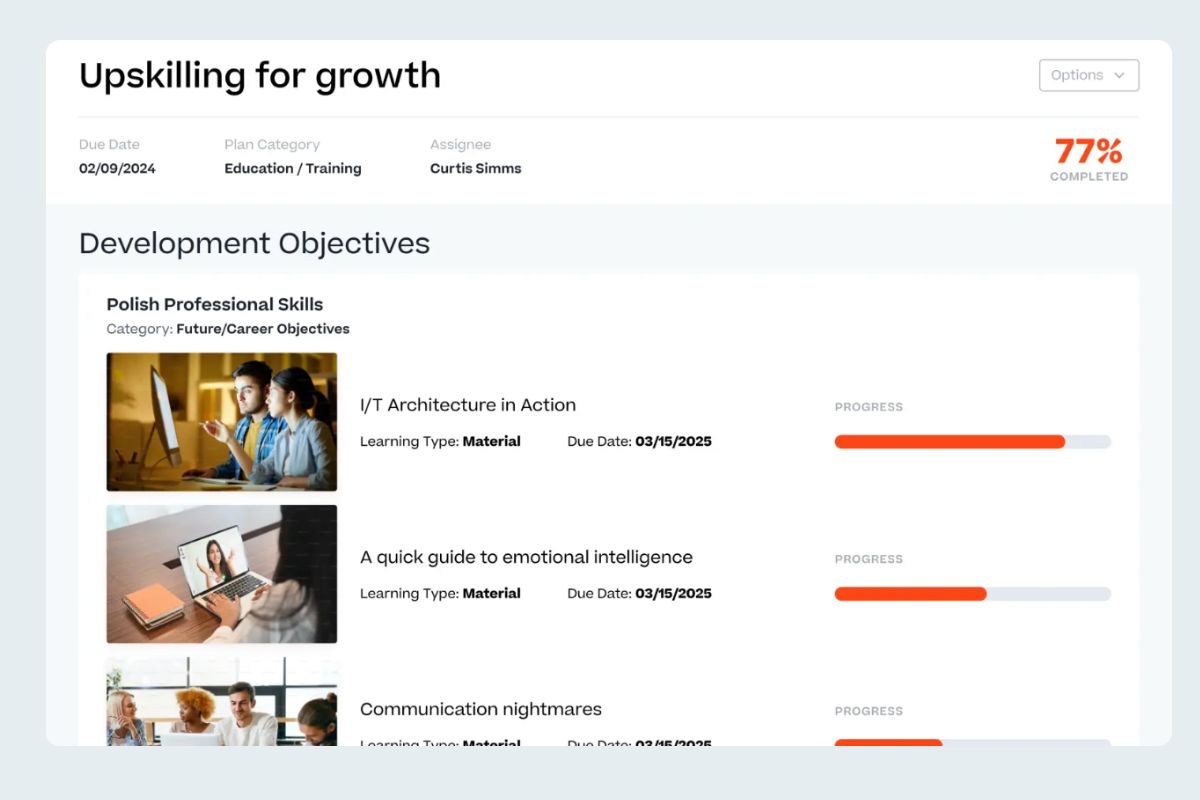
Cornerstone Galaxy is an AI-powered workforce agility platform. It’s built for organisations that need to manage learning, performance, and compliance in one unified system. The platform uses Galaxy AI to help L&D teams identify skills gaps across the organisation. The AI tool then recommends personalised learning paths and curated content to address those gaps. Its Immerse feature allows organisations to deliver immersive, AI-driven learning experiences. Its integrations with communication and HR systems support learning in the flow of work.
However, some users find the platform complex to navigate and time-consuming to implement. This can be a big challenge for mid-sized organisations without a dedicated technical team to manage the rollout.
Key Features
- AI skills engine
- Skills gap analysis
- Content curation tools
- Virtual and augmented reality learning
- AI learning assistant
- Compliance tracking
- Learning paths
- Mobile learning app
- Reporting and analytics
- Automated enrolments
- Third-party integrations
Pros
- AI skills engine that helps organisations identify gaps in workforce skills
- Supports multimodal learning experiences
- Robust reporting and analytics tools that provide real-time visibility into training progress
- Integrates with communication and HR platforms to keep learning in the flow of everyday work
Cons
- Complex to configure and time-consuming to implement
- Steep learning curve for new administrators
- Limited content creation tools for advanced training needs
- Mobile app with limited functionality compared to desktop
Pricing
Cornerstone doesn’t make pricing available on their website. Contact their team directly for accurate pricing details.
User Volume
Large enterprises and global organisations that need to manage workforce agility and compliance training at scale.
Rating
4.3/5 (average rating from G2, Capterra, GetApp and Software Advice)
Not Considering Cornerstone Galaxy?
Compare other learning platforms that offer powerful training capabilities without enterprise-level complexity.#9 Docebo

Docebo is an AI-powered LMS. It’s built for organisations that need to scale training across large, complex workforces. The platform combines LMS, LXP, and content authoring capabilities into one system. Its AI features help L&D teams automate enrolments and personalise learning paths for each learner. Docebo Shape and Docebo Create allow training teams to build and manage course content at speed. The platform also offers robust analytics. This reporting feature helps organisations connect learning activities to wider business outcomes.
However, Docebo is purpose-built for enterprise organisations. It requires a minimum of 250 active learners. The platform is also complex to configure, particularly during initial setup. This can extend implementation timelines for teams that want to get started quickly.
Key Features
- AI course authoring
- AI video presenter
- AI virtual coaching
- Skills engine
- Learning paths
- Social learning
- Blended learning
- Compliance training
- Mobile learning
- Reporting and analytics
- Automated enrolments
- Third-party integrations
Pros
- AI-driven recommendations that help recommend relevant content for each learner
- Social learning tools that encourage knowledge sharing across teams
- Robust reporting dashboards that make compliance tracking and audit preparation easy
Cons
- Steep learning curve for administrators during initial setup
- Not suited for organisations with fewer than 250 active learners
Pricing
Docebo offers two pricing tiers: Elevate and Enterprise. Pricing for these plans are available on request.
User Volume
Enterprises that need to manage complex, multi-audience employee training programs at scale.
Rating
4.3/5 (average rating from G2, Capterra, GetApp, Software)
Not Sure Docebo Is Right For Your Needs?
These alternative solutions may be a better fit.#10 Litmos
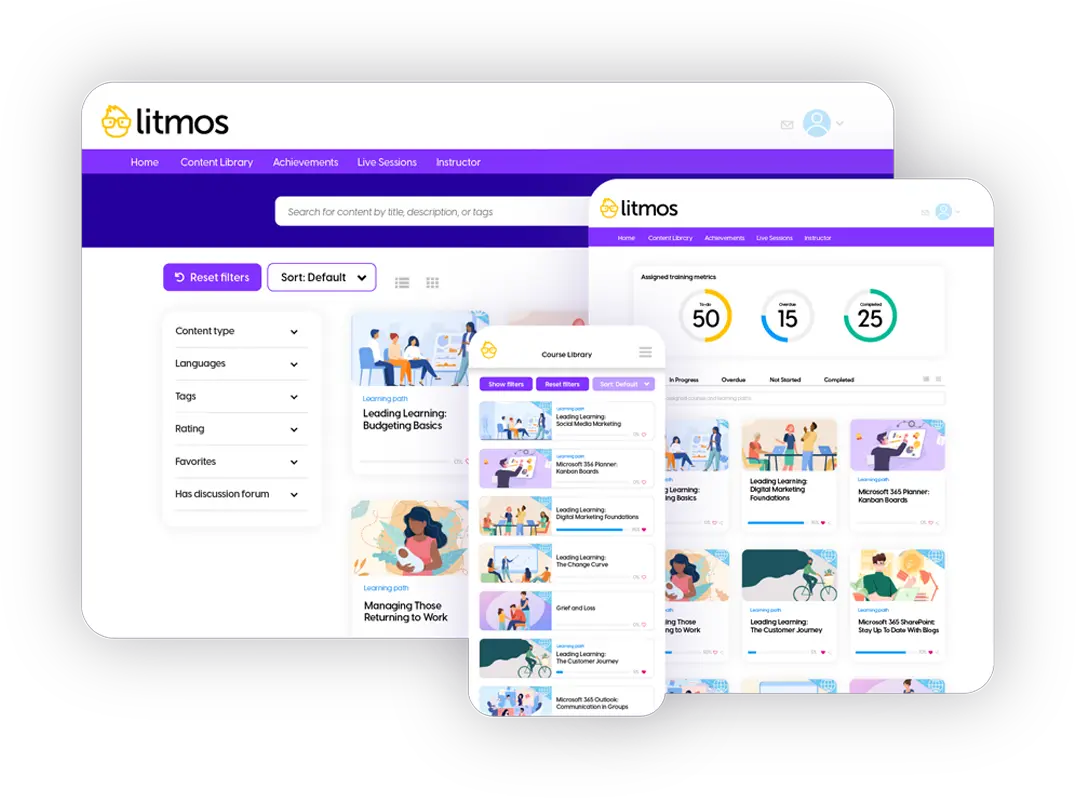
Litmos is a corporate training LMS. It’s used by training teams to manage onboarding, compliance, and skills development from a single platform. Its built-in content authoring tool allows trainers to create mobile-responsive courses directly within the system. The platform also provides access to a library of off-the-shelf courses. Litmos includes additional features like gamification, badges, leaderboards, and certificates to keep learners engaged. Its AI assistant helps learners find relevant content and get answers quickly.
However, some users find that course creation options feel limited for more advanced training needs. There is no way to organise content by sub-modules or drip-feed material to support spaced learning campaigns.
Key Features
- Course authoring
- AI content authoring
- Content library
- Learning paths
- Instructor-led training
- Video assessments
- Observation checklists
- Compliance training
- Mobile learning
- Gamification
- Reporting and analytics
- Automated enrolments
- Third-party integrations
Pros
- Large off-the-shelf content library that reduces the time needed to source and build compliance courses
- Video assessment tools that allow managers to evaluate real-world performance remotely
- AI assistant that helps learners find relevant content and get answers quickly
- Quick to deploy, with organisations able to get up and running without lengthy onboarding
Cons
- Limited course structuring and sequencing options
- Reporting tools are difficult to customise
- Admin interface feels clunky to navigate
- Limited automation for large-scale training assignments
Pricing
Litmos doesn’t make pricing details available on their website. Contact them directly for accurate pricing information.
User Volume
Mid-sized to large enterprises that need a scalable platform for employee compliance and skills training.
Rating
4.3/5 (average rating from G2, Capterra, GetApp, Software Advice)
Digital Education Platform Buyer’s Guide
- Define your primary training use case. Digital education platforms vary widely in what they do best. Some are built for compliance and onboarding. Others for skills development or performance-linked learning. Knowing your core use case will narrow your options quickly.
- Consider your learner environment. Think about where and how your employees access training. Frontline and deskless workers need mobile and offline access. Office-based teams may prioritise a browser-first experience.
- Assess the content creation experience. Some platforms offer built-in authoring tools, others rely on third-party integrations. Consider whether your team has the capacity to build content in-house. If not, you may benefit from larger off-the-shelf course libraries.
- Check how the platform tracks and reports on training. Reporting capabilities vary significantly across platforms. You need to be able to track completions, compliance status, and skills gaps. Make sure the data is accessible to both L&D teams and line managers.
- Understand how learning is assigned and managed. Look for platforms that support automated enrolments and personalised learning paths. Manual assignment at scale creates unnecessary admin burden for training teams.
- Evaluate AI capabilities carefully. Many platforms now offer AI features, but their depth varies. Some use AI for content creation, others for personalisation or skills mapping. Understand what the AI actually does before treating it as a differentiator.
- Think about integration with your existing tech stack. A digital learning platform should connect with your existing tools. Poor integration creates data silos and limits the impact of your training programs.
- Factor in implementation and onboarding support. Some platforms require significant technical setup and configuration. Others are designed to be up and running quickly. Consider your internal capacity and how much support the vendor provides during rollout.
- Check scalability as your organisation grows. Your platform should be able to accommodate more users, more content, and more complexity over time. Revisit pricing structures and feature limits before committing.