Most Registered Training Organisations (RTOs) understand that their trainers need to keep their skills up to date. Professional development is also a compliance requirement, not just a skills issue.
Incomplete trainer and assessor professional development records are among the most commonly identified issues in ASQA audits. Trainers and assessors with outdated skill sets can impact training effectiveness, compliance, and a provider’s reputation. RTOs that don’t prioritise continuous professional development (CPD) put their registration at risk.
In this article, we explore:
- What RTO professional development means
- Who it applies to
- Why CPD matters in the Vocational Education and Training (VET) sector
- Types of RTO professional development
- Steps for building an effective professional development plan
What is RTO Professional Development?
RTO professional development is the ongoing training that trainers, assessors, and administrators complete to maintain their vocational competency, industry currency, and assessment skills.
For registered training organisations, professional development is more than best practice. It’s a requirement under the Standards for RTOs 2025. Supporting professional development ensures teams maintain current skills and relevant industry experience. It also helps them keep up with the latest advancements in delivery and assessment.
Who Needs to Undertake Professional Development in an RTO?

While the Standards for RTOs specify requirements for trainers and assessors, that doesn’t mean that other staff shouldn’t be developed. Every RTO employee contributes to the quality of training and support students receive. Keeping skills current is a shared responsibility across the entire workforce.
- Trainers. Need to stay up to date with the industries and subjects they teach. Regular professional development keeps their knowledge fresh and their delivery engaging and effective.
- Assessors. Need to keep up with best practices to ensure they use appropriate assessment methods. CPD also helps to ensure their decisions are consistent, fair, and easy to justify during audits.
- Administrators. Need to stay on top of regulatory changes to maintain compliance. Continuous development also helps them support learners more effectively and streamline operational processes.
- Third Parties and Contractors. Need to have current skills appropriate for their subject area. This applies to anyone engaging in delivery and assessment, including direct employees and any external parties the RTO works with.
- RTO Managers and Leaders. RTO managers and leaders set the direction for quality and compliance across the organisation. Ongoing development helps them make informed decisions and respond effectively to audits.
Why Professional Development Matters For RTOs

Meets Compliance Requirements
RTOs that neglect professional development put their registration at risk. Regulators evaluate trainer and assessor currency as part of their audit processes. Non-compliance can result in conditions being placed on an RTO’s registration. In serious cases, it can lead to suspension or cancellation.
Improves Learner Outcomes
Skilled trainers are better equipped to answer learner questions and keep them engaged in the training process. Their industry knowledge also reflects real-world needs that are grounded in current practice rather than theory alone. By ensuring their own currency, they’re in a better position to prepare learners for industry-ready roles. Exploring new training methods and approaches can boost learner engagement and effectiveness even further.
Supports Academic Integrity
Academic integrity means assessments are conducted honestly, consistently, and without bias. When assessors engage in ongoing development, they’re more likely to apply fair and evidence-based judgements. Staying current reduces the risk of assessors relying on outdated standards or practices. This gives employers confidence that a graduate’s qualification reflects genuine, work-ready competency.
Boosts RTO Reputation
Students and industry partners look for RTOs with strong success rates and academic integrity. Professional development is one of the clearest signals that an RTO takes quality seriously. Maintaining a track record of quality training builds trust with students, employers, and regulators. This encourages enrolments and partnerships, and supports long-term sustainability.
Furthers Career Development
Professional development benefits individual staff as much as it benefits the RTO. Trainers and assessors who invest in their own growth tend to be more engaged and effective. It opens pathways to new roles, responsibilities, and qualifications. Employees actively look for workplaces that support their development. RTOs that foster a culture of continuous learning are better placed to attract and retain good people.
Types of Professional Development
Vocational Currency
Involves staying up to date with the industries and subject areas a trainer or assessor works in. It ensures their knowledge, skills, and experience reflect practical, industry-relevant practice.
Developing vocational currency often means attending industry events, completing short courses, or maintaining active memberships with professional associations.
Training and Assessment Practice
Involves keeping up with the latest developments in adult learning. This ensures trainers and assessors have a thorough understanding of modern methods and best practices.
Developing training and assessment practice can involve completing formal units and qualifications, or attending assessment validation workshops and peer observation sessions.
Technology and Digital Literacy
Involves learning how to use new tools, platforms, and systems relevant to training delivery and assessment. This ranges from navigating platforms confidently to streamlining processes with more advanced capabilities. It helps RTO staff save time, reduce errors, and adapt to new technologies more confidently.
Developing technology skills and digital literacy could involve completing software onboarding and training, exploring AI tools for creating training materials, or attending webinars on digital learning trends.
Leadership and Mentoring
Involves developing the skills needed to guide and support others within the RTO. Leadership focuses on organisational direction and decision-making, while mentoring focuses on interpersonal skills. Together, they promote a culture of continuous improvement.
Developing leadership and mentoring skills often includes completing formal management qualifications, attending VET governance workshops, or completing communication and coaching short courses.
How To Build an RTO Professional Development Plan

1. Map Your Workforce
Start by identifying everyone who contributes to training and assessment within the RTO. This includes direct employees, contractors, and any third-party arrangements. Having a complete picture of your workforce ensures no one is overlooked when planning development activities.
Top Tip. Don’t rely on memory. Pull your current staff list and cross-reference it against your scope of registration.
2. Conduct a Skills Gap Analysis
A skills gap analysis compares what each staff member currently knows and can do against what their role requires. It identifies where development is needed and helps prioritise where to focus first. Addressing gaps proactively reduces the risk of compliance issues emerging during an audit.
Top Tip. You don’t have to start from scratch. Use a skills gap analysis tool to keep your analysis consistent and comparable across all staff members.
3. Set Individual Professional Development Goals
Goals give staff a clear target and give the RTO a basis for measuring progress over time. They should reflect both the compliance requirements of each role and the individual’s own career mobility goals. Clear goals make it easier to select the right activities and evaluate whether development is having the intended impact.
Top Tip. Set goals collaboratively rather than top-down. Staff who have input into their own development plans are more likely to follow through on them.
4. Select Appropriate Professional Development Activities
There are a variety of options for activities that can further professional skills. However, they can require different levels of commitment. Work with your employees to find the right activities that align with their availability, industries, goals, and gaps. Some examples include:
- Formal Qualifications. Structured courses and accredited programs that build credentials and deepen knowledge.
- Industry Placements. Hands-on experience in a relevant workplace or industry setting to stay up-to-date on workplace norms and needs.
- Communities of Practice. Groups of practitioners who share knowledge, experiences, and resources around a common area of interest.
- Networking. Building professional relationships with peers, industry contacts, and sector bodies to stay informed and connected.
- Self-Directed Learning. Independent study through reading, online courses, or exploring new tools and technologies at the individual’s own pace.
- Personal Upskilling and Reskilling. Developing new skills outside of the workplace that can translate into improved approaches or productivity.
Top Tip. Aim for a mix of formal and informal activities. Formal qualifications build credentials, but industry placements and peer networking often develop practical skills more quickly.
5. Assign Timelines and Responsibilities
A professional development plan without clear deadlines and ownership is easy to deprioritise. Assigning timelines ensures development stays on track, while clarifying responsibilities ensures RTOs and staff members know what is expected. For example, the RTO may be expected to provide resources. The individual will be responsible for completing activities and providing evidence of competency.
Top Tip. Build development deadlines into your broader compliance calendar. Reviewing them alongside other key dates makes them harder to overlook.
6. Provide Ongoing Support
Ongoing support goes beyond approving a course enrolment or signing off on a development plan. RTOs should consider what practical barriers might prevent staff from completing their development activities. These could include financial, logistical, or time constraints. Addressing those barriers, and working with staff to remove them, increases the likelihood of completion. It also helps to show that professional development is more than a box-ticking exercise. It signals that development is a genuine investment in the organisation and its people.
Top Tip. Consider whether financial assistance, study leave, or access to an internal mentor would make a meaningful difference for individual staff members.
7. Track and Store Evidence
Having a clear trail of evidence is essential for demonstrating compliance during an RTO audit. Without a reliable system in place, records may be incomplete, inconsistent, or difficult to find when it matters most.
Setting up the right tools early on provides RTOs with a structured approach to evidence collection and management. Examples include:
- Digital CPD Logs. Records of completed development activities, including dates, hours, and outcomes.
- Skills Management Software. Systems for tracking current skills and competencies across an organisation.
- Training Matrices. Visual overviews of training activities and qualifications, with indicators for training that’s in progress, complete, missing, or expiring.
- Training Certificate Management Systems. Store certificates of completion for formal qualifications and short courses along with their expiry dates.
- Assessment Validation. Records of validation outcomes, indicating areas of success and where action may be required.
- Compliance Management Systems. Centralised tools for tracking regulatory deadlines and obligations.
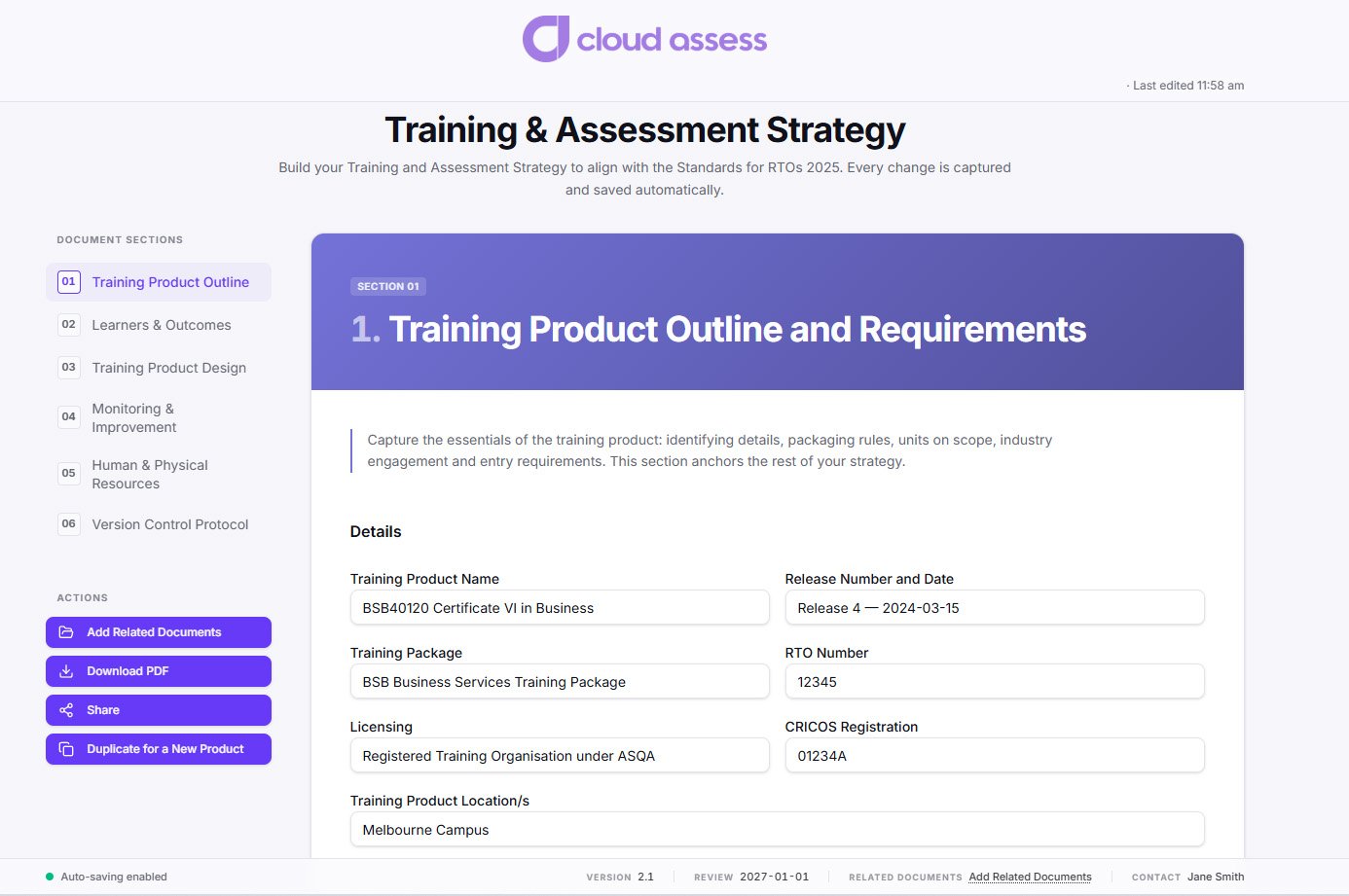
Top Tip. Did you know our Training and Assessment Strategy Builder includes a section for tracking employee development? This ensures a CPD log for trainers, assessors, and third parties forms part of your documentation for every training package.