

Training in manufacturing isn’t just about boosting productivity. It’s a legal requirement. With high-risk tasks in many roles, ensuring employees are properly trained and certified is essential for safety and compliance. However, tracking training across teams and shifts can be complex without the right systems in place.
An effective manufacturing training matrix is just the tool you need.
In this article, we explore:
- What a training matrix is
- Why a training matrix is important for manufacturing organisations
- Benefits of using a manufacturing training matrix
- A guide for building your own training matrix
- A free, customisable template to get you started
What is a Manufacturing Training Matrix?

A manufacturing training matrix is a visual tool used to track skills, competencies, course enrolments, training completions and certifications in manufacturing organisations. It provides a clear overview of which employees have completed mandatory and statutory training, who still needs it, and where any knowledge or competency gaps exist. This ensures the safety and continuity of manufacturing operations.
Training matrices are also valuable tools for developing future employee training plans that ensure teams remain compliant, capable, and up-to-date with industry trends and market demands.
Why is a Training Matrix Important in Manufacturing?

- Maintaining regulatory compliance. UK manufacturing organisations are subject to strict legal requirements. There are statutory training courses for employees who work with hazardous materials, work from height, or handle heavy loads, for example. Manufacturing training matrices can track employee enrolments in required courses, helping businesses avoid non-compliance penalties.
- Tracking skills, certifications and competencies. Technical roles require up-to-date skills and valid certifications. Outdated skill sets and expiring certificates can quickly impact individual and general productivity, which in manufacturing can mean increased turnaround times and missed deadlines. Manufacturing training matrices provide visibility into training completion, current competencies, and upcoming certification expiries. This helps organisations take timely action to maintain compliance and ensure their operations continue seamlessly.
- Ensuring consistency in training delivery. As manufacturing organisations grow, so does the complexity of managing employee training programs across shifts, sites, and departments. Using a matrix allows organisations to standardise delivery, ensuring all employees receive the correct training. No one is missed, and nothing falls through the cracks.
- Assigning tasks to the right people. When you have clear oversight of employee competencies, it becomes easier to assign work based on skill, training completion or certification. For example, someone who recently completed their verification of competency would be better placed to operate heavy machinery than an employee whose certification expired last month. This reduces operational risk, improves efficiency, and helps companies leverage employee strengths, avoiding both career and skill stagnation.
- Meeting operational risk management needs. Assigning untrained or underqualified employees to tasks that require handling heavy or hazardous materials can lead to injury, downtime, or even regulatory intervention. A manufacturing training matrix ensures that only competent, certified staff who have completed specific training perform critical tasks, reducing risk exposure.
- Preparing for audits. Compliance audits and HSE inspections often require proof of training and competency. A manufacturing training matrix makes this process easier by centralising records, tracking documents, and allowing quick access when needed.
Benefits of Using a Manufacturing Training Matrix
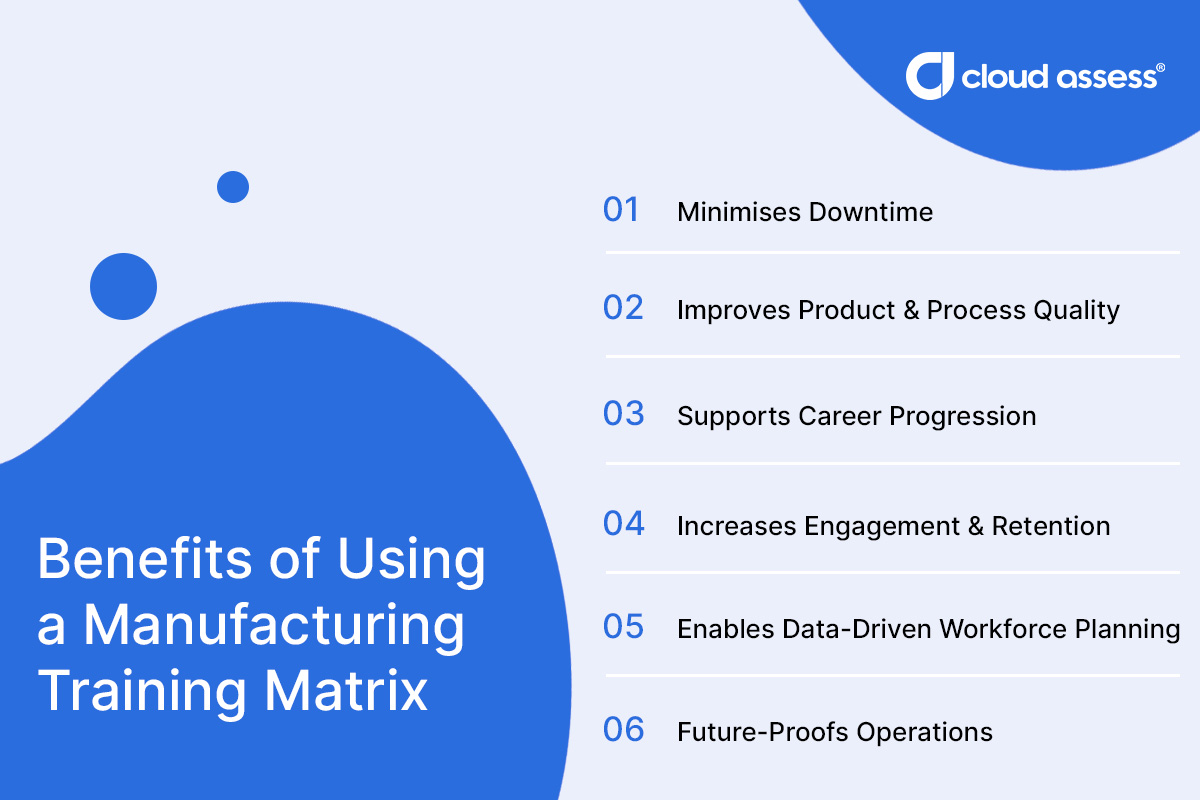
Minimises Downtime
In manufacturing, even small mistakes can lead to costly disruptions. Employees who aren’t thoroughly trained or whose skills have become outdated often take longer to perform even the simplest tasks, affecting productivity and efficiency. And then there are employees who have to be taken off the production line because their certifications have lapsed. The impact is especially pronounced when skilled or certified workers are in short supply.
However, the stakes are often much higher. Accidents and injuries can halt operations entirely and pose serious risks to both employee and public safety.
A well-structured matrix ensures your teams are properly trained and competent in their roles. This reduces the likelihood of errors and safety incidents, while supporting operational continuity by making it easier for other workers to step in when needed.
Improves Product and Process Quality
When staff lack the necessary training or up-to-date workplace skills, quality is often the first area to suffer. The risk of defects, rework, and shop floor errors increases, leading to higher costs, compromised standards, and reduced customer satisfaction.
Manufacturing training matrices ensure that employees are fully qualified for their roles and capable of performing specific tasks on the production line. This promotes consistency and reduces variation in output. It also supports adherence to Standard Operating Procedures, helping to streamline workflows and minimise process inefficiencies that can lead to waste, delays, or compliance issues.
Supports Career Progression
Without clear communication, employees often struggle to see where opportunities for improvement, upskilling, or advancement lie. This is especially true in the manufacturing industry, where the majority of workers start as entry-level employees. Without transparent career pathways or visible development opportunities, employees may feel stuck in their current positions. If left unaddressed, this can lead to disengagement and career stagnation, where individuals feel their roles are becoming obsolete or their skills are being overlooked.
A manufacturing training matrix offers both managers and employees a clear view of the skills and qualifications needed for progression. It supports structured employee development planning, targeted upskilling and reskilling, and greater visibility into opportunities for promotion. These could see entry-level employees becoming team leaders, supervisors, line managers and technical experts, among other roles.
Increases Employee Engagement and Retention
New manufacturing hires often require extensive employee onboarding before they can contribute effectively. Even skilled technicians need time to learn a company’s specific systems, processes, and safety requirements. This makes retaining experienced employees and keeping them engaged critical to maintaining operational performance.
When employees see that their development is a priority and have clear opportunities for growth, employee engagement increases. A well-structured manufacturing training matrix makes these development pathways visible, especially when it’s shared openly with both employees and management. By supporting growth and recognising progress, training becomes a powerful way to increase employee retention and provide your workforce with a clear future within the organisation.
A training matrix provides leaders with real-time insights into team capabilities and skill gaps. This data helps identify whether you can fill leadership roles through internal recruiting, and when you may need to turn to external hiring for specific technical expertise. It also highlights where strategic training initiatives can close knowledge gaps, prepare employees for advancement, and ensure your workforce is ready to meet future challenges.
Future-Proofs Operations
A manufacturing training matrix does more than just track completed courses and certifications. It also supports the planning of training initiatives to develop skills for the future of work that will help you stay competitive.
By monitoring industry and market trends, you can spot emerging opportunities and develop training programs to address them directly. This could include recognising a new product that you could manufacture, or a new technique that would save time on your production line. A training matrix also highlights employees who already have these skills, making it easier to leverage their expertise across your workforce through skill mobility and knowledge sharing.
How to Build a Manufacturing Training Matrix
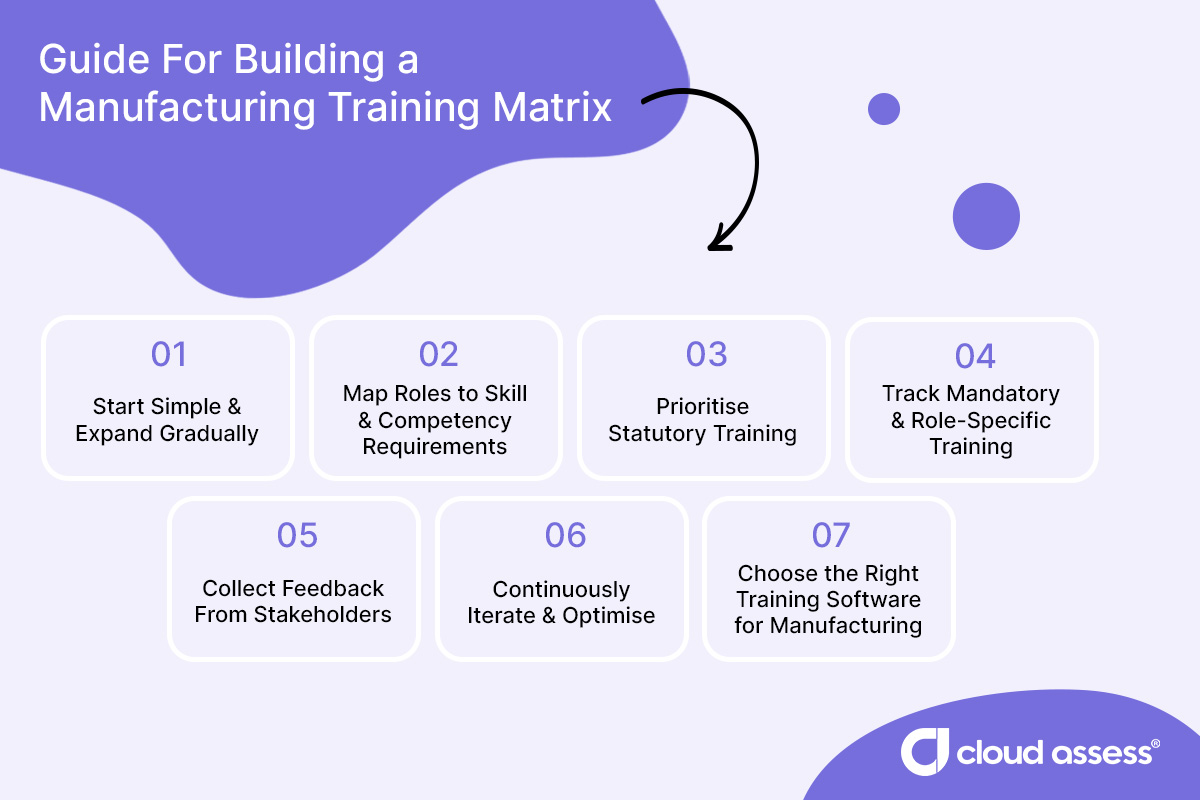
Start Simple and Expand Gradually
The primary goal when building a training matrix is to track which employees have completed required training and when. This helps you identify gaps where statutory, mandatory, or induction training is still needed, or where refresher courses may be valuable.
Keeping your training matrix clean and easy to read is also key. Using simple visuals helps supervisors and line managers quickly identify areas that need attention without having to sift through complex data. For example, you could use green to indicate completed training and red to highlight gaps. This speeds up the process and ensures employees receive the specific training that they need at the right time to actively improve their contributions.
Over time, you may want to expand the matrix to include additional details, like skills, assessment results, or proficiency levels. However, adding too much complexity at the start can dilute the matrix’s main focus. In some cases, a manufacturing skills matrix may be better suited for tracking skills and proficiencies in more detail.
Map Roles to Skill and Competency Requirements
Once you’ve identified existing training records, the next step is to define the specific skills and competencies required for each role. This isn’t about listing what your workforce already has, but about clarifying the knowledge, abilities, and qualifications needed to work safely and effectively.
From there, you can map the relevant courses, certifications, and training programs that address these requirements and track whether they have been completed.
For example, an industrial maintenance technician may require certification in working at height, safe handling of hazardous materials, the use of personal protective equipment (PPE), and operation of specialised machinery. If your matrix shows that they’ve only completed working at height training, you can quickly identify gaps that could put safety, compliance, or productivity at risk. This allows you to schedule targeted upskilling or refresher training before gaps become incidents or operational setbacks.
Prioritise Statutory Training
Statutory training is a legal requirement, and your organisation can face severe penalties if you’re unable to provide evidence that employees have received appropriate training. While the law doesn’t specify particular courses, it does require that certain topics and risks are effectively covered.
Enrolling your teams in accredited, industry-recognised programs and tracking completions in your matrix simplifies compliance with these legal obligations.
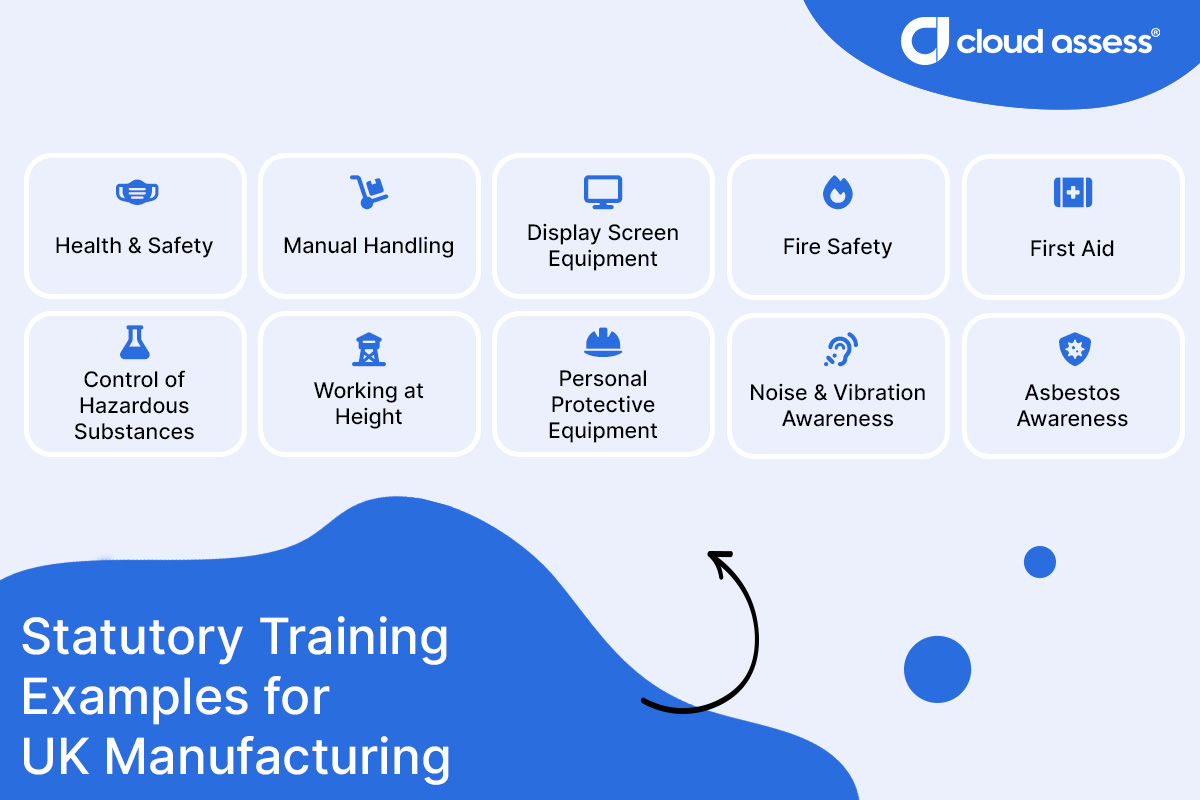
In the UK, some of the key statutory training areas that manufacturing organisations need to address include:
- Health and Safety Training. Provides employees with the knowledge to work safely, identify risks, and follow workplace health and safety procedures. Required for all employees under the Health and Safety at Work etc. Act 1974.
- Manual Handling Training. Teaches employees safe techniques for lifting, carrying, and moving loads to reduce the risk of musculoskeletal injuries. Required for employees who lift, carry, push, pull, or move loads under the Manual Handling Operations Regulations 1992.
- Display Screen Equipment (DSE) Training. Helps employees set up their workstations correctly to prevent eye strain, discomfort, and repetitive strain injuries. Required for employees who use display screens daily for prolonged periods under the Health and Safety (Display Screen Equipment) Regulations 1992.
- Fire Safety Training. Equips employees with the knowledge to prevent fires, respond to alarms, and safely evacuate the workplace. Required for all employees, with additional training for appointed fire wardens or marshals, in line with the Regulatory Reform (Fire Safety) Order 2005.
- First Aid Training. Prepares staff to provide immediate care in the event of an injury or medical emergency until professional help arrives. Required for appointed first-aiders, and recommended for all staff, under the Health and Safety (First Aid) Regulations 1981.
- Control of Hazardous Substances Training. Educates employees on the safe handling, storage, and disposal of hazardous substances to minimise health risks. Required for employees who work with or might be exposed to hazardous materials under the Control of Substances Hazardous to Health Regulations 2002.
- Working at Height Training. Provides employees with the knowledge and skills to work safely at height, including the use of ladders, scaffolding, and fall protection systems. Required for any employees who use these types of equipment under the Work at Height Regulations 2005.
- Personal Protective Equipment (PPE) Training. Ensures employees understand how to correctly select, wear, and maintain PPE to protect themselves from workplace hazards. Required for employees working in high-risk environments under the Personal Protective Equipment at Work Regulations 1992.
- Noise and Vibration Awareness Training. Raises awareness of the risks associated with exposure to excessive noise and vibration, and how to reduce harm through safe working practices. Required for employees working in high-noise areas under the Control of Noise at Work and Control of Vibration at Work Regulations 2005.
- Asbestos Awareness Training. Informs employees how to identify potential asbestos-containing materials and avoid disturbing them. Required for maintenance, construction and repair staff under the Control of Asbestos Regulations 2012.
Track Mandatory and Role-Specific Training
In addition to legal requirements, many manufacturing organisations have company policies, standard operating procedures, and customer or insurer expectations that must be met. This type of mandatory training isn’t set by law, but is required by the organisation to ensure employees have the skills and knowledge needed to work efficiently, effectively, and safely.
Mandatory training often differs by department or role. For example, GDPR training may be essential for administrative teams who handle sensitive information, but unnecessary for technicians working solely with machinery.
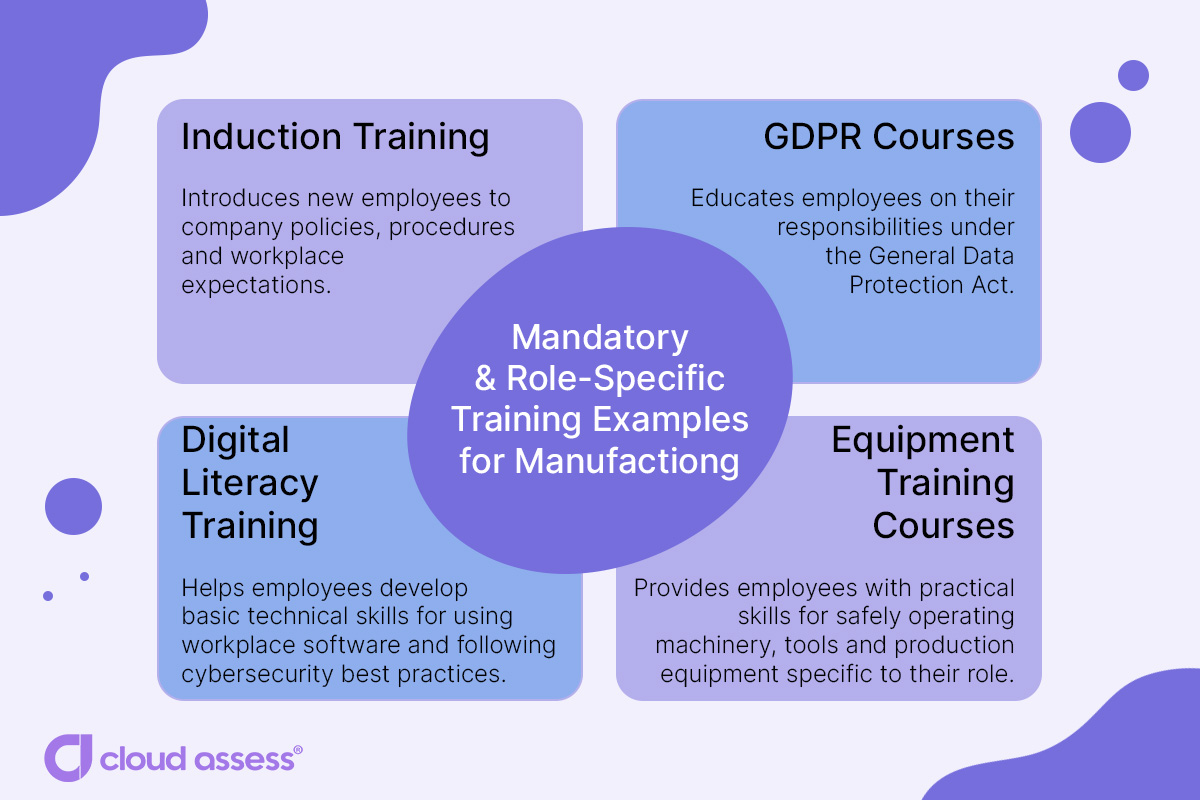
Some common examples of mandatory training include:
- Induction Training provides new employees with an introduction to company policies, procedures, and workplace expectations, helping them settle into their roles safely and effectively. Induction training usually forms part of onboarding and would be a requirement for all new hires, regardless of their roles.
- GDPR Courses educate employees on their responsibilities under the General Data Protection Regulation (GDPR), helping them handle personal data securely. GDPR training is most common for administrative staff, HR teams, IT personnel, and any employees who process or manage customer data.
- Digital Literacy Courses help employees develop basic technical skills for using workplace software, accessing digital systems, managing online communications, and following cybersecurity best practices. These courses are particularly useful for employees with limited experience using digital tools or workplace technologies.
- Equipment Training Courses provide employees with the knowledge and practical skills to safely operate machinery, tools, or production equipment specific to their role. This type of training is essential for machine operators, technicians, maintenance teams, and production line staff.
Collect Feedback From Stakeholders
While leadership often sets the direction for training strategies, the most valuable feedback often comes from the people using the training matrix day-to-day. Team leaders, supervisors, and production line workers can benefit from access to training records for tracking progress, gaining operational insights, or identifying opportunities for continuous professional development.
It’s important to engage all stakeholder groups to understand what’s working, what isn’t, and what improvements could make the matrix more useful and effective.
Continuously Iterate and Optimise
Your manufacturing training matrix should never be a “set and forget” tool. As regulatory requirements, customer expectations, and operational processes evolve, so must your matrix. Setting quarterly or biannual review cycles ensures your matrix is an evolving tool that reflects the real training and competency needs of your workforce.
It’s also important to version control your updates to ensure that changes are documented and traceable over time. This not only helps you manage historical records but also demonstrates continuous improvement, something often expected in audits and quality management systems.
Choose the Right Training Software for Manufacturing
While it’s possible to track training using a simple spreadsheet, the best training matrices are often incorporated into digital solutions like learning management systems.
A training and assessment platform like Cloud Assess can help you develop and deliver training activities, measure skills, and maintain training records across your workforce. With certification and document management features and a strong focus on simplifying compliance, their flexible, all-in-one platform will help you scale training across your organisation.
Interested in learning more? Sign up for a Explore Pricing or request a demo today.
Training Matrices for Other Industries
Not in manufacturing? Cloud Assess supports organisations of all sizes across a wide range of industries. Our other guides for building training matrices include:


