Vocational education and training (VET) in Australia depends on clear rules. These define who can deliver accredited training and issue nationally recognised qualifications. Without those rules, qualifications would not be trusted. They would not be portable or consistent across industries and states.
RTOs exist to meet this need. They are named in legislation, regulatory standards, and funding arrangements across the sector. Understanding what RTO status means is essential for Australian VET. It affects anyone delivering, undertaking, or relying on the RTO sector.
In this blog, we’ll explore
- What RTO means in the Australian VET system
- What RTOs do across training, assessment, and certification
- Examples of RTO activities in real delivery environments
- Who regulates RTOs and how oversight works
- Why regulation exists within the VET sector
- Types of RTOs operating across Australia
- How RTOs operate in practice
- How RTOs differ from other training providers
- When RTO registration is required
- Common misconceptions about RTOs
- How to check whether a provider is an RTO
What Does RTO Stand For?
RTO stands for Registered Training Organisation. It is a formal term used within Australia’s vocational education and training system. The title reflects a provider’s registration status with a VET regulator, not its size, ownership structure, or delivery model.
What is an RTO?
An RTO is a training provider that is formally registered in Australia. This registration allows the provider to deliver nationally recognised vocational education and training. It also allows the provider to certify outcomes under the national VET system.
What Does an RTO Do?

Deliver Nationally Recognised Training
RTOs deliver training that results in qualifications that are recognised across Australia. This training is based on approved training packages or accredited offline and online courses.
To do this, RTOs:
- Deliver units of competency, skill sets, or full qualifications
- Align training content with national competency standards
- Deliver quality training within their approved scope of registration
Assess Learners Against Competency Standards
RTOs assess whether learners meet the requirements of nationally defined units of competency. Competency-based assessment confirms that a learner has demonstrated the required skills and knowledge.
To support this, RTOs:
- Use assessment tools aligned to unit requirements
- Gather evidence of competence
- Make assessment decisions against national benchmarks
Issue Qualifications and Statements of Attainment

RTOs issue formal certification for nationally recognised training.
Certification is issued when:
- All required units have been successfully completed
- Assessment requirements have been met
- Outcomes align with the RTO’s scope of registration
Provide Non-Accredited Training
RTOs may also deliver non-accredited training. These courses and programs sit outside the national training framework.
Non-accredited training is used to:
- Address specific workplace needs
- Support organisational or compliance training
- Deliver short-form or customised learning
Examples of RTO Activities

Workplace Training and Assessment
RTOs may deliver training and conduct assessments through workplace and work-based learning arrangements. These activities take place in real work environments and support practical training outcomes. Workplace training can be offered across a range of qualification levels, including advanced diplomas. Evidence of competence is gathered through practical tasks, observation, and workplace evidence. This reflects actual job performance rather than simulated activity. These activities are often tracked through RTO training plans.
Recognition of Prior Learning and Credit Transfers
RTOs assess skills and knowledge that learners already hold through recognition of prior learning (RPL). This process allows learners to receive credit without repeating formal training. Evidence may include work history, previous study, or third-party verification. RTOs assess this evidence against unit requirements. This helps them determine whether competence has been demonstrated and where the volume of learning can be reduced. Credit transfers can also be applied for courses or units that have been completed through other institutions.
Developing Training Resources
RTOs create and maintain training and assessment resources. These support consistent delivery and assessment across different cohorts. Resources are mapped to units of competency and updated as requirements change. This ensures training remains aligned with current standards and delivery expectations.
Engaging With Industry Stakeholders

RTOs engage with industry stakeholders to stay informed about workforce needs and expectations. This engagement helps ensure training remains relevant to current job roles. Activities may include consultation with employers and subject matter experts. It involves collecting feedback from industry bodies or informal collaboration with workplace representatives.
Assessment Reviews
RTOs review assessment tools and assessment decisions as part of ongoing quality activities. These activities focus on checking suitability. They confirm that assessment methods meet the unit requirements. They help confirm that evidence expectations are clear. Assessment decisions are applied consistently across different delivery contexts.
Who Regulates RTOs?
Australian Skills Quality Authority (ASQA)
ASQA is the main national regulator for registered training organisations. It regulates most RTOs across Australia. This includes RTOs that:
- Operate across state or territory borders
- Deliver VET training to overseas students on student visas
- Are not eligible for state-based regulation
State-Based Regulators

Some RTOs are regulated by state-based authorities rather than ASQA. This applies where an RTO operates only within a single state and does not deliver training to overseas students.
- Victorian Registration and Qualifications Authority (VRQA). The VRQA regulates eligible RTOs that operate only within Victoria. It performs the same regulatory function as ASQA within the Victorian training system.
- Training Accreditation Council (TAC). The TAC regulates eligible RTOs that operate only within Western Australia. It oversees registration and ongoing compliance for these VET providers.
Other Regulators That Affect RTO Operations
In addition to VET system regulation, RTOs are also subject to other regulators. This is because they operate as businesses and employers. These regulators do not control RTO registration or nationally recognised training. Instead, they regulate specific activities carried out by RTOs.
Examples include:
- Consumer protection regulators, such as the Australian Competition and Consumer Commission, which oversees compliant RTO marketing and consumer law obligations
- Workplace relations regulators, such as the Fair Work Ombudsman, which oversee employment conditions
- Privacy regulators, who oversee the handling of personal information
- Workplace health and safety regulators, who oversee safety obligations
Types of RTOs

1. Private RTOs
Private training providers are independently owned. They deliver nationally recognised training across a wide range of industries and qualifications. Many operate commercially and may offer both accredited and non-accredited training.
Private RTOs vary significantly in size and scope. Some specialise in specific industries or qualifications. Others deliver training across multiple sectors. This allows them to support a range of learner and employer needs.
2. TAFEs
Technical and Further Education (TAFE) institutes are public education providers that operate as RTOs. They provide nationally recognised training as part of government-supported education and skills development.
TAFEs offer a broad range of qualifications. They often have a strong focus on trade training, apprenticeships, and large-scale delivery. Their role supports structured training pathways within the VET system. This is particularly important for vocational and technical careers.
3. Enterprise RTOs
Enterprise training providers are established by organisations to train their own workforce. Training is typically aligned to the organisation’s operational needs and job roles.
These RTOs deliver nationally recognised training primarily to employees. Some may also deliver training to external participants. This depends on their approved scope of registration.
4. Schools as RTOs
Some secondary schools operate as RTOs. This allows them to deliver nationally recognised VET qualifications to students. They do so as part of senior secondary programs.
School-based RTOs must meet the same registration and compliance requirements as other RTOs. Their delivery is typically focused on entry-level qualifications. It also focuses on pathways that support transition into further training or employment.
How RTOs Operate
Training and Assessment Strategies
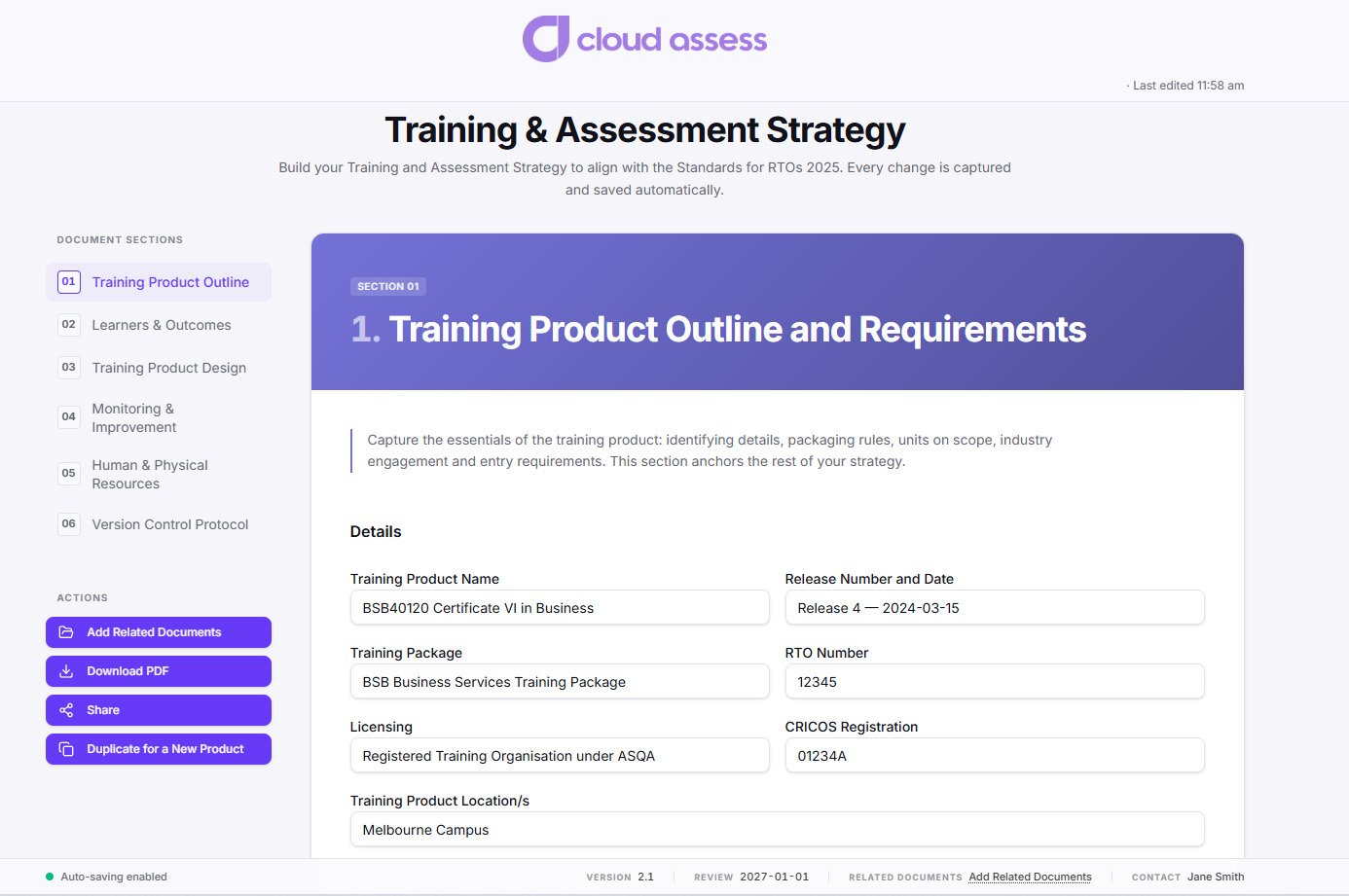
RTOs develop Training and Assessment Strategies (TAS) for each qualification, skill set, or course on their scope. These document how training will be delivered and outcomes will be evaluated in line with the requirements of the relevant training package or accredited course.
TAS documents outline target learner cohorts and delivery and assessment approaches. They also outline necessary resources and industry requirements. As organisational planning documents, these strategies support consistent and compliant delivery over time.
RTOs engage qualified trainers and assessors to deliver training and make assessment decisions. These personnel must hold the required vocational competencies and training. They must also hold necessary assessment credentials and maintain current industry skills.
RTOs are responsible for ensuring trainers and assessors meet requirements. This includes providing professional development opportunities and evidence of industry currency.
Continuous Improvement
RTOs maintain continuous improvement processes as part of their quality systems. These processes use information from learner feedback and assessment outcomes. They also involve analysing training data and engaging with industry partners to review and improve training and assessment practices. Industry input helps align training with current workplace expectations. RTOs record actions taken and changes made. This demonstrates that improvement activities are ongoing and effective.
Assessment Validation and Moderation
RTOs implement scheduled assessment validation and moderation as part of their assessment governance. These processes are planned, documented and conducted using agreed assessment methods. Validation checks that assessment tools and evidence requirements align with unit standards. They also check alignment with the principles of assessment. Moderation focuses on comparing assessment decisions. This helps support consistent outcomes across assessors, learner cohorts and delivery locations.
Systems and Documentation
RTOs maintain systems and documentation to support regulatory compliance and operational control. These systems manage learner records, assessment evidence, certification, and mandatory reporting obligations.
Accurate and complete documentation demonstrates how the RTO meets regulatory requirements. It also supports RTO audits, quality assurance activities, and ongoing regulatory oversight.
How RTOs Differ From Other VET Training Providers

1. Nationally Recognised vs Non-Accredited Training
RTOs deliver training that leads to learning outcomes recognised across Australia. This training is based on training packages or accredited VET courses. It results in formal certification under the national system.
RTOs can deliver both, but other training providers only deliver non-accredited training outside the national VET framework. This training may support workplace skills or professional development. But it does not result in nationally recognised outcomes. Recognition is typically limited to a specific context. This is usually an organisation, role, or industry, rather than a broader career pathway.
2. Compliance and Quality Assurance Requirements
RTOs are required to meet the Standards for RTOs. These set mandatory requirements for training, assessment, governance, and learner protection. RTO compliance is monitored by a VET regulator.
Training providers that are not registered as RTOs are not subject to these Standards. They may apply their own internal quality controls or follow industry guidelines. But these practices are voluntary and are not regulated under the national VET compliance framework. As a result, training approaches and quality assurance processes may vary between providers.
3. Use of National Training Packages
RTOs deliver and assess against the requirements of the relevant training product. This includes training package qualifications and units of competency. It also includes VET-accredited courses.
Providers that are not RTOs do not deliver training under the national VET regulatory framework. They may deliver non-accredited training based on organisational needs or industry preferences. They are not required to align delivery to training package requirements. They are also not required to align training against VET-accredited course requirements.
4. Ability to Issue AQF Qualifications
Only RTOs are authorised to issue Australian Qualifications Framework (AQF) qualifications and Statements of Attainment. This authority is granted through RTO registration and ongoing compliance with national standards.
Training providers that are not RTOs cannot issue AQF certification. They may issue certificates of completion or attendance, but these do not carry national recognition.
When You Need to Become an RTO
Organisations considering how to start an RTO should first assess whether RTO registration is actually required. They should evaluate whether they intend to:
- Deliver nationally recognised training
- Issue Statements of Attainment or AQF qualifications
- Access Australian government funding or contracts that require RTO registration
- Formally certify workforce skills against national competency standards
In these situations, RTO registration is mandatory. It cannot be replaced by non-accredited training or internal certification.
Common Misconceptions About Training Providers
Any Training Provider Can Issue Qualifications
While other training providers may deliver learning activities, they cannot certify outcomes under the Australian Qualifications Framework.
RTO Status Gives Automatic Funding
RTO registration does not guarantee access to government funding. Funding programs have separate eligibility criteria, application processes, and contractual requirements. Many RTOs operate entirely without government funding. However, only registered training organisations are eligible to apply for government funding
Accredited Training Doesn’t Require Registration
It is often assumed that accredited training can be delivered by any provider because it sits outside training packages. This is incorrect. VET-accredited courses are nationally recognised training products. That means they can only be delivered by registered training organisations. Providers that are not RTOs may deliver non-accredited training. But they cannot issue nationally recognised outcomes.
How to Check Whether a Provider is an RTO
The status of a training provider can be verified using the national training register.
In Australia, all RTOs are listed on training.gov.au. This register is maintained as the authoritative source for RTO information.
To check whether a provider is an RTO:
- Search the organisation name or RTO number on the website
- Confirm that the registration status is current
- Review the provider’s scope of registration to ensure it covers the qualification, skill set, or units being offered
Only providers with current registration and the appropriate scope are authorised to deliver nationally recognised training.
This check is useful for learners, employers, and organisations engaging training providers. It is particularly important where nationally recognised outcomes are required.