Frontline and deskless workers in sectors like construction and manufacturing often need to work at heights. This presents unique risks to employees and organisations as a whole.
Employers have a legal and ethical responsibility to ensure their teams are properly trained to minimise hazards when working at height. They must also comply with UK and Australian safety regulations, including the Work at Height Regulations 2005 (UK) and Workplace Health and Safety (WHS) laws (Australia).
We’ve gathered top courses from various sources that cover the essentials of working at height, and provide safety measures when using scaffolding, harnesses and EWPs.
Who Says Learning Has To Be Costly?
Access our comprehensive library of free courses todayWorking at Height Training Courses
1. Working at Heights Training Course
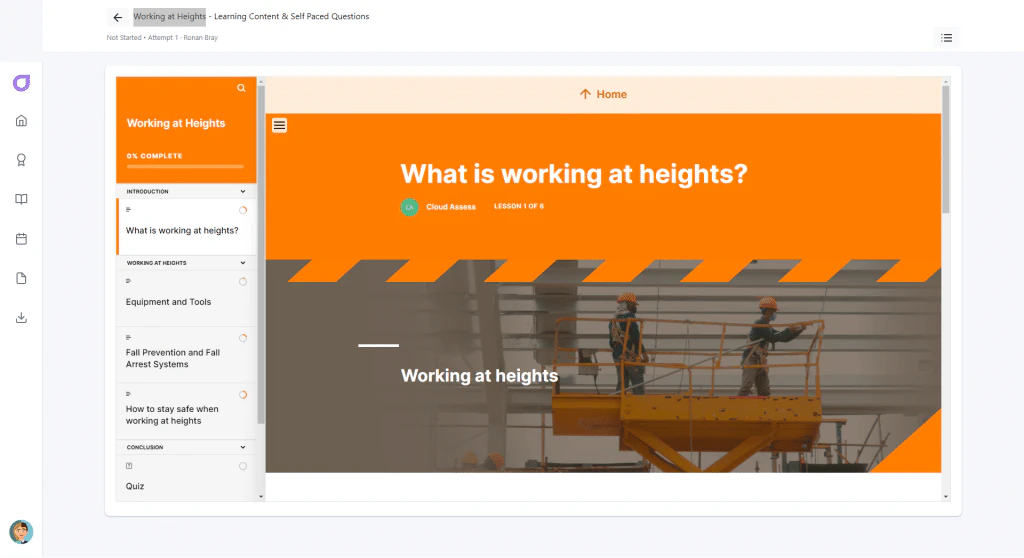
This fundamental course provides essential knowledge and skills needed to work safely at height, reducing the risk of falls, injuries, and fatalities. It covers the dangers associated with working at height, the importance of choosing the correct equipment, and how to implement safety control measures that protect workers.
The course also provides practical strategies and personal protective equipment training and includes prevention controls to minimise the risks of working at height. By the end of the course, learners will be equipped to meet Work at Height Regulations and contribute to a safer work environment.
Scope:
- Definition of working at height and the risks involved
- Importance of selecting appropriate equipment
- Guidelines for inspection, maintenance and proper use of equipment
- Types of personal protective equipment (PPE) for fall protection
- Fall prevention and arrest systems
- Strategies for prioritising safety when working at height
Cost: Free
2. Working at Heights CPD Accredited Course

This CPD-accredited course from Cloud Assess provides a certified approach to working at heights, ensuring teams understand the safety regulations they must follow. It provides a basis for the certified training of teams, ensuring they have the thorough understanding required to work at height safely and compliantly, in line with the UK’s Work at Height Regulations 2005.
By the end of this safety training course, participants will understand their legal and ethical responsibilities for ensuring a safe environment when working at height. It includes modules on classifying tasks, using safety equipment, and the importance of work at height risk assessment in identifying hazards and reducing workplace accidents.
Scope:
- Recognising and identifying tasks that involve working at height and their associated risks
- Selecting the correct safety equipment
- Conducting risk assessments to evaluate and mitigate potential hazards
- Safe practices for climbing, using ladders, and working on scaffolds
- Developing emergency response plans
- Fall prevention techniques using PPE and fall arrest systems
Cost: Free with a Cloud Assess subscription
3. Scaffold Safety Course

Working on scaffolds comes with hazards that include risks of falling, structures collapsing and electrical malfunctions. Without proper training, workers are vulnerable to accidents that could lead to severe injuries or worse. This makes scaffold training essential for safety professionals across a range of industries including construction and maintenance.
This height training course has been designed to meet statutory and mandatory training requirements, ensuring employees using scaffolds understand the risks involved and how to avoid them. Through practical examples, participants will gain a step-by-step understanding of scaffold assembly, dismantling, inspections and maintenance, and risk assessment best practices. This ensures they meet regulatory requirements and are well-equipped to work at height safely.
Scope:
- Legal and regulatory requirements to work safely on scaffolds in the construction industry
- Common scaffold hazards and risk assessment procedures
- Different types of scaffolds
- Techniques for assembly and dismantling
- Fall protection measures
- Best practices for working safely on scaffolds
- Importance of regular inspections and maintenance
Cost: Free
4. Working Safely at Heights and Confined Spaces Course

Working at height and in confined spaces both pose significant risks to employees in construction and engineering fields. This height training course, developed by Training Express and available on Alison, provides a fundamental overview of these risks and how they can be minimised.
The CPD-accredited course focuses on the laws and regulations associated with working at heights and in confined spaces, providing guidelines for recognising and assessing risks. It also covers control measures, prevention measures, and emergency procedures that can be followed in critical situations.
Scope:
- Risks associated to working from heights
- Equipment, confined spaces and laws
- Risk assessment
- Control measures and emergency procedures
Cost: Free
5. Working at Height Short Course

The UK’s Work at Height Regulations 2005 outline organisational responsibilities for ensuring employees receive thorough training to work safely above ground level. This free short online training course covers the fundamentals of the regulations, who they apply to, and the risks involved.
By the end of the course, participants will gain insight into the dangers of working on ladders and flat roof surfaces, along with the risks of falling objects and fragile surfaces.
Scope:
- Who do the Work at Height Regulations 2005 apply to?
- Surfaces that present risks to construction workers
- Safe use of ladders
Cost: Free
6. Harnessing Course

Fall protection is a crucial aspect of risk management when working at height. Using appropriate and well-maintained equipment can mean the difference between fatalities, injuries, and accidents being avoided altogether.
This harnessing course from SC Training provides a comprehensive guide to harnessing equipment, including Personal Fall Arrest Systems (PFAS) and how to select, and inspect them. It also covers height equipment inspection, cleaning, maintenance, and proper storage, ensuring participants gain a thorough understanding of the importance of these safety materials.
Scope:
- Personal arrest systems
- Selection
- Planning the use
- Inspection
- Clearning, maintenance, and storage
Cost: Free
7. The Safe Use of Ladders Course

Many workplace falls happen due to incorrect use of ladders. This Safetyhub video training course teaches workers how to select, position, and use ladders safely, reducing the risk of accidents.
The course covers the identification, use and maintenance of different ladder types and the selection of appropriate ladders for specific situations. It also provides guidelines and best practices for safe angles, transport, erection and positioning of ladders to prioritise safety in any environment. It includes videos, transcripts and practical exercises.
Scope:
- Step ladders
- Straight ladders and extension ladders
- General maintenance
- Selecting the right ladder
- Safe angles
- Lifting and carrying of ladders
- Erecting and securing of ladders
- Safe positioning of ladders
- Best practices for working on ladders
Cost: Free with a Safetyhub subscription
8. Working at Heights Awareness Course

Developed with Australian organisations in mind, this course helps employers and employees recognise their legal responsibilities when it comes to working at height This ensures compliance in corporate training and assessment while prioritising workplace safety. Maintaining Australian Workplace Health and Safety (WHS) regulations, it helps organisations and workers recognise situations that qualify as working at height, and the risks associated with them.
The course also covers hazards, assessments and control measures for minimising and mitigating risks, including the use of safety height equipment and fall prevention devices. Finally, participants will learn how to inspect, dismantle, clean and store equipment safely and effectively.
Scope:
- Definition of work at height
- Health and safety legislation
- Suspension intolerance
- Risk management
- Equipment and systems for working at height
- Prevention of falling objects
- Inspection requirements for equipment
- Dismantling, cleaning and storage of equipment
Cost: From $59.00 per user
9. OSHA Fall Protection Training Course

Developed for a US audience, this comprehensive course has been designed to minimise and mitigate the risks of falling when working from height. It helps companies and employees meet the regulatory requirements set out by the Occupational Safety and Health Administration’s (OSHA) guidelines.
The course covers common falling causes, safety protocols that workers can follow, and the use of Personal Fall Arrest Systems. By the end of the course, participants will understand how to select and use appropriate height equipment to prevent falls and minimise the injuries they can cause.
Scope:
- Levels at which fall protection is required
- Methods of controlling fall hazards
- Examples of types of fall control
- Factors of Personal Fall Arrest Systems
- Acceptable criteria for using a PFAS
- Requirements for using scaffolds
- Elements of a Fall Protection Plan
- Types of ladders used in the workplace
- Procedures for selecting and using portable ladders
- Requirements under OSHA regulations
Cost: $25.00 for a 30-day subscription
10. Elevated Work Platform (EWP) Rescue and Escape Course

When working at height, it’s critical that employees are prepared in the case of disaster. They must be able to think on their feet, access equipment, and use it safely to mitigate the risk of injury. This requires thorough and regular training, ensuring employees are up-to-date with the latest regulations and best practices, especially when using specialised equipment like elevated work platforms.
This height training course offers a comprehensive guide to the safe use of EWPs including scissor lifts, boom lifts, and aerial work platforms. It covers common risks associated with working at heights and how to identify and respond to them while adhering to safety regulations. The height safety course also covers the importance of developing effective emergency procedures and communication protocols.
Scope:
- Definition, types and common hazards associated with Elevated Work Platforms
- EWP risk and hazard assessments
- Developing an emergency response plan
- EWP safety features and control systems
- Effective emergency communication and reporting protocols
- Procedures for EWP rescue operations
- Basic first aid techniques and medical assistance for common EWP injuries
Cost: Free
Other Workplace Health and Safety Courses
If you’re looking for more courses to help you maintain the health and safety of your employees and your work environment, check out more of our curated lists:
- Forklift Training Courses
- Equipment Courses
- Manual Handling Courses
- Incident Prevention Courses
- Workplace Safety in Industrial Setting Courses