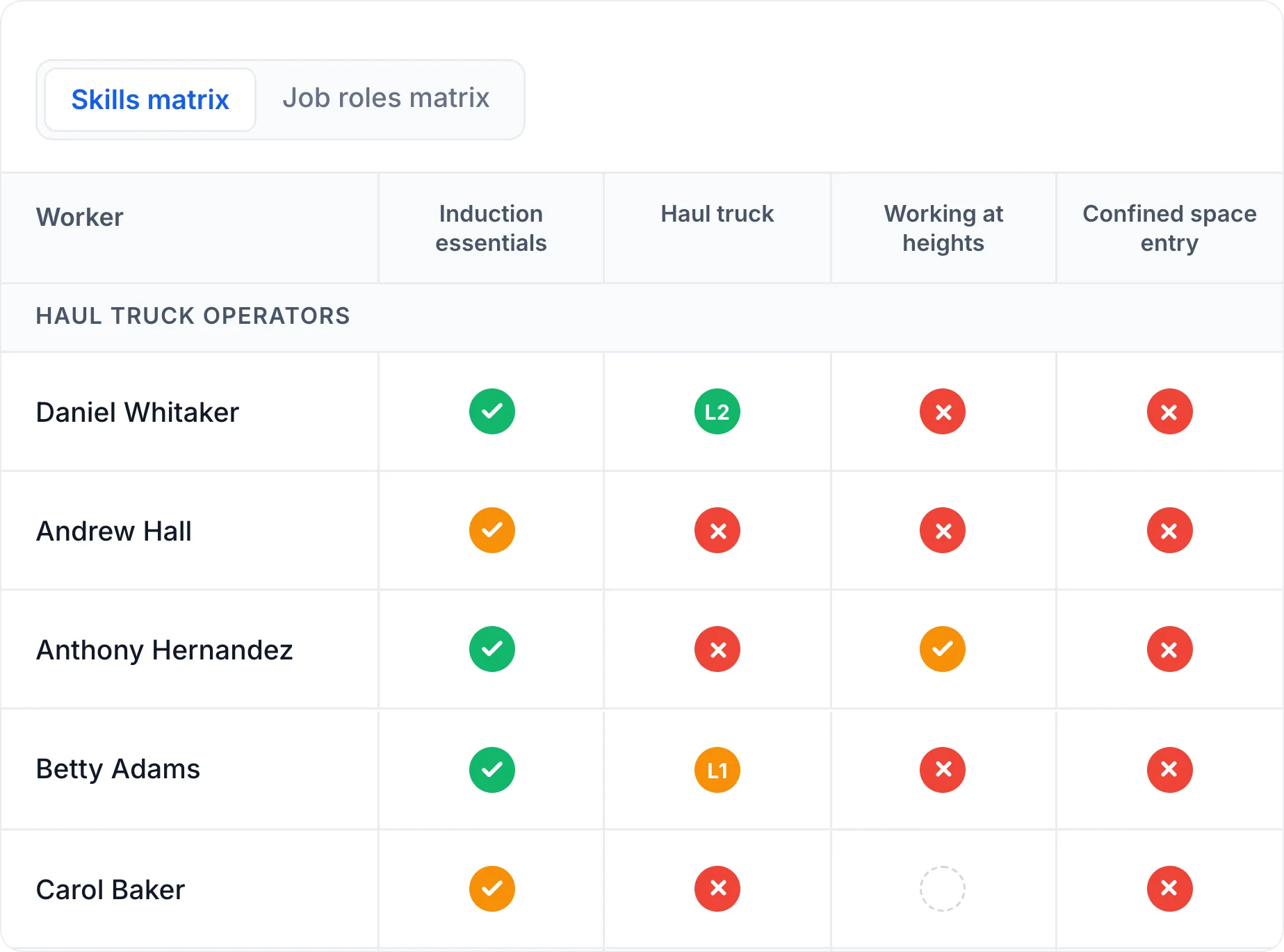
Skill Will Matrix vs. Skills Matrix
A skills matrix highlights what each team member can do. It lists technical skills, qualifications, and areas of expertise, making it easy to see strengths and gaps across a group. Managers use it to assign roles, identify training needs, or plan project teams.
The skill will matrix goes a step further by also looking at willingness to do the work. It doesn’t just show who can do the work, but also who wants to do it and is ready to take initiative.
While a skills matrix focuses on the “what,” the Skill Will Matrix reveals both the “what” and the “why.”

The Four Quadrants of the Skill Will Matrix
Low Skill, Low Will
Team members in this quadrant lack both the required skills and the motivation to perform their tasks. They may feel overwhelmed, uncertain, or disconnected from their work. Without support, they often struggle to meet expectations or show progress.
High Skill, Low Will
Employees in this group have the technical skills and experience to do their jobs well but show low motivation or engagement. They might seem disengaged, resistant to feedback, or simply uninterested in new challenges. This can stem from personal challenges, or unclear goals. It can also come from a mismatch between their strengths and current responsibilities.
Low Skill, High Will
These team members are eager, motivated, and ready to take on new tasks. But lack the experience or technical skills to perform at a high level. They’re open to learning, ask questions, and put in the effort, even if results are uneven at first.
High Skill, High Will
This quadrant is for employees who are highly skilled and highly motivated. They consistently deliver results, take initiative, and are often seen as role models for others. These team members thrive on challenging tasks, opportunities for growth, and autonomy.
How to Use the Skill Will Matrix

1. Assess Skills and Will
Start by looking closely at each team member. Notice how they handle responsibilities, take on new challenges, and follow through on tasks. Conversations about their goals, strengths, and barriers can reveal a lot that isn’t obvious on paper. To get a complete view, use feedback from others, real employee performance data, and your own day-to-day observations.
- Hold regular one-on-one meetings. Use open-ended questions to discuss recent work, challenges, and goals.
- Observe how team members approach new or complex tasks. Sit in on projects or shadow them for part of a day.
- Gather feedback from peers, supervisors, or clients. Use quick surveys, feedback forms, or informal check-ins.
- Review recent project outcomes, training records, and performance reviews. Keep organised records and compare them over time.
- Watch for signs of engagement, initiative, or hesitation. Note participation in meetings, willingness to volunteer, and general attitude during daily interactions.
2. Map Employees to the Matrix
Once you’ve gathered your information, it’s time to map each team member onto the skill will matrix. The goal is to be objective and base decisions on recent evidence, not assumptions.
- Draw a simple two-axis grid. Add “skill” on one axis and “will” on the other. Use a whiteboard, spreadsheet, or even a printed template.
- Place each team member on the matrix. Use your findings as a guide and include concrete examples for clarity.
- Write a short note next to each placement. Explain why you chose that spot and reference specific behaviours, results, or feedback.
- Ask for advice if you’re unsure about an employee’s placement. Reach out to a trusted colleague, project manager, or HR partner for a second opinion.
- Revisit the matrix after a few weeks. Check if placements still match current performance and motivation levels.
3. Take Targeted Action

After mapping your team, use the matrix to guide your approach with each employee. The aim is to offer practical support or new challenges based on where they are right now. Adapt your leadership style, feedback, and skill development plans to meet their needs.
- Low Skill, Low Will. Create a structured plan with clear expectations, checklists, and short-term goals. Meet more frequently to review progress, address obstacles, and provide encouragement. Celebrate small wins and help them see the impact of their efforts.
- High Skill, Low Will. Set up a focused conversation to talk through their motivation. Offer coaching or mentoring. Adjust their responsibilities or projects to align with their interests or strengths. It’s also essential to set clear, meaningful goals that reignite their drive.
- Low Skill, High Will. Assign targeted training or job-shadowing opportunities. Break down complex tasks and provide step-by-step instructions. Pair them with a more experienced colleague for hands-on training. Make sure to provide frequent feedback as their skills improve.
- High Skill, High Will. Give them stretch assignments or leadership roles. Involve them in decision-making or special projects. Encourage them to mentor other team members. Recognise their contributions publicly to keep them engaged and motivated.
4. Monitor and Adjust
Skill and will are not fixed. As team members’ skills and will develop, face new challenges, or take on new responsibilities, their place on the matrix will change. Consistent follow-up helps you stay responsive and keeps your support relevant.
- Schedule regular check-ins or catch-ups. Use these sessions to discuss progress, shifting goals, or new obstacles.
- Update the matrix. Do this whenever you notice significant changes in performance, attitude, or engagement.
- Review development plans and adjust them. Make these changes based on results, feedback, and any new training completed.
- Use feedback tools for quick check-in sessions. Brief surveys or informal chats can help you understand how support and new strategies are working.
- Recognise improvements as they happen. Address setbacks promptly. Set clear expectations that ongoing skill development is part of your team’s culture and support it at every stage.
Benefits of the Skill Will Matrix for Businesses

Improves Leadership Effectiveness
The skill will matrix helps leaders recognise that a single management style won’t work for everyone. It allows managers to adapt their approach by offering more guidance, coaching, or autonomy where it’s needed. This leads to more confident decision-making and greater leadership effectiveness. As managers use the matrix, they build good leader skills and qualities that strengthen their overall impact.
Enables Personalised Management and Support
No two team members have exactly the same strengths or needs. With the skill will matrix, you can tailor feedback, training, and support to match each employee’s skill level and motivation. This targeted approach makes employee development plans more effective. It also helps employees feel valued as individuals.
Improves Employee Engagement and Satisfaction
When employees know their manager understands what drives them, they’re more likely to feel motivated at work. When managers also know where team members want to grow, employees feel satisfied in their roles. The matrix helps managers recognise and address both skill gaps and motivational barriers. This builds a culture that improves employee engagement and encourages junior staff to participate.
Identifies Skills Gaps for Targeted Development
The skill will matrix gives a clear picture of where the team’s strengths and weaknesses lie. By mapping necessary skills and will, you can easily see which areas need more training, coaching, or support. This makes it easier to update or refine your training matrix, ensuring resources go where they’re needed most.
Facilitates Fair Performance Management
The matrix relies on observable behaviours and results, not gut feeling or assumptions. This approach makes performance management transparent and fair. Managers use the skill will matrix as a structured way to review progress. They set expectations clearly and provide constructive feedback based on evidence.
Supports Long-Term Organisational Growth
Building skill and will across the team doesn’t just improve day-to-day performance. It also helps the organisation adapt to change. It gives future leaders room to develop and support a culture of continuous learning and improvement. Teams that use the skill will matrix effectively tend to show stronger resilience and readiness for new challenges.
When to Apply the Skill Will Matrix

Onboarding New Starters
You can use the skill will matrix when you’re onboarding new team members. This allows you to quickly assess their initial skill level and will. This helps you set realistic expectations and tailor your support from the start.
For example: A new apprentice in manufacturing shows high will but low skill. You can assign them to shadow an experienced technician on the production line. You can also create step-by-step training modules they can follow. Check in regularly to build their confidence and support a smooth employee onboarding experience.
Preparing for Performance Appraisals
Apply the matrix before performance appraisals, when you need to review each team member’s current position. This is the time to assess both their skill level and will, so you have a clear picture going into the meeting.
For example: In a retail setting, you might look at where a sales associate employee falls on the matrix. You can use this to guide the performance conversation. If they show high skill but low will, you can discuss what changes or support might help them regain enthusiasm for their role.
Planning for Team Restructuring
Use the skill-will matrix during team restructuring to guide internal recruitment decisions. This is an ideal time to assess both skill and will, so you can match people to roles where they’ll have the greatest impact.
For example: In a manufacturing environment, you might identify a team member with high skill and high will. You may assign them to lead a new production team or oversee a critical process during the transition.
Assigning Employees to Projects

Refer to the matrix when you’re matching employees to new projects. This makes it easier to assign structured tasks that suit their current skills and will. This approach improves project management, project outcomes and keeps engagement high.
For example: You might assign a highly skilled and motivated nurse to lead a quality improvement initiative. On the other hand, you might assign a junior nurse with low skill, high will to assist with the initiative.
Guiding Career Development
Use the matrix during career development conversations. It’s especially useful when you’re helping an employee plan their next steps. This is the right moment to discuss their current skill level and will, and explore where they want to develop.
For example: In a logistics company, you might use the matrix to identify that a warehouse coordinator has high skill, high will. This positions them well for a supervisory role or for specialised training in supply chain management. You can open up these conversations using real data.
Managing Change or Transition Periods
You can use the skill will matrix as part of your change management strategies. It’s particularly useful when introducing new systems or technology. It allows you to identify employees who have high skill and high will in adapting to change.
For example: Say there’s a digital system rollout in aged care. You can use the matrix to identify employees with high skill, high will in adopting new systems. Pair them with colleagues who have low skill in using the new system, whether their will is high or low.
How Cloud Assess Can Help
A skill will matrix is only as reliable as the evidence behind it. Accurate placements on the skill axis depend on up-to-date training and assessment records. Cloud Assess helps organisations keep those records in one place.
Managers can also gather feedback through tools such as 360 performance reviews. Training history, assessment results, and peer feedback then sit side by side. That gives managers a clearer basis for mapping skill and will across their team. Once placements are set, they can assign training where gaps appear.
Want to learn more about how Cloud Assess supports workforce skill development? Explore features today.