Leadership plays an important role in how organisations grow, adapt, and succeed. As teams get bigger and priorities shift, the need for strong, capable leaders increases. Effective leadership rarely happens by accident. It takes planning, support, and focused effort. Organisations need to prepare people to handle important responsibilities. Leaders also need to guide their teams clearly and with purpose.
In response, many companies are creating structured development pathways. They use these pathways to build leadership talent from within. Programs differ in scope and approach, but all share one main goal. They prepare future leaders for the demands of their roles. They also help leaders make meaningful contributions to the organisation’s direction.
This guide covers:
- Understanding leadership development programs
- When to consider starting a program
- Essential skills for effective leadership
- Proven techniques for leadership training
- How to create your own leadership development program
- How technology can support leadership development
- Common mistakes to avoid during implementation
- FAQs about leadership programs
What is a Leadership Development Program?
A leadership development program is a structured plan designed to build leadership capabilities. It helps individuals develop the skills needed to lead effectively within an organisation. This applies whether someone is new to management or moving into a more senior position.
Why Should Businesses Invest in Leadership Development Programs?
- Stronger leadership at all levels. Leadership skill development programs equip people with the skills they need to lead teams, manage pressure, and make sound decisions.
- Better alignment across the organisation. Trained leaders help set clear expectations, maintain consistency, and improve workplace communication skills across teams.
- Improve employee engagement and retention. Good leadership creates a supportive environment. It supports team wellbeing, reduces turnover, and encourages people to stay and grow.
- Greater adaptability in changing conditions. Leaders who understand how to manage change are more effective in uncertain situations. They help organisations respond quickly to shifting priorities and market demands.
- A reliable pipeline of future leaders. Building leadership talent from within helps companies plan for succession and avoid gaps in key roles. It also shows a clear path for professional growth, which motivates employees to develop and stay committed to the business.
When to Consider a Leadership Development Program?
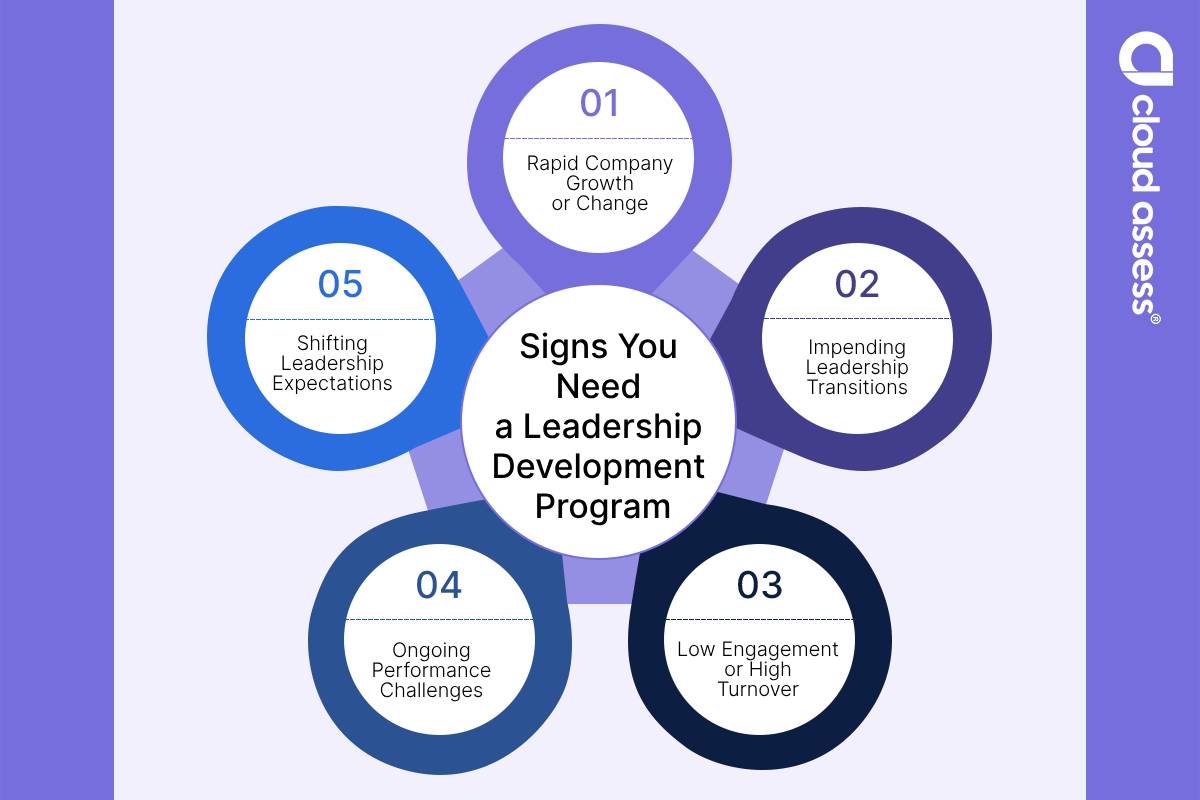
- Rapid Company Growth or Change. Significant growth, restructuring, or market expansion can overwhelm existing leadership capacity. When your business is scaling quickly or navigating major shifts, you need more leaders. They must be ready to take on broader and more complex responsibilities.
- Impending Leadership Transitions. If mid-level leaders are approaching retirement, promotion, or departure, now is the time to prepare successors. This helps you avoid scrambling to fill critical roles.
- Low Engagement or High Turnover. Noticeable dips in morale, disengagement, or high staff turnover often link to poor leadership. These signs indicate a need for stronger leadership capability.
- Ongoing Performance Challenges. Teams may struggle with delivery, accountability, or cohesion. When this happens consistently, the root cause may be ineffective leadership. These persistent issues need more than quick fixes.
- Shifting Leadership Expectations. As your organisation evolves, leadership roles must evolve too. This may include adapting to hybrid work or responding to return to work mandates. It may also involve addressing diversity and inclusion priorities or increased uncertainty. When the demands on leaders change, the way you prepare them should also change.
Essential Skills for Leadership Development
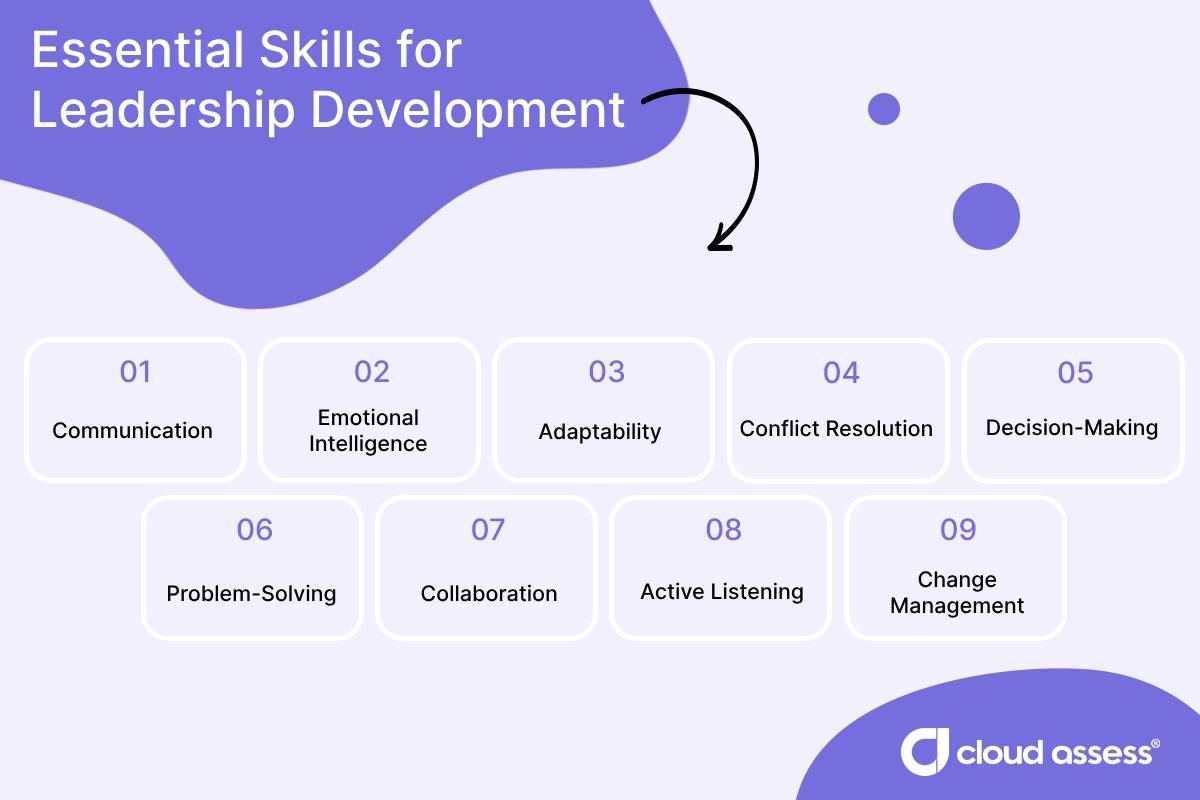
- Communication: Clear communication is one of the most important leader skills and qualities. It helps leaders share goals, set expectations, and build trust. It also supports stronger collaboration across teams and departments.
- Active Listening: This helps leaders understand what people need. It helps them identify where problems exist, and how to respond effectively. It also shows respect and builds trust.
- Emotional Intelligence: Leaders need to recognise their own emotions. They also need to understand how others feel. This helps them respond with empathy, manage conflict, and build stronger relationships. Emotional intelligence training supports this by helping leaders become more self-aware. It also helps them improve empathy. This makes it easier to navigate complex interpersonal dynamics.
- Collaboration: Strong leaders bring people together. They encourage diverse viewpoints, create space for input, and help teams work toward shared goals.
- Conflict Resolution: Disagreements happen in every workplace. Leaders must know how to address tension early, mediate discussions, and work toward fair outcomes. Conflict management training helps leaders develop these new skills. It offers strategies to manage difficult conversations and reduce team friction.
- Decision-Making: Leaders often make choices that affect people, timelines, and results. Good decision-making involves gathering input, weighing options, and acting with confidence.
- Problem-Solving: Challenges and setbacks are part of every project. Leaders must analyse situations, find workable solutions, and move forward without delay.
- Adaptability: Organisations change quickly. Leaders who can adjust to new challenges, feedback, or priorities are better equipped to keep teams focused and productive.
- Change Management: Leaders often guide teams through transitions. Whether it’s a process shift, structural change, or new strategy. They need to explain the “why”, manage resistance, and keep people engaged.
Top Techniques for Leadership Development Programs
Experiential Learning

This approach puts people in real or simulated leadership situations. It could include leading a project, managing a new initiative, or taking part in a cross-functional task force. The method draws on Kolb’s Experiential Learning Theory. The theory emphasises learning as a continuous cycle. In practice, this means leaders learn by doing, reflecting, drawing valuable insights, and applying them in new situations.
Coaching and Mentoring
One-on-one support helps leaders grow faster. Coaching focuses on specific goals and challenges. Mentoring offers broader guidance based on experience. Both approaches build confidence and accountability. They also create space for reflection, feedback, and personalised development. This is especially valuable when leaders take on new responsibilities or face complex team dynamics.
Workshops and Seminars

Interactive sessions allow groups to learn key leadership topics together. These might cover communication, delegation, performance management, or strategic thinking. Workshops encourage discussion, practice, and feedback.
Online Leadership Courses
Digital leadership courses offer flexible, self-paced learning. They’re useful for covering foundational skills and introducing new ideas. They also make it easier to reach remote employees. Many include quizzes, case studies, and real-world examples.
Peer Learning and Group Discussions
Leaders benefit from learning with and from each other. These interactions help them build perspective and confidence. Group discussions create space to share experiences and ask questions. They also give leaders a chance to explore solutions in a collaborative setting. This approach encourages openness and reflection. It also supports practical knowledge-sharing across different teams and leadership levels.
Role-Play and Simulations
Simulations give leaders a safe space to practise key skills, such as giving feedback or handling conflict. They help people build muscle memory and prepare for high-stakes situations. This approach also boosts confidence by reducing the fear of making mistakes in real scenarios.
360-Degree Feedback
This process gathers input from a leader’s peers, direct reports, and supervisors. It highlights strengths, blind spots, and areas for growth. When delivered well, 360-degree reviews are a powerful tool for self-awareness and improvement. It encourages more honest reflection and creates a clearer picture of leadership impact.
Action Learning
Action learning combines real business challenges with structured learning. Small groups work on solving actual problems while applying leadership concepts. This method builds both strategic and practical workplace skills. It also reinforces accountability. Participants often present their findings or recommendations to stakeholders.
How to Create a Leadership Development Program

1. Assess Your Leadership Needs
Start by identifying the leadership skills, behaviours, and roles your organisation needs now and in the future. Use a skills matrix to map existing capabilities against desired skills. This process highlights current gaps and identifies key areas for development. This helps define the scope and focus of your leadership development program.
2. Set Clear Goals for Your Program
Clarify what you want the program to achieve. Goals could include preparing first-time managers or building a succession pipeline. They could also be about improving cross-functional collaboration. Clear development goals keep the program focused and measurable.
3. Get Leadership Buy-In
Senior support is essential for leadership development programmes to succeed. Involve key decision-makers early in the planning process. Show how the program aligns with business priorities. Highlight how it supports employee retention or improves team performance. When leaders champion the initiative, it sends a clear message that development is a company-wide priority, not just an HR task.
4. Choose the Right Training Methods
Not everyone learns the same way. Combine different employee training methods to meet a range of learning preferences and job demands. Use in-person or virtual workshops for collaborative learning. Add coaching for personalised support. Include digital courses for flexibility. The mix should reflect your goals, resources, and the day-to-day reality of your teams.
5. Select the Right Techniques
Go beyond lectures or theory. Focus on techniques that build practical workforce skills and encourage behaviour change. For example, use 360-degree feedback to promote self-awareness. Add mentoring for long-term growth. Apply action learning to solve real business problems while developing leadership capacity. Each technique should serve a clear purpose in the learning journey.
6. Leverage Leadership Courses and Training Resources
You don’t have to build everything from scratch. Curate high-quality materials from trusted sources, whether internal or external. Many providers offer ready-to-use content on core topics. Some examples include power skill courses for team leaders and leadership soft skills courses. These offer practical, job-focused training that fits real workplace demands. Use them as a base and tailor them to your organisational context.
7. Tailor Content to Audience and Company Culture
Generic training has limited impact. Adapt content to reflect the realities your leaders face. This could include managing onsite, remote, and hybrid teams. It might also involve working across departments or navigating rapid growth. Use language, examples, and case studies that mirror your organisation’s values, tone, and working style. Relevant content is easier to engage with and more likely to stick.
8. Design the Program Structure
Think through the logistics. Decide who the program is for, how long it will run, and how often sessions will take place. Define milestones, check-ins, and opportunities for reflection. Make the program manageable alongside daily workloads. But make sure you structure them enough to show progress over time. A well-designed structure keeps learning focused and sustainable.
9: Launch and Communicate Your Program
How you introduce the program matters. Build excitement before the launch through internal communications. Use manager endorsements and clear invitations to encourage participation. Be transparent about the purpose, format, and expectations. Make sure participants understand how the program works, what support they’ll receive, and what success looks like.
10. Measure and Sustain Success
Leadership development is not a one-off event. Set clear indicators to track progress. These might include engagement levels, behaviour change, or performance improvements. Collect feedback regularly to adjust the program as needed. Reinforce learning with follow-up sessions, peer discussions, or refresher content. Long-term positive impact comes from continued support and real-world application.
The Role of Technology in Leadership Development Programs

Technology supports leadership development by making learning more flexible, scalable, and measurable. It doesn’t replace in-person experiences or relationships. But it adds structure, reach, and real-time insight. Used well, it can enhance nearly every part of your program.
Here are a few ways technology adds value:
- Enables on-demand learning. Self-paced courses allow leaders to learn at their own pace. They fit around busy schedules and different learning speeds.
- Expands access to coaching and mentoring. Video calls and mentoring platforms help connect people across teams or locations. This is especially useful for remote or distributed workforces.
- Organises content and tracks progress. Learning management systems (LMS) help assign modules and monitor participation. They also provide data to evaluate learning outcomes.
- Simulates real-world scenarios. Digital tools offer interactive role-plays and exercises. These give leaders a safe space to practise difficult conversations or decisions.
- Collects training feedback and other data at scale. Surveys, pulse checks, and dashboards make it easier to assess engagement and track progress over time. This helps you adapt the program based on real input.
5 Common Mistakes to Avoid When Implementing Leadership Development Programs
1. Inconsistent Participation or Drop-Off
When you treat development like an option or ad hoc activity, participation can drop off. Competing priorities often push learning to the side. Unclear expectations or lack of accountability make it even easier to ignore.
Solution: Set clear expectations upfront around time commitment and involvement. For example, block time in calendars or link sessions to performance goals. Involve managers to reinforce the value and keep development visible day to day.
2. Failing to Adapt for Different Learning Styles or Roles
Generic content won’t speak to the varied needs of first-time managers, senior leaders, or technical leads. People disengage when they don’t see how the learning applies to their reality or doesn’t match their preferred learning styles.
Solution: Offer content in multiple formats such as video, live sessions, reading, or hands-on tasks. Tailor case studies or group discussions to reflect different leadership levels or departments. Even simple changes, like creating learning tracks by role, can improve relevance.
3. Lack of Real-World Application and Follow-Through
Leaders may enjoy the content but struggle to apply it. Without clear opportunities to practise, the learning fades quickly.
Solution: Build in assignments or activities that link directly to work. For example, have participants run a feedback session, lead a meeting, or complete a peer coaching task. Reinforce learning through reflection prompts or small group check-ins.
4. Not Measuring Outcomes
Without measurement, it’s hard to know if the program is making a difference or just checking a box. You miss opportunities to adjust based on what’s working or not.
Solution: Set measurable goals from the start. These could include improved manager feedback scores or participation rates. Use short surveys, pulse checks, or manager input to track progress over time. Even simple metrics can show trends and guide decisions.
5. Not Gathering and Acting on Feedback
When participants give feedback but never see action, engagement drops. It signals that their input doesn’t matter, even if the intent is positive.
Solution: Create regular opportunities for honest input. Use anonymous surveys, post-session check-ins, or quick retros. If feedback highlights a gap, respond visibly, even with small adjustments. Acknowledging input builds trust and keeps the program aligned with real needs.