As businesses adapt to the constantly changing landscape, having a clear and strategic approach to workforce development is crucial. A skills framework helps organisations identify, develop, and manage the competencies that drive success in a structured way.
It provides a clear roadmap for aligning workforce capabilities with strategic goals, ensuring employees have the right skills to tackle current and future challenges.
What is a Skills Framework?
A skills framework is a structured system used to identify, define, and categorise key skills required for specific roles within an organisation or industry. It provides a common language and a reference point for evaluating, developing, and managing skills across different levels and functions. This framework typically outlines the core competencies, technical skills, and behavioural skills needed for specific positions, often organised into proficiency levels.
This should not be confused with the competency framework or skills ontology framework.
Skills vs Competency Framework
Skills and competency frameworks guide talent development, strategic workforce planning, and performance management, but they differ in scope, focus, application, and assessment.
- Focus: A skills framework is skill-specific, concentrating on tasks employees can do. A competency analysis focuses on broader attributes, including behaviours, and knowledge that contribute to job performance. A competency matrix is often used to map out and assess how employees’ competencies align with the required attributes for their roles. This matrix provides a visual representation of strengths and gaps, making it easier to manage talent development.
- Application: A skill framework is flexible and can be applied across different roles and industries. A competency framework is often role-specific and tied to performance management systems.
- Assessment: A skills framework is generally used for skills assessments, training needs analysis, and identifying skill gaps. Competency frameworks are used for performance evaluations, talent management, and aligning employee behaviour with organisational goals.
Skills Framework vs Skills Ontology
While both a skills framework and skills ontology framework aim to classify and organise skills within an organisation or industry, their structure, scope, and application differ.
- Structure: A hierarchical and static skills framework offers a fixed view of required skills. In contrast, a skills ontology is dynamic, mapping evolving relationships and dependencies between skills.
- Complexity: A skills framework is straightforward and accessible, clearly separating essential skills and proficiency levels. Skills ontologies, however, are more complex, focusing on the relationships between skills and how they interrelate.
- Application: A skill framework is typically used for practical purposes such as workforce planning, training, and development. Skills ontology suits strategic applications like future workforce planning, skill forecasting, and adaptive learning paths. It can also be used to identify opportunities for skill mobility, where specific skills can be useful across different roles.
- Adaptability: A static skills framework needs manual updating as roles and skills evolve. Skills ontology, especially when powered by AI, is more flexible and capable of adapting to changing industry demands or skill landscapes.
Who is a Skills Framework For?
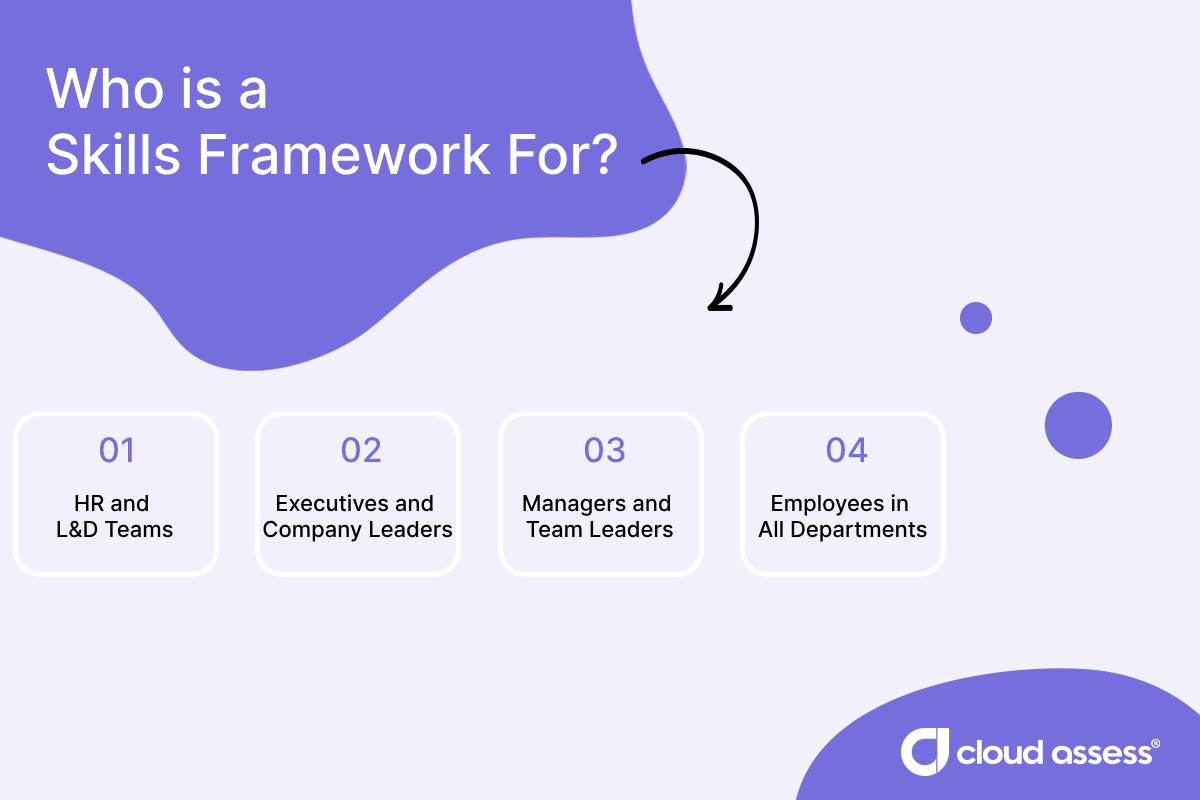
HR and Learning & Development Teams
HR and Learning and development teams use a skills framework to design targeted employee training programs, streamline recruitment, and manage career development pathways. The framework helps identify areas of improvement in workplace skills, create relevant learning interventions, and evaluate the effectiveness of training efforts.
Executives and Organisational Leaders
Executives and organisational leaders rely on a skills framework to align workforce capabilities with strategic goals. It supports decision-making by providing a clear view of current skills, future of work skills opportunities, and potential areas for growth, aiding in strategic planning and resource allocation.
Managers and Team Leaders
Managers and team leaders use this type of framework to assess team strengths and weaknesses, guide continuous professional development, and make informed decisions about promotions and team composition. The framework helps set clear expectations and provides targeted support for skill improvements.
Employees
A skills framework is an essential tool for employee development. It provides a roadmap for individual growth by identifying skill gaps and offering targeted training opportunities. Employees gain clarity on the competencies they need to advance in their careers.
Similar to skills mapping, which aligns specific skills with roles, a skills framework offers a structure that supports development by categorising skills and guiding training efforts. This alignment ensures that employees and organisations can effectively address developmental needs and enhance overall performance.
Benefits of a Skills Framework
Ensures Workforce Alignment
One of the primary benefits of a skills framework is its ability to align the workforce with the organisation’s strategic objectives. Defining the skills needed for each role allows companies to ensure their employees are well-equipped to contribute to the overall mission.
This alignment enhances productivity and fosters a sense of purpose and direction among employees as they understand how their skills and roles contribute to the bigger picture.
Enhances Employee Development
A skills framework is an essential tool for employee development. It provides a roadmap for individual growth by identifying skill gaps and offering targeted training opportunities. Employees gain clarity on the competencies they need to advance in their careers, while companies benefit from a more capable and motivated workforce.
An effective employee training plan enables companies to improve retention and satisfaction, as workers want to stay with organisations that invest in their growth.
Improves Talent Management
Effective talent management hinges on understanding the skills and competencies of your workforce. A skills framework enhances skills management by mapping these skills across your entire team. This approach makes it easier to spot high-potential individuals and identify where additional training or new hires are needed. This comprehensive view of talent allows for more strategic decisions regarding promotions, team compositions, and succession planning, ultimately leading to a more robust and adaptable organisation.
Increases Organisational Agility
A skills framework improves agility by enabling organisations to quickly identify and fill skill gaps through training, reskilling, or hiring. This adaptability ensures companies can confidently respond to new challenges and explore opportunities that become available, which helps maintain their competitive edge in the market.
Complementing Competency Framework
While competency frameworks focus on behaviours and attitudes required for success in specific roles, skills frameworks complement it by detailing specific technical and soft skills needed.
These frameworks provide a holistic approach to talent management, ensuring employees perform well in their roles and possess the necessary skills to drive organisational success. By integrating both frameworks, companies can better understand their workforce’s capabilities and create more effective development and training programs.
5 Components of a Skills Framework

- Skill Categories and Types: Organises skills into broad categories such as technical skills, soft skills, and behavioural competencies. Where a skills taxonomy provides a detailed hierarchical structure, skill categories and types offer a broader overview. They don’t delve into the specific relationships and levels of proficiency within each category.
- Skill Levels: Define proficiency for each skill, typically categorised into beginner, intermediate, advanced, and expert. A beginner may have a basic understanding and need supervision, while an intermediate can work independently on standard tasks. Advanced individuals can handle complex tasks and mentor others, while experts have mastery and can innovate or lead based on their deep expertise. These levels provide a clear progression path and allow organisations to assess and develop employees’ capabilities.
- Skill Descriptions: Clear and detailed explanations of each skill, outlining its scope, relevance, and application within a role. For instance, a “Project Management” skill description might include tasks like planning, organising, and overseeing project execution. This clarity ensures employees and employers understand what each skill entails and how it applies to job functions.
- Proficiency Indicators: Measurable behaviours or outcomes that demonstrate skill mastery. They offer criteria for evaluating an individual’s competence and help guide development. For example, proficiency indicators for “Communication” might include clear articulation of ideas, effective listening, and the ability to adjust communication style to different audiences. These indicators support assessments and personal development by making key skill levels observable and measurable.
- Application Context: This refers to how skills are used in different job roles, industries, or organisational functions. It anchors the skills framework in practical reality. For example, “Data Analysis” might look different in marketing than in operations. Defining contextual use ensures the framework is adaptable and meaningful across various settings, aiding talent mobility and workforce planning.
Skills Framework Examples
1. Industry: Transport
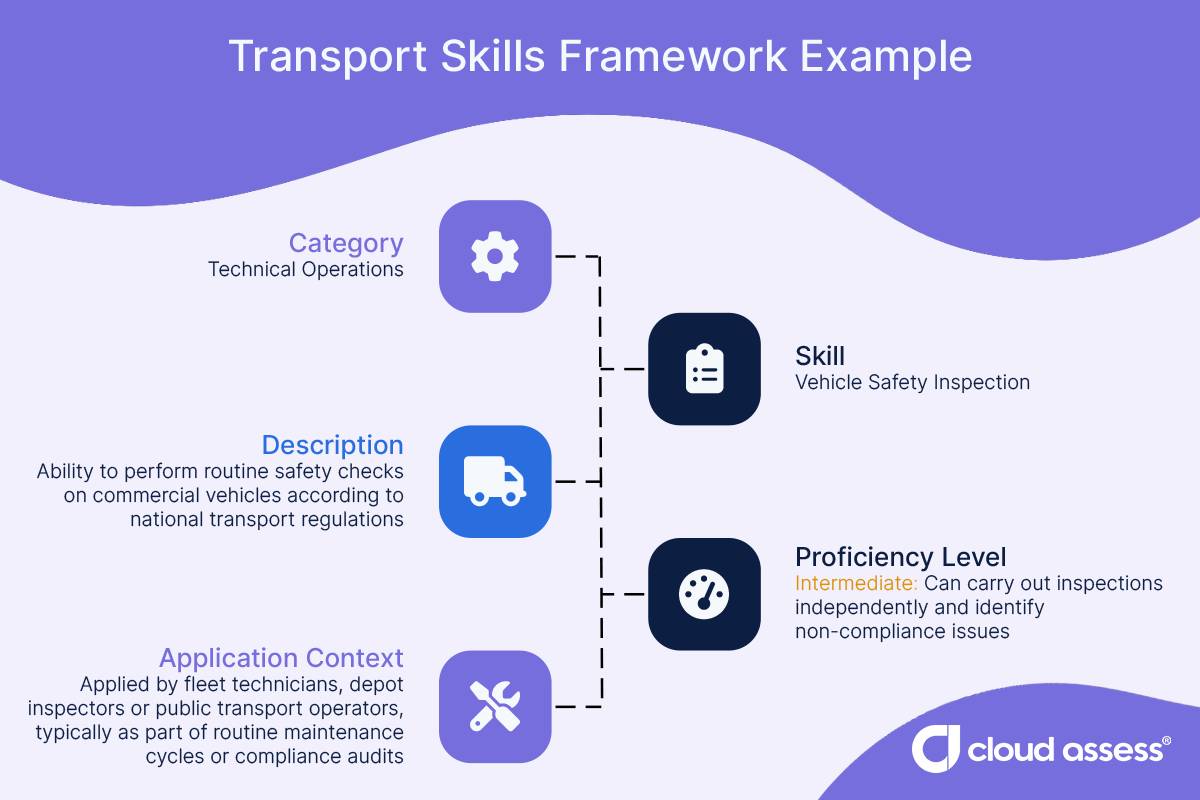
- Skill Category: Technical Operations
- Skill: Vehicle Safety Inspection
- Skill Description: Ability to perform routine safety checks on commercial vehicles according to national transport regulations.
- Proficiency Level: Intermediate – can carry out inspections independently and identify non-compliance issues.
- Application Context: Applied by fleet technicians and depot inspectors within logistics firms or public transport operators, typically as part of routine maintenance cycles or compliance audits.
2. Industry: Hospitality
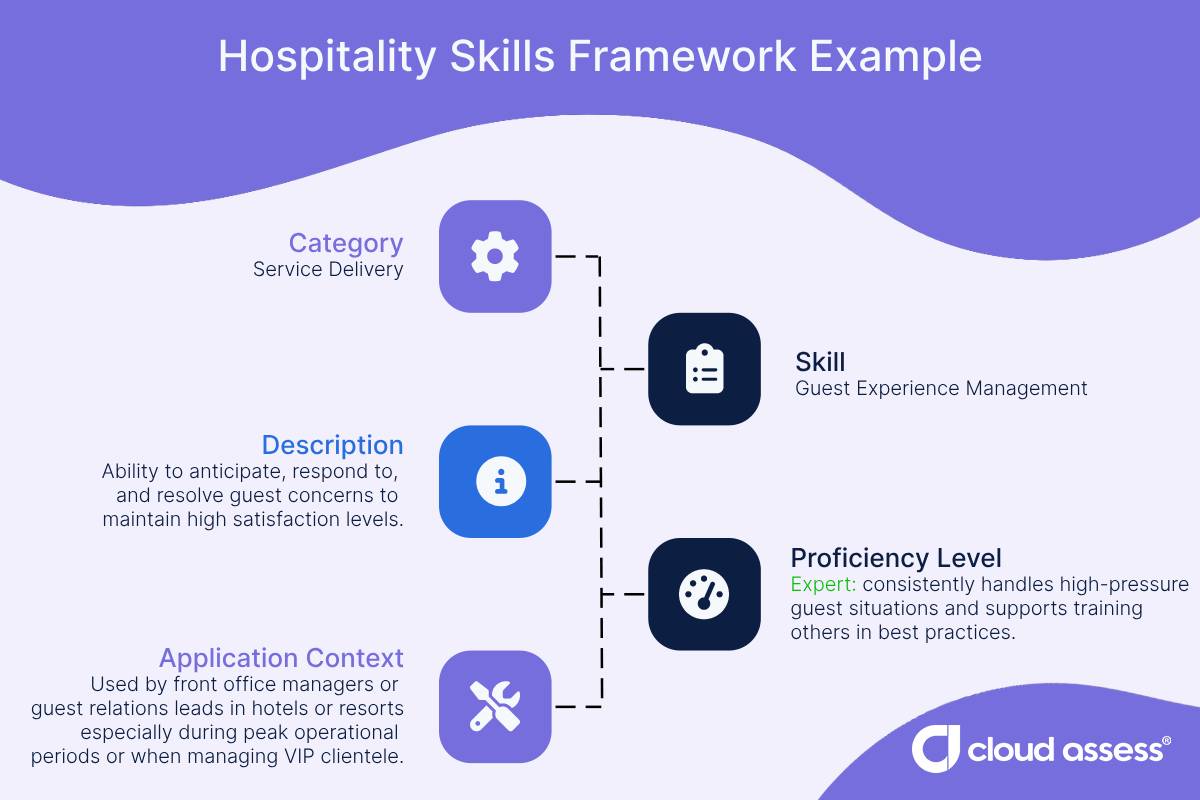
- Skill Category: Service Delivery
- Skill: Guest Experience Management
- Skill Description: Ability to anticipate, respond to, and resolve guest concerns to maintain high satisfaction levels.
- Proficiency Level: Expert – consistently handles high-pressure guest situations and supports training others in best practices.
- Application Context: Used by front office managers or guest relations leads in hotels or resorts, especially during peak operational periods or when managing VIP clientele.
9 Steps to Create a Skills Framework
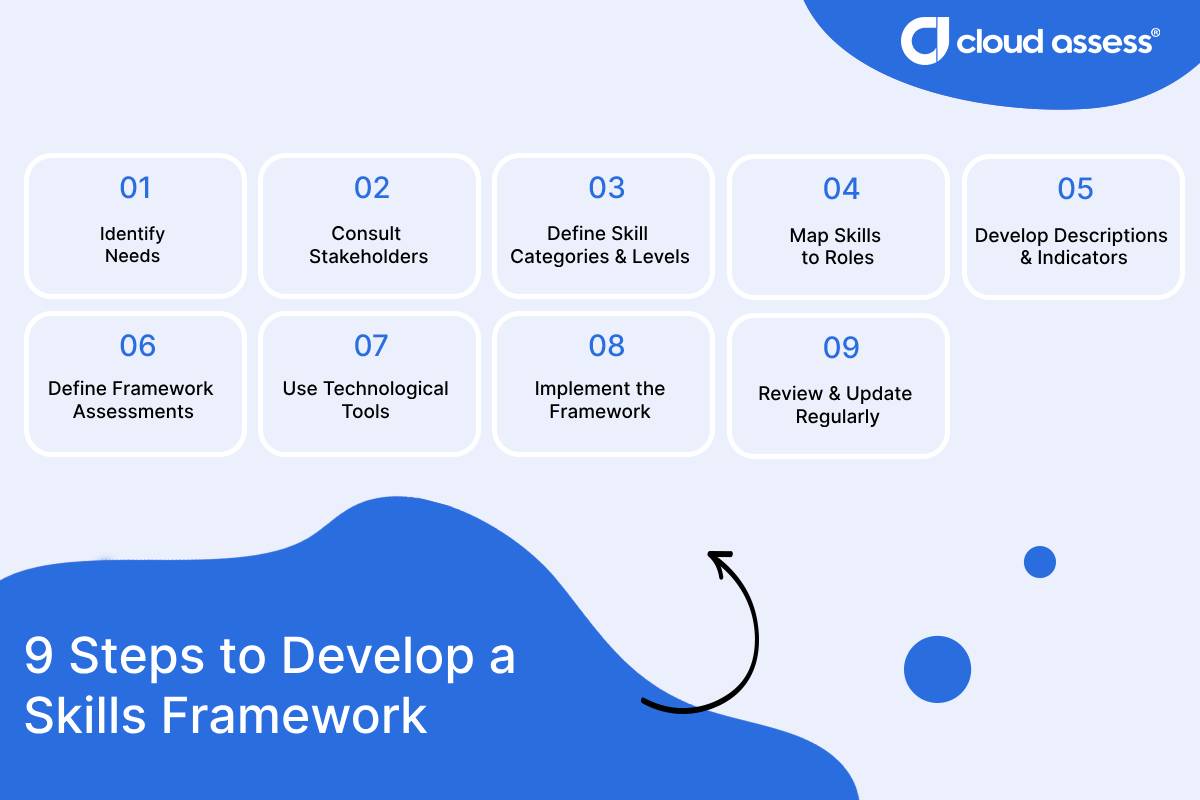
1. Identify Organisational Needs. Start by analysing your organisation’s goals and future demands. Conduct a skills audit to identify the capabilities required to meet strategic objectives and remain competitive.
- Consult Stakeholders: Engage key stakeholders such as HR, department heads, and employees to gather input on the necessary workforce skills for each role. This internal communication ensures the framework is comprehensive and relevant across the organisation.
- Define Skill Categories and Levels: Organise skills into categories and define proficiency levels. This creates a clear structure for skill evaluation.
- Map Skills to Roles: Assign relevant skills and proficiency levels to specific job roles. Ensure that each role’s required skills align with its responsibilities and performance expectations, making the framework practical for workforce planning.
- Develop Skill Descriptions and Indicators: Provide detailed skill descriptions and measurable proficiency indicators to clarify expectations. These indicators allow for objective assessment of skill mastery at various levels.
- Define Skills Framework Assessments: Determine how each skill and proficiency level will be evaluated. These assessments, such as self-assessments, manager reviews, or practical tasks, ensure consistent and objective skill measurement across the organisation.
- Use Technology to Manage the Framework: Leverage technology, such as learning management systems (LMS) or talent management systems, to implement and track the skills framework. This allows for the automation of assessments, tracking progress, and integration of the framework into daily HR processes.
- Implement the Framework: Train managers and employees on using the framework in recruitment, performance evaluations, and career development. Ensure that the framework is embedded into HR systems for consistent application.
- Review and Update Regularly: Continuously review and update the skills framework to reflect evolving business needs, industry trends, and emerging skills. Regular feedback from stakeholders will help keep it relevant and effective over time.
4 Ways to Use a Skills Framework
- Employee Development and Training: A skills framework helps identify skill gaps and tailor training programs to address them, ensuring employees acquire necessary power skills for their roles and future growth.
- Career Progression: It provides clear pathways for career advancement by outlining the skills and proficiency levels required for different roles, helping employees plan their development.
- Recruitment and Onboarding: The framework aligns job descriptions and candidate assessments with the key skills needed for specific roles, ensuring external hiring and employee onboarding are focused and effective.
- Performance Management: It offers a structured way to evaluate employee performance based on clearly defined skill expectations, making reviews objective and actionable.
Challenges in Developing a Skills Framework
Identifying Relevant Skills
Determining the most relevant skills for your organisation can be difficult, especially with the rapid pace of change in many industries.
Solution: Engage with industry subject matter experts, stakeholders, and employees to gather insights on emerging trends and essential skills. Regularly review and update your skills framework to align with current and future needs.
Consistency Across Departments
Ensuring consistency in skill definitions and proficiency levels across various departments can be challenging, leading to potential discrepancies in evaluations and training.
Solution: Standardise the framework by developing clear guidelines and criteria that apply across the organisation. Conduct workshops and training sessions to align all departments on the definitions and expectations within the framework.
Measuring Skill Proficiency
Accurately assessing and measuring skill proficiency can be subjective and inconsistent without clear indicators.
Solution: Develop specific, measurable indicators for each skill level and train managers to evaluate these consistently. Consider using tools or assessment software to help standardise the measurement process.
Change Management
Implementing a new skills framework can be challenging for employees and managers used to the current processes, which makes change management crucial for a smooth transition.
Solution: Communicate the benefits of the skills framework clearly and involve employees in the development process to build buy-in. Offer support and training to help everyone transition smoothly and address concerns proactively.