Modern learning often feels reactive. It’s treated as a quick fix for a problem, a gap or a lack that needs to be addressed. People complete courses, tick boxes, and move on without a clear sense of purpose. The problem isn’t usually the training itself. It’s the lack of direction behind it.
Without clear learning goals, it’s hard to know what success looks like or why certain skills matter. It can also feel like individual development is entirely separate from broader business outcomes.
In this article, we explore:
- What learning goals are
- The difference between organisational, professional, and personal goals
- Categories and examples of impactful objectives
- Different goal-setting techniques and frameworks
- Steps for writing learning objectives that have real impact
- Tips for balancing different types of learning goals

What Are Learning Goals?
Learning goals are clear, specific objectives that define what an individual or team aims to achieve through training. They act as a roadmap that helps guide learning experiences. They ensure that training activities remain focused, measurable, and aligned with broad needs.
Setting clear goals helps learners understand what success looks like. It also helps educators design relevant training programs and makes progress easier to track.
Types of Learning Goals
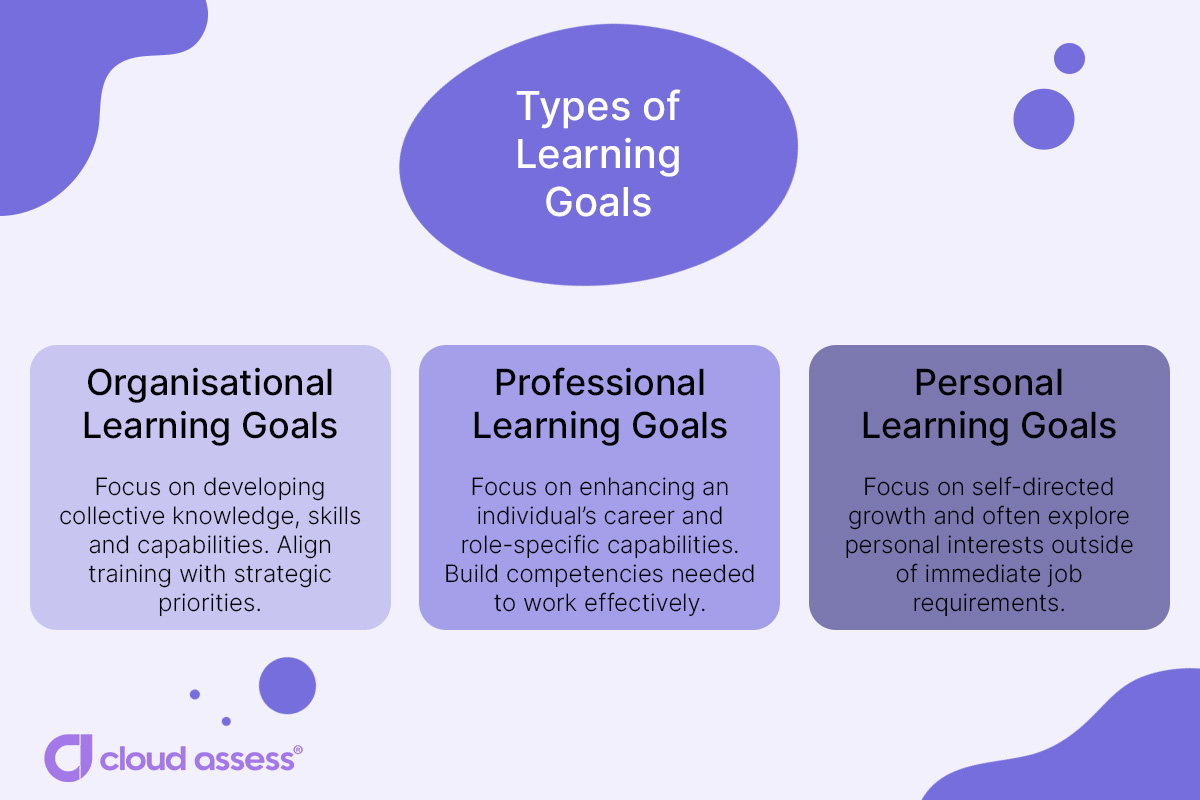
Organisational Learning Goals
Organisational goals focus on developing collective knowledge, skills, and capabilities. They align training programs with strategic priorities. These could include improving productivity, ensuring compliance, or supporting digital transformation.
Setting organisational goals ensures that training directly contributes to performance and long-term success.
Professional Learning Goals
Professional goals focus on enhancing an individual’s career aspirations and role-specific capabilities. They help people build the competencies they need to work effectively or prepare for future opportunities. These goals often target areas like leadership theories, technical proficiency, or communication skills.
By setting professional learning goals, employees can take ownership of their growth. Companies could also recommend professional development goals that support succession planning.
Personal Learning Goals
Personal learning goals centre on an individual’s self-directed growth and personal interests. They may involve developing soft or power skills like confidence and time management. They could also focus on exploring interests outside of immediate job requirements. These goals encourage continuous learning and adaptability, helping individuals stay engaged and motivated.
Supporting personal goals helps organisations foster a culture of curiosity. This improves motivation and job satisfaction, benefiting individuals and the business.
Learning Goal Categories

Skill-Based Goals
Skill-based goals target practical, hands-on abilities. These could include areas like communication, leadership, or technical proficiency. They help individuals perform better in their roles or achieve their personal goals.
Knowledge-Based Goals
Knowledge-based goals focus on understanding concepts or information related to a particular topic. They help learners build the theoretical foundation needed to apply skills in real situations.
Behaviour-Based Goals
Behaviour-based goals shape how individuals act and interact with others at work. They often address interpersonal effectiveness, professionalism, and alignment with company values and standards.
Attitude-Based Goals
Attitude-based goals impact how learners think or feel about their work, team, or organisation. They foster motivation, openness to feedback, and a positive approach to change.
Outcome-Based Goals
Outcome-based goals define the desired end result or measurable impact of training. They link learning efforts to tangible business outcomes. These could include improving productivity or reducing errors.
Performance-Based Goals
Performance-based goals involve applying learning to demonstrate measurable criteria and improvements in job performance. They often focus on specific areas that impact employee effectiveness, productivity, and efficiency.
Techniques For Setting Learning Goals
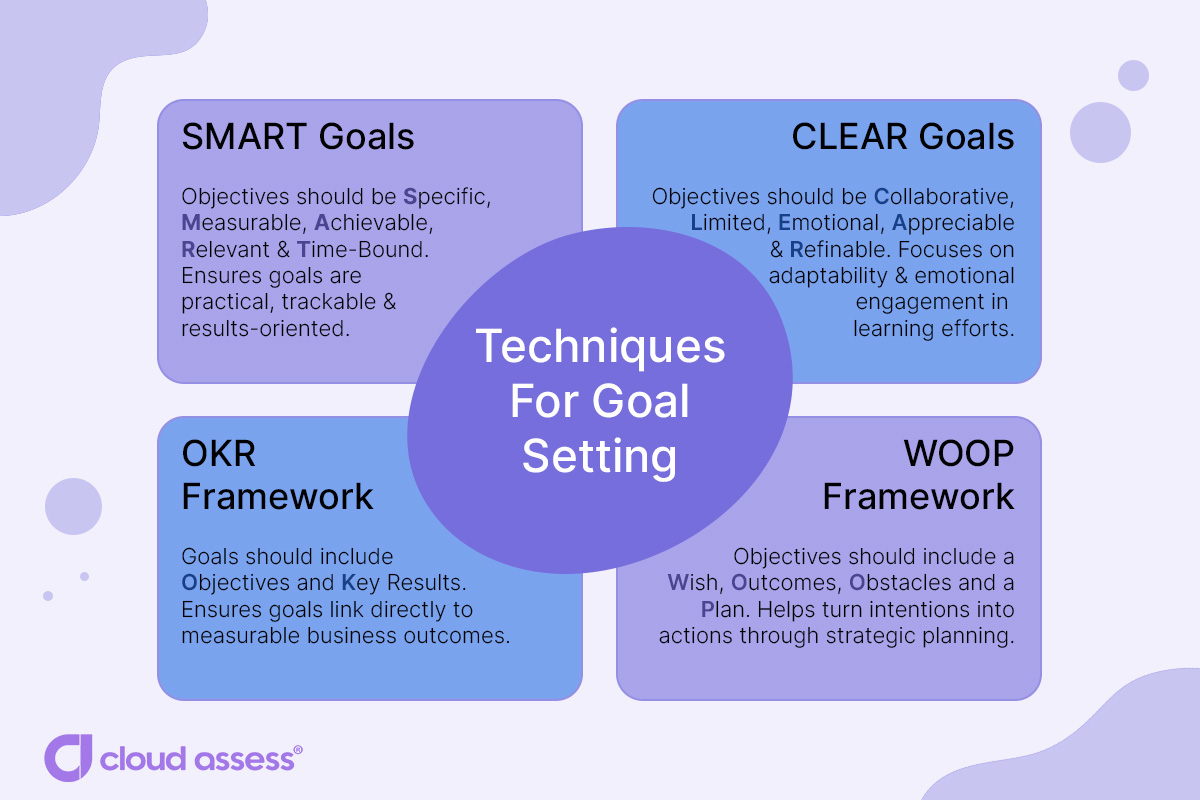
SMART Framework
The SMART learning objectives ensure goals are practical, trackable, and results-oriented. They help learners and organisations set clear expectations and measure progress effectively. SMART learning objectives should be:
- Specific. Goals should clearly define the exact skill, behaviour, or knowledge area to develop.
- Measurable. Progress should be quantifiable or observable. This allows learners and trainers to track improvement.
- Achievable. Goals must be realistic and attainable based on current capabilities and resources.
- Relevant. Goals should align with broad objectives. This ensures the effort put into learning supports meaningful outcomes.
- Time-Bound. Every goal should have a clear timeframe for completion. Deadlines create urgency and help maintain motivation.
SMART Learning Objective Example: Complete advanced Excel training within eight weeks to improve data analysis accuracy by 20%.
CLEAR Goals
The CLEAR framework focuses on adaptability, collaboration, and emotional engagement in learning. It’s particularly effective in fast-changing workplace environments where business needs evolve quickly. CLEAR objectives should be:
- Collaborative. Educational objectives should encourage teamwork and shared accountability. This helps learners build stronger connections and collective ownership of outcomes.
- Limited. They should remain focused and realistic. Concentrating on fewer priorities ensures commitment and better follow-through.
- Emotional. Learning goals should resonate on a personal level, inspiring motivation and engagement. Emotionally connected learners are more likely to sustain long-term progress.
- Appreciable. Larger learning objectives should be broken down into smaller, measurable steps. This makes progress visible and helps maintain momentum.
- Refinable. Make goals flexible and adaptable as circumstances change. This allows for continuous improvement and alignment with evolving priorities.
CLEAR Learning Objective Example: Encourage cross-department collaboration by hosting monthly knowledge-sharing sessions that strengthen teamwork and innovation.
Objectives and Key Results Framework
The OKR framework links learning goals directly to measurable business outcomes. It helps learners and organisations align personal development with strategic objectives. OKR learning goals should include:
- Objectives. A clear, inspirational statement describing what you want to achieve. Objectives should be ambitious yet achievable.
- Key Results. A set of measurable criteria that define how progress toward the objective will be tracked. These results should be specific, quantifiable, and time-bound.
OKR Learning Objective Example: My objective is to enhance leadership training effectiveness. The results should be 90% positive feedback in post-training evaluations and increasing team performance scores by 15% within six months.
WOOP Framework
The WOOP framework focuses on turning intentions into actions through strategic mental planning. It helps learners anticipate obstacles and create realistic plans to overcome them. WOOP learning objectives should include:
- A Wish. Identify a meaningful and achievable goal related to personal or professional growth.
- An Outcome. Visualise the best possible result that would come from achieving the goal.
- Obstacles. Recognise internal or external challenges that could prevent success.
- A Plan. Develop a clear, actionable strategy to overcome those obstacles.
WOOP Learning Objective Example: I wish to improve confidence during presentations. The outcome will be delivering engaging, structured talks with fewer notes. An obstacle is my anxiety when speaking to large audiences. To address it, I plan to practise in small groups weekly and use breathing techniques to manage my nerves.
10 Steps For Writing Effective Learning Objectives
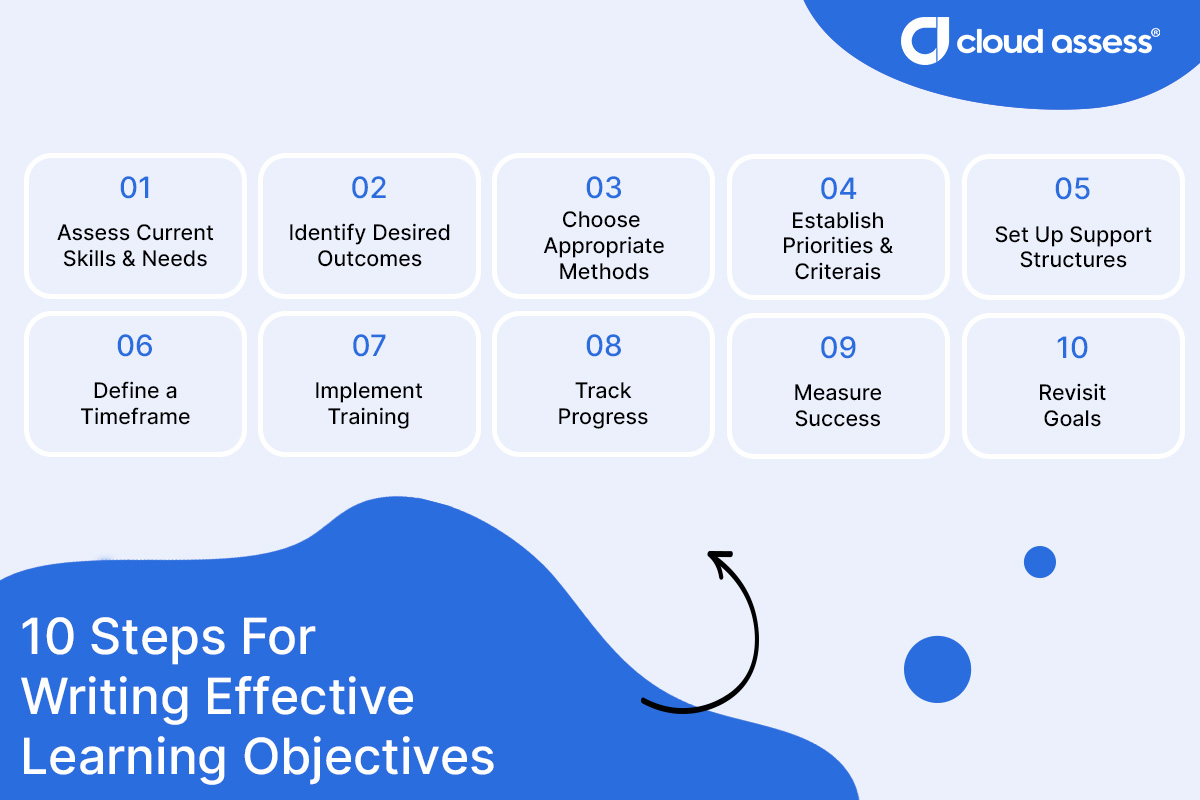
1. Assess Current Skills and Needs
Before setting new learning goals, it’s important to understand where you’re starting from. This ensures your objectives are meaningful and achievable.
A skills audit can help companies identify workforce strengths, gaps, and areas for improvement. A skills matrix is also useful for mapping abilities and tracking progress over time.
Self-assessments can also highlight areas where learners want to improve or explore new interests. This reflection is especially valuable when setting professional or personal development goals.
2. Identify Desired Outcomes

Clearly define what you want to achieve by the end of the learning process.
This might mean linking learning goals to key metrics like compliance or customer satisfaction. It could also involve identifying workforce skills that will support a promotion, a career shift, or personal growth. The more specific the outcome, the easier it becomes to align goals with actionable results.
3. Choose an Appropriate Goal-Setting Method
The right goal-setting framework ensures your learning objectives are realistic, structured, and achievable. It helps translate ambition into attainable outcomes. It’s also important to choose a method that suits your (or your team’s) skills, working styles, and learning preferences.
For example, writing SMART objectives may be difficult for someone who struggles with time management. A WOOP approach to developing self-regulation skills can make SMART goal-setting more effective later on.
4. Establish Priorities and Criteria for Success
When several goals are on the table, prioritisation is key. Focusing on too many learning goals at once can impact focus and lead to confusion. Consider which objectives will deliver the greatest value personally and professionally. It’s also important to consider the time and effort required to achieve them.
Ask questions like:
- Which goals are ‘quick wins’, ensuring a positive impact without big time or effort commitments?
- Which goals will take significant time, but lead to significant improvements?
- Which goals support company- or team-wide efforts?
- Which goals will impact employee satisfaction?
5. Set Up Support Structures

Learning is easier and more sustainable when supported by the right people and resources. Build a network that offers guidance, encouragement, and accountability throughout your (and your employees’) learning journeys. Consider the four key types of support:
- Informational support: People who share knowledge or advice to help learners make informed decisions.
- Esteem support: Mentors or colleagues who believe in learners’ abilities and boost their confidence.
- Tangible support: Individuals or teams who can provide hands-on assistance or resources.
- Emotional support: Trusted peers or mentors who listen, offer perspective, and encourage learners.
6. Define a Timeframe
Every learning goal needs a clear timeframe to stay on track. Deadlines create structure, accountability, and momentum. This turns good intentions into measurable action.
For organisations, this might involve setting quarterly or annual targets for performance improvement. Individuals can set up weekly or monthly checkpoints to maintain focus and motivation. Having defined timeframes helps ensure progress is consistent and measurable.
7. Implement Training
Effective implementation means providing the right resources to support success.
- Tools: This might include a learning management system for delivering and tracking training. Assessment tools and communication platforms that support real-time collaboration are also essential.
- Training Materials: These should be accessible, engaging, and relevant. Individuals may want to find a curation platform that gives them access to courses across various topics. eLearning authoring software can also help organisations design interactive and multimedia-rich training content. Clear, consistent materials help learners apply new concepts with confidence. This reinforces long-term skill development.
- Training Methods: Companies should use various employee training methods. These could include eLearning courses, workshops, mentoring, or blended learning programs. This can help you accommodate different learning styles. It also provides multiple points of reference when employees transfer learning into their roles. For individuals, microlearning courses and self-paced modules offer flexibility. This makes it easier to balance learning with other commitments.
8. Track Progress
Tracking progress helps learners and organisations stay accountable and identify what’s working and what isn’t. Regular reviews make it easier to adjust goals, methods, or timelines as needed.
Tools like Cloud Assess can help you monitor learning outcomes and record assessment results. This supports the visualisation of improvement over time. Individuals can track their progress through journals, log books, checklists, or self-assessment reflections. Consistent tracking keeps learners engaged and motivated to reach their goals.
9. Measure Success

It’s important to look at both quantitative and qualitative data. This might mean analysing key performance indicators or return on investment from training. Individual success could be reflected in improved performance, expanded skillsets, or increased confidence.
Measuring outcomes ensures training delivers tangible value and highlights areas for continuous improvement.
10. Revisit Goals
Goal setting shouldn’t end once an objective is achieved. It’s an ongoing process of reflection and growth. Revisiting goals ensures they stay aligned with evolving roles, priorities, and aspirations.
Review progress, celebrate achievements, and identify new areas for development. This continuous cycle of goal setting and reflection builds a culture of sustained growth.
Tips For Balancing Personal, Professional and Organisational Learning Goals
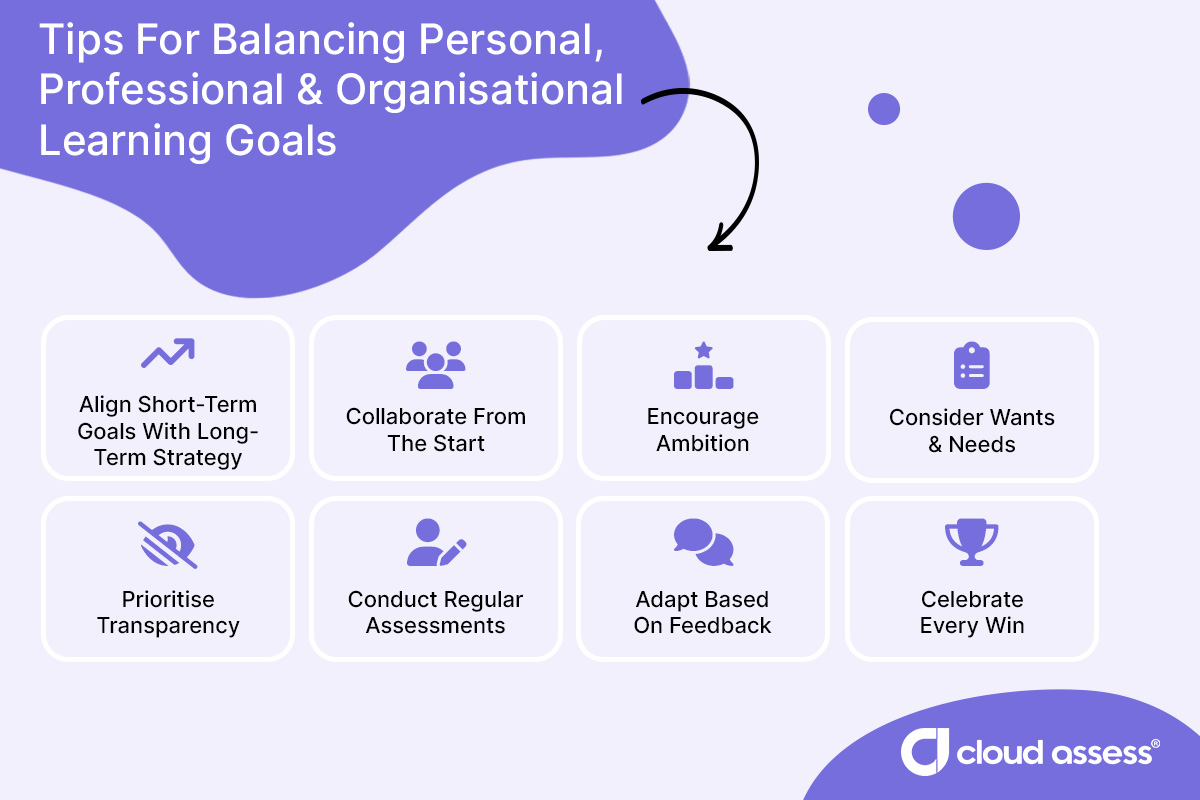
Align Short-Term Goals With Long-Term Strategy
Short-term goals should always support your long-term vision. Every objective should move you closer to where you ultimately want to be. This ensures that effort spent on day-to-day learning creates real, lasting progress.
Collaborate From the Start

Get your teams and support network involved early when setting learning goals. Collaboration builds ownership and ensures goals reflect real challenges and opportunities. The same concept applies to personal goals. When your family, friends, and colleagues understand what you want to achieve and why, they’re in a better position to support your goals.
Encourage Ambition
Ambition drives progress, as long as goals remain realistic. Start by recognising the value you already bring to the table, and create goals that build on those strengths. Think about how your work can positively impact others, both inside and outside your organisation. And when you identify areas for growth, embrace them with curiosity and confidence.
Consider Wants and Needs
Balance what you want to learn with what you need to learn. Companies often focus on business needs, while individuals are driven by curiosity or personal growth. When both align, development feels both rewarding and relevant.
Prioritise Transparency
Be open about how and why learning goals are set. At work, this might mean discussing training priorities openly with your team. On a personal level, it’s about being honest with yourself about what you can commit to and what matters most. Transparency builds trust, accountability, and shared purpose.
Conduct Regular Assessments
Regular check-ins help you see what’s working and where adjustments are needed. Continuous assessment, rather than once-off evaluations, keeps learning goals relevant and progress consistent. This might mean tracking training outcomes or reassessing company-wide skill needs over time. Self-assessments and ongoing reflection also help measure improvement and uncover new growth opportunities.
Adapt Based on Feedback
Feedback helps everyone grow. Collecting feedback can make your training programs more effective. Listening to constructive input also helps individuals refine goals and improve results. Platforms like Cloud Assess can simplify feedback collection and help turn insights into action.
Celebrate Every Win