Every organisation relies on people to achieve its goals. But success depends on more than having job descriptions in place. Teams perform at their best when there is a clear understanding of the competence needed to excel. A competency framework provides this clarity. It offers a structured way to define what effective performance looks like across roles and levels. This creates a common language that connects individual contributions to organisational success.
In this guide, we’ll explore:
- What a competency framework is
- How it compares to a skills framework and when to use each
- How it supports strategy and improves performance
- The core components that make a competency framework effective
- Benefits for employers, managers, and employees alike
- Practical steps for successful implementation
- Common challenges and how to address them
- A look at how competency frameworks are evolving for the future
What is a Competency Framework?
A competency framework is a model that outlines the knowledge, skills, and behaviours needed to perform effectively. It acts as a reference point for what ‘good’ looks like in a role or across the organisation. The framework sets standards that guide how employees work and interact. It also shows levels of proficiency that mark progress, growth, and capability within the workforce.
Competency Framework vs Skills Framework
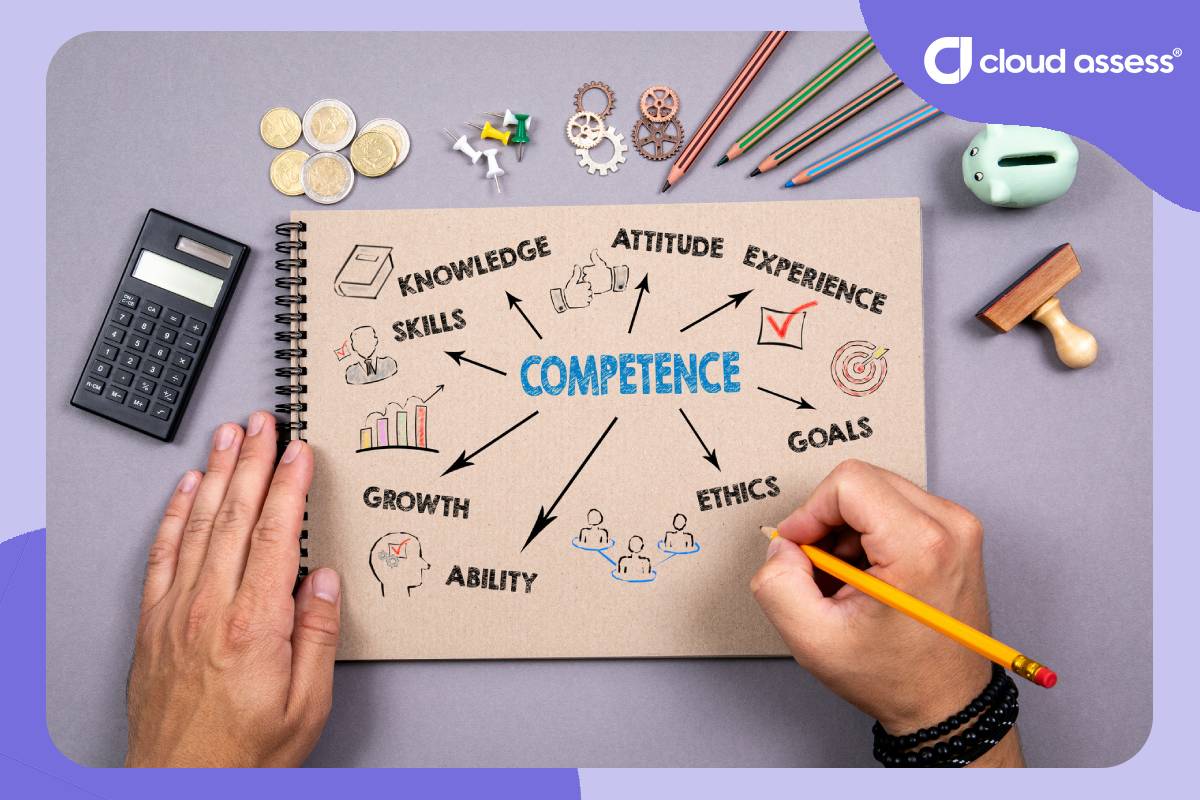
A skills framework focuses mainly on technical abilities and practical know-how. It is narrower in scope and often used to map expertise within a specific field or discipline.
A competency framework doesn’t only define skills. It is also the knowledge and behaviours that shape effective performance. It provides a broader view that links individual abilities to organisational goals.
The key difference is that a skills framework concentrates on what a person can do. But a competency framework looks at the whole picture of performance.
When to Use Each
A competency framework is most useful when an organisation:
- Wants to align people with strategic goals
- Needs consistent standards for performance across roles
- Seeks to guide behaviours and workplace culture
- Plans for long-term career development and growth
- Is looking to make data-driven recruitment decisions
- Focuses on technical expertise in specific fields
- Needs to track abilities and identify skill gaps
- Plans targeted training for fast-changing requirements
- Operates in areas where up-to-date technical knowledge is critical
Purpose of a Competency Framework

Alignment with Organisational Strategy
A competency framework ensures that workforce ability supports the organisation’s direction. It does this by mapping required competencies to strategic goals. It also does it by linking them to individual and organisational performance. This enables teams to know what personal characteristics or behaviours and expertise drive success.
Consistency in Performance Management
A key purpose of a competency framework is to bring structure to performance management. It gives line managers clear criteria to assess employees. This enables fairness, reduces subjectivity, and builds trust in the process.
Designing Learning and Development
The framework highlights the knowledge, skills, and behaviours that employees need to develop. It plays a key role in aligning training with business goals by identifying the abilities that drive performance. This helps learning and development initiatives target the most critical areas. This ensures that training efforts deliver measurable impact.
Defining Clear Career Pathways
A competency framework breaks down what is required for progression across roles and levels. It clarifies responsibilities at each stage. Managers use it to guide career conversations, while employees use it to see what steps they need to take. Together, they can plan professional development that aligns personal goals with organisational needs.
Components of a Competency Framework

Core Competency Categories
Organises competencies into categories such as technical or behavioural. This makes the framework easier to navigate and apply across roles. They also ensure performance expectations cover both specific role requirements and wider organisational needs.
Competency Descriptions
Each competency statement defines what the competency involves and clarifies its scope. Descriptions explain why competency is important and outline how it should be demonstrated in practice. For example, a “problem-solving” competency could have different descriptions in specific contexts. In one case, it may refer to analysing issues and proposing effective solutions. In another, it could involve using data to identify root causes and implement improvements. Clear wording removes ambiguity and builds shared understanding across roles.
Proficiency Levels
Proficiency levels show how employees demonstrate competency at different stages of development. It helps set levels from basic to advanced, often labelled beginner, proficient, and expert. These levels create a clear path for progression and promotions into new roles. It also allows managers to measure performance and growth.
Observable Behaviours
Each competency should have observable and measurable behaviours attached to it. These behaviours provide evidence of how employees act in real situations. For instance, “collaboration” behaviours include sharing information, supporting colleagues, and resolving conflicts constructively. Using behaviours keeps assessment fair and targeted.
Benefits of a Competency Framework

For Organisations
A competency framework strengthens alignment between people and organisational goals. It creates a common standard that:
- Improves decision-making around external and internal recruitment
- Enhances strategic workforce planning
- Supports succession planning for management roles and other critical positions
For Managers
Managers use a competency framework to provide structured feedback. It supports performance management by:
- Offering criteria that reduce bias and subjectivity
- Helping managers identify development needs
- Guiding coaching and career mobility discussions
For Employees
Employees gain a transparent view of what success looks like in their roles. The framework gives them direction by:
- Showing where they stand against role expectations
- Highlighting key areas for growth, reducing career stagnation
- Outlining the steps for career progression
For Learning and Development Teams
Learning and development teams use a competency framework to focus resources where they matter most. It improves training design by:
- Identifying actual skill and behaviour gaps
- Prioritising development areas with strategic value
- Measuring the impact of learning against clear benchmarks
How to Implement a Competency Framework

1. Identify Organisational Goals
Start with a review of your organisation’s strategy, objectives, and performance targets. Look at where the business is heading and what competencies it will need in the future. Speak with senior leaders to understand priorities such as growth, compliance, or community impact. This gives the framework a clear anchor in strategy, not guesswork.
Example: Let’s say you’re an early education provider. Your organisation sets a five-year goal to expand enrolments and improve school readiness outcomes. From this strategy, leaders identify “quality of learning” and “child safety” as top priorities. Use these priorities to guide the framework. They may point to competencies like “curriculum delivery,” which supports school readiness. Or they may point to “safeguarding practices,” which ensure safe environments as enrolments grow.
2. Engage Stakeholders
Bring key groups into the process early. Involve HR teams, managers, educators, and support staff who understand the realities of day-to-day work. Hold workshops, focus groups, or interviews to capture their insights. This collaboration builds ownership and ensures the framework reflects actual needs.
Example: Using the example above. You can run a workshop with teachers, assistants, and centre managers. In small groups, participants share the challenges they face and the behaviours that lead to strong outcomes in the classroom. Their input becomes the foundation for defining competencies in the next step.
3. Define Key Competencies
Translate organisational goals into a list of core competencies. Decide which apply across the organisation and which are role-specific. Write each competency in plain, practical language so it is easy for everyone to use.
Example: Following the same example above. Organisation-wide competencies may include “team collaboration” and “professional integrity.” Role-specific competencies may include “lesson planning” for teachers. It may also include “student record management” for administrators.
4. Determine Skills, Knowledge, Behaviours, and Proficiency Levels
Break each competency into its building blocks. Define the skills, knowledge, and behaviours that contribute to achieving success. Map out proficiency levels such as beginner, proficient, and expert. Explain what each level looks like in practice. This gives managers and employees a clear roadmap for growth.
Example: For the competency “child engagement” at the proficient level:
- Skill: Plans and delivers group activities that keep children focused and involved.
- Knowledge: Understands age-appropriate learning methods and safety requirements for classroom activities.
- Behaviour: Encourages participation and responds to children’s questions. Also, adapts activities when engagement drops.
5. Validate and Pilot
Test the draft framework before rolling it out. Choose a pilot group from different roles or centres. Ask them to apply the framework in performance reviews or development discussions. Collect feedback on clarity, relevance, and ease of use. Use the feedback to refine the framework before wider launch.
Example: Continuing with the same example. You can pilot the framework with one centre. Teachers test competencies like “lesson delivery” and “child engagement” during classroom observations. Afterwards, they share whether the behaviours are realistic and measurable. Their feedback helps refine the framework before expanding to all centres.
6. Implement and Train
Introduce the framework across the organisation in a structured way. Train managers so they know how to use it in performance management and career development. Provide guidance for staff on how to track their progress. Support adoption with resources such as guides, checklists, and digital tools.
Example: You can update appraisal forms to include the new key competencies. Managers receive training on how to rate behaviours consistently. Educators learn how to self-assess against the framework and use it in their development plans.
7. Measure and Assess
Build measurement into the process from the start. Use competency-based assessments such as self-assessments, manager evaluations, or peer reviews. Track results against proficiency levels to identify skill and competency gaps. Use the data to target training and measure impact.
Example: You can assess “child engagement” during classroom observations. Observers look for behaviours like active participation from children. They can look for behaviours in how teachers adjust when attention drops. This evidence links performance directly to the framework.
8. Integrate Technology

Use technology to embed the framework into everyday practice. It makes it easier to align competencies with training, track progress, and capture evidence of development. It also helps managers and employees access the framework in real time, keeping it active rather than static.
Example: You may integrate a learning management system (LMS) that helps link competencies to training and assessments. You could map competencies like “curriculum delivery” and “safeguarding practices” to training modules in your LMS. The platform can also track progress automatically as staff complete training or ongoing assessments. Managers can then see who meets required proficiency levels and where additional support is needed. This ensures competency gaps are visible and closed quickly. Employee LMS platforms such as Cloud Assess also provide a competency matrix tool. This tool maps competencies, gives real-time insights, and ensures training addresses gaps effectively.