Why is a Skills Matrix Valuable in Health & Social Care?

Care providers have several obligations that they need to meet when it comes to staff development and training. These extend beyond simply tracking staff capabilities; they include the following:
- Care Competencies. These are the essential abilities that staff need to provide effective care in health and social work environments. A well-designed skills matrix will help you track both hard and soft skills, along with other capabilities and competencies, so your teams have what they need to deliver exceptional care.
- Care Quality Commission (CQC) Compliance Requirements. Care providers must ensure their staff are trained, competent, and capable of performing their roles. A skills matrix offers a clear way to track and demonstrate this. It helps managers monitor training completion, identify gaps, and assign the right people to the right tasks. This makes it easier to meet CQC expectations and prepare for inspections.
- Mandatory Training. Meeting compliance requirements involves ensuring that staff complete mandatory and statutory training in areas like moving and handling, safeguarding, first aid, and dementia care. This ensures care teams have a deep understanding of their responsibilities and obligations in terms of industry frameworks and your organisation’s standard operating procedures (SOPs). A skills matrix can help you visualise which employees have completed mandatory training and where any training gaps may lie.
- Skill Audits. Organisations need to regularly maintain and submit training records to demonstrate compliance . A skills matrix helps track staff development over time. This makes it easier to prepare for skill audits. It also contributes to more efficient operations and better risk management.
- Personalise Care Planning. No two patients are the same. Personalising care to individual needs improves outcomes. A skills matrix can help you identify which staff members have the specific skills required to manage individual patient care. It also helps highlight where additional training could be valuable in rounding out your workforce skills and matching staff more effectively with patient needs.
Benefits of a Skills Matrix for Care Providers
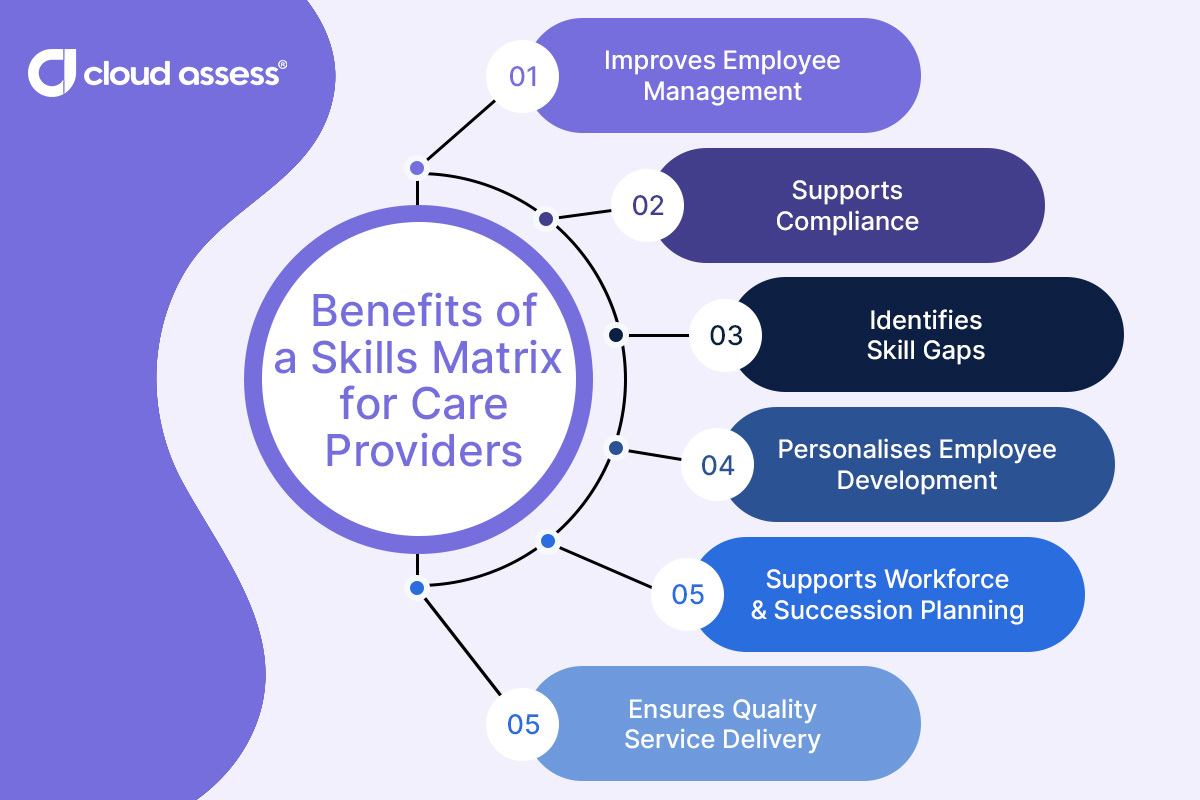
Improves Employee Management
Having a clear view of your teams’ capabilities across roles like care assistants, support workers, and nurses allows managers to plan and track training more effectively. This ensures each staff member has the right qualifications and skills to deliver safe and responsive care.
By using a skills matrix to identify who has completed training and who needs further development, you can plan shifts, delegate tasks, and assign supervisors with confidence. It also helps align staff with care tasks that suit their strengths, boosting confidence, performance, and job satisfaction.
Supports Compliance
Healthcare providers must show that staff are competent to meet Care Quality Commission (CQC) requirements. A skills matrix helps track and demonstrate employee skills, proficiencies, and areas that still need attention.
It also helps providers maintain documentation and certifications in a CQC evidence folder aligned with the commission’s key lines of enquiry (KLOEs). This ensures organisations are always audit- and inspection-ready and able to meet statutory obligations with confidence.
Identifies Skill Gaps
One of the key benefits of a skills matrix is its ability to highlight gaps in staff capabilities before they impact care delivery. These gaps may stem from outdated training modules, missing certifications, or skill stagnation, where abilities no longer meet current care standards.
Identifying skill gaps and their causes allows you to implement proactive training programs early. This reduces risk to your organisation and the people you support, while improving training outcomes. It also ensures staff feel confident in their roles and are prepared to meet evolving care demands, helping you deliver consistent, safe, effective, and person-centred care.
Personalises Employee Development
A skills matrix supports tailored staff development by providing a clear view of each individual’s strengths and areas for growth. This allows you to design competency-based training that’s relevant and role-specific, rather than relying on a one-size-fits-all approach.
It also streamlines induction training and onboarding by showing which skills new hires already have and where they need support. Over time, this personalised approach fosters continuous improvement and helps staff build confidence, autonomy, and long-term job satisfaction.
Supports Workforce and Succession Planning
Assigning staff to shifts and roles that match their current abilities improves team performance and ensures safe, efficient care delivery. But it’s just as important to plan ahead for future workplace skill requirements.
This is where a skills matrix becomes a powerful tool for strategic workforce planning. It gives you visibility to identify emerging leaders, support internal progression, and prepare for staffing changes with confidence. This enables effective succession planning and helps you develop clear career pathways across your teams. It also reduces the risk and impact of turnover, improving employee engagement, retention, and overall workforce stability.
How to Build a Care Staff Skills Matrix

1. Define Roles
Start by listing your teams and the roles within them. Each team will have different needs, and each role will require specific competencies based on its responsibilities. Mapping responsibilities to skills at this stage helps build a more relevant and actionable matrix.
For example, a care delivery team may be made up of the following roles:
- Care workers who provide day-to-day personal care and support
- Team leads who supervise care staff and manage shift handovers
- Nurses who carry out clinical tasks such as administering medication
- Managers who oversee service quality and compliance
2. Map Out Competencies
For each role, map out the mandatory and role-specific skills staff need to perform safely and effectively. This may include statutory training and other relevant competencies like communication, documentation, or dementia care expertise.
For example, using the care delivery team above, you may want to track the following competencies and proficiency levels:
- Care workers require skills like manual handling and infection control. Enroling them in an accredited manual handling awareness course will help them develop these specific skills.
- Team leads need competencies like leadership and effective communication. Enroling them in leadership and soft skill courses may be a good starting point.
- Nurses use skills like medication management or wound care. Enroling them in healthcare safety courses will ensure they stay up to date with best practices, reduce clinical risks, and maintain compliance with regulatory standards.
- Managers require strong skills in regulatory compliance, audit readiness, and workforce oversight. A course for maintaining record management systems could be valuable.
3. Track Current Capabilities
Assess and record each staff member’s current skills and training status. Using a mix of different types of assessments will provide a detailed overview of hard and soft skills and proficiency levels. It’s also important to factor in qualifications, certifications, on-the-job training and real-world experience. This gives you a reliable snapshot of who’s up to date and where skill development may be needed.
4. Highlight Gaps
Use a visual rating system, such as traffic light colours or skill levels, to clearly identify where gaps exist. This makes it easy to see at a glance which staff need refresher training or upskilling in specific areas before it affects care delivery. You’ll also be able to identify which teams are missing valuable expertise, which can be addressed through internal recruitment or external hiring.
5. Develop Personalised Training Plans
Use the insights from your skills matrix to build tailored employee development plans that align with each staff member’s needs. This supports continuous professional development (CPD) compliance and ensures staff remain confident, competent, and qualified in their roles.
6. Review and Update Regularly
A skills matrix should be a living document. Regularly update it after training sessions, performance reviews, or changes in care regulations. This ensures it stays accurate and supports ongoing workforce planning and compliance.
7. Use Technology to Simplify Management
Consider using digital tools or skills matrix software to automate tracking, alerts, and reporting. These tools save time, reduce errors, and help you stay inspection-ready by keeping training records up to date and easily accessible.
Skills Matrix Tools and Technologies for Care Homes
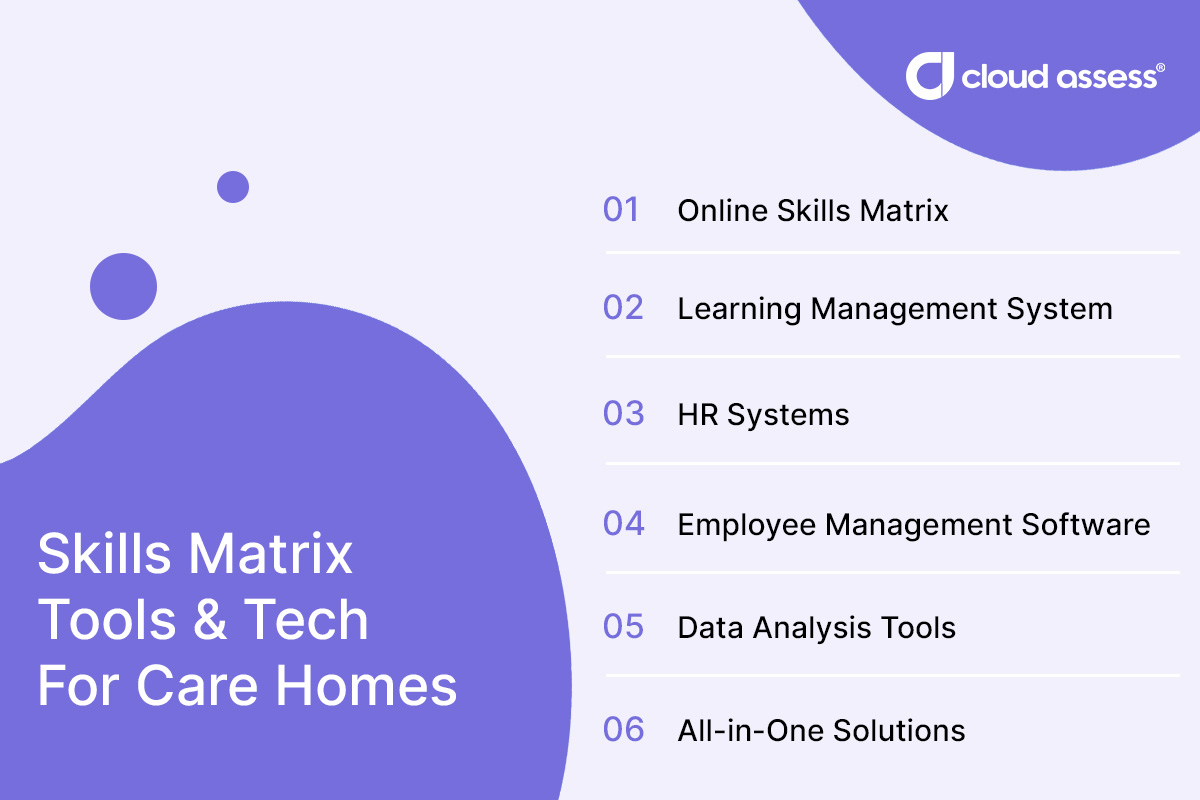
- Online Skills Matrix. An online skills matrix provides a centralised platform for care teams to track competencies, training completion, and role-specific skills across multiple locations. It allows for real-time visibility and helps managers quickly identify skill gaps.
- Learning Management System (LMS). An LMS supports eLearning delivery and provides training dashboards where care homes can assign, monitor, and record progress on statutory and mandatory training. This ensures compliance while streamlining professional development for all staff. Not all LMS include a skills matrix, so it’s important to consider solutions that offer this.
- HR Systems. Some HR systems can automatically track certifications and alert managers to upcoming training expiries. This helps care homes maintain compliance and reduce the risk of lapsed qualifications across their workforce.
- Employee Management Software. Employee management tools often include shift scheduling, performance monitoring, and skill tracking features, helping providers manage day-to-day operations while ensuring the right staff are assigned to the right roles.
- All-in-One Solutions. Flexible all-in-one solutions, like Cloud Assess, combine skills tracking, HR integration, training management, and compliance monitoring into a single system. These are ideal for care providers looking to streamline processes and centralise oversight across teams and locations.
Strengthen Your Care Team with a Skills Matrix
For care providers, ensuring staff are skilled, compliant, and confident in their roles is essential to delivering safe and high-quality care. A skills matrix gives you the visibility to manage training, track competencies, and plan effectively for the future. By investing in the right tools and maintaining an up-to-date matrix, you’ll strengthen your team, support compliance, and deliver better outcomes for the people you care for.
Download our free skills matrix template to get started or book a demo with Cloud Assess to see how it can help you strengthen your care team.