Change isn’t coming. It’s here, and it’s not going anywhere. Whether you’re running a business, delivering vocational education, or preparing learners for a rapidly shifting workforce, the pace of transformation is unyielding. Technology, regulations, consumer expectations, and work itself are all evolving fast.
In this climate, ongoing training isn’t a luxury. It’s a strategic necessity. It supports professional development, sharpens new skills, ensures compliance, and enables both organisations and individuals to stay ahead of change. For businesses, it drives agility and supports employee retention. For training providers and educators, it ensures relevance. For learners, it opens doors to career growth, mobility, and confidence in the face of disruption.
In this blog, we’ll cover:
- How industries are evolving
- Why training must keep pace
- The strategic role of ongoing training in adapting to change
- Real-world examples
- Practical strategies for delivering training that sticks
- How to overcome common barriers and build lasting capability
Evolving Industry Landscapes
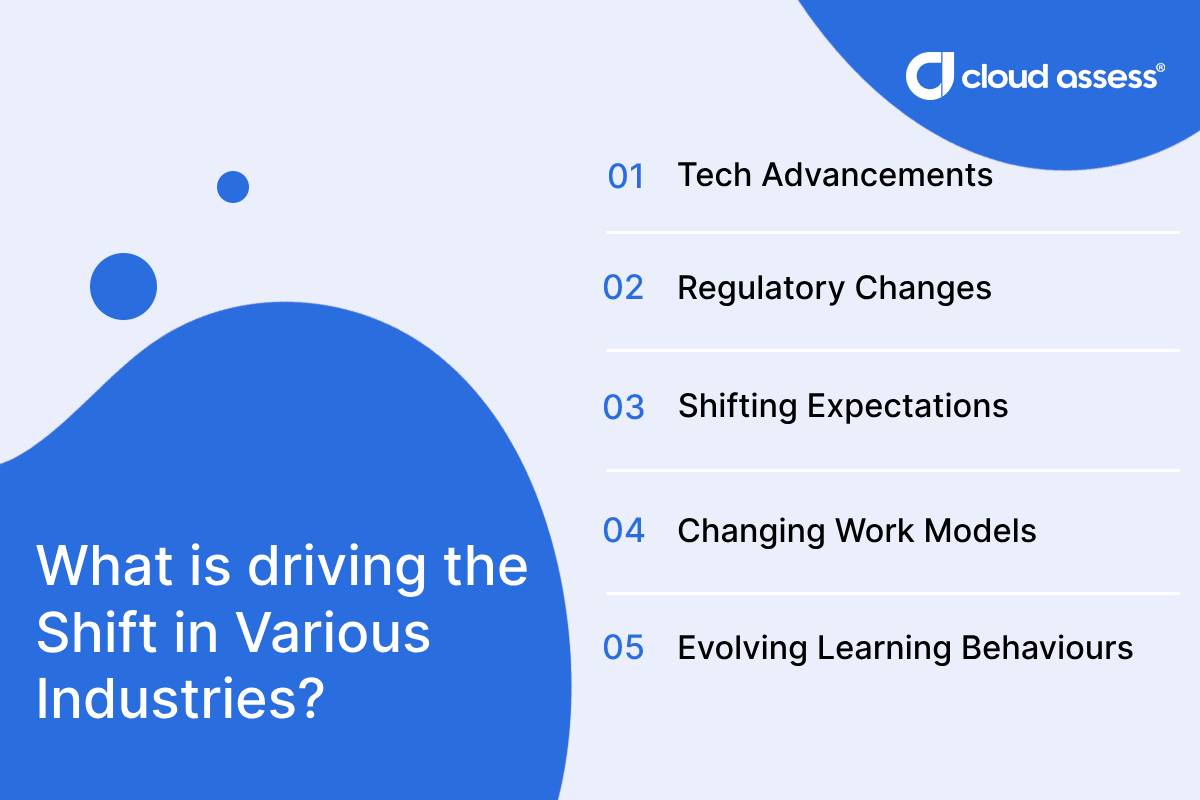
The world of work and learning is shifting fast. What’s driving this change? A mix of forces, including emerging industry trends that are reshaping how we operate, learn, and prepare for the future. From technology to compliance, these shifts are redefining the skills required to build a skilled and adaptable workforce.
Technological Advancements
AI, automation, and data are technological advancements that are continuously changing how we work and the new skills we need. According to the World Economic Forum’s Future of Jobs Report 2025, technology is the number one driver of skills change globally.
For vocational education, this means updating training programs to match the tools being used on the job. For workplaces, it’s about employee training and reskilling so they can work with technology, not around it. The problem? Many training systems aren’t keeping up. The World Bank flagged that most vocational training programs are underprepared for this shift.
Regulatory Changes
Regulations are getting more complex and adapting faster than ever. For training providers, especially registered training organisations (RTOs), compliance now extends far beyond audits and course validations. It’s about maintaining accurate records, proving learner competency, meeting data and privacy requirements, and aligning with constantly evolving standards in funding, assessment, and reporting.
The pressure is just as intense for workplace training. Regulatory demands around safety, Environmental, Social, and Governance (ESG) frameworks, and industry-specific licensing mean training content must be contextual, timely, and audit-ready.
The common thread? You can’t afford static learning initiatives. RTOs, enterprise L&D teams, or dual-purpose providers need agile tools and processes that make compliance part of the workflow, not an afterthought.
Shifting Expectations
People expect more from brands, employers, and educators. Learners want purpose, flexibility, and pathways that feel real. In Australia, nearly 95% of apprentices and trainees who completed their training in 2023 were employed afterwards, according to NCVER. The message is clear: vocational pathways are delivering strong outcomes and aligning with learner and employee development goals.
Whether you’re designing learning for students or staff, today’s training needs to do more than inform, it needs to empower. That’s the difference between participation and real career advancement.
Changing Work Models
Hybrid and remote work are here to stay, and that changes how we train. For employers, it means building systems that can reach onsite, hybrid and remote workers. For training providers, it means going digital without losing the hands-on, contextual edge that vocational education is known for.
The good news? People are already adapting. A 2024 survey showed that 70% of workers are already using automation tools daily as part of how they now do their jobs. This shift signals a new kind of work model, one that blends physical and digital tasks. The challenge now is giving people the platforms and support to grow alongside the tools they’re already using.
Evolving Learning Behaviours
Learners today aren’t waiting around. They want flexible, mobile, and immediately useful learning programs. Whether new to the workforce or decades in, the expectation is the same: don’t waste my time, give me what I need to improve.
And it’s not just soft or power skills. The WEF’s 2025 report mentioned above also shows that analytical thinking is now one of the most in-demand competencies, and organisations are building training programs around it. If your learning isn’t relevant, it’s forgotten.
The Role of Ongoing Training in Navigating Change
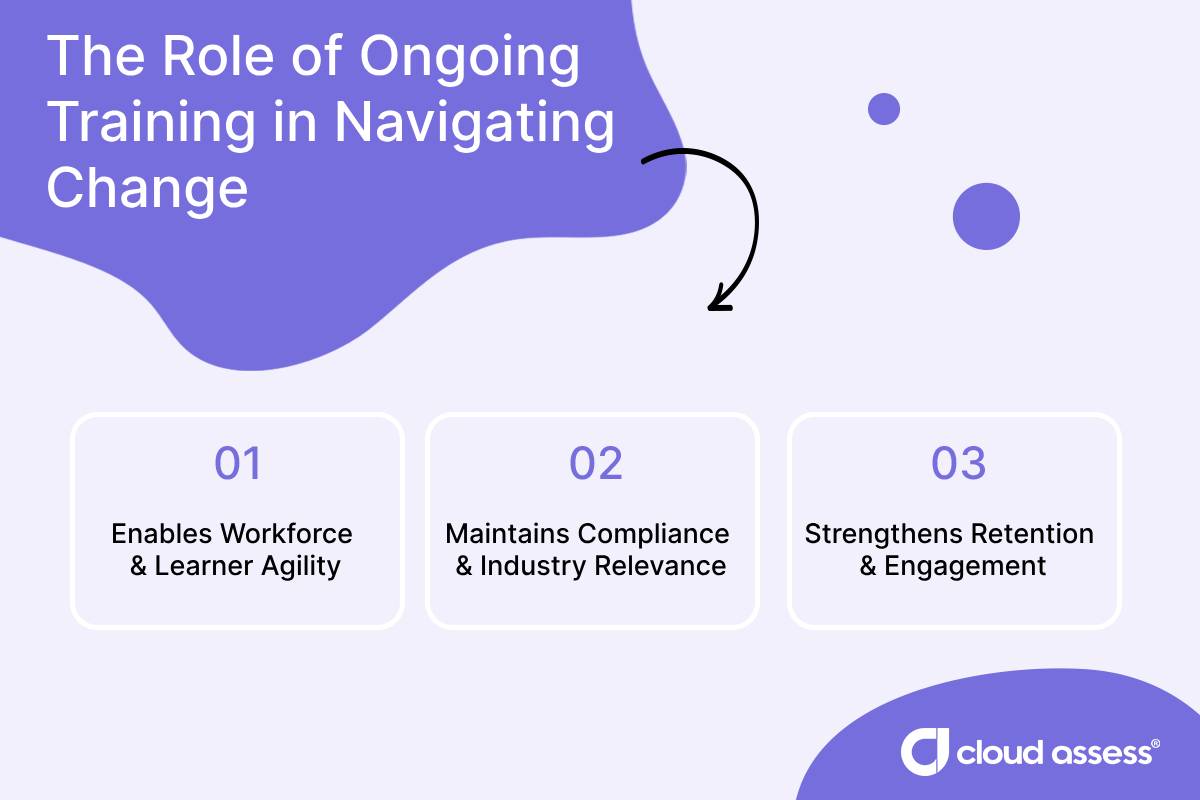
Enables Workforce and Learner Agility
Change isn’t theoretical, it shows up in new processes, shifting standards, and evolving roles. Ongoing learning helps people adjust without hesitation. Whether it’s a worker needing to master new tech, or a vocational learner stepping into a changing industry, training provides the bridge between what’s known and what’s next.
For RTOs and training providers, this means offering programs that reflect real-world shifts. For workplaces, it’s about giving teams the confidence to respond with capability, aligned to evolving business objectives.
That’s exactly what Pacific National, Australia’s largest private rail freight operator, did when responding to digital transformation in their industry. As rail operations became increasingly tech-driven, they moved from paper-based verification of competency assessments to a digital-first model using Cloud Assess. This shift aligned their training with industry practice, enabling a dispersed, high-risk workforce to complete assessments anytime, anywhere.It wasn’t just about replacing paperwork, it was about ensuring their people could operate in a digital environment with the same confidence they have on the tracks. That’s agility in action.
Maintains Compliance and Industry Relevance
Regulations don’t wait. When compliance requirements change, whether it’s safety protocols, industry licensing, or national training standards, ongoing training ensures your people are prepared before it becomes a problem.
We’re seeing this especially in high-stakes, highly regulated industries like transport security, where expectations are constantly evolving. ISS Australia faced exactly this challenge while delivering the Certificate II in Transport Security Protection to their airport screening staff. With regulations and ASQA standards continuing to tighten, they needed a solution that could scale, without sacrificing rigour.
By implementing Cloud Assess, ISS trained over 1,300 staff annually, with more than 1,000 completions per year. The platform helped them keep pace with compliance demands while supporting long-term employee development and operational reliability.This is what ongoing training looks like in action: responsive, trackable, and built for industries where non-compliance simply isn’t an option.
Strengthens Retention and Engagement
People don’t disengage because they don’t care, they disengage when training doesn’t connect. Ongoing and continuous training improves completion and retention by staying relevant, contextual, and accessible. When people see the point of training, and the path it opens, they’re far more likely to stick with it.
For vocational learners, this means pathways to real jobs. For employees, it means seeing career development as part of the deal. That kind of clarity and support is what drives job satisfaction and long-term employee engagement.
Strategies for Implementing Effective Ongoing Training
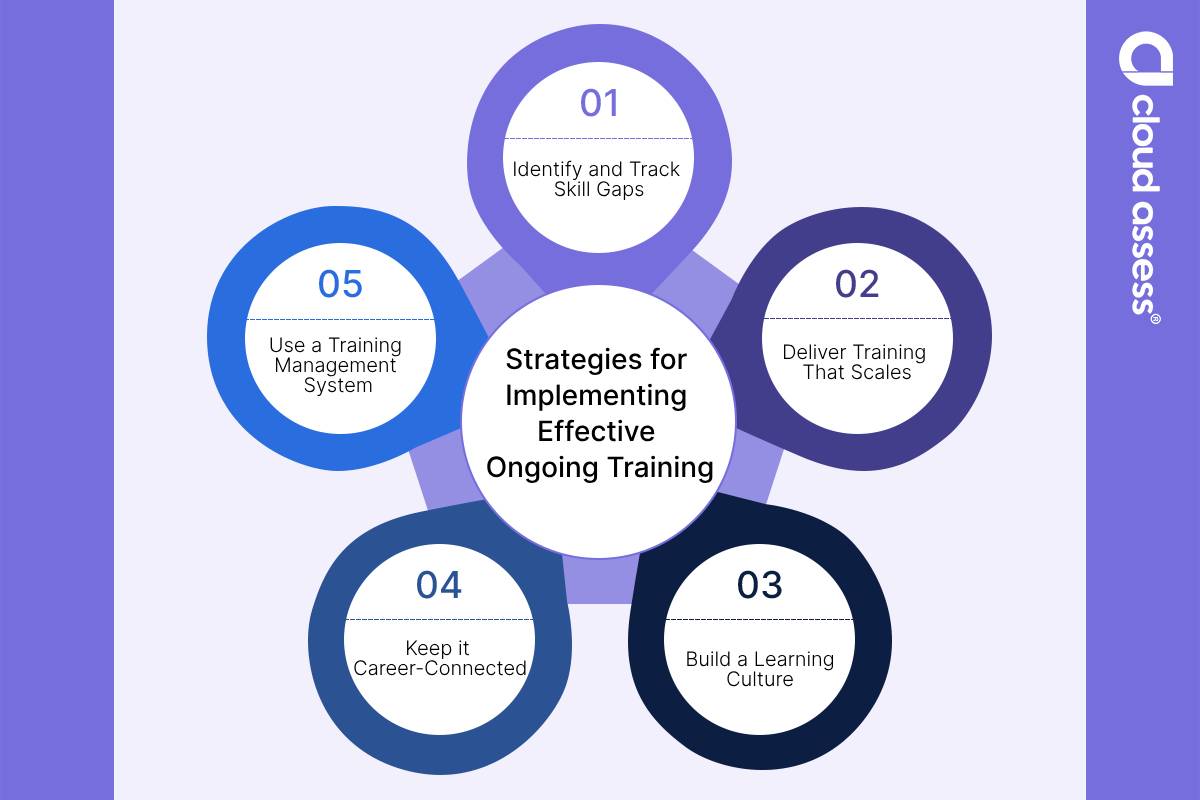
1. Continuously Identify and Track Skill Gaps
Everything starts with visibility. If you don’t know which skills your learners or teams have—or which ones they’re missing, you’re flying blind. Ongoing training works best when it’s built on a clear, evolving understanding of capability.
A skills matrix allows both RTOs and organisations to map required competencies across job roles, units, or qualifications. Cloud Assess’s skills matrix gives you real-time visibility into who’s competent, who’s progressing, and where to focus next. This makes it valuable for when you’re preparing apprentices for placement or ensuring frontline workers meet new safety standards.
It’s not just a management tool, it’s a foundation for agile training decisions, targeted skill development, and supporting meaningful career growth over time.

Overcoming Challenges in Ongoing Training
Limited Time, Budget, and Capacity
Training teams in both RTOs and workplaces are often stretched. Trainers juggle delivery, compliance, admin, and learner support, all while trying to keep training programs current. On top of that, budget pressures can limit innovation or expansion.
What helps: Efficiency and automation. Cloud Assess reduces manual admin through smart workflows and digitised records, helping you do more with less. Tools like training journeys, workflow automation, and forms streamline repetitive tasks such as enrolments, notifications, and assessment releases. With reusable templates and digital content, RTOs can spend more time improving outcomes, and businesses can scale training as they grow. And they can achieve this without scaling headcount or compromising on quality skill development.
Keeping Learners Engaged

Supporting a student working toward a qualification or an employee in a high-pressure role means navigating constantly shifting levels of engagement. Training that feels irrelevant, too long, or disconnected from the day-to-day quickly loses impact.
What helps: What keeps learner engagement high is training that’s contextual, mobile, and on-demand. With Cloud Assess, you can deliver learning where it’s needed, whether that’s an apprentice on-site or a mobile team in the field. The Learner App, designed for frontline and remote use, supports both online and offline access, so learners stay connected wherever they are. Features like in-app messaging, trainer feedback, and customisable learning paths via journeys help learners stay engaged and on track.
Tracking Progress and Demonstrating Outcomes
For vocational providers, RTO audits and funding depend on accurate records. For employers, proving training completion is tied to compliance, safety, and performance. Without centralised tracking, things slip through the cracks.
What helps: Real-time dashboards, automated reporting, and centralised learner data. Cloud Assess provides complete visibility with role-based dashboards, training matrices, and custom reports. For RTOs, it ensures AVETMISS compliance, transparent audit trails, and instant certificate generation. For businesses, it provides a central source of truth for skills tracking, safety credentials, and training progress, right down to the site or department level.
Ensuring Consistency Across Trainers and Sites
Training quality often depends on who’s delivering it and where. Variability in delivery can lead to confusion, missed competencies, or uneven outcomes across teams or campuses.
What helps: Standardised training and assessment tools. Cloud Assess supports consistent delivery with features like pre-built assessment templates, structured observation checklists, and revision control to ensure everyone’s using the latest version. Trainers can access shared content, and mapping tools ensure assessments align with required competencies. Whether you’re managing multiple campuses or a national workforce, Cloud Assess keeps delivery consistent and outcomes reliable.
Future-Proofing Your Organisation Starts Here
Change isn’t slowing down. And neither are the expectations of your people, your programs, or your performance. Whether you’re preparing learners for the workforce or keeping experienced teams compliant and capable, one thing is clear: ongoing training is no longer optional, it’s operational.
The organisations and providers that will thrive are the ones building training systems that are dynamic, scalable, and deeply connected to real-world demands. That means moving beyond static courses and outdated processes. It means training that evolves with your industry, not behind it.
Cloud Assess is purpose-built for this. With tools that support agile delivery, real-time skills tracking, and contextualised learning at scale, it’s not just a training platform, it’s a readiness platform. Future-proofing doesn’t start with strategy decks or big ideas. It starts with how you train today.