The UK manufacturing sector is facing a significant skills shortage, and it’s holding the industry back. Employers are struggling to hire people with the right skills. This is an experience felt across factories, workshops, and engineering firms. The shortages affect everything from production lines to digital systems and technical leadership.
In the UK, this skills mismatch is widespread. It’s especially clear in areas like automation, precision work, digital tools, and engineering. As a result, hiring is more expensive, innovation slows down, and pressure builds on existing teams.
With global competition rising and technology moving fast, closing this gap is now urgent. To stay competitive, UK manufacturing needs to invest in a skilled, future-ready workforce.
In this report, we cover:
- The current state of skills gaps in UK manufacturing
- Key sectors, roles, and regions most affected
- The business impact on growth, productivity, and competitiveness
- The critical skills in shortest supply
- Actionable strategies to assess and close skills gaps
- Digital tools and training methods that support workforce development
- How to access government support and funding
What are Manufacturing Skills Gaps?
A manufacturing skills gap is a disconnect between what employers need and what workers can do. It happens when job candidates, or even current employees, don’t have the right skills for the role. It can also result from skill stagnation, where employees’ abilities fail to keep pace with changing demands. It shows up when businesses can’t find people with the right training, experience, or technical ability to do specific jobs.
In manufacturing, this gap includes both hands-on and digital roles. It might mean a lack of experience in operating machinery. It can also involve gaps in knowledge around automation. In many cases, the missing skills relate to areas like coding, robotics, or quality control.
Gaps are especially pronounced when job requirements change faster than training can keep up.
In short, a skills gap means the right roles exist. But not enough qualified people to fill them.
Why Do Manufacturing Skill Gaps Matter to the UK Economy?
Manufacturing plays a vital role in the UK economy. In 2024, the industry contributed 16.74% to the country’s GDP, according to Statista. This contribution reflects the sector’s importance not just in output, but in jobs, exports, and long-term economic growth.
“Manufacturing is an integral part of the UK economy, through GDP contribution, job creation, and as a source of high wages. When you consider the sector’s extended reach through its supply chains and beyond, you can really start to see the scale of its contribution.” Dave Atkinson, UK Head of Manufacturing SME & Mid Corporates, Lloyds Bank.
When manufacturers can’t access the skills they need, performance across the sector begins to slow. That creates ripple effects across supply chains, investment, and productivity.
Skills gaps raise pressure on existing teams, which can lead to:
- Slower delivery of products and services
- Increased recruitment and training costs
- Lost revenue from missed contracts or delays
A strong manufacturing workforce is important to economic stability. Without the right skills in place, growth stalls, innovation suffers, and job creation slows. Closing the skills gap isn’t just a business need, it’s a national priority.
The Current State of Manufacturing Skills Gaps in the UK
The ongoing challenge UK manufacturers face with skills shortages doesn’t seem to have an end in sight. Since 2020, the sector has struggled to fill vacancies and secure the right talent to meet evolving demands. Statistics reveal concerning numbers.
- In 2024, approximately 42% of manufacturing job vacancies remain unfilled due to a lack of qualified workers.
- Half of manufacturers surveyed by Make UK say they cannot source the talent their business needs locally. Moreover, 62% reported they do not expect to find it easy to secure the skills necessary to power their businesses ahead to 2030.
Within these areas, certain specialist positions continue to prove difficult to fill. CNC machinists, robotics technicians, and quality control engineers are the most affected. Skilled production operatives also face the biggest shortages. Research found that 43% of manufacturers struggle to recruit for these skilled roles.
The Causes of Skills Gaps in UK Manufacturing
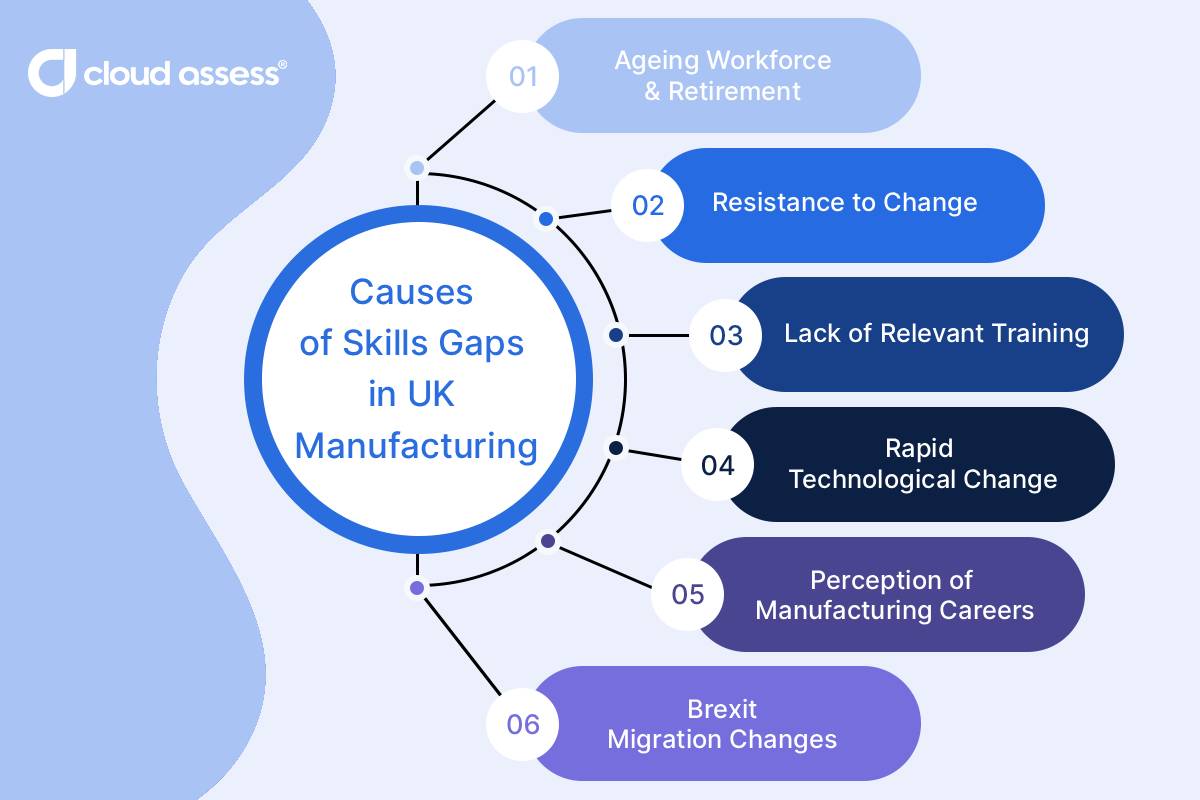
Ageing Workforce and Retirement
A large portion of skilled workers are approaching retirement age. This creates a big loss of experience and expertise. Manufacturers find it difficult to replace these workers quickly enough to maintain operations.
This trend intensifies pressure on external hiring as fewer young people enter manufacturing roles. The departure of older employees without sufficient new talent to fill their positions widens the skills gap. Many companies also lack structured succession planning. This means valuable knowledge is often lost rather than passed on. Without clear strategies for mentoring and knowledge transfer, valuable expertise is lost. Decades of skills and experience risk disappearing as staff retire.
Resistance to Change
Another cause of skills gaps in UK manufacturing is resistance to change among long-serving workers. Many experienced employees stick to the way they’ve always done things. This is the case even when companies introduce new technologies or methods. They often refuse to retrain or adopt unfamiliar systems.
This reluctance slows down the adoption of modern manufacturing practices. Companies roll out training, but employees don’t take it up. Outdated skills remain in use while industry demands move forward, leaving a widening gap.
Lack of Relevant Training
Many workers do not get the up-to-date technical education needed to keep up with modern manufacturing methods.
Training programmes often fall behind advances in technology and new processes. As a result, workers lack vital competencies in areas like automation, digital tools, and advanced machinery. This gap limits both productivity and innovation in the sector.
Rapid Technological Change
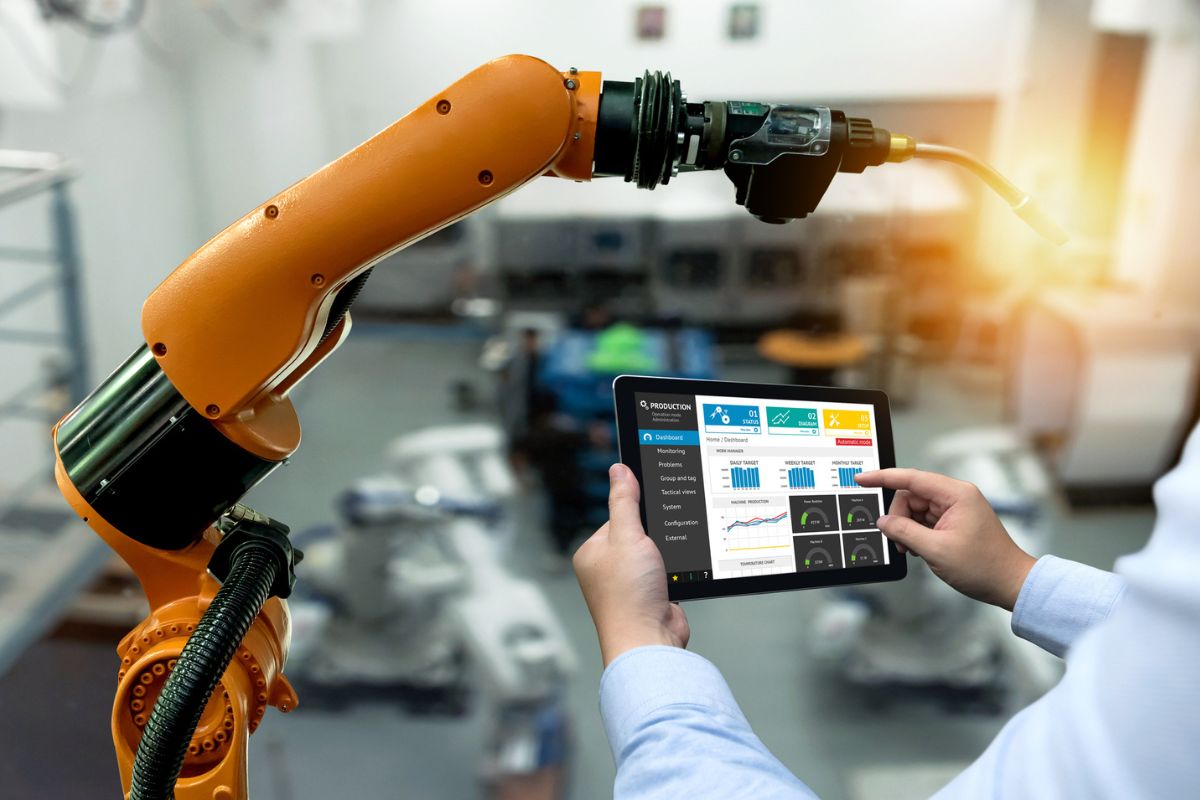
Rapid technological change is a major cause of manufacturing skills gaps in the UK. Automation, artificial intelligence, and robotics are changing how manufacturers produce products. But many workers lack the skills to operate and maintain this advanced equipment. In the Make UK report, 46% of manufacturers say they lack the technical skills required. They admit that this shortage hinders their ability to adopt automation technologies.
Technology is evolving quickly. Training and education often fail to keep pace with industry needs. This leaves workers unprepared to use new tools and systems effectively. Without skilled employees, companies fall behind competitors who adopt innovations faster.
Perception of Manufacturing Careers
The perception of manufacturing careers plays a significant role in skills gaps. Many young people still see manufacturing as outdated and low-skilled. The limited exposure in schools and a lack of visible role models reinforce this view. Manufacturing is also widely seen as a male-dominated industry. Research found that women make up only 26% of the UK manufacturing workforce, well below the 35% target set for 2035.
As a result, fewer students consider manufacturing a viable career path. Despite advances in technology and innovation, the sector struggles to attract new talent. It often lacks effective outreach and promotion. This means the variety of roles and career progression opportunities available aren’t well showcased. This negative image reduces the pipeline of new workers entering the field. As a result, skills shortages across the sector worsen.
Brexit and Migration Changes
Brexit has had a significant impact on skills gaps in UK manufacturing. Changes to immigration rules have reduced the availability of skilled workers from abroad. These are workers who have traditionally filled many manufacturing roles.
The reduction in migrant labour has added pressure on an already tight labour market. This shift has also affected the diversity and range of skills within the workforce.
Key Skills Lacking in UK Manufacturing

Digital and Technical Skills
Manufacturers need workers with advanced digital skills. They need to be able to operate automated machines, robotics, and data systems. Digital skills gaps make it hard for companies to use industry 4.0 technologies. These technologies are essential for improving productivity and quality. Workers need skills like automation programming to keep factories running well. They also need digital troubleshooting, data analysis skills and other similar skills for decision making. These skills are scarce because technology evolves faster than training can keep up. Education providers often lag behind industry needs. On the other hand, businesses don’t always invest enough in upskilling existing staff. This leaves workers underprepared for digital-first environments.
Engineering and STEM Skills
Engineers design, maintain, and improve manufacturing processes. Shortages in mechanical, electrical, and systems engineering affect product quality. They also limit the ability to innovate. Workers also need science, technology, engineering, and mathematics (STEM) skills. These hard skills help them solve problems and optimise processes. They also help companies compete in global markets. The short supply of STEM skills is because fewer graduates are entering the sector. They’re also affected by gender imbalances and by outdated views of manufacturing as an unattractive career path. These factors make it harder to find the skilled engineers the industry needs.
Soft Skills
Manufacturing depends on various soft skills to manage complex processes and new technology. These include teamwork and clear communication. Employees with good soft or power skills work well across teams, adapt to change, and solve problems quickly. These skills help reduce downtime and keep operations running smoothly. However, soft skills are often undervalued compared to technical abilities. Many training programmes and recruitment strategies prioritise technical expertise. This means power skills are sometimes overlooked until gaps begin to affect performance.
Leadership and Management Skills
Strong business leaders help companies adopt new technologies and develop their workforce. Managers who manage change and plan strategically keep teams focused on business goals. Without good leader skills and qualities, they can’t lead effectively. Many technical specialists move into management roles without sufficient preparation. As a result, they often lack the leadership skills needed to succeed. Without targeted leadership development, even highly skilled employees can struggle to guide teams. They may also find it difficult to manage change and set long-term strategy. This leads to slow decision-making and delays in important changes, holding back growth.
How to Address Manufacturing Skills Gaps in the UK
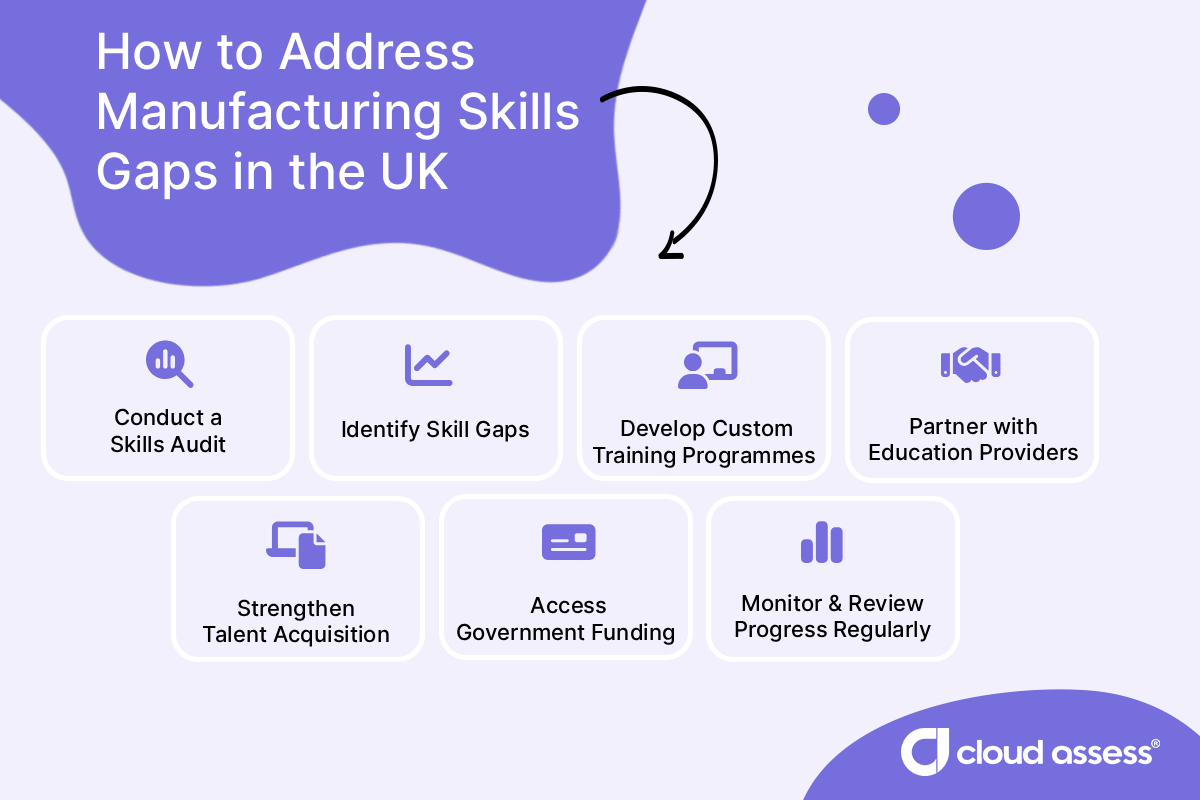
1. Conduct a Skills Audit
Start by conducting a skills audit. Collect detailed information on your manufacturing workforce’s skills. Use surveys, interviews, or digital assessment tools tailored to technical and operational tasks. This process enables clear skills visibility, allowing you to see the skills your production teams currently hold.
2. Identify Skill Gaps
Once you have completed the audit, organise the data using a manufacturing skills matrix. This visual tool shows which employees possess specific skills critical to your production roles. Comparing current skills with what each role demands helps you identify skill gaps. These gaps impact production efficiency, quality, and innovation.
3. Develop Targeted Training Programs
The next step is to design employee training programs that address the specific needs you’ve identified. Focus on upskilling and reskilling your current workforce to close these gaps effectively. Prioritise apprenticeships that build practical experience. Also, use accredited courses to teach critical future of work skills the manufacturing industry lacks.
Schedule training around production to minimise disruptions. Use a blend of hands-on training, online courses, and workshops to engage employees and reinforce learning. Foster a culture of continuous professional development. This helps employees stay up to date with evolving technologies and compliance requirements.
4. Partner with Education Providers
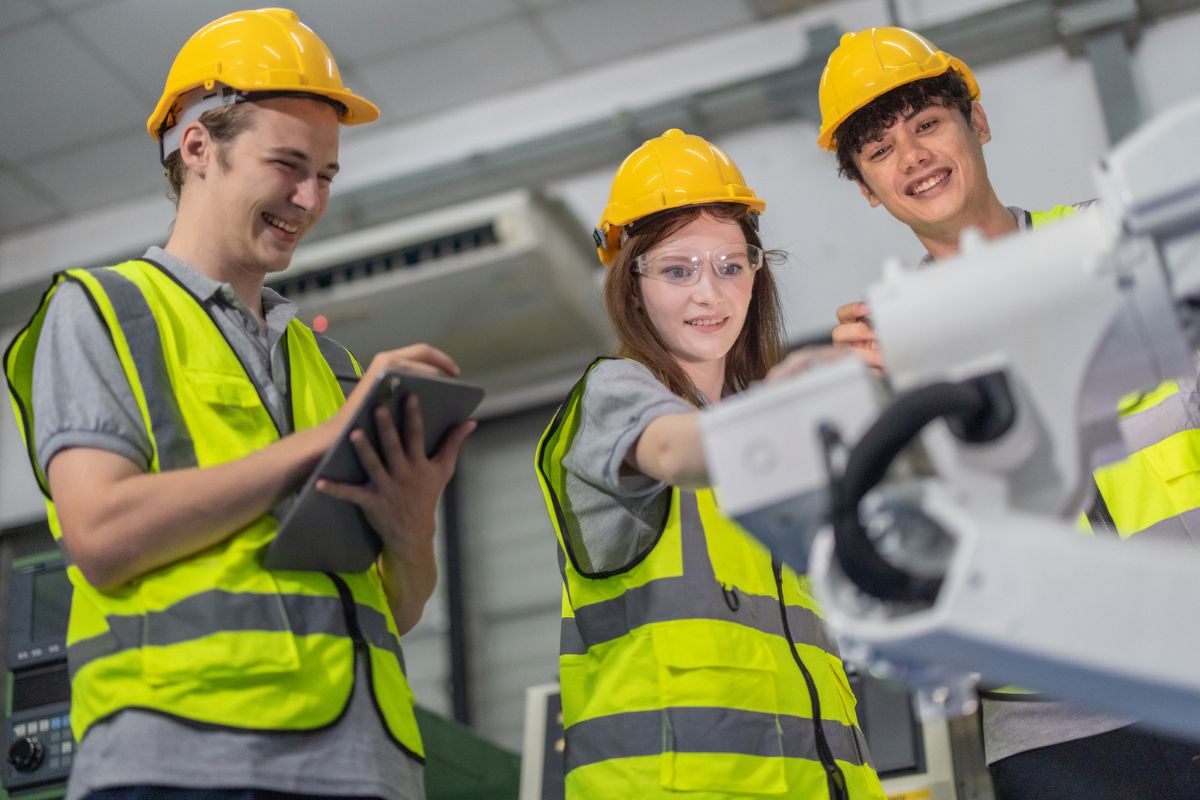
Strong collaboration with education providers is vital to bridge skills gaps in manufacturing. Work closely with local colleges and technical schools. Also, connect with universities that offer engineering and manufacturing courses. Work with them early to help design courses that include the latest industry technologies and practices.
Offer work placements, internships, or apprenticeships. This provides students with real-world manufacturing experience. This exposure helps them build relevant workplace skills. It can also improve recruitment pipelines.
Maintain regular communication with education partners. This ensures training stays aligned with evolving production needs. It also allows you to influence the skills taught. This helps build a future-ready workforce tailored to your specific challenges.
5. Strengthen Talent Acquisition
Attracting skilled workers is critical to closing manufacturing skills gaps. Use recruitment technology and digital job boards that specialise in manufacturing roles. This helps in reaching a wider, targeted audience.
Promote manufacturing careers actively through outreach programmes, factory open days, and STEM events. Showcase the advanced technologies and career progression opportunities within your business. This enables you to challenge outdated perceptions.
Improve your employer branding. Do this by highlighting your commitment to innovation, training, and employee development. This helps appeal to younger, tech-savvy candidates and builds a robust talent pipeline for the future.
6. Access Government Support and Funding
Tap into various UK government initiatives to help address skills gaps. The Apprenticeship Levy provides funding for apprenticeship programmes. This allows businesses to train new and existing employees cost-effectively.
Grants and funding schemes are also available at regional and national levels. These initiatives support workforce development and technology adoption. Local enterprise partnerships often run sector-specific programmes. These offer financial and advisory support tailored to manufacturing needs.
Engaging with government resources can reduce training costs. It can also improve your ability to build a skilled, future-ready workforce.
7. Monitor and Review Progress Regularly
Set clear key performance indicators (KPIs) related to manufacturing skills development. These might include measures like reduced machine downtime, or increased apprenticeship completions. You may also look at faster adoption of automation technologies.
Regularly collect training feedback from employees and training partners. This information will help you assess the effectiveness of your skills programmes. Use surveys, focus groups, or performance reviews to gather insights.
Based on this feedback and evolving industry trends, make adjustments. Update your training, external and internal recruitment, and partnership strategies. This review ensures your workforce can meet current and future manufacturing challenges.
The Role of Digital Learning Tools in Closing Manufacturing Skills Gaps

Manufacturing companies can leverage digital learning tools to accelerate skills development.
- Consider LMS Solutions for Skills Mapping and Development. Use manufacturing Learning Management Systems (LMS) to map skills across your workforce. You can also use them to centralise training content and monitor progress.
- Use eLearning Modules to Deliver Consistent Technical Training. Provide flexible, standardised courses. These can be on topics such as machinery operation, safety, and digital technologies that employees can complete at their own pace.
- Leverage Virtual Learning Environments and Webinars for Remote Upskilling. Enable real-time remote training accessible to staff across different locations.
- Apply Gamification and Microlearning to Engage Manufacturing Learners. Break down training into short, interactive sessions to boost engagement and knowledge retention.
- Integrate Digital Badges and Credentials to Recognise Progress. Use digital badges to motivate ongoing learning and formally acknowledge new skills.
How Cloud Assess Can Help You Address Skills Gaps in Your Manufacturing Organisation

Over the years, Cloud Assess has helped manufacturing companies achieve their goals. This includes closing critical skills gaps and ensuring workforce compliance. It has also helped many UK organisations improve operational safety. Its mobile-friendly platform, designed specifically for frontline workers, makes these successes possible.
With Cloud Asses, you can effectively :
- Map job roles to required skills and certifications. This will ensure every employee meets industry standards.
- Use real-world assessments. These include on-site observations, logbooks, and practical demonstrations to verify hands-on capabilities.
- Automate targeted upskilling. This is possible with customised learning paths tailored to manufacturing tasks and safety requirements.
- Get your teams access to mobile and offline learning. This allows you to train and assess directly on the factory floor or in remote locations.
- Track compliance. You can ensure this with certifications, licenses, and safety training in real time to reduce risks and audit pressures.