Finding the right learning management system (LMS) is rarely straightforward. Every organisation has different training goals, team structures, and technical requirements. What works well for one business can feel restrictive or overcomplicated for another.
The LMS market has grown significantly in recent years, with platforms ranging from lightweight tools built for small teams to enterprise-grade systems covering the full employee lifecycle. That variety is useful, but it also makes the selection process harder. Knowing which platform fits your organisation’s needs requires looking beyond feature lists and understanding how each tool actually works in practice.
This guide covers ten ELMO LMS alternatives worth considering. Each platform takes a different approach to learning management, and each addresses a different set of organisational needs.
Uncover Your Skill Gaps Right Now!
Our AI tool is quick and free to use.
What is ELMO LMS?
ELMO LMS is a cloud-based learning management system built for organisations across Australia, New Zealand, and the UK. It sits within ELMO’s broader HRIS suite, which also covers payroll, recruitment, onboarding, and performance management. The LMS allows HR and L&D teams to create, deliver, and track training programs from a single platform. Administrators can build courses using the platform’s built-in course builder. It also allows them to assign training automatically based on role, department, or location. Organisations get access to a library of over 400 ready-made courses covering compliance, soft skills, and continuous professional development (CPD).
ELMO LMS suits mid-sized organisations that want learning connected to their wider HR processes. It supports blended learning, instructor-led training, certification tracking, and compliance reporting. Its mobile app also gives employees on-demand access to learning content. Its ANZ-specific course library makes it a practical choice for organisations with local compliance requirements.
However, while ELMO LMS is a capable platform, some organisations find it limiting:
- A suite-first experience. The LMS is one module within a broader HRIS platform. Organisations using it as a standalone product may find the experience less cohesive, as some features are designed to work alongside other ELMO modules.
- Module inconsistency. Integrations between ELMO’s own modules can feel disjointed. Users report that changes in one module do not always reflect accurately in others.
- An outdated course builder. Some users find the course builder restrictive. A number resort to building content in third-party tools before uploading it to ELMO.
- Reporting requires manual effort. Producing clean, usable reports often means downloading CSV files and reformatting data outside the platform.
- Limited customisation. Modifying forms, layouts, and branding can be time-consuming. Users report that adapting the platform to specific workflows or organisational structures requires significant manual effort.
- Rigid workflows. The platform can feel restrictive for organisations with complex or non-standard learning requirements.
Best ELMO LMS Alternatives

Cloud Assess is a cloud-based LMS built for organisations that need to manage workforce skills, compliance, and competency. The platform supports gamified learning, digital badging, and personalised onboarding. These tools help keep employees motivated and engaged throughout their training journey. They also get access to training through a dedicated learner app, with offline learning and assessment capabilities. This makes it a practical learning platform for deskless and frontline workers.
Unlike ELMO LMS, Cloud Assess is built for L&D and training teams rather than HR administrators. Its core strength is combining learning with structured assessment tools, skills tracking, and automated workflows. This allows L&D teams to move away from manual processes and paper-based records.
Cloud Assess is particularly well-suited to organisations in high-compliance industries. These include construction, healthcare, mining, and logistics, where structured assessment and verifiable competency records are critical.
Key Features
- Course builder
- AI assessment generator
- AI marking assistant
- Assessment builder
- Evidence portfolios
- Observation checklists
- Learning pathways
- Blended learning delivery
- SCORM support
- Offline mobile learning
- Learner app
- Competency tracking
- Certification management
- Automated workflows
- Compliance reporting
- Skills matrix
- HRIS integrations
Pros
- Gamification and social learning features boost learner engagement
- Mobile learning with offline access enables training access in any environment, ensuring field-based and deskless workers stay connected to learning
- Automated workflows free up L&D teams from repetitive admin
- Skills matrix helping managers identify and address competency gaps quickly
ELMO LMS vs Cloud Assess
Cloud Assess offers:
- A standalone LMS with no dependency on wider HR modules
- Seamless data sharing keeps information consistent across tech stacks
- A modern AI-powered course builder that supports interactive and engaging learning experiences
- Real-time reporting dashboards with no need to export or reformat data
- Flexible branding and layout options for specific organisational needs
- Configurable workflows that support complex training structures
Pricing
Cloud Assess offers an all-inclusive solution for employee training in high-risk, high-compliance industries. Every feature is included from day one, including mobile offline assessment, verification of competency, skills matrix and automated compliance tracking. There are no upgrade paths or feature gates. Visit our pricing page for an accurate quote.
Rating
4.7/5 (average rating from Capterra, G2, GetApp, Software Advice)
#2 Trakstar Learn
Average User Score: 4.3/5

Trakstar Learn is a cloud-based LMS built for HR leaders and training teams. Following its acquisition by Mitratech in 2023, it continues to operate as a dedicated learning management system. It helps organisations build, deliver, and track training programs. It offers social learning and gamification tools to keep employees engaged.
While ELMO LMS connects learning to payroll and recruitment workflows, Trakstar Learn connects learning directly to performance management and upskilling programs. This gives managers a clearer view of how training contributes to employee development and growth.
However, Trakstar Learn is best suited to organisations with straightforward training needs. Teams requiring advanced reporting capabilities may find the platform limiting.
Key Features
- Course builder
- Content and delivery tools
- Learning paths
- Auto enrolment
- Onboarding programs
- Upskilling courses
- Quizzes and assessments
- Gamification and leaderboards
- Social learning
- Reporting and compliance
Pros
- Auto enrolment removing manual assignment for role-based and compliance training
- Onboarding programs guiding new hires through structured training from day one
- Social learning tools enabling employees to collaborate and share knowledge across teams
- Upskilling courses help employees develop new skills at their own pace
Cons
- Limited course customisation makes it harder to align with branding guidelines
- Reporting lacks depth for organisations needing granular learner analytics
- Mobile experience less capable than the desktop version
ELMO LMS vs Trakstar Learn
As an ELMO LMS alternative, Trakstar Learn offers:
- A standalone LMS built entirely around learning and workforce development
- A unified system with no module inconsistency
- A course builder that supports engaging learner content
- Auto enrolment and onboarding workflows that flex by role, department, and tenure
Pricing
Mitratech doesn’t make Trakstar Learn pricing details available. Contact their team to get an accurate quote.
Rating
4.3/5 (average rating from Capterra, GetApp, and Software Advice)
#3 Bridge LMS
Average User Score: 4.3/5

Bridge LMS is a corporate LMS and employee development platform built for mid-market HR and L&D teams. It provides automated learning journeys to schedule and deliver training in stages. This reduces admin burden. The platform also comes with a built-in skills library of over 30,000 job titles. This helps organisations identify skills gaps and connect employees to relevant learning.
Both Bridge LMS and ELMO LMS give managers clear visibility of team progress. But Bridge LMS extends this into skills tracking, career mobility planning, and performance conversations.
However, Bridge LMS’s native course authoring tools are limited. Teams with complex or media-rich content needs will likely rely on external authoring tools.
Key Features
- Course builder
- SCORM support
- Learning journeys
- Skills library
- Skills communities
- Career development plans
- Performance management
- Peer feedback
- Manager dashboards
- Mobile learning app
Pros
- Skills library connects employees to relevant courses based on role and career goals
- Career development plans give employees a clear path for growth, supporting internal recruiting
- Peer feedback tools support continuous learning outside formal reviews
- Performance management integration keeps learning and goal tracking in one place
Cons
- Only basic authoring features with limited support for media-rich content
- No native certification feature noted by some users
- Navigation within course modules can feel less intuitive
ELMO LMS vs Bridge LMS
Bridge LMS offers:
- A dedicated LMS experience built entirely around learning and employee development
- Consistent functionality across learning, skills, and performance in one platform
- Automated reporting dashboards giving managers clear visibility of team progress
- Flexible branding options that align the platform to organisational standards
- Customisable learning journeys that adapt to staged or complex training programs
Pricing
Bridge LMS offers three pricing plans: Learn for a standalone LMS, and Talent Suite for a combination of LMS and Skills modules, and Full Suite that includes a performance module.
Rating
4.3/5 (average rating from G2, Capterra, GetApp, and Software Advice)
#4 SkyPrep
Average User Score: 4.7/5

SkyPrep is designed for mid to large organisations that need a straightforward, scalable platform for employee training. Its clean interface makes it easy for admins and learners to get started quickly. It comes with multi-portal management that lets organisations run separate branded platforms for different teams or branches from one account. Its focus on remote and frontline learning also makes it a popular transport LMS.
Unlike ELMO LMS, SkyPrep is designed to be used without technical expertise or IT involvement. Non-technical HR and L&D teams can build, deploy, and manage training programs independently from day one.
However, SkyPrep’s native authoring tools are basic. Organisations that need to build complex or highly interactive course content will likely need external authoring tools.
Key Features
- Course builder
- AI content authoring
- SCORM support
- Gamification
- Learning paths
- Course auto-enrolment
- Automated alerts and reminders
- Multi-portal management
- Reporting and analytics
- Course content library
Pros
- Gamification features keep employees engaged throughout training
- Course content library provides ready-made training content for faster deployment
- Auto enrolment streamlines administrative processes
Cons
- Support not available outside business hours
- Exporting certificates and training records can be time-consuming
- Native authoring tools less advanced than dedicated content creation platforms
ELMO LMS vs SkyPrep
SkyPrep offers:
- A dedicated LMS built around training delivery
- Consistent data across the platform
- Real-time reporting dashboards with customisable and pre-built report options
- Flexible branding across portals, including logos, colours, and certificates
- Multi-portal workflows supporting complex organisational structures and branching
Pricing
SkyPrep offers Lite, Premium, and Enterprise Learning Suite. All pricing details are available on request.
Rating
4.7/5 (average rating from G2, Capterra, GetApp, and Software Advice)
#5 Trainual
Average User Score: 4.7/5

Trainual is a training and knowledge management platform. It’s designed for small to mid-sized businesses that need to document processes, onboard employees, and keep teams aligned as they grow. It combines SOP documentation, role-based learning paths, and AI-powered content creation in one searchable system. Employees can access training content directly through a Chrome extension while completing tasks, reducing the need to switch between tools.
While ELMO prioritises structured training programs and compliance workflows, Trainual focuses on capturing and sharing how work actually gets done across an organisation.
However, Trainual is best suited to smaller, growing teams. Larger organisations with complex certification requirements may find its learning management depth insufficient.
Key Features
- AI content authoring
- Standard Operating Procedure (SOP) documentation
- Role-based learning paths
- Course and quiz builder
- SCORM support
- Gamification and leaderboards
- Automated role-based enrolment
- HRIS integrations
- Progress tracking
- AI search and knowledge retrieval
Pros
- Document management connects processes and training
- AI-powered knowledge search gives employees instant answers from published content
- Gamification and leaderboards drive engagement and accountability across teams
- Chrome extension provides access to training notes while completing tasks
- Template library of 500+ pre-built SOPs speeds up content creation
Cons
- Mobile experience less polished than the desktop version
- Content formatting options feel restrictive for complex layouts
- Less suited to organisations needing advanced certification management
ELMO LMS vs Trainual
Trainual offers:
- A standalone training and knowledge management platform
- Consolidated data across feature set
- A modern AI-powered builder requiring no need for third-party content tools
- Real-time progress tracking with clear completion and quiz visibility
- Flexible role-based content organisation adapting to team structures
Pricing
Trainual offers four pricing plans: Core, Pro, Premium, and Enterprise. Contact their team for a personalised quote.
Rating
4.7/5 (average rating from G2, Capterra, GetApp, and Software Advice)
Not looking for Trainual?
Explore our full list of Trainual alternatives for more platforms worth considering.
#6 Acorn
Average User Score: 4.6/5

Acorn is an AI-powered performance LMS. It’s built for enterprises that need to align training to business goals. It maps training to role-based capability frameworks, giving employees a clear view of what they need to develop in their role. This development is supported through AI-driven assessments and personalised learning pathways. The platform’s automated workflows also reduce admin for L&D teams.
Like ELMO LMS, Acorn supports compliance tracking and training certification management. But Acorn prioritises connecting compliance to capability development and ongoing performance conversations.
However, Acorn’s initial setup and content migration can be time-consuming. Organisations should factor in significant admin hours before the platform is ready to deploy.
Key Features
- AI capability framework builder
- Capability assessments
- Role-based learning pathways
- Performance-linked learning
- Course builder
- SCORM support
- Gamification
- Microsoft Teams integration
- Compliance tracking
- Reporting and analytics
Pros
- Capability framework builder connecting learning directly to role performance
- AI-powered pathways guiding employees through role-specific development
- Multi-tenancy support for separate branded environments across teams
Cons
- Steep learning curve with complex setup and migration can slow adoption
- Smaller built-in content library than some competitors
- Limited mobile experience with no offline access
ELMO LMS vs Acorn
Acorn offers:
- A platform built around learning and performance
- No reliance on additional modules for effective training
- A modern AI-powered course builder with capability-linked content
- Extensive reporting connecting learning activity to performance outcomes
- Flexible branding and customisable learning environments across multiple learning audiences
- Configurable workflows support complex, role-based training structures
Pricing
Acorn doesn’t make pricing information available on their website. Book a demo to get a custom quote.
Rating
4.6/5 (average rating from G2, Capterra, GetApp, and Software Advice)
#7 Sentrient
Average User Score: 4.7/5

Sentrient is a compliance management platform. It combines training, HR, governance, risk, and compliance tools. The platform comes with built-in, pre-loaded, and legally endorsed compliance courses. These cover topics such work health and safety, privacy, bullying, and equal employment opportunity. This helps organisations meet their legal obligations without building content from scratch.
Unlike ELMO LMS, Sentrient is built specifically for the Australian and New Zealand regulatory environment. Its compliance courses are regularly updated to reflect current state and territory legislation.
However, organisations looking for a dedicated learning platform may find Sentrient’s LMS features more limited than specialist providers.
Key Features
- Compliance courses
- Policy builder
- Blended learning delivery
- Online assessments
- Knowledge management
- Automated training assignment
- Compliance reporting
- Audit-ready reports
- Event and CPD management
- Pulse surveys
Pros
- Compliance courses aligned with Australian workplace law
- Policy builder enables organisations to create and publish custom workplace policies
- Knowledge management tools create a central hub for organisational learning resources
- Event and CPD management support both online and in-person training delivery
Cons
- Some platform features not yet fully functional
- Less suited to organisations that need advanced content authoring tools
- Reporting options less suitable for complex data requirements
ELMO LMS vs Sentrient
Sentrient offers:
- A compliance and learning platform that functions independently of broader HR modules
- Pre-built audit-ready report templates removing manual reporting effort
- Customisable branding and content organisation for different teams and groups
- Automated compliance workflows with policy sign-off tracking
Pricing
Sentrient doesn’t make pricing information available on their website. Contact their team to get accurate pricing details.
Rating
4.7/5 (average rating from Capterra, GetApp, and Software Advice)
#8 etrainu
Average User Score: No reviews available

etrainu is an Australian LMS built for organisations across hospitality, healthcare, aged care, disability services, and sports. It combines a sector-specific course library with AI authoring tools. This allows training teams to build structured content quickly without technical expertise. The platform’s qualification management and microcredentials give employees a clear view of their learning progress and a verifiable record of their certifications.
Like ELMO LMS, etrainu includes a built-in course library alongside its core training tools. While ELMO’s library covers broad HR and workplace topics, etrainu’s courses are tailored to specific industries and regulatory requirements.
However, organisations outside highly regulated industries may find etrainu’s course library and feature set less relevant to their needs.
Key Features
- AI course authoring
- SCORM support
- Sector-specific compliance training courses
- Learning pathways
- Qualification management
- Digital credentials and skills passport
- Blended learning delivery
- Automated course assignment
- Compliance reporting
- Custom branding
Pros
- Courses designed specifically for aged care, disability, and sports sectors
- Digital credentials encourage continuous development and learner engagement
- Qualification management tracks learning pathways and certification renewals
- Blended delivery combining online and face-to-face assessment via mobile app
Cons
- Less suitable for general employee training and upskilling
- Interface feels dated compared to more modern platforms
- Support limited to business hours on weekdays
- No confirmed public API for custom integrations
ELMO LMS vs etrainu
etrainu offers:
- A standalone LMS built around compliance training and management
- No reliance on additional modules or platforms
- A modern AI course authoring tool turning documents into structured courses
- Customisable reporting with automated progress tracking
- Fully customisable branding for different teams and audiences
- Flexible workflows supporting blended and compliance-focused learning
Pricing
etrainu offers three pricing plans: Learn, Activate, and Perform. The pricing details are available on request.
Rating
No ratings available
#9 Compono Develop
Average User Score: 4.8/5

Compono Develop is an Australian-built talent platform designed for mid-market organisations. Its capability-linked pathways connect course delivery directly to role requirements and performance outcomes. This helps managers move beyond completion rates to measurable skill development. The platform’s learning data connects to Compono’s recruitment, engagement, and competency assurance tools. This gives HR teams a joined-up view of workforce capability.
Unlike ELMO LMS, Compono Develop centres its learning design around behavioural science and work personality. It matches training to how each individual processes information, rather than their role or department.
However, Compono Develop’s integrations are largely built around the Compono suite. Organisations that rely on external HR platforms may find connectivity more limited than they need.
Key Features
- Course builder
- SCORM support
- Off-the-shelf course library
- Capability-linked learning pathways
- Personality-based learning personalisation
- Compliance tracking
- Competency assurance
- Skills gap identification
- Reporting and analytics
- Recruitment and engagement integrations
Pros
- Personality-based learning matching training delivery to individual learning styles
- Skills gap identification supports targeted development and strategic workforce planning
- Competency assurance provides verifiable proof of workforce ability
- Responsive local support trusted by ANZ mid-market organisations
Cons
- Limited third-party integrations outside the Compono suite
- Best suited to ANZ mid-market organisations rather than global or enterprise teams
- LMS is one module within a broader talent platform
ELMO LMS vs Compono Develop
Compono offers:
- A modern course builder with capability-linked content and off-the-shelf courses
- Connected analytics linking learning outcomes to performance and engagement data
- Customisable workflows connecting learning to recruitment, performance, and competency data
Pricing
Compono’s Develop LMS pricing details are only available on request. Book a demo with their team to get a custom pricing plan.
Rating
4.8/5 (average rating from Capterra, GetApp, and Software Advice)
#10 PageUp
Average User Score: 4.7/5
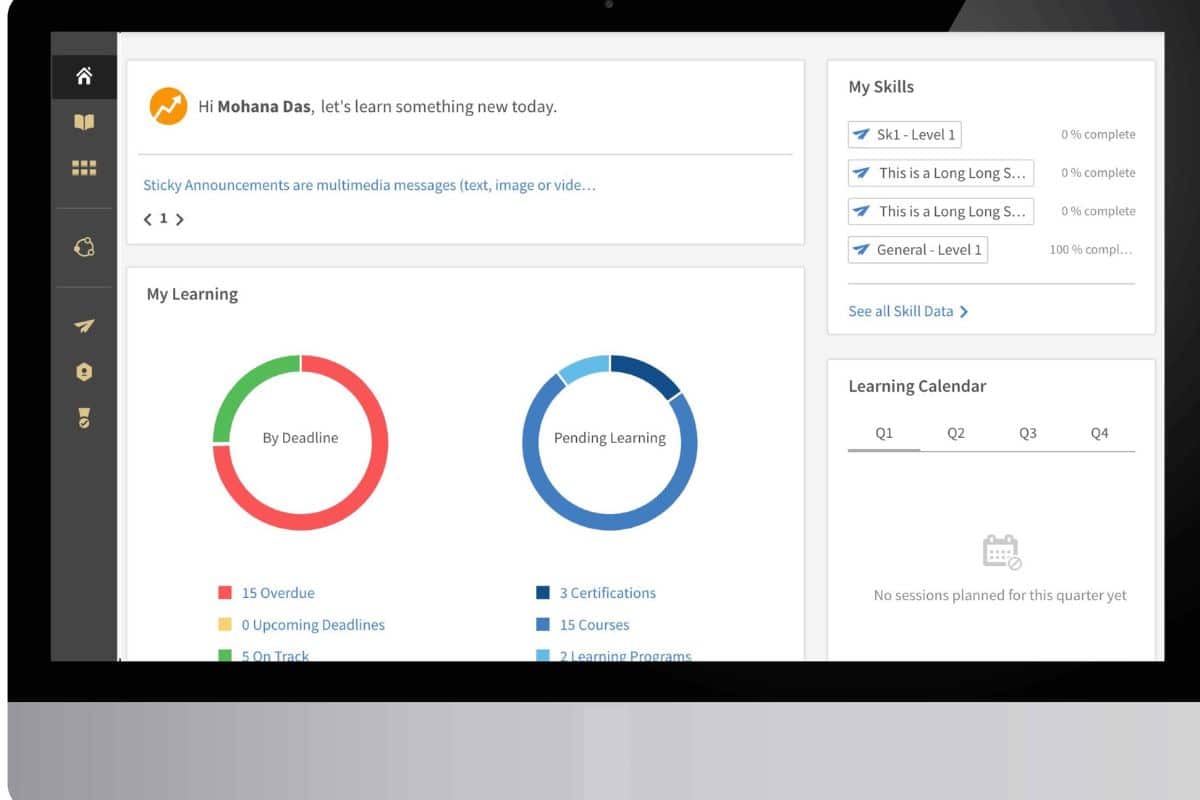
PageUp is an Australian-built talent management platform designed for medium to large enterprises. Its LMS sits alongside recruitment, employee onboarding, performance management, and succession planning tools. This gives HR teams a single platform to manage the full employee lifecycle. Role-based learning assignment and performance-linked development plans connect training to broader workforce goals.
Like ELMO LMS, PageUp is an Australian-developed platform built for larger organisations. But, unlike ELMO, the platform places stronger emphasis on talent acquisition and long-term development.
However, PageUp’s LMS is better suited to organisations that already use the broader PageUp platform. Teams looking for a standalone, feature-rich learning solution may find its capabilities limited.
Key Features
- Role-based learning assignment
- Blended learning delivery
- SCORM, AICC, and xAPI support
- Third-party content library access
- Compliance tracking
- Competency recording
- Learning pathways
- Performance-linked learning
- Onboarding integration
- Reporting and analytics
Pros
- Performance-linked learning ties development to organisational goals and feedback conversations
- Employee onboarding integration moves new hires seamlessly into structured training
- Third-party content access through GO1 and Skillsoft expands the course library
- External hiring and talent management tools sit alongside the LMS in one platform
Cons
- LMS module less developed than dedicated learning platforms
- Implementation can be lengthy for enterprise setups
- Navigation can feel complex with a steep learning curve for new administrators
ELMO LMS vs PageUp
PageUp offers:
- Built-in analytics dashboards with flexible reporting options
- Flexible branding options support unique experiences for candidates, employees, and other audiences
- Configurable workflows and onboarding portals adapting to organisational structures
Pricing
PageUp doesn’t make pricing details available on their website. Contact their team for a custom quote.
Rating
4.7/5 (average rating from G2, Capterra, GetApp, and Software Advice)
Looking for More Alternatives?
We’ve done the hard work for you. Explore these curated lists of popular platforms and alternative solutions.