Scaling a Registered Training Organisation (RTO) involves far more than simply meeting compliance obligations. If your RTO is ready to grow, it takes more than just increasing enrolments. It means aligning your operations, systems, people, and compliance processes to support sustainable expansion.
When done well, scaling allows you to reach more learners, improve training outcomes, and create a bigger impact in the communities and industries you serve. It also helps build a more resilient, future-ready organisation that can respond to change and stay competitive.
In this blog, we’ll explore:
- Steps to take to scale sustainably and successfully
- Critical tools needed when scaling an RTO
- Best practices to follow when scaling an RTO
How to Successfully Scale Your RTO

1. Define a Scalable Growth Strategy
Scaling starts with clarity. Without a clear strategy, growth can quickly become chaotic and unsustainable. A well-defined growth plan ensures your Registered Training Organisation expands in alignment with industry needs, organisational capacity, and compliance obligations.
Identify High-Performing Courses and Niches
Start by reviewing enrolment trends, completion rates, and training feedback to identify which courses are performing well. Focus on areas where your RTO already has strong outcomes, high demand, or a unique advantage. These can form the foundation of your scalable model, especially if aligned with emerging workforce priorities.
Evaluate Your Market and Expansion Potential
Conduct a market analysis to identify where growth opportunities exist, whether in new regions, online delivery, or industries facing skill shortages. Consider how your training offerings align with future of work skills, factoring in competitor positioning, funding availability, and evolving job market trends to guide your expansion decisions.
Recognise Capacity Limits in Current Systems
Look closely at your current systems, staffing, and infrastructure to spot potential constraints. Scaling places extra pressure on administration, training delivery, RTO compliance, and student support. Identifying bottlenecks early lets you address them before they hinder growth.
Ensure Compliance Capacity Scales with Growth
As you grow, so do your compliance responsibilities. Stay up to date with the latest revisions to RTO standards, assessment validation requirements, and expectations around risk assessment and reporting. Make sure your teams understand the principles of assessment and apply consistent, compliant assessment strategies across expanded delivery.
Regulatory bodies such as the Australian Skills Quality Authority (ASQA) play a central role in shaping these expectations, so staying aligned with their guidance is essential. Scaling without robust compliance management systems puts your organisation at risk of non-compliance penalties that can affect both funding and reputation.
Align Your Strategy with Industry Needs and Trends
Stay connected with the industries you serve. Engage with employers and advisory groups, and analyse current labour market data to understand what skills are in demand. Aligning your course offerings with these needs ensures relevance and helps position your RTO as a trusted provider in your niche. Consider how your strategy reflects broader VET trends, such as microcredentials, and work-integrated learning. Ensure your delivery supports current industry skills, and that new qualifications fit within the Australian Qualifications Framework. Growth planning should also be guided by well-documented training strategies that support consistent, high-quality training delivery.
2. Develop a Roadmap for Growth
Once your strategic direction is clear, the next step is to build a roadmap that turns vision into action. A well-structured growth plan helps your team stay aligned and focused while ensuring you meet operational and compliance obligations along the way.

Set Specific Growth Goals and Timelines
Define measurable objectives with realistic timelines, such as increasing enrolments in key qualifications, entering new markets, or expanding online delivery. Break larger goals into manageable stages, allowing for consistent review and adjustment as you scale. Be mindful not to exceed intake numbers beyond what your team and systems can support. Ensure growth remains aligned with training package requirements, as some qualifications include maximum student limits to safeguard support quality and compliance.
Forecast Resources: Staffing, Tech, Budget
Scaling isn’t just about demand, it’s also about capacity. Assess what’s needed in terms of trainers, student support, technology, and infrastructure. Importantly, factor in the resourcing needed to maintain ongoing compliance, such as keeping your training and assessment strategy (TAS) up to date, scheduling RTO audits, and conducting regular assessment validation.
Plan for Cash Flow and Sustainable Scaling
Rapid growth can strain your finances if not carefully planned. When developing your learning and development budget, include costs for systems upgrades, content development, staff training, and compliance functions. Focus particularly on activities like financial viability risk assessment and internal quality reviews. Ensure your funding model supports not just growth, but the compliance work required to sustain it.
Prioritise Areas for Expansion
Not all opportunities are equal. Prioritise areas that offer strong demand and fit with your organisation’s capacity and expertise. Whether you’re moving into online learning, entering a new region, or developing training for a growing sector, take a phased approach. This makes it easier to manage quality and compliance requirements across all new areas.
3. Optimise Your Team and Internal Operations
Scaling an RTO is not only about adding more, but also about improvement. Solid operations and a skilled, adaptable team are the backbone of sustainable growth.

Delegate and Automate Non-Core Tasks
Relieve your core team from time-consuming administrative duties by automating tasks like enrolment workflows, data entry, and reporting. This improves efficiency and reduces the risk of compliance breaches tied to human error, especially in areas like student documentation and assessment tracking.
Upskill Staff to Support Multi-Functional Roles
As you grow, roles naturally evolve. Equip your team with the skills to move across functions, such as compliance reporting, learning support, or data integrity, without sacrificing quality. Promoting skill mobility helps staff adapt to shifting priorities while maintaining consistency in service delivery. Those involved in training delivery should hold current vocational competencies and feel confident navigating updated compliance and assessment frameworks. They must also hold the TAE40122 Certificate IV in Training and Assessment, or whichever version is current at the time of delivery. This flexibility strengthens operational resilience and supports high-quality, consistent outcomes across your RTO.
Implement Standard Operating Procedures (SOPs)
Develop SOPs for critical workflows such as assessment processes, document handling, student onboarding, and updates to your TAS. These procedures support consistency across campuses, teams, and delivery modes, while also preparing your organisation for smooth internal RTO audits. Include clear processes for managing assessment records, ensuring they’re secure, complete, and audit-ready.
Streamline Communication and Collaboration Tools
As your team expands or works across multiple locations, strong communication becomes essential. Introduce systems that support timely updates, shared knowledge, and collaborative decision-making, whether through messaging platforms, shared dashboards, or centralised document hubs. Clear internal communication is critical for operations and reduces the risk of errors that can impact RTO compliance and student outcomes.
Prepare Leadership to Focus on Strategic Execution
As the operational load increases, leadership must focus on the bigger picture, driving performance, evaluating risk, and steering the RTO’s evolution. This includes ongoing oversight of compliance activities, refinement of assessment tools, and evaluation of program effectiveness as you scale. Supporting your leadership team with continuous professional development ensures they can lead through change, manage teams effectively, and stay current with sector expectations.
Consider Outsourcing for Agility
When internal capacity is stretched, outsourcing certain functions can give your RTO flexibility without compromising quality. Areas like assessment validation, compliance review, and even course design can benefit from external expertise, allowing your team to focus on growth and delivery.
4. Build a Tech Stack That Supports Expansion
Technology is one of the most powerful enablers of scale. A well-integrated tech stack improves efficiency, supports compliance, and enables data-driven decisions across every stage, from enrolment to delivery, reporting to marketing. Each system should work together to support your RTO’s broader strategy.
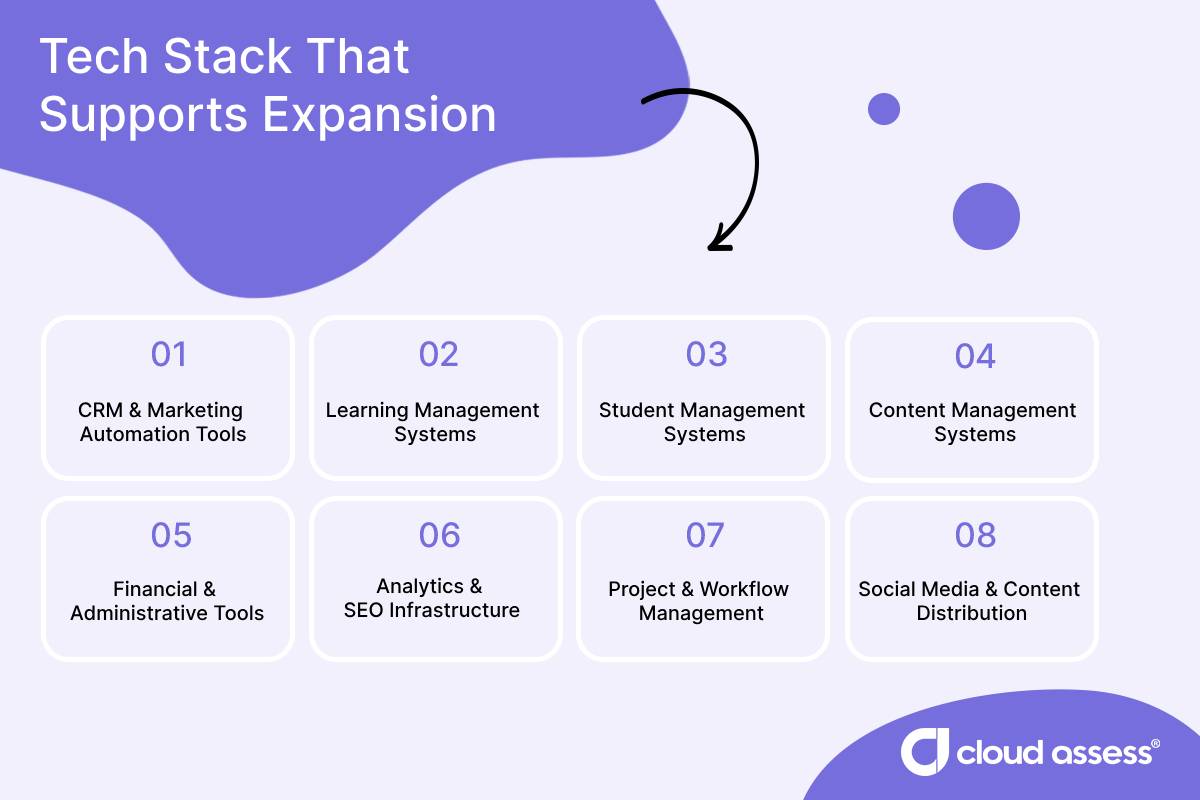
CRM and Marketing Automation Tools
A Customer Relationship Management (CRM) system is essential for addressing student enquiries, lead nurturing, and conversion tracking. It allows you to personalise communication, automate campaigns, and gain real-time insights into marketing performance. As your database grows, CRM segmentation helps target different learner groups more effectively, whether you’re running campaigns for school leavers, job seekers, or upskilling professionals.
Integrated CRMs also support compliance by tracking consent, communications history, and application status, ensuring your marketing activities are aligned with national standards. When your marketing workflows are automated and trackable, they’re easier to scale and audit.
Learning Management Systems (LMS)
Your Learning Management System (LMS) is the backbone of scalable delivery. It supports consistent student engagement, structured learning pathways, and robust evidence collection. A well-configured LMS allows for blended, face-to-face, and self-paced learning, which are essential if you’re expanding delivery formats or geographic reach. Not all LMS platforms are created equal. Evaluate carefully to ensure the system aligns with your delivery model and operational requirements.
Choose an LMS that includes built-in assessment tracking, trainer feedback, student progress dashboards, and integration with your Student Management System (SMS). These features reduce manual-intensive admin and improve your ability to demonstrate compliance with the Principles of Assessment and Rules of Evidence.
Content Management Systems (CMS)
A learning CMS ensures your website and internal portals can grow with you. Whether you’re adding new qualifications, publishing policies, or updating your scope, a CMS keeps course information accurate, accessible, and easy to manage.
It should also be user-friendly for both learners and administration staff. Learners need clear navigation, accessible course details, and a smooth path to enquiry or enrolment. On the back end, your team needs intuitive tools to update content quickly, maintain consistency, and ensure accuracy without relying on developers. A well-structured CMS supports lead generation, improves user experience, and helps maintain your professional presence as you scale.
Financial and Administrative Tools
Financial and back-office systems play a key role in managing the business side of scaling. Look for tools, including HR systems, that integrate with your LMS or SMS to streamline functions such as invoicing, payment tracking, payroll, and reporting. HR systems also support workforce planning, onboarding, and compliance with employment standards. Systems that offer audit trails and permissions-based access help ensure financial oversight and meet compliance obligations, including financial viability risk assessments.
Analytics and SEO Infrastructure
As your digital footprint grows, data becomes essential for making informed decisions. Web analytics tools help you understand how visitors interact with your website, from which courses they’re exploring to where they’re dropping off. This insight can shape everything from marketing campaigns to course positioning and resource development.
SEO infrastructure is equally important. A clear site structure, fast load times, and relevant content all improve visibility in search engines and enhance user experience. Focus on optimising for the search intent behind course-related queries, rather than just specific keywords. This ensures your content attracts the right learners, whether they’re exploring online study options or comparing training providers in their region.
Project and Workflow Management Platforms
Scaling introduces more moving parts, course management, onboarding, compliance reviews, and partner engagement. Tools like project boards, task automation, and team dashboards help maintain alignment. Choose platforms that support cross-functional collaboration and provide visibility across departments.
Social Media and Content Distribution
As your RTO scales, strengthening your digital presence is essential to reaching new learners and building authority. A well-rounded strategy should include targeted social media activity, supported by consistent messaging and smart content scheduling. Focus on improving your social media presence by aligning content with learner interests, celebrating success stories, and showcasing your training outcomes.
Effective digital marketing strategies can also enhance visibility in new markets, particularly when optimised for specific learner demographics or industry needs. Incorporating proven marketing strategies for training companies, such as audience segmentation and campaign tracking, allows you to measure impact and refine your outreach over time. While promotion is key, it’s equally important to ensure your messaging aligns with RTO-compliant marketing and recruitment practices. This helps build trust, supports ethical engagement, and keeps your organisation aligned with national standards as it grows.
5. Measure, Adjust, and Scale Responsibly
Scaling isn’t just about growing fast, it’s about growing smart. Sustainable expansion requires ongoing measurement, adaptation, and a focus on maintaining quality across every area of your Registered Training Organisation.

Define KPIs and Monitor Business Performance
Set clear, measurable KPIs that align with your growth goals. These may include enrolment numbers, course completion rates, student satisfaction, compliance performance, or cost per acquisition. Regularly tracking these training metrics gives you a real-time view of what’s working and where intervention is needed.
Create Feedback Loops
Make it easy for your stakeholders to provide feedback and make sure it gets acted on. Use surveys, internal reviews, and industry consultations to gather insight on course relevance, delivery quality, and learner experience trends. This helps refine your operations and demonstrates your commitment to continuous improvement and quality assurance.
Run Regular Reviews and Retrospectives
Hold structured check-ins across departments to review progress, address bottlenecks, and capture lessons learned. These sessions are particularly useful post-launch of a new marketing campaign, after successful completion of an intake or use of a new assessment method. They also create accountability and momentum across your leadership and delivery teams.
Test and Iterate with Agility
When scaling, not every initiative will be a win from day one, and that’s okay. Adopt a mindset of piloting, testing, and iterating. Whether trialling a new delivery format or rolling out new assessment tools, start small, collect feedback, and scale only what proves effective.
Focus on Sustainable Growth, Not Just Speed
Avoid overextending resources or diluting quality in pursuit of rapid growth. Sustainable scaling means protecting your trainer workload, maintaining a high standard of assessment validation, and ensuring your systems are prepared for increased demand. Speed matters, but not at the cost of learner outcomes or regulatory breaches.
Maintain High-Quality Training and Student Outcomes
No matter how large your RTO becomes, training quality should remain your core value. That means ongoing investment in RTO professional development, resource updates, and regular reviews of your assessment process. Monitor key indicators like student satisfaction, completion rates, and assessment outcomes to ensure your courses continue to deliver measurable value to learners and align with industry needs.
Keep Training Resources Current and Relevant
As your offerings expand, it’s essential to regularly review and refine your training resources. Ensure materials are accurate, accessible, and aligned with delivery expectations and compliance requirements. Outdated content, inconsistencies, or gaps in trainer support can undermine learner confidence and compliance outcomes.
Scaling should never come at the cost of quality education. Strong learner outcomes and sector credibility rely on up-to-date content, engaged trainers, and consistently high standards.
Best Practices for Scaling
Scaling looks different for every Registered Training Organisation, but there are core practices that support growth that’s sustainable, strategic, and grounded in quality. These aren’t one-time actions, they’re ongoing habits that strengthen your organisation over time.
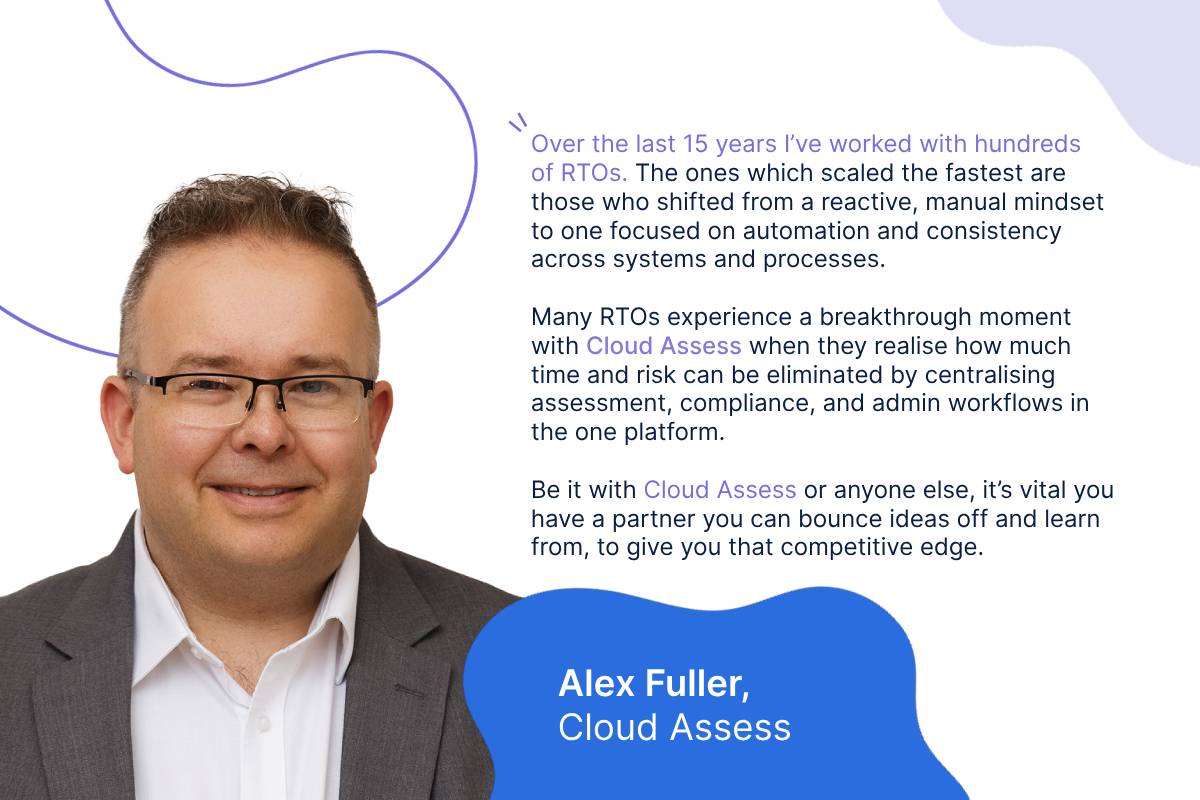
Leverage Strategic Planning Retreats and Peer Communities
Step outside day-to-day operations to focus on long-term direction. Planning retreats help leadership teams align on goals, address challenges, and explore new opportunities without distraction. Peer networks and industry forums also offer invaluable insights, especially from others who’ve successfully scaled within the sector.
Stay Adaptable to Changing Market Demands
The vocational education landscape shifts constantly, from workforce needs and funding priorities to regulatory updates and learner expectations. Building adaptability into your own Registered Training Organisation’s business model allows you to respond quickly to change, seize new opportunities, and maintain your relevance in a competitive space.
Reinforce a Culture of Quality and Accountability
Sustainable growth relies on more than systems, it depends on people. A strong internal culture supports consistency, responsiveness, and continuous improvement. Empower your team to take ownership of quality across all touchpoints, from student experience to training outcomes. This mindset helps ensure your organisation not only meets external standards, such as those set by the Australian Skills Quality Authority, but consistently delivers value to learners, employers, and stakeholders.