There’s no denying that customer-facing employees have a tough job. They need to balance a wide range of skills to excel in both their job and customer service. This challenge is often exacerbated by a lack of support from employers, which can lead to a host of problems. These include underperformance or even underserved and unhappy customers.
How do we as businesses give our frontline workers the support they need to be high performers in all areas of their demanding jobs? The answer lies within coherent frontline training.
In this article, we:
- Explain what frontline training is and how it differs from traditional training methods
- Outline the benefits of training frontline employees
- Identify core skills that can be developed in frontline training
- Highlight courses that you can enrol your teams and frontline leadership in
- Provide steps for building frontline skills
- Explore best practices in modern frontline training

What Is Frontline Training?
Frontline training describes the techniques that companies use to equip customer-facing employees with the skills they need to provide exceptional service while supporting organisational goals.
Frontline workers have distinct training needs when compared to other team members. While soft skills like communication, negotiation and conflict management are beneficial in most roles, they are essential for frontline employees working directly with customers and vendors. These skills play a critical role in building and managing strong relationships and ensuring positive interactions.
Delivering training to frontline workforces requires unique strategies compared to traditional roles. Since frontline and deskless workers often don’t have the opportunity to sit at a computer, a mobile-first approach is essential. On-the-job training is particularly effective, offering practical, hands-on experiences that prioritise real-world skills over theoretical or rote learning.
Benefits of Frontline Staff Training
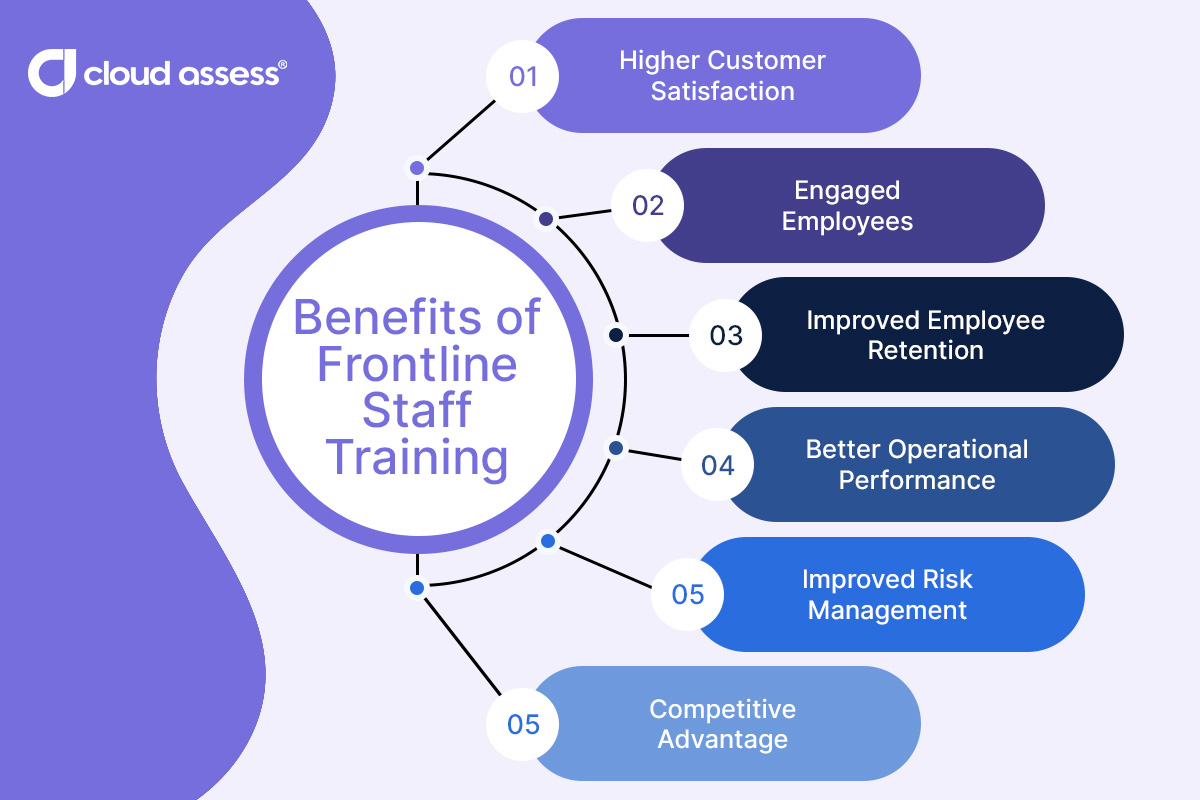
1. Higher Customer Satisfaction
Equipping your frontline teams with the right skills can help customers feel heard and cared for. This will directly and positively impact customer satisfaction, and satisfied customers are far less likely to be lured away by competitors. This increases a customer’s lifetime value (CLV), directly impacting your bottom line. It also makes them far more likely to recommend your business to friends and colleagues, providing free word-of-mouth advertising.
The impact of this cannot be overstated. The fact of the matter is, people trust people, not businesses. 96% of consumers don’t trust advertising at all, while word-of-mouth is a key driving factor in 20-50% of purchasing decisions. This makes fostering good relationships essential in any industry, but especially in frontline roles.
2. Engaged Employees
Frontline training programs play a crucial role in boosting employee engagement and morale. Providing opportunities for growth and learning helps employees become more competent, confident, and committed to your company.
It also encourages them to engage more deeply with your company culture, leading to higher job satisfaction, increased productivity, and stronger collaboration across your organisation. When frontline teams are happy and well-aligned, they are perfectly positioned to deliver exceptional customer experiences.
3. Improved Employee Retention
Employees who are engaged in their roles and see opportunities for growth and professional development are less likely to seek employment elsewhere. This makes frontline training—and training in general—a powerful employee retention strategy.
Regular training helps those in frontline roles feel valued and highlights potential career pathways within your organisation. Not only does this support succession planning for future frontline leadership, but it also reduces the risk of career stagnation, a leading factor in employee turnover. By providing clear opportunities for advancement, you create a workplace where staff are more likely to invest in their roles and grow alongside your business.
4. Better Operational Performance
Comprehensive training programs support continuous professional development, enhancing employees’ skills while also boosting operational performance. A well-trained workforce operates more proficiently and productively, leading to improved performance across teams and contributing directly to organisational success.
By focusing training on frontline skills such as problem-solving, workflow management, and process optimisation, businesses can create more streamlined operations. This efficiency not only frees up time for innovation but also enhances business operations, products, and service offerings, driving growth and competitiveness.
5. Improved Risk Management
Frontline workers face various risks in their roles, ranging from cybersecurity and compliance risks to managing conflicts, difficult customers, and aggressive behaviours. Providing training in risk recognition and management equips your teams with workforce skills needed to identify potential issues early and respond quickly and effectively.
Well-trained employees can help your organisation mitigate risks, protect your business and customers, and maintain a safe and professional environment. This proactive approach not only enhances operational safety and efficiency but also builds trust in your brand, offering peace of mind to both employees and customers.
6. Competitive Advantage
Frontline workers are often the first to observe and respond to market changes, making their ability to adapt quickly to evolving customer needs critical. Developing training programs that focus on change management, emotional intelligence, and innovation equips employees to navigate changing circumstances with confidence and skill.
By investing in future-ready skills for your teams and frontline leadership, your organisation can maintain a strong competitive edge. A workforce that embodies adaptability and innovation ensures customer satisfaction, even as industry and market trends evolve.
Core Skills to Develop in Frontline Employee Training
The most efficient frontline training programs will help employees build a vast number of skills. These include both hard skills and soft skills (also known as power skills).
Hard Frontline Skills
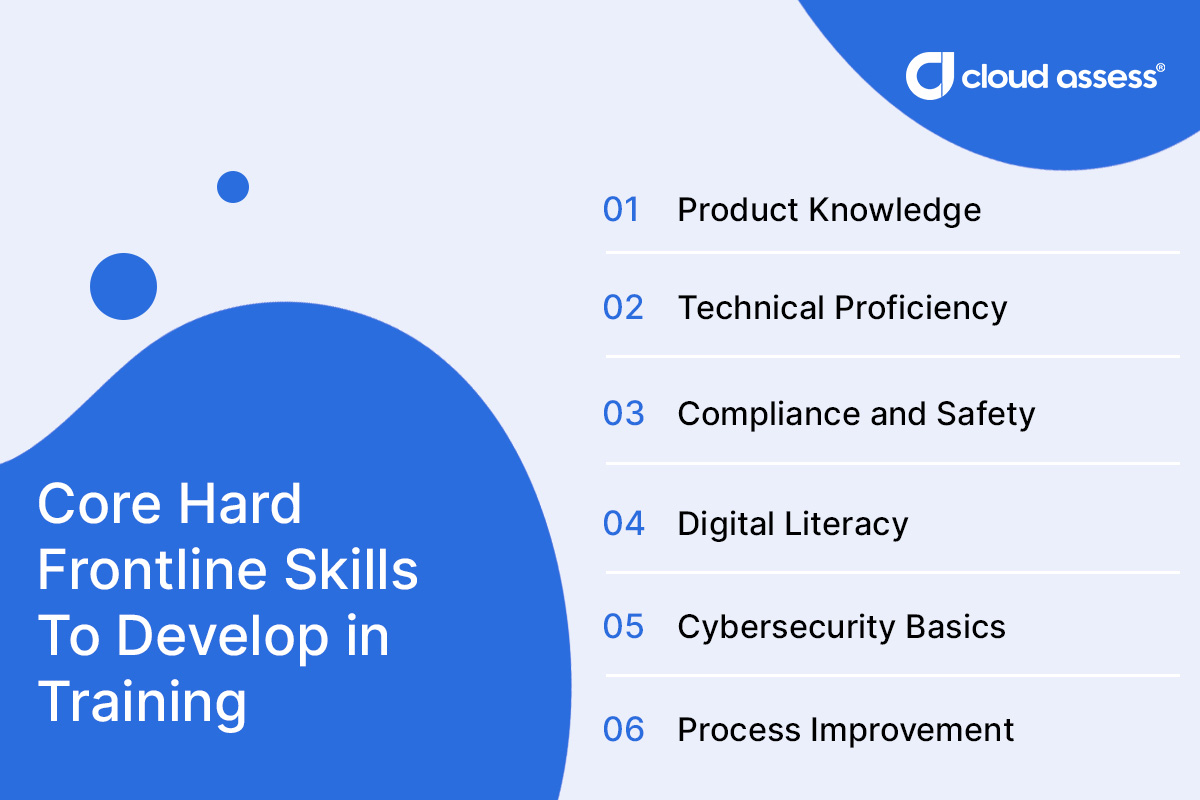
- Product Knowledge. Enables frontline workers to provide accurate information, upsell and cross-sell products, and answer customer queries with confidence.
- Technical Proficiency. Ensures employees can provide expert guidance on technical matters. Especially important for in-person, online and customer support roles.
- Compliance and Safety. Minimises risk and ensures a safe environment for both employees and customers, reinforcing your company’s reputation for being responsible and trustworthy.
- Digital Literacy. Ensures frontline workers can use digital tools to capture data, manage orders, track jobs, record meetings and more.
- Cybersecurity Basics. Prepares employees for recognising to preventing attacks that could potentially damage your company.
- Process Improvement. Supports a lasting culture of continuous improvement that focuses on productivity and efficiency workflows.
Soft Frontline Skills
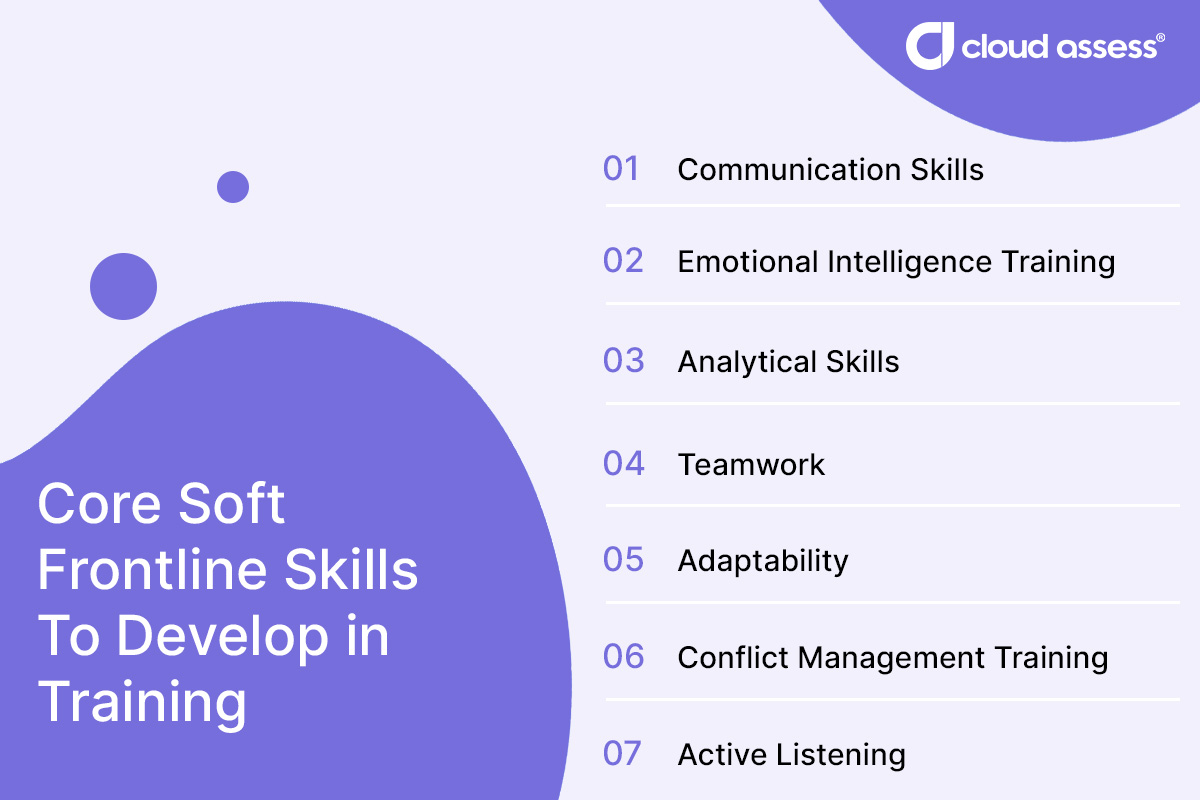
- Communication Skills. Helps frontline workers create positive relationships, meet, and even exceed client expectations.
- Emotional Intelligence Training. Provides employees with the ability to regulate their emotions while also being mindful of the emotions of customers.
- Analytical Skills. Supports complex problem-solving, data-driven decision making, and recognising and addressing potential problems before they become a reality.
- Teamwork. Enables employees to collaborate effectively and support one another in achieving common goals, fostering mutual respect and shared experiences.
- Adaptability. Helps employees effectively navigate dynamic situations while maintaining exceptional customer experiences.
- Conflict Management Training. Ensures employees know the best conflict management styles to navigate tense situations and prevent harm to your customers and company reputation.
- Active Listening. Helps frontline workers truly understand customer needs and requests to answer questions, alleviate fears, and enhance experiences.

Frontline Worker Training Courses
Developing tailored training programs is best for providing frontline employees with new skills unique to your business. However, digital learning for frontline employees helps cover the basics. On top of general soft skill training, communication courses, and digital literacy courses, we’ve also developed training sessions for specific sectors and frontline workers:
- For retail teams, these entry-level retail courses and customer-focused retail courses will help you meet and exceed expectations and improve in-store experiences.
- For frontline healthcare workers, these free NDIS courses can help you provide patients with meaningful care and support. These support worker courses can also provide foundational training for those who work in childcare, aged care, rehabilitation and disability support.
- Frontline hospitality workers can benefit from these foundational hospitality training courses. There are also specific hotel industry and food industry training courses for those who have already specialised.
- Those in customer service will benefit from these fundamental frontline customer service training courses that cover handling customer complaints.
Challenges With Training For Frontline Staff
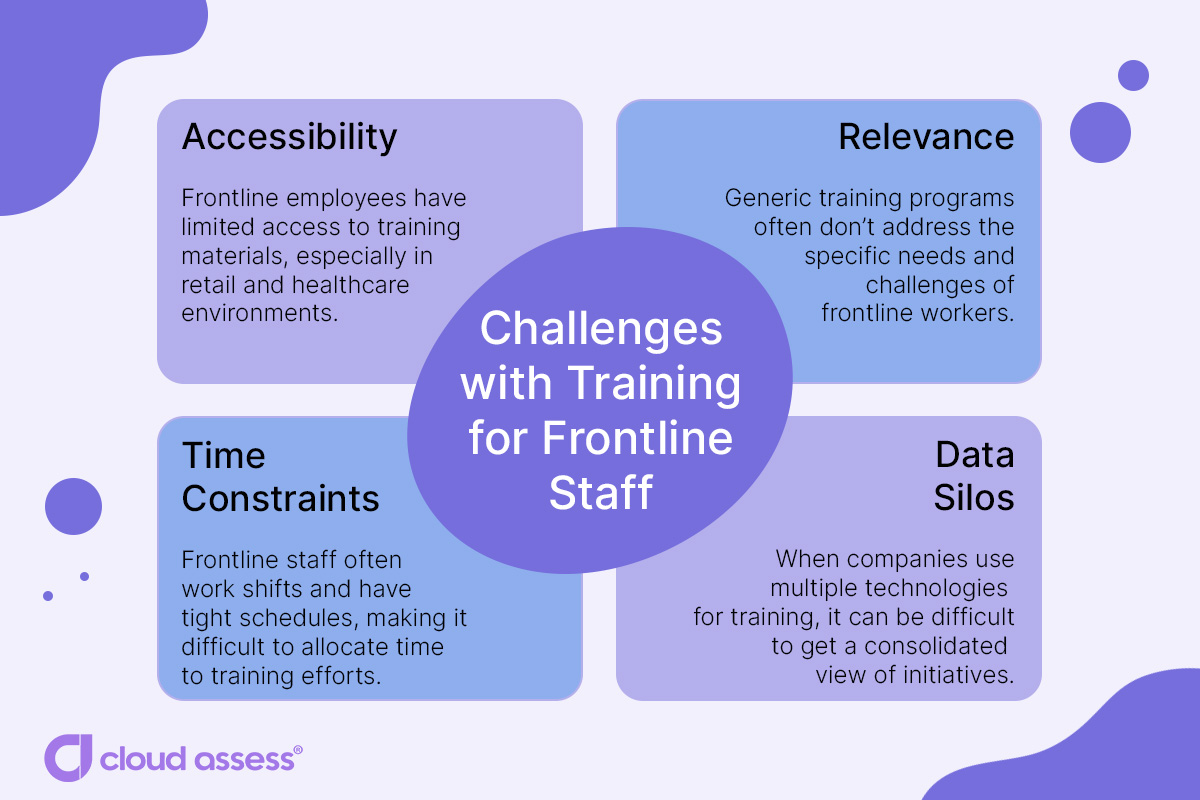
1. Accessibility
Frontline employees often have limited access to training materials, especially in retail and healthcare environments. It’s essential for companies to use mobile-friendly frontline training solutions like cloud-based learning management systems to deliver courses and maximise the accessibility of materials.
2. Relevance
Generic training programs often don’t address the specific needs and challenges of frontline workforces. Tailoring training to specific roles and focusing on practical skills and real-world scenarios through on-the-job training can help organisations address this gap.
3. Time Constraints
Frontline staff often work according to shifts and have tight schedules, which can make it difficult to allocate time to training. It’s important for frontline leadership to account for training in their employee work rotas. Providing flexible, online training options will also help employees access training at their own pace.
4. Data Silos
When companies use multiple technologies for training and managing their teams, it can be difficult to get a consolidated view of initiatives or determine their success. Ensuring that your training solutions integrate with your other technologies allows for seamless data sharing and better progress tracking.
How to Build Frontline Training Skills
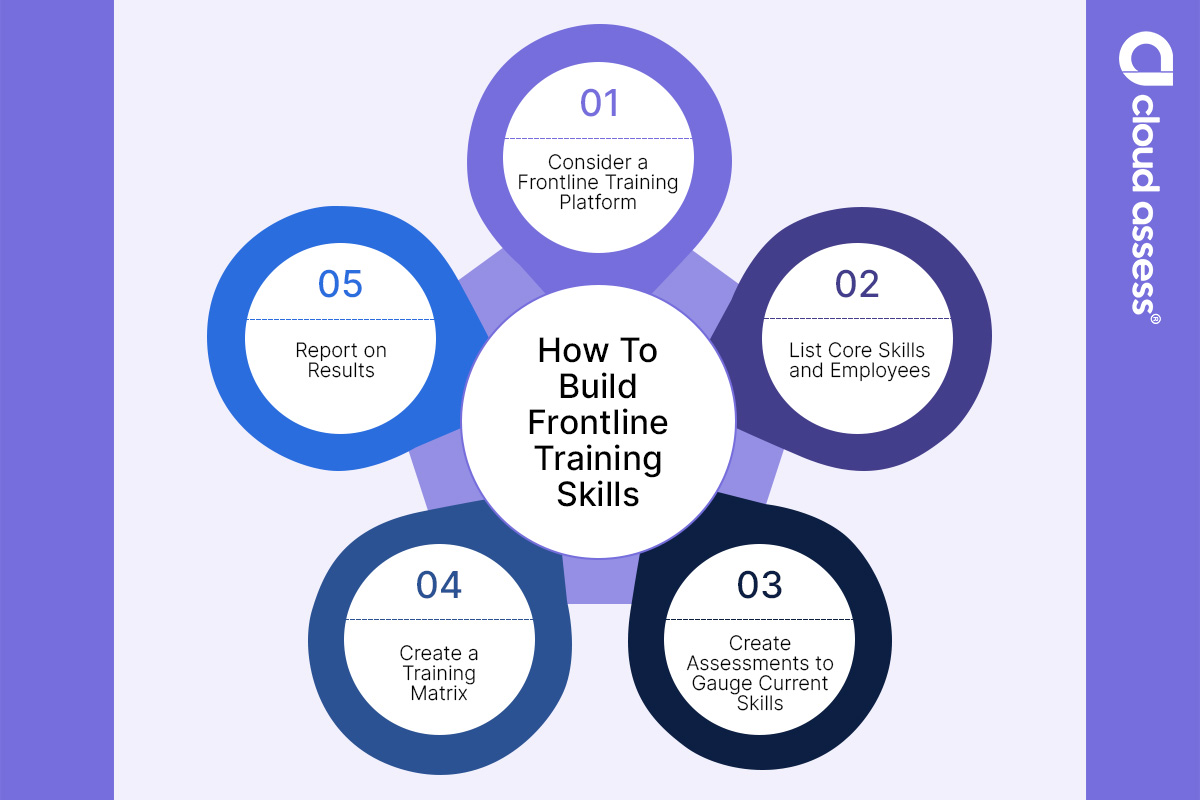
1. Consider a Frontline Training Platform
Frontline training software can greatly reduce the time it takes to create and implement your learning and development efforts. For example, an assessment platforms for frontline training like Cloud Assess allows you to quickly and easily create courses and assessments, even using AI to save you time and effort. Automated grading and workflows significantly reduce administrative burden and the risk of manual error, streamlining your operations even further.
2. List Core Skills & Employees
Next, you’ll want to identify the skills that your frontline staff already possess. Skill mapping allows you to track abilities and proficiencies across individuals and teams, while skills matrix software helps you identify skill gaps and develop targeted employee development plans to address them.
5. Report on Results
Using your skills matrix, training matrix, and customer feedback surveys, you can track the impact of frontline training on both employee performance and customer experiences. These insights should be used to consistently refine and improve training programs, ensuring continuous professional and organisational growth. Additionally, reporting can inform future learning and development budgets, ensuring that funds are directed towards high-impact training initiatives.
Frontline Training Best Practices
1. Leverage Various Employee Training Methods
There is no one-size-fits-all solution when it comes to training, which is why it’s important for companies to adopt a mix of employee training methods and delivery techniques.
For example, on-the-job training is ideal for providing frontline workers with practical, hands-on experiences, while off-the-job training offers a more structured environment to learn company policies and procedures. Microlearning courses are perfect for delivering bite-sized, online training sessions, making it easy for employees to learn on the go. In contrast, in-person training sessions work well when the same content needs to be delivered to a large group simultaneously.
A blended learning approach can help you meet both of these needs, combining online and in-person sessions for flexible training that accommodates diverse learning needs.
Since frontline staff often need access to training materials while on the move, it’s also crucial for your learning management system to offer offline functionality. This ensures that workers can access training even in remote areas, with their progress automatically synced once they regain connectivity.
2. Implement Different Types of Assessment

In the same way that different training methods are effective in specific scenarios, so different types of assessment are best for measuring knowledge, skills and proficiency levels.
For example, competency-based frontline worker assessments measure an employee’s ability to apply specific skills and knowledge in real-world scenarios, ensuring they meet required performance standards.
Holistic assessment examples are best used for evaluating an employee’s overall competence, considering their performance across multiple tasks and how well they can integrate their skills and knowledge to handle complex situations.
Examples of diagnostic assessments, on the other hand, help companies identify existing knowledge gaps and determine training needs before starting a new learning initiative, ensuring that training programs are targeted and effective.
Using each of these assessment types will ensure a well-rounded evaluation of employee skills, helping organisations tailor training programs to meet specific needs and drive continuous improvement.
3. Foster a Culture of Continuous Improvement
A culture of learning can benefit your entire company, not just frontline staff. Continuous learning helps to sustain the impact of training initiatives and stop potential regression. You’ll also have quick learners who are better equipped to rapidly adapt to changing technology by learning new things.
Encourage feedback from employees, celebrate learning within teams, and regularly conduct skill assessments to keep the culture alive. Adopting a continuous assessment approach in your business will also help.
4. Recognise Training Achievements

Recognising training efforts and achievements promotes a culture of continuous learning, enhances employee satisfaction, and helps businesses align employee growth with organisational goals. Examples of effective recognition methods include:
- Microcredentials that provide frontline staff with quantifiable achievements upon completing courses and training programs.
- Digital badges that offer visible recognition of skills and can be shared on professional networks.
- Gamification elements, like points, leaderboards and rewards, that introduce a sense of achievement and healthy competition.